Vanadium based Casting Toughening Agent
CN → US| HS Code | Tariff Rate | Origin | Destination | Doc |
|---|---|---|---|---|
| 7202920000 | 39.2% | CN | US | Official Doc |
| 8112927000 | 37.0% | CN | US | Official Doc |
| 8112992000 | 37.0% | CN | US | Official Doc |
| 3824993600 | 24.0% | CN | US | Official Doc |
| 3815190000 | 35.0% | CN | US | Official Doc |
Product Images
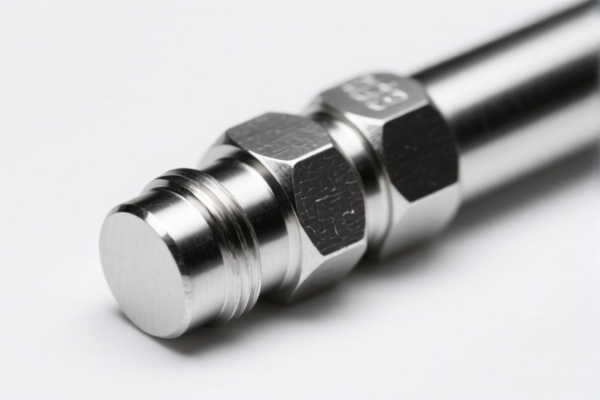
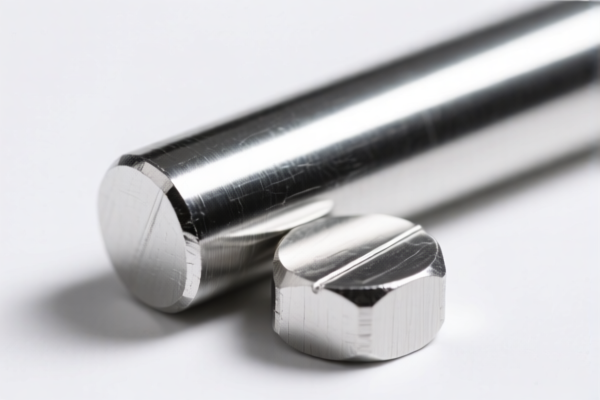
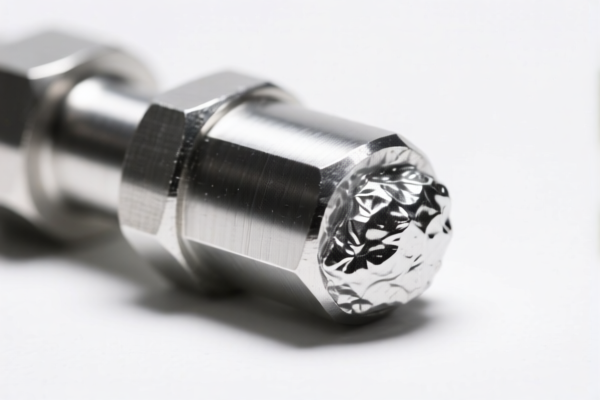

AI Analysis
🔥 Vanadium-Based Casting Toughening Agent (钒基铸造增韧剂)
🌐 HS Code Reference & Customs Clearance Guide | 2026 Latest Tariff Analysis | Professional Level Strategy
📌 Part I: Product Definition & Classification: Do You Truly Understand "Vanadium-Based Casting Toughening Agent"?
Vanadium-based casting toughening agents are critical alloy additives in the metallurgical industry, designed to enhance the impact resistance, toughness, and grain refinement of cast iron, steel, and other ferrous alloys. In international trade, they are not a single monolithic product but vary significantly based on their chemical form, vanadium content, and application phase.
Misclassification is the #1 cause of customs delays for these products. The key distinction lies in whether the product is considered: 1. A Ferroalloy (Iron-Vanadium alloy): High iron content, used directly in steel/cast iron melting. 2. Pure Vanadium Metal or Powder: High purity, used for specialized alloys or advanced manufacturing. 3. Chemical Additives or Catalysts: Complex mixtures or compounds used for chemical processing or specific catalytic functions rather than direct metallurgical alloying.
⚠️ Key Distinction Points:
- If it is an Iron-Vanadium alloy (>10% Vanadium, high Iron) → Classified under Chapter 72 (Iron & Steel).
- If it is Pure Vanadium Metal (powder, spheroids, refined) → Classified under Chapter 81 (Other Base Metals: Vanadium).
- If it is a Chemical Mixture/Catalyst not primarily for alloying → Classified under Chapter 38 (Miscellaneous Chemical Products).
📦 Part II: HS Code Classification Details (2026 Latest Tariff Authority Mapping)
| HS Code | Product Description | Application Scenario | Primary Attribute |
|---|---|---|---|
7202.92.00.00 |
Vanadium Ferroalloy Additives: Matches Vanadium Iron material & ferrous alloy raw material attributes | Direct additive in steel/cast iron melting; high iron content | ✅ Ferroalloy (Iron-Vanadium) |
8112.92.70.00 |
Vanadium-Based Additives: Matches Vanadium material & metal powder or primary form | Specialized alloys, metallurgical research, high-purity inputs | ✅ Base Metal (Pure Vanadium/Powder) |
8112.99.20.00 |
Vanadium-Based Additives: Matches Vanadium material & metal products processing application | Fabrication, advanced manufacturing, non-powder forms | ✅ Base Metal (Processed Vanadium) |
3824.99.36.00 |
Vanadium-Based Curing Agent: Matches vanadium-made chemical products & inorganic compound mixture uses | Chemical processing, binders, non-metallic applications | ✅ Chemical Mixture |
3815.19.00.00 |
Vanadium-Based Curing Agent: Matches Catalyst/Reaction Accelerator & supports catalyst attributes | Catalytic processes, chemical reaction acceleration | ✅ Catalyst |
🔍 Key Reminder:
- Metallurgical vs. Chemical: If the primary purpose is to add Vanadium metal into steel/iron to improve physical properties → Chapters 72 or 81.
- If the product is a chemical compound used for curing, binding, or catalysis in non-metallurgical contexts → Chapter 38.
- Do NOT confuse "Vanadium Ferroalloy" (7202) with "Pure Vanadium" (8112). The iron content is the deciding factor.
💰 Part III: 2026 Latest Tariff Rate Details (Including Surtaxes & Policy Additions)
✅ Applicable Country: United States (US)
✅ Origin: China (CN)
✅ Effective Time: 2025 onwards (including subsequent imports)
🎯 1. 7202.92.00.00 —— Vanadium Ferroalloy (Vanadium Iron)
| Item | Content |
|---|---|
| Basic Duty Rate | 4.2% (ad valorem) |
| Surtax (Section 301) | +25.0% |
| 122 Clause Tariff | +10.0% |
| Total Effective Rate | 39.2% |
| Tax Calculation | CIF Value × 39.2% |
| De Minimis Exemption? | ❌ NO (Not eligible for de minimis) |
| Legal Basis Path | USITC:7202.92.00.00 → Section 301: +25% → 122 Clause: +10% |
📌 Explanation:
- Basic 4.2%: Standard Most Favored Nation (MFN) duty for ferroalloys.
- +25% Section 301: Additional duty imposed on Chinese goods under U.S. Trade Act Section 301.
- +10% 122 Clause: Additional duty under Section 122 of the Trade Act of 1974 (often applied to protect domestic industries).
- Total 39.2%: High barrier for entry. Must be accurately declared as "Vanadium Ferroalloy."
🎯 2. 8112.92.70.00 —— Pure Vanadium / Metal Powder (Primary Form)
| Item | Content |
|---|---|
| Basic Duty Rate | 2.0% |
| Surtax (Section 301) | +25.0% |
| 122 Clause Tariff | +10.0% |
| Total Effective Rate | 37.0% |
| Tax Calculation | CIF Value × 37.0% |
| De Minimis Exemption? | ❌ NO |
| Legal Basis Path | USITC:8112.92.70.00 → Section 301: +25% → 122 Clause: +10% |
📌 Explanation:
- Slightly lower basic duty (2.0%) than ferroalloys due to classification as a refined base metal.
- Still subject to full surtaxes.
- Critical: Must provide purity certificates to prove it is not a ferroalloy (which might trigger 7202 classification if iron content is high).
🎯 3. 8112.99.20.00 —— Pure Vanadium (Metal Products/Processed)
| Item | Content |
|---|---|
| Basic Duty Rate | 2.0% |
| Surtax (Section 301) | +25.0% |
| 122 Clause Tariff | +10.0% |
| Total Effective Rate | 37.0% |
| Tax Calculation | CIF Value × 37.0% |
| De Minimis Exemption? | ❌ NO |
| Legal Basis Path | USITC:8112.99.20.00 → Section 301: +25% → 122 Clause: +10% |
📌 Explanation:
- Applies to vanadium in forms other than powder (e.g., spheroids, ingots for further processing).
- Tax rate identical to 8112.92.70.00.
- Key: Must demonstrate "metal products processing application" rather than direct casting alloying.
🎯 4. 3824.99.36.00 —— Vanadium-Based Curing Agent (Chemical Mixture)
| Item | Content |
|---|---|
| Basic Duty Rate | 6.5% |
| Surtax (Section 301) | +7.5% |
| 122 Clause Tariff | +10.0% |
| Total Effective Rate | 24.0% |
| Tax Calculation | CIF Value × 24.0% |
| De Minimis Exemption? | ❌ NO |
| Legal Basis Path | USITC:3824.99.36.00 → Section 301: +7.5% → 122 Clause: +10% |
📌 Explanation:
- Lower Surcharge: Note the Section 301 surcharge is only +7.5%, not 25%. This is a significant cost advantage.
- Applicability: ONLY if the product is a chemical compound/mixture used for curing or binding, NOT for direct metallurgical alloying.
- Risk: Customs may reclassify as ferroalloy if evidence suggests metallurgical use.
🎯 5. 3815.19.00.00 —— Vanadium-Based Catalyst
| Item | Content |
|---|---|
| Basic Duty Rate | 0.0% |
| Surtax (Section 301) | +25.0% |
| 122 Clause Tariff | +10.0% |
| Total Effective Rate | 35.0% |
| Tax Calculation | CIF Value × 35.0% |
| De Minimis Exemption? | ❌ NO |
| Legal Basis Path | USITC:3815.19.00.00 → Section 301: +25% → 122 Clause: +10% |
📌 Explanation:
- Zero Basic Duty: Basic tariff is 0% because it is classified as a catalyst preparation.
- High Surcharge: However, it incurs the full 25% Section 301 surcharge.
- Applicability: Strictly for catalytic applications. Misuse as a casting additive will lead to penalties.
🛠️ Part IV: Customs Clearance Practical Advice (Real-World Pitfall Avoidance)
✅ 1. Documentation Checklist (Indispensable)
| Document | Required | Description |
|---|---|---|
| ✅ Product Specification Sheet | ✔️ | Must detail Vanadium content, Iron content, physical form (powder, lump, mixture), and CAS number. |
| ✅ Technical Data Sheet (TDS) | ✔️ | Explains the primary function: Alloying Agent vs. Catalyst vs. Curing Agent. |
| ✅ Certificate of Analysis (COA) | ✔️ | Proves chemical composition. Critical for distinguishing between 7202 (ferroalloy) and 8112 (pure metal). |
| ✅ Intended Use Declaration | ✔️ | Explicitly state: "For use in steel casting" (→ Ch 72/81) OR "For chemical catalytic processes" (→ Ch 38). |
| ✅ Commercial Invoice | ✔️ | Must clearly describe the product using the technical name, not just "Vanadium Additive." |
| ✅ Origin Certificate | ✔️ | Essential for determining surtax applicability. |
| ✅ Packaging List | ✔️ | Detail net/gross weight, especially for bulk ferroalloys vs. packaged chemicals. |
✅ 2. Declaration Tips (Key Mantras)
🔥 "Function Defines Code, Iron Content Defines Chapter, Use Determines Surcharge!"
| Scenario | Correct HS Code | Incorrect Action | Consequence |
|---|---|---|---|
| Vanadium Iron Alloy (>10% V, high Fe) | 7202.92.00.00 |
Declare as 8112 (Pure Vanadium) |
Underpayment of basic duty; penalty |
| Pure Vanadium Powder (Low Fe) | 8112.92.70.00 |
Declare as 7202 (Ferroalloy) |
Overpayment of basic duty (4.2% vs 2.0%) |
| Chemical Curing Mixture (Non-metallurgical) | 3824.99.36.00 |
Declare as 7202 |
Unnecessary high surcharge (39.2% vs 24.0%) |
| Catalytic Compound | 3815.19.00.00 |
Declare as 7202 |
High surcharge (35.0% vs potential lower if misclassified) |
⚠️ Critical Warning:
- If you declare a product as a Catalyst (3815) or Curing Agent (3824) but it is actually used for casting, Customs may reclassify it as a Ferroalloy (7202) and apply the 39.2% rate retroactively, plus penalties.
- Do NOT split shipments to avoid surtaxes; this is considered fraud.
✅ 3. Special Cases Handling
| Scenario | Handling Advice |
|---|---|
| Hybrid Products (Alloy + Chemical Binder) | If the product contains both metallurgical and chemical components, the primary purpose determines the HS Code. Provide technical data to justify the primary use. |
| OEM Custom Vanadium Additives | Provide client specifications and design documents. Ensure the HS Code matches the chemical/physical reality, not just the client's label. |
| Small Samples / R&D | Still subject to full duties. De minimis does NOT apply. |
| Vanadium in Non-Metallic Applications | If Vanadium is used in ceramics or glass (not metal casting), it may still fall under 3824 or 3815. Provide end-use proof. |
🌍 Part V: Global Market Comparison (2026 Latest)
| Country/Region | Recommended HS Code | Tariff (China Origin) | Certification Requirements | Notes |
|---|---|---|---|---|
| 🇺🇸 USA | 7202.92.00.00 |
39.2% (Ferroalloy) | None specific | High surtaxes apply. Strict origin verification. |
| 🇨🇳 China | 7202.92.00.00 |
4.2% | N/A | No surtaxes domestically. |
| 🇪🇺 EU | 7202.92 |
0% - 4% (varies) | REACH Registration | No major surtaxes. REACH compliance is critical. |
| 🇮🇳 India | 7202.92 |
7.5% - 10% | BIS Certification | Antidumping duties may apply. Check latest CBIC notifications. |
| 🇯🇵 Japan | 7202.92 |
0% - 5% | JIS Standards | Low tariffs. Focus on quality consistency. |
📌 Conclusion:
- USA is the most challenging market due to the 35%-39.2% effective duty rates.
- Chemical classifications (38xx) offer lower surcharges but require rigorous proof of non-metallurgical use.
- Ferroalloys (7202) are the standard for casting but carry the highest tax burden.
📌 Part VI: Common Errors & Pitfalls (Lessons Learned)
❌ Error 1: Declaring Vanadium Ferroalloy as Pure Vanadium (8112)
👉 Consequence: Customs reclassifies to 7202 → Higher basic duty (4.2% vs 2.0%) + potential penalty for misdeclaration.
❌ Error 2: Declaring Metallurgical Additive as Catalyst (3815) to avoid surtax
👉 Consequence: Customs demands proof of catalytic use. If unable to provide → Reclassified to 7202 + 25% surtax + penalties.
❌ Error 3: Ignoring 122 Clause Tariff
👉 Consequence: Underpayment by 10%. Customs will assess back duties + interest.
❌ Error 4: Vague Description: "Vanadium Additive"
👉 Consequence: Customs exam delays. Clear description: "Vanadium Ferroalloy, 40% Vanadium, 55% Iron, for Steel Casting, CAS 12041-86-2" is required.
✅ Correct Practice:
"Vanadium Ferroalloy (FeV40), for use in cast iron production, to improve tensile strength. Composition: 40% V, 55% Fe, 5% C."
🎯 Part VII: Conclusion: Professional Declaration, Cost Optimization, Risk Mitigation
🎯 Remember the Mantra:
🔹 "Ferroalloy is 7202, Pure Metal is 8112, Chemical is 38xx."
🔹 "Iron Content Defines the Chapter, Primary Use Defines the Surcharge."
🔹 "39.2% for Casting, 24.0% for Chemicals – Know Your Product!"
📌 Pro Tip:
If your vanadium-based product has a dual use (e.g., both metallurgical and chemical), consider splitting the shipment if commercially viable, or provide strong technical evidence for the lower-duty classification.
For high-volume imports, consider applying for an Advance Ruling from U.S. Customs to lock in the HS Code and duty rate.
📣 Immediate Action:
📞 Contact a licensed customs broker + Provide Technical Data Sheet (TDS) + Certificate of Analysis (COA) + Apply for Advance Ruling
🚀 Ensure smooth clearance, accurate taxation, and optimized supply chain costs!
✨ Professional Clearance Starts with Precise Classification!
💼 Your Every Penny is Worth Accurate Calculation!
Customer Reviews
About HS Code Classification
The Harmonized System (HS) is an internationally standardized nomenclature developed by the World Customs Organization (WCO) to classify traded products. Over 200 countries use the HS system as the basis for customs tariffs, trade statistics, and import/export regulations.
Each HS code follows a hierarchical structure:
- Chapter (2 digits) — Broad category of goods (e.g., Chapter 84: Machinery and Mechanical Appliances)
- Heading (4 digits) — More specific grouping within the chapter
- Subheading (6 digits) — Internationally standardized breakdown, used by all WCO member countries
- National subdivisions (8-10 digits) — Country-specific extensions for further classification, such as US HTSUS 10-digit codes
Correct HS code classification is essential for smooth customs clearance, accurate duty payment, and compliance with trade regulations. Misclassification can lead to customs delays, overpayment of duties, or penalties.
When importing from CN to US, the applicable tariff rates may include:
- Most-Favored-Nation (MFN) rate — The standard duty rate applied to WTO members
- General rate — Applied to countries without trade agreements
- Trade remedy duties — Additional tariffs such as Section 301 (anti-dumping), Section 232 (national security), or countervailing duties
The information provided on this page is for reference purposes only. For official classification, please consult with your local customs authority or a licensed customs broker.