Varicose Vein Gradient Compression Socks
CN → US| HS Code | Tariff Rate | Origin | Destination | Doc |
|---|---|---|---|---|
| 9021100090 | 10.0% | CN | US | Official Doc |
| 9021908100 | 10.0% | CN | US | Official Doc |
| 6115100500 | 10.0% | CN | US | Official Doc |
| 6115103000 | 31.0% | CN | US | Official Doc |
Product Images
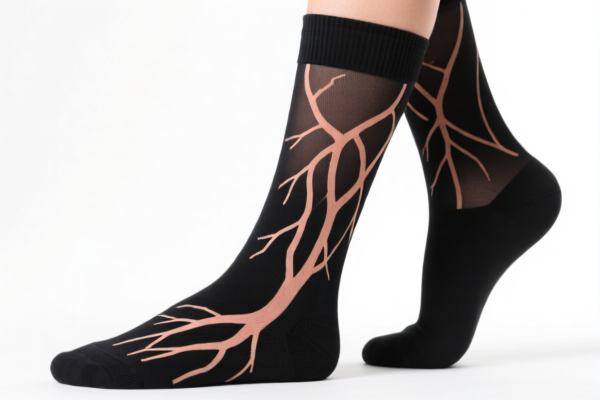
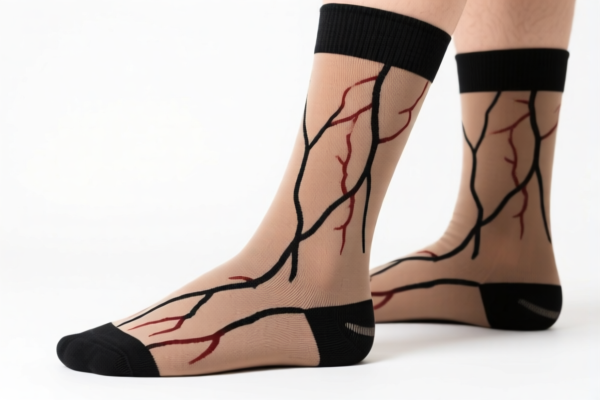
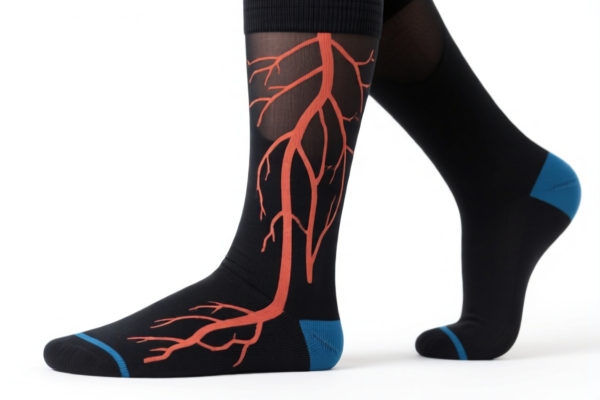
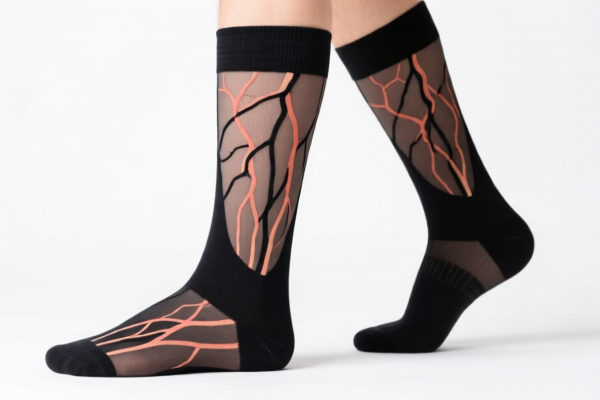
AI Analysis
🦵 Varicose Vein Gradient Compression Socks
🌐 HS Code Reference & Customs Clearance Guide | 2026 Latest Tariff Analysis | Professional通关 Strategy
📌 One, Product Definition & Classification: Do You Really Understand “Compression Socks”?
Varicose vein gradient compression socks are medical-grade elastic garments designed to apply graduated pressure to the legs, improving blood flow and preventing/treating venous disorders. In international trade, they fall into two distinct categories based on material composition and medical function:
1. Medical/Orthopedic Devices (Chapter 90): Socks explicitly marketed and designed as medical aids for treating varicose veins, classified under orthopedic appliances or compensatory devices.
2. Apparel/Textiles (Chapter 61): Socks classified by material (e.g., cotton, synthetic fibers) if not explicitly regulated as medical devices in certain jurisdictions, or where the primary characteristic is textile structure rather than medical function.
⚠️ Key Distinction Point:
- If the product is marketed as a medical device for treating varicose veins, with specific therapeutic pressure levels (e.g., 15-20 mmHg, 20-30 mmHg), it leans towards HS 9021 or HS 6115.10 depending on interpretation.
- If the product is primarily seen as elastic hosiery without strict medical device certification in the destination, it may fall under HS 6115.10.
- Crucial: The 2026 tariff data shows multiple possible codes, reflecting this ambiguity. Misclassification can lead to significant tax differences.
📦 Two, HS Code Classification Details (2026 Latest Tariff Authority Comparison)
| HS Code | Product Description | Application Scenario | Material/Function Conflict? |
|---|---|---|---|
9021.10.00.90 |
Other orthopedic or fracture appliances, including varicose vein socks classified as medical devices | Medical use, therapeutic gradient pressure, sold as healthcare products | ✅ No conflict; classified under medical appliances |
9021.90.81.00 |
Functional medical auxiliary devices, including compression socks for varicose veins, classified under orthopedic compensation devices | Medical-grade compression, treating body defects (venous insufficiency) | ✅ No conflict; functional medical device |
6115.10.05.00 |
Hosiery with gradient compression, matching varicose vein treatment use, no material conflict | Elastic socks for circulation improvement, textile-based | ✅ No material conflict; classified under hosiery |
6115.10.30.00 |
Cotton or other fiber-made compression socks for varicose veins | Textile-based compression socks, no specific medical device regulation | ✅ No conflict; classified under apparel |
🔍 Key Reminder:
-9021Codes: Apply when the product is clearly a medical device for treating varicose veins. These are classified under Chapter 90 (Medical/Orthopedic Instruments).
-6115.10Codes: Apply when the product is classified as hosiery/apparel, either due to material (e.g., cotton) or lack of strict medical device status in the destination.
- Tax Implication: The difference between9021and6115.10.30is 21% in total tax rate. Misclassification can cost you dearly!
💰 Three, 2026 Latest Tariff Rate Details (Including Surtaxes, Policy Surcharges)
✅ Applicable Country: United States (US)
✅ Origin: China (CN)
✅ Effective Time: From November 10, 2025 (including subsequent imports)
🎯 1. 9021.10.00.90 — Orthopedic Appliances (Medical Grade Compression Socks)
| Item | Content |
|---|---|
| Base Tariff | 0% (ad valorem) |
| USITC Surtax | 0% |
| Section 122 Tariff | +10% (Targeting Chinese medical/orthopedic products) |
| Total Rate | 10.0% |
| Tax Calculation | CIF Value × 10% |
| De Minimis Exemption | ❌ Not Applicable (Section 321 threshold does not apply to medical devices under certain interpretations) |
| Legal Basis Path | USITC:9021.10.00.90 → Section 122 Tariff |
📌 Explanation:
- Base Tariff: 0% under normal MFN rates for medical orthopedic devices.
- Section 122 Tariff: A specific surcharge applied to certain Chinese-origin medical and orthopedic products, adding 10%.
- Total: 10%. This is a moderate tax rate, but still significant compared to zero.
🎯 2. 9021.90.81.00 — Other Orthopedic/Appliance Components (Functional Medical Socks)
| Item | Content |
|---|---|
| Base Tariff | 0% |
| USITC Surtax | 0% |
| Section 122 Tariff | +10% |
| Total Rate | 10.0% |
| Tax Calculation | CIF Value × 10% |
| De Minimis Exemption | ❌ Not Applicable |
| Legal Basis Path | USITC:9021.90.81.00 → Section 122 Tariff |
📌 Note:
- Same as above; classified under other orthopedic appliances.
- Both9021codes carry a 10% total tariff due to Section 122.
🎯 3. 6115.10.05.00 — Elastic Hosiery (Compression Socks, Textile-Based)
| Item | Content |
|---|---|
| Base Tariff | 0% |
| USITC Surtax | 0% |
| Section 122 Tariff | +10% |
| Total Rate | 10.0% |
| Tax Calculation | CIF Value × 10% |
| De Minimis Exemption | ❌ Not Applicable |
| Legal Basis Path | USITC:6115.10.05.00 → Section 122 Tariff |
📌 Note:
- Classified under hosiery, but still subject to Section 122 due to origin.
- 10% total tariff.
🎯 4. 6115.10.30.00 — Cotton or Other Fiber Hosiery (Compression Socks)
| Item | Content |
|---|---|
| Base Tariff | 13.5% |
| USITC Surtax | 7.5% |
| Section 122 Tariff | +10% |
| Total Rate | 31.0% |
| Tax Calculation | CIF Value × 31% |
| De Minimis Exemption | ❌ Not Applicable |
| Legal Basis Path | USITC:6115.10.30.00 → Section 301 → Section 122 |
📌 Critical Warning:
- This code carries a much higher tax rate (31%) due to base tariffs + USITC surtax + Section 122.
- Do NOT misclassify medical-grade compression socks as simple cotton hosiery if they are intended for medical use.
- Reason: If customs determines the product is a medical device, they may reassess to9021codes (10%), but if declared as textile, you face 31%. However, misdeclaration can lead to penalties, delays, or seizure.
🛠️ Four, Customs Clearance Practical Advice (Battle-Tested Pitfall Avoidance Guide)
✅ 1. Required Documentation Checklist (All Mandatory)
| Document | Required | Explanation |
|---|---|---|
| ✅ Product Specification Sheet | ✔️ | Includes pressure levels (mmHg), size chart, material composition, intended use |
| ✅ Medical Device Certification (if applicable) | ✔️ | FDA clearance, CE Mark, or ISO 13485 to support 9021 classification |
| ✅ Material Composition Label | ✔️ | Clear indication of fiber content (e.g., 80% Nylon, 20% Spandex) |
| ✅ Commercial Invoice | ✔️ | Must clearly state "Gradient Compression Socks for Varicose Veins Treatment" |
| ✅ Packing List | ✔️ | Detailed weight, dimensions, and number of pairs |
| ✅ Country of Origin Certificate | ✔️ | For Section 122 applicability determination |
| ✅ Third-Party Test Report | ✔️ | Pressure gradient testing, material safety, FDA/CE compliance |
✅ 2. Declaration Tips (Key Mantra)
🔥 "Medical Use First, Material Second, Pressure Levels Key, Tax Rate Clear!"
| Scenario | Correct Declaration | Wrong Practice |
|---|---|---|
| Medical-grade compression socks | 9021.10.00.90 or 9021.90.81.00 |
Declare as 6115.10.30.00 → 31% tax |
| Fashion/Wellness compression socks | 6115.10.05.00 |
Declare as medical device → May face extra scrutiny |
| Cotton-based compression socks | 6115.10.30.00 |
Declare as 9021 → Contradiction with material |
| Mixed packaging (Medical + Fashion) | Split Declaration | Mix in one shipment → Custom scrutiny |
✅ 3. Special Case Handling
| Scenario | Handling Advice |
|---|---|
| OEM/Custom Medical Socks | Provide design specs + pressure certification to support 9021 classification |
| Socks for Athletic Recovery | Declare as 6115.10.05.00, not medical device |
| Socks for Travel/Economy Class | Declare as 6115.10.05.00, not medical device |
| Socks with FDA Clearance | Always declare under 9021 to justify medical use, but be prepared for Section 122 |
🌍 Five, Global Market Customs Clearance Comparison (2026 Latest)
| Country/Region | Recommended HS Code | Tariff | Certification | Remarks |
|---|---|---|---|---|
| 🇺🇸 United States | 9021.10.00.90 |
10% | FDA/CE | Section 122 applies |
| 🇪🇺 European Union | 9021.90.81.00 |
0% | CE MDR | No Section 122 |
| 🇨🇳 China | 9021.90.81.00 |
5% | NMPA | Low tax |
| 🇦🇺 Australia | 9021.90.81.00 |
5% | TGA | Low tax |
| 🇯🇵 Japan | 9021.90.81.00 |
0% | PMDA | No surtax |
📌 Conclusion:
- The US is the only major market imposing Section 122 surcharges on Chinese-origin compression socks.
- EU and other markets do not apply equivalent surtaxes, making them more attractive for distribution.
- Consider supply chain diversification (e.g., sourcing from Vietnam or Mexico) to avoid Section 122.
📌 Six, Common Mistakes & Pitfall Guide (Lessons Learned the Hard Way)
❌ Mistake 1: Declaring medical-grade compression socks as "Cotton Socks" (6115.10.30.00)
👉 Consequence: 31% tax instead of 10%, plus potential penalties for misdeclaration.
❌ Mistake 2: Not providing pressure level specifications
👉 Consequence: Customs cannot verify medical use → Delayed clearance or reassessment.
❌ Mistake 3: Mixing medical and fashion socks in one shipment without clear labeling
👉 Consequence: Custom scrutiny, possible seizure of entire shipment.
❌ Mistake 4: Ignoring Section 122 applicability
👉 Consequence: Underpayment of tariffs → Back taxes + interest.
✅ Correct Practice:
"Medical Gradient Compression Socks, 20-30 mmHg, Nylon/Spandex Blend, FDA-Cleared, Model XYZ, for Varicose Vein Treatment"
🎯 Seven, Conclusion: Professional Declaration, Time-Saving, Cost-Efficiency!
🎯 Remember the Mantra:
🔹 "Medical Use First, Material Second, Section 122 Hits 10%, Cotton Hits 31%, Split if Needed, Misdeclare is Painful!"
🔹 "HS Code Determines Tax, 21% Difference, One Step Wrong, Thousands Lost!"
📌 Pro Tip:
If your compression socks are originating from Vietnam, Mexico, Thailand, or Malaysia, you can avoid Section 122, reducing the total tax to 0%~13.5% depending on classification.
Recommend Applying for Advance Ruling to lock in the correct HS Code and tax rate before shipment.
📣 Take Action Now:
📞 Contact Professional Customs Broker + Provide Product Specs + Apply for Advance Ruling
🚀 Let Your Compression Socks, Clear Customs Smoothly, Export Efficiently, Double Profits!
✨ Professional Customs Clearance Starts with Precise Classification!
💼 Every Penny of Your Cost Deserves Exact Calculation!
Customer Reviews
About HS Code Classification
The Harmonized System (HS) is an internationally standardized nomenclature developed by the World Customs Organization (WCO) to classify traded products. Over 200 countries use the HS system as the basis for customs tariffs, trade statistics, and import/export regulations.
Each HS code follows a hierarchical structure:
- Chapter (2 digits) — Broad category of goods (e.g., Chapter 84: Machinery and Mechanical Appliances)
- Heading (4 digits) — More specific grouping within the chapter
- Subheading (6 digits) — Internationally standardized breakdown, used by all WCO member countries
- National subdivisions (8-10 digits) — Country-specific extensions for further classification, such as US HTSUS 10-digit codes
Correct HS code classification is essential for smooth customs clearance, accurate duty payment, and compliance with trade regulations. Misclassification can lead to customs delays, overpayment of duties, or penalties.
When importing from CN to US, the applicable tariff rates may include:
- Most-Favored-Nation (MFN) rate — The standard duty rate applied to WTO members
- General rate — Applied to countries without trade agreements
- Trade remedy duties — Additional tariffs such as Section 301 (anti-dumping), Section 232 (national security), or countervailing duties
The information provided on this page is for reference purposes only. For official classification, please consult with your local customs authority or a licensed customs broker.