Vegetable Fiber Storage Basket
CN → US| HS Code | Tariff Rate | Origin | Destination | Doc |
|---|---|---|---|---|
| 6305390000 | 25.9% | CN | US | Official Doc |
| 5608192090 | 40.0% | CN | US | Official Doc |
| 5608192010 | 40.0% | CN | US | Official Doc |
| 6305900000 | 23.7% | CN | US | Official Doc |
| 4202929100 | 52.6% | CN | US | Official Doc |
Product Images
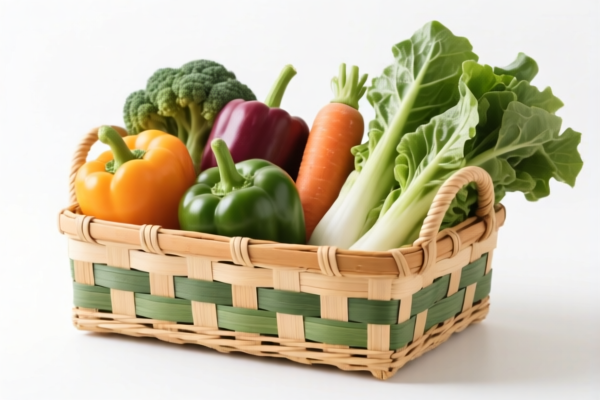
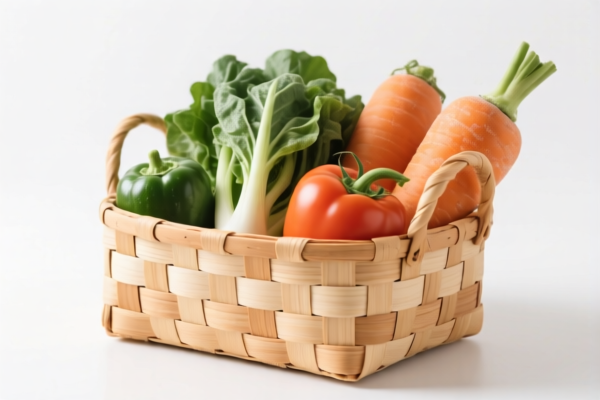
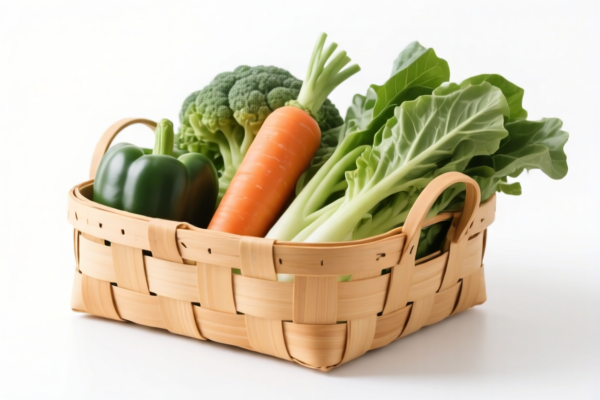
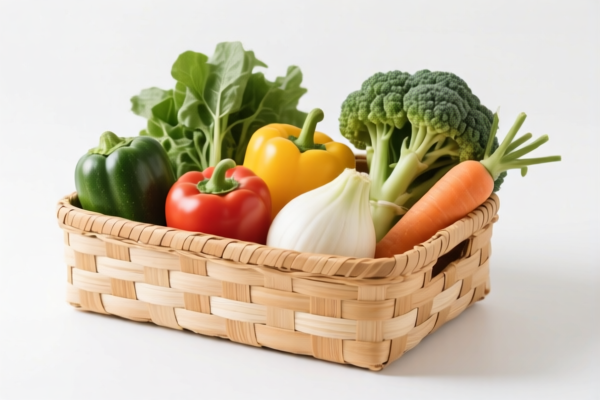
AI Analysis
🧺 Vegetable Fiber Storage Basket (Fiber Storage Bags)
🌐 HS Code Reference & Customs Clearance Guide | 2026 Latest Tariff Analysis | Professional Clearance Strategy
📌 I. Product Definition & Classification: Do You Really Understand "Fiber Storage Baskets"?
A Vegetable Fiber Storage Basket is a container used for organizing, storing, or transporting goods. In international trade, its classification depends heavily on material composition (natural vs. artificial fiber) and structural form (bag-like, woven net, or rigid container).
⚠️ Key Distinction Points:
- If made from natural vegetable fibers (e.g., sisal, jute, hemp) in a simple bag/net form → Often falls under Chapter 56 (Textile Articles) or Chapter 63 (Other Made-Up Textile Articles) depending on specific structure.
- If made from synthetic/Artificial Fibers (often loosely referred to as "fiber" in generic lists) → May fall under Chapter 42 (Articles of Leather/Travel Goods) if treated as a textile-covered container, or Chapter 63 if considered a general textile bag.
- Crucial Note: The term "Basket" can be ambiguous. Customs looks at the primary function (storage) and construction (woven, stitched, or knotted).
📦 II. HS Code Classification Details (2026 Latest Tariff Concordance)
Based on the provided data, here are the possible classifications for "Fiber Storage Bags/Baskets":
| HS Code | Product Description | Application Scenario | Material/Form Logic |
|---|---|---|---|
| 6305.39.00.00 | Fiber storage bag, material: fiber, form: bag-like, fits classification for bags made of artificial textile materials. | General storage bags made of synthetic/artificial fibers. | ✅ Artificial Textile Bag |
| 5608.19.20.90 | Fiber storage bag, fiber corresponds to artificial/textile material, storage bag belongs to knotted net products in other finished forms. | Bags classified under knotted nets or similar mesh structures. | ✅ Knotted Net/Mesh Form |
| 5608.19.20.10 | Fiber storage bag, fiber corresponds to artificial textile material, storage bag belongs to net/bag category, fits general fallback logic. | General net/bag articles not specified elsewhere. | ✅ Net/Bag Category |
| 6305.90.00.00 | Fiber storage bag, form: bag, material: textile material, use: storage, fits classification for bags made of textile materials. | General textile storage bags (natural or mixed). | ✅ General Textile Bag |
| 4202.92.91.00 | Fiber storage bag, form: container, material: fiber, inferred as textile material made of artificial fibers, fits requirement for exterior surface made of textile materials. | Rigid or semi-rigid containers covered in textile fibers (e.g., travel bags, cosmetic cases). | ✅ Textile-Surfaced Container |
🔍 Key Reminder:
- 4202.92.91.00 carries the highest tax burden due to its classification as a "container" with textile exterior, often used for higher-end or structured storage items.
- 6305.39.00.00 and 6305.90.00.00 are more favorable for simple, flexible bags made of textile fibers.
- 5608 codes apply if the storage bag has a distinct net/mesh construction.
💰 III. 2026 Latest Tariff Rate Details (Including Surcharges, Policy Add-ons)
✅ Applicable Country: United States (US)
✅ Origin: China (CN)
✅ Effective Date: 2025/2026 Import Period
🎯 1. 6305.39.00.00 —— Fiber Storage Bag (Artificial Textile)
| Item | Content |
|---|---|
| Base Duty Rate | 8.4% (ad valorem) |
| Section 301 Surcharge | +7.5% |
| Section 122 Surcharge | +10.0% |
| Total Rate | 25.9% |
| Tax Calculation | CIF Value × 25.9% |
| De Minimis Eligibility | ❌ No (Subject to full taxation) |
| Legal Basis Path | Base Tariff → Section 301 → Section 122 → HS:6305.39.00.00 |
📌 Explanation:
- This is a relatively moderate tariff for textile storage bags.
- The Section 122 tariff (often related to national security or specific trade remedies) adds a significant 10%.
- Total 25.9% is manageable but must be factored into pricing.
🎯 2. 5608.19.20.90 & 5608.19.20.10 —— Fiber Storage Bag (Knotted Net/Mesh)
| Item | Content |
|---|---|
| Base Duty Rate | 5.0% |
| Section 301 Surcharge | +25.0% |
| Section 122 Surcharge | +10.0% |
| Total Rate | 40.0% |
| Tax Calculation | CIF Value × 40.0% |
| De Minimis Eligibility | ❌ No |
| Legal Basis Path | Base Tariff → Section 301 → Section 122 → HS:5608.19.20.90/10 |
📌 Note:
- Classification as a "net" or "mesh" product triggers the 25% Section 301 tariff, which is significantly higher than the 7.5% for general textile bags.
- Total 40% is high. Ensure the product is not structurally a simple woven bag but distinctly a knotted net.
🎯 3. 6305.90.00.00 —— General Textile Storage Bag
| Item | Content |
|---|---|
| Base Duty Rate | 6.2% |
| Section 301 Surcharge | +7.5% |
| Section 122 Surcharge | +10.0% |
| Total Rate | 23.7% |
| Tax Calculation | CIF Value × 23.7% |
| De Minimis Eligibility | ❌ No |
| Legal Basis Path | Base Tariff → Section 301 → Section 122 → HS:6305.90.00.00 |
📌 Advantage:
- This code offers the lowest total tariff (23.7%) among the options.
- Use this if the bag is made of general textile materials (natural or mixed) and doesn't fit the specific "artificial fiber" or "net" subcategories.
🎯 4. 4202.92.91.00 —— Fiber Storage Bag (Textile-Surfaced Container)
| Item | Content |
|---|---|
| Base Duty Rate | 17.6% |
| Section 301 Surcharge | +25.0% |
| Section 122 Surcharge | +10.0% |
| Total Rate | 52.6% |
| Tax Calculation | CIF Value × 52.6% |
| De Minimis Eligibility | ❌ No |
| Legal Basis Path | Base Tariff → Section 301 → Section 122 → HS:4202.92.91.00 |
📌 Warning:
- This is the highest tax bracket (52.6%).
- Classification as a "container" (Chapter 42) implies a more rigid or structured form (e.g., a boxy basket with handles).
- Avoid this classification unless the product is undeniably a structured container and not a simple flexible bag.
🛠️ IV. Customs Clearance Practical Advice (实战避坑指南)
✅ 1. Required Documents Checklist
| Document | Mandatory | Description |
|---|---|---|
| ✅ Product Specification Sheet | ✔️ | Must detail: Material (e.g., "100% Sisal," "Polypropylene Fiber"), Dimensions, Weight. |
| ✅ Product Photos | ✔️ | Clear images showing: Exterior, Interior, Handles/Structure, Label/Tag. |
| ✅ Commercial Invoice | ✔️ | Must explicitly state: "Fiber Storage Basket/Bag," HS Code, Value. |
| ✅ Packing List | ✔️ | Itemized list per carton. |
| ✅ Material Declaration | ✔️ | Crucial for distinguishing between Chapter 56 (Net) and Chapter 63 (Bag) or Chapter 42 (Container). |
✅ 2. Declaration Tips (Key Mantra)
🔥 "Material Defines Chapter, Structure Defines Rate!"
| Scenario | Correct Declaration | Incorrect Practice |
|---|---|---|
| Simple Flexible Bag | 6305.90.00.00 or 6305.39.00.00 |
Declaring as "Container" → 52.6% |
| Knotted Mesh Net | 5608.19.20.90 |
Declaring as "Bag" → Lower tax but potential audit |
| Structured Basket with Handles | 4202.92.91.00 |
Declaring as "Textile Bag" → Misclassification risk |
| Natural Fiber (Sisal/Jute) | 6305.90.00.00 (if general bag) |
Ignoring material origin → Delay |
✅ 3. Special Situation Handling
| Situation | Handling Advice |
|---|---|
| Mixed Materials | If 50% vegetable fiber, 50% synthetic, declare as Textile Bag (6305) if textile is principal. |
| With Linings/Pockets | If the bag has complex internal structures (like a cosmetic bag), 4202 might be argued. Justify with simplicity. |
| Origin Marking | Ensure "Made in China" is permanently marked on the product or packaging. |
| Section 122 Impact | All listed codes are subject to the 10% Section 122 tariff. No exemption applies. |
🌍 V. Global Market Clearance Comparison (2026 Latest)
| Country/Region | Recommended HS Code | Total Tariff (China Origin) | Certification Requirements | Notes |
|---|---|---|---|---|
| 🇺🇸 USA | 6305.90.00.00 |
23.7% | None specific | Best rate for flexible bags. |
| 🇺🇸 USA | 4202.92.91.00 |
52.6% | None specific | Avoid unless structured. |
| 🇪🇺 EU | 6305.90.00.00 |
~5-8% | REACH (if chemicals used) | No Section 301/122. |
| 🇨🇳 China | 6305.90.00.00 |
~5-10% | None | Standard domestic tariff. |
📌 Conclusion:
- USA Market: High tariffs apply. 6305.90.00.00 (23.7%) is the optimal choice for flexible fiber bags.
- EU/Other Markets: Significantly lower tariffs, no Section 301/122 surcharges.
📌 VI. Common Errors & Pitfalls (Blood Lessons)
❌ Error 1: Declaring a structured basket as a simple "bag" to save tax
👉 Consequence: Customs audit → Re-classification to 4202 → 52.6% Tax + Penalties!
❌ Error 2: Misidentifying "Artificial Fiber" as "Natural Vegetable Fiber"
👉 Consequence: Incorrect HS code → Delayed clearance, potential duty underpayment.
❌ Error 3: Ignoring Section 122 Tariff
👉 Consequence: Budget miscalculation → 10% unexpected cost on every shipment.
❌ Error 4: Vague Description ("Basket")
👉 Consequence: Customs officer discretion → Risk of highest classification.
✅ Correct Action:
"Storage Basket, Woven Sisal Fiber, No Liner, Flexible, Model XYZ, Origin: China"
🎯 VII. Conclusion: Precise Classification Saves Money!
🎯 Remember the Mantra:
🔹 "Flexible Bag = 6305 (23-26%), Net = 5608 (40%), Container = 4202 (52%)!"
🔹 "Material & Structure Define Code, Section 301 & 122 Define Cost!"
📌 Pro Tip:
If your fiber basket is made from 100% Natural Vegetable Fibers (e.g., Jute, Coir) and not synthetic, verify with customs if it can be classified under Chapter 46 (Basketware) which may have lower Section 301 rates. However, based on the provided data, all options assume "fiber" includes artificial/textile materials subject to current tariffs.
📣 Immediate Action:
📞 Contact your customs broker with photos and material specs.
📄 Request an Advance Ruling for high-volume shipments.
🚀 Optimize for 6305.90.00.00 (23.7%) if possible!
✨ Professional Clearance Starts with Accurate Classification!
💼 Every percentage point counts in global trade!
Customer Reviews
About HS Code Classification
The Harmonized System (HS) is an internationally standardized nomenclature developed by the World Customs Organization (WCO) to classify traded products. Over 200 countries use the HS system as the basis for customs tariffs, trade statistics, and import/export regulations.
Each HS code follows a hierarchical structure:
- Chapter (2 digits) — Broad category of goods (e.g., Chapter 84: Machinery and Mechanical Appliances)
- Heading (4 digits) — More specific grouping within the chapter
- Subheading (6 digits) — Internationally standardized breakdown, used by all WCO member countries
- National subdivisions (8-10 digits) — Country-specific extensions for further classification, such as US HTSUS 10-digit codes
Correct HS code classification is essential for smooth customs clearance, accurate duty payment, and compliance with trade regulations. Misclassification can lead to customs delays, overpayment of duties, or penalties.
When importing from CN to US, the applicable tariff rates may include:
- Most-Favored-Nation (MFN) rate — The standard duty rate applied to WTO members
- General rate — Applied to countries without trade agreements
- Trade remedy duties — Additional tariffs such as Section 301 (anti-dumping), Section 232 (national security), or countervailing duties
The information provided on this page is for reference purposes only. For official classification, please consult with your local customs authority or a licensed customs broker.