Vegetable Fiber Woven Accessory Bag
CN → US| HS Code | Tariff Rate | Origin | Destination | Doc |
|---|---|---|---|---|
| 4602192920 | 40.3% | CN | US | Official Doc |
| 4602192940 | 40.3% | CN | US | Official Doc |
| 6305100000 | 17.5% | CN | US | Official Doc |
| 6305900000 | 23.7% | CN | US | Official Doc |
| 4202124000 | 41.3% | CN | US | Official Doc |
| 4202921500 | 41.3% | CN | US | Official Doc |
Product Images
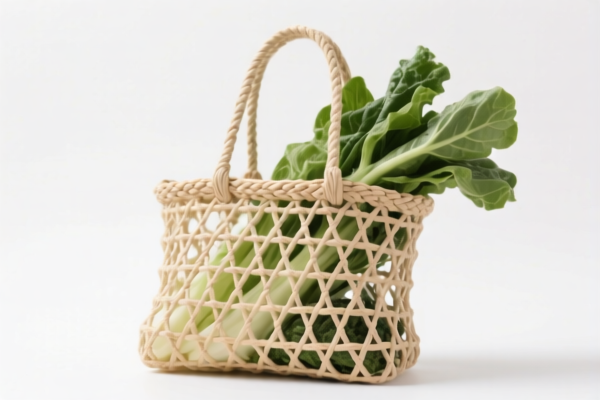

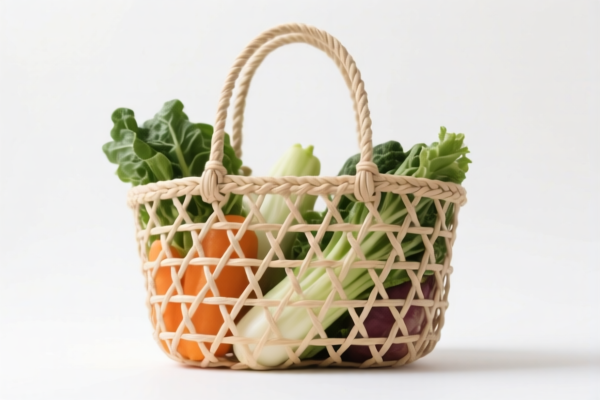

AI Analysis
👜 Vegetable Fiber Woven Accessory Bag: HS Code Classification & Customs Clearance Guide (2026)
🌐 HS Code Reference & Customs Clearance Guide | 2026 Latest Tariff Analysis | Professional Entry Strategy
📌 I. Product Definition & Classification: What is a "Vegetable Fiber Woven Accessory Bag"?
"Vegetable Fiber Woven Accessory Bag" is a broad term in international trade that primarily refers to packaging sacks, shopping bags, or storage containers made from natural vegetable fibers (such as Jute, Sisal, or Coir). The correct HS Code classification depends strictly on usage (packing vs. fashion/luggage) and material composition.
⚠️ Key Distinction Point:
- If it is a sack/bag for packing goods (e.g., jute sacks for coffee, flour, or general cargo) → It falls under Chapter 63.
- If it is a fashion accessory (e.g., woven handbags, shopping bags, tote bags) → It falls under Chapter 42 (if textile) or Chapter 46 (if basketwork/plaiting materials).
📦 II. HS Code Classification Details (Based on Provided DATA)
Below are the specific HS Codes and Tax Rates derived from your input data. Note that China-origin goods face different tax treatments for Jute vs. Other Textiles.
1. 📦 Jute/Textile Bast Fiber Packing Sacks (Chapter 63)
| HS Code | Product Description | Usage Scenario | Material |
|---|---|---|---|
6305.10.00.00 |
Sacks and bags, of a kind used for the packing of goods: Of jute or of other textile bast fibers of heading 5303 | Industrial packing, agricultural goods packaging, jute sacks | Jute / Bast Fibers |
6305.90.00.00 |
Sacks and bags, of a kind used for the packing of goods: Of other textile materials | Packing sacks made of cotton, polypropylene, or other textiles (non-jute) | Other Textiles |
2. 👜 Woven/Fashion Bags (Chapters 42 & 46)
| HS Code | Product Description | Usage Scenario | Material |
|---|---|---|---|
4202.12.40.00 |
Trunks, suitcases, briefcases, etc. (of leather, plastics, textile): With outer surface of textile materials: Of vegetable fibers and not of pile or tufted construction: Of cotton | Fashion handbags, school satchels, briefcases made of cotton or vegetable fibers | Cotton/Vegetable Fiber |
4202.92.15.00 |
Trunks, suitcases, etc. (of leather, plastics, textile): Other: With outer surface of sheeting of plastics or of textile materials: Travel, sports and similar bags: ... Of vegetable fibers ... Of cotton | Travel bags, sports bags, knapsacks made of cotton/vegetable fibers | Cotton/Vegetable Fiber |
4602.19.29.20 |
Basketwork, wickerwork...: Of vegetable materials: Other: Luggage, handbags...: Other Handbags | Handbags made directly from plaiting materials (wicker, reed, straw) | Wicker/Plaiting |
4602.19.29.40 |
Basketwork, wickerwork...: Of vegetable materials: Other: Luggage, handbags...: Other Other | Other luggage/bags made from wicker/plaiting materials | Wicker/Plaiting |
💰 III. 2026 Latest Tariff Rate Details (Crucial for Costing)
✅ Applicable Country: United States (US)
✅ Origin: China (CN) (Note: Rates below reflect the specific "Additional Tax" mentioned in your DATA for Jute)
✅ Effective Date: Current as per 2026 tariff schedules
🎯 1. 6305.10.00.00 —— Jute/Textile Bast Fiber Packing Sacks
(This is the most common classification for "Vegetable Fiber Woven Accessory Bag" if used for packing)
| Item | Content |
|---|---|
| Base Tariff | 0.0% (ad valorem) |
| Additional Tariff (Section 301/Retaliatory) | 7.5% |
| Total Tax Rate | 7.5% |
| Tax Calculation | CIF Value × 7.5% |
| De Minimis Exemption | ❌ Not Applicable (Generally, sacks of this kind are commercial goods) |
| Legal Basis Path | USITC:6305.10.00.00 → Section 301 Footnote |
📌 Interpretation:
- Although the base tariff is 0%, there is a specific 7.5% additional tax applied to jute and textile bast fiber sacks.
- This is significantly lower than many other textile categories but cannot be ignored.
- Warning: Do not confuse with "General Textile Sacks" (6305.90), which have 0% total tax in your data.
🎯 2. 6305.90.00.00 —— Other Textile Material Packing Sacks
| Item | Content |
|---|---|
| Base Tariff | 0.0% |
| Additional Tariff | 0.0% |
| Total Tax Rate | 0.0% |
| Tax Calculation | CIF Value × 0% |
📌 Interpretation:
- Sacks made of materials other than jute/bast fibers (e.g., cotton, PP) enjoy 0% tariff.
- Strategic Advice: If possible, ensure the bag is not made of "heading 5303" fibers (Jute) if you want to avoid the 7.5% tax.
🎯 3. Fashion/Travel Bags (4202 & 4602 Series)
| Item | Content |
|---|---|
| Base Tariff | 0.0% |
| Additional Tariff | 0.0% |
| Total Tax Rate | 0.0% |
| Tax Calculation | CIF Value × 0% |
📌 Interpretation:
- Handbags, travel bags, and basketwork items listed in your data have 0% total tax.
- Crucial: To qualify for 0%, the bag must be declared as a finished fashion item (e.g., Handbag, Travel Bag) and not as a "packing sack."
🛠️ IV. Customs Clearance Practical Advice (Real-World Pitfall Avoidance)
✅ 1. Preparation Checklist (Non-negotiable)
| Document | Must Provide | Explanation |
|---|---|---|
| ✅ Product Photos | ✔️ | Clear images showing the bag's structure, lining, and material texture. |
| ✅ Material Composition Certificate | ✔️ | Must specify % of Jute vs. Cotton vs. Synthetic. Crucial for distinguishing 6305.10 from 6305.90. |
| ✅ Intended Use Declaration | ✔️ | Is it for "Packing Goods" (Industrial) or "Fashion/Shopping" (Consumer)? This changes the Chapter (63 vs 42/46). |
| ✅ Commercial Invoice | ✔️ | Must explicitly state: "Jute Sacks for Packing" or "Woven Handbags." |
| ✅ Packing List | ✔️ | Weight and dimensions of the bags. |
✅ 2. Declaration Tips (Key Mantras)
🔥 "Material Defines Tax, Usage Defines Chapter!"
| Scenario | Correct Declaration | Wrong Declaration | Consequence |
|---|---|---|---|
| Jute Sack for Coffee | 6305.10.00.00 (Jute Sacks) |
6305.90.00.00 (Other Sacks) |
Under-declaration Risk: 7.5% tax unpaid → Penalty + Back Tax |
| Cotton Tote for Shopping | 4202.12.40.00 (Handbag) |
6305.90.00.00 (Packing Sack) |
Misclassification: May be rejected if used for retail display |
| Wicker Basket Bag | 4602.19.29.20 (Handbag) |
4202.12.40.00 (Textile Bag) |
Low Risk: Both 0%, but technical error in duty drawback claims |
| Generic "Vegetable Fiber Bag" | Never Use | Vague description | Customs Hold: Requires physical inspection, delays clearance by days |
✅ 3. Special Case Handling
| Situation | Handling Advice |
|---|---|
| Mixed Material Bag | If >50% Jute → Classify as Jute (6305.10). If <50% but Jute is key component → May still be classified as Jute based on essential character. |
| Reusability | If the bag is durable and reusable (e.g., heavy-duty cotton tote), consider Chapter 42 (Fashion/Travel) to potentially avoid packing-specific regulations, though tax is 0% anyway in your data. |
| Origin Marking | Ensure "Made in China" is marked on each bag. For 6305.10, this is critical for Section 301 enforcement. |
🌍 V. Global Market Comparison (2026)
| Country/Region | Recommended HS Code | Tariff (China Origin) | Certification Required | Remarks |
|---|---|---|---|---|
| 🇺🇸 USA | 6305.10.00.00 |
7.5% | None specific | High compliance required for material accuracy |
| 🇨🇳 China | 6305.10.00.00 |
0% | None | Standard export |
| 🇪🇺 EU | 6305.10.00 |
Variable | CE (if applicable) | EUDR (Deforestation Regulation) may apply to Jute |
| 🇬🇧 UK | 6305.10.00 |
Variable | UKCA | Post-Brexit rules apply |
📌 Conclusion:
- The US market is the most critical for tariff cost awareness due to the 7.5% additional tax on Jute sacks.
- Fashion Bags (4202/4602) remain tariff-free in this dataset, offering a cost advantage if the product design allows.
📌 VI. Common Errors & Pitfalls (Lessons Learned)
❌ Error 1: Declaring Jute Sacks as "Other Textile Sacks" (6305.90)
👉 Consequence: Avoiding 7.5% tax → Customs Audit, Penalties, and Back Taxes.
❌ Error 2: Declaring Fashion Handbags as "Packing Sacks" (6305.10)
👉 Consequence: Unnecessary 7.5% tax → Lost Profit Margin.
❌ Error 3: Vague Description "Vegetable Fiber Bag"
👉 Consequence: Customs cannot determine if it's Jute (7.5%) or Other (0%) → Hold for Inspection.
✅ Correct Practice:
"Jute Sack, 50kg, for Packing Coffee Beans, HS 6305.10.00.00"
OR
"Woven Cotton Handbag, Summer Style, HS 4202.12.40.00"
🎯 VII. Conclusion: Professional Declaration Saves Money
🎯 Remember the Mantra:
🔹 "Jute Sacks = 7.5% (USA), Other Sacks = 0%, Fashion Bags = 0%."
🔹 "Be Specific: 'Jute' vs. 'Cotton' vs. 'Wicker' matters!"
📌 Pro Tip:
If your bag is 100% Cotton and used for shopping, classify as 4202.12.40.00 (Handbag) to ensure it is viewed as a fashion item rather than industrial packing, securing the 0% tax rate and avoiding any potential scrutiny on "packing goods" regulations.
📣 Immediate Action:
📞 Verify material composition (Jute vs. Cotton).
📄 Choose the correct HS Code (6305.10for Jute Packing,4202for Fashion).
🚀 Clear Customs Smoothly, Minimize Tariffs, Maximize Profit!
✨ Professional Clearance, Starting from Accurate Classification!
💼 Every Percentage Point of Tax Counts!
Customer Reviews
About HS Code Classification
The Harmonized System (HS) is an internationally standardized nomenclature developed by the World Customs Organization (WCO) to classify traded products. Over 200 countries use the HS system as the basis for customs tariffs, trade statistics, and import/export regulations.
Each HS code follows a hierarchical structure:
- Chapter (2 digits) — Broad category of goods (e.g., Chapter 84: Machinery and Mechanical Appliances)
- Heading (4 digits) — More specific grouping within the chapter
- Subheading (6 digits) — Internationally standardized breakdown, used by all WCO member countries
- National subdivisions (8-10 digits) — Country-specific extensions for further classification, such as US HTSUS 10-digit codes
Correct HS code classification is essential for smooth customs clearance, accurate duty payment, and compliance with trade regulations. Misclassification can lead to customs delays, overpayment of duties, or penalties.
When importing from CN to US, the applicable tariff rates may include:
- Most-Favored-Nation (MFN) rate — The standard duty rate applied to WTO members
- General rate — Applied to countries without trade agreements
- Trade remedy duties — Additional tariffs such as Section 301 (anti-dumping), Section 232 (national security), or countervailing duties
The information provided on this page is for reference purposes only. For official classification, please consult with your local customs authority or a licensed customs broker.