Vegetable Fiber Woven Pet Basket
CN → US| HS Code | Tariff Rate | Origin | Destination | Doc |
|---|---|---|---|---|
| 4602191800 | 39.5% | CN | US | Official Doc |
| 4602110900 | 45.0% | CN | US | Official Doc |
| 4202921500 | 41.3% | CN | US | Official Doc |
| 4202922000 | 40.7% | CN | US | Official Doc |
| 4601999000 | 38.3% | CN | US | Official Doc |
| 4601944000 | 35.0% | CN | US | Official Doc |
Product Images
AI Analysis
🧺 Vegetable Fiber Woven Pet Basket
🌐 HS Code Reference & Customs Clearance Guide | 2026 Latest Tariff Analysis | Professional Clearance Strategy
📌 I. Product Definition & Classification: What Exactly Is a "Vegetable Fiber Woven Pet Basket"?
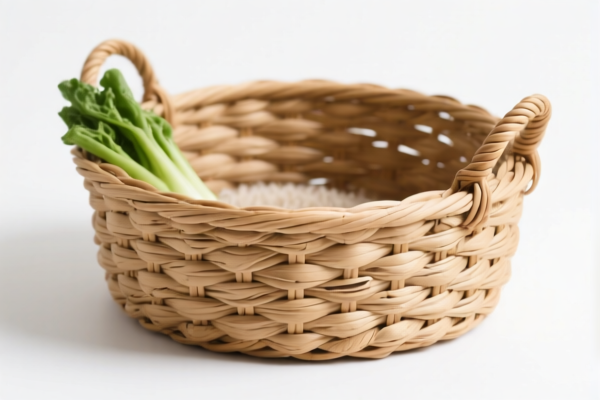
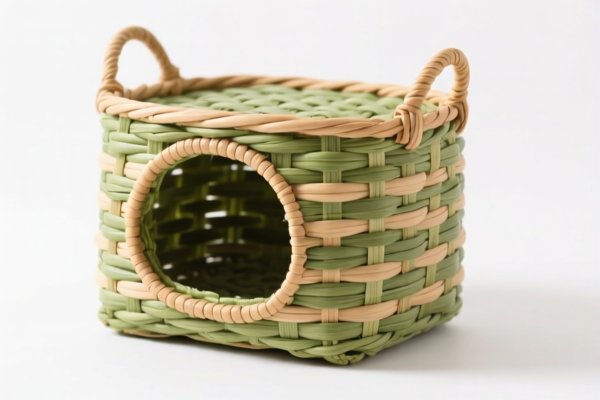
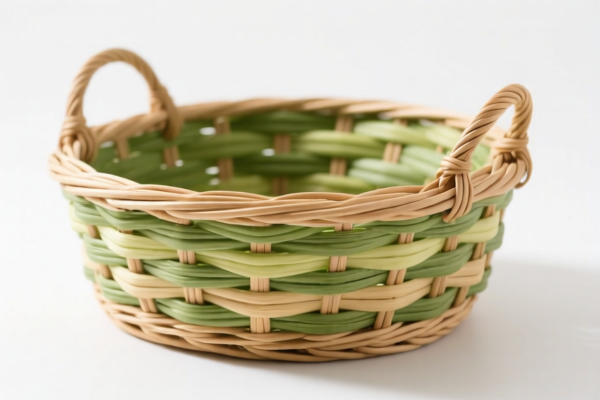
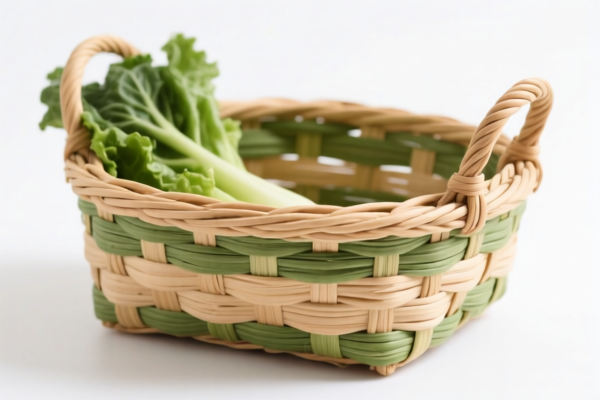
A "Vegetable Fiber Woven Pet Basket" is a container designed for housing or transporting pets, constructed primarily from natural plaiting materials (such as bamboo, rattan, willow, or other plant fibers). In international trade, the classification depends heavily on the construction method and the specific material composition.
The key distinction lies in whether the item is: 1. Finished Article of Basketry: Made directly to shape from plaiting materials (Heading 46.02). 2. Plaited Material/Sheet: Sold as mats, screens, or unfinished strips (Heading 46.01). 3. General Container: If not primarily "basketry" but more like a general textile or plastic container, it might fall under Heading 42. However, for woven vegetable fiber items, Heading 46 is the primary jurisdiction.
⚠️ Critical Distinction:
- If it is a finished basket made directly from plaited strips (bamboo, rattan, etc.) → Heading 4602.
- If it is unfinished plaiting or sheets (mats/screens) → Heading 4601.
- Note: Items in Heading 46 are considered "Plaiting Materials and Other Articles of Plaiting Materials." They are not generally classified as "bags" under Heading 4202 unless they meet specific textile/plastic criteria, but woven natural fibers usually stay in Chapter 46.
📦 II. HS Code Classification Details (2026 Latest Tariff Authority)
Based on the provided , here are the relevant HS Codes for vegetable fiber woven pet baskets, categorized by material and structure.
| HS Code | Product Description | Applicable Scenario | Material Type |
|---|---|---|---|
4602.11.09.00 |
Basketwork, wickerwork... Of bamboo: Other baskets and bags, whether or not lined: Other | Bamboo pet baskets/crates; Woven bamboo pet carriers; Bamboo-lined pet beds | 🎋 Bamboo |
4602.19.18.00 |
Basketwork, wickerwork... Of vegetable materials: Other baskets and bags, whether or not lined: Other: Other | Pet baskets made from non-bamboo vegetable fibers (e.g., rattan, willow, reed, seagrass); General wicker pet crates | 🌿 Other Veg. Fiber |
4601.94.40.00 |
Plaats and similar products... Of other vegetable materials: Other: Other | Unfinished plaited mats, screens, or sheet-like structures made of other vegetable fibers (NOT finished baskets) | 🌿 Other Veg. Fiber (Unfinished) |
4601.99.90.00 |
Plaats and similar products... Other: Other: Other | Unfinished plaiting materials of unspecified or mixed vegetable origin (generic plaiting strips/sheets) | 🌿 Generic Plaiting |
🔍 Key Clarification:
- Finished Pet Baskets should generally fall under 4602 (Basketwork articles).
- 4601 is for plaits, mats, and sheet forms. If your pet basket is a finished, 3D container, 4601 is likely incorrect.
- Between4602.11.09.00and4602.19.18.00:
- Use4602.11.09.00if the primary structural material is Bamboo.
- Use4602.19.18.00if the material is Rattan, Willow, Reed, Seagrass, or other non-bamboo vegetable fibers.
💰 III. 2026 Latest Tariff Rate Breakdown (Including Add-on Taxes)
✅ Applicable Country: United States (US)
✅ Origin: China (CN) (Assumed based on typical high-tax scenarios in reference data; verify origin)
✅ Effective Time: Current tariff structure (Subject to USITC/IEEPA rules)
🎯 1. 4602.11.09.00 —— Bamboo Pet Baskets
| Item | Content |
|---|---|
| Base Tariff | 10.0% (Ad Valorem) |
| Add-on Tariff (Section 301) | +25.0% |
| Total Tax Rate | 35.0% |
| Tax Calculation | CIF Value × 35% |
| De Minimis Eligibility | ❌ No (High duty rate typically excludes low-value exemptions) |
| Legal Basis Path | HTSUS:4602.11.09.00 → USITC Footnote 4 (Section 301) |
📌 Explanation:
- Bamboo products from China are subject to the standard 10% MFN rate.
- Crucially, they are listed under Section 301 lists, incurring an additional 25% tariff.
- This results in a 35% total landed duty cost, which is significant for low-margin pet goods.
🎯 2. 4602.19.18.00 —— Other Vegetable Fiber Pet Baskets (Rattan, Willows, etc.)
| Item | Content |
|---|---|
| Base Tariff | 0.0% (Ad Valorem) |
| Add-on Tariff (Section 301) | 0.0% |
| Total Tax Rate | 0.0% |
| Tax Calculation | CIF Value × 0% |
| De Minimis Eligibility | ✅ Yes (Potentially, depending on other regulations) |
| Legal Basis Path | HTSUS:4602.19.18.00 |
📌 Explanation:
- Non-bamboo vegetable fiber baskets (e.g., rattan, willow) often enjoy 0% base duty.
- They are NOT subject to the 25% Section 301 add-on in this specific code.
- This is a major cost-saving opportunity compared to bamboo!
⚠️ Important Note on 4601 Codes (Unfinished Plaiting)
If mistakenly classified under 4601.94.40.00 or 4601.99.90.00 (which are for mats/sheets, not baskets):
- 4601.94.40.00: 25.0% Total (0% Base + 25% Add-on)
- 4601.99.90.00: 28.3% Total (3.3% Base + 25% Add-on)
🚫 Risk: Misclassifying a finished basket as an "unfinished mat" (4601) may lead to customs scrutiny, penalties, or reclassification to 4602, which could increase or decrease duty depending on the material (Bamboo vs. Other).
🛠️ IV. Customs Clearance Practical Advice (Real-World Pitfall Guide)
✅ 1. Preparation Checklist (Do Not Skip)
| Document | Required? | Description |
|---|---|---|
| ✅ Product Photos | ✔️ | Must show the 3D structure to prove it is a "basket" (4602) and not a "mat" (4601). |
| ✅ Material Declaration | ✔️ | Explicitly state: "Made of Rattan/Willow/Reed" (to qualify for 0% tax) OR "Made of Bamboo" (for 35% tax). |
| ✅ Construction Diagram | ✔️ | Show how the plaiting is assembled into a basket shape. |
| ✅ Commercial Invoice | ✔️ | Description: "Woven Pet Bed/Basket, Vegetable Fiber, Finished Article." |
| ✅ Certificate of Origin | ✔️ | To prove origin (China vs. Vietnam, etc.). Note: If from Vietnam, different rules may apply. |
✅ 2. Declaration Strategy (Key Mnemonic)
🔥 "Material Dictates Rate: Bamboo 35, Other Veg 0!"
| Scenario | Correct HS Code | Duty Rate | Why? |
|---|---|---|---|
| Pet Basket made of Bamboo | 4602.11.09.00 |
35% | Bamboo is heavily taxed under Sec 301. |
| Pet Basket made of Rattan/Willow/Reed | 4602.19.18.00 |
0% | Non-bamboo veg. fibers are duty-free + no add-on. |
| Pet Basket made of Plastic/Rattan Mix | Check 4202/39 | Varies | If >50% plastic, may shift to plastic chapter. |
| Unwoven Plaiting Strips | 4601.99.90.00 |
28.3% | Not a finished article. |
📌 Critical Tip:
- If you can substitute bamboo with rattan, willow, or seagrass, you can save 35% in tariffs.
- Ensure the "pet basket" is clearly a finished container with sides and bottom, not just a flat woven mat.
✅ 3. Special Cases & Handling
| Situation | Recommendation |
|---|---|
| Lined Basket | If lined with fabric, it is still 4602 if the exterior is primarily vegetable fiber. Add "Lined with Cotton" to description. |
| Mixed Materials | If frame is bamboo but lining is plastic, and plastic is >50% by weight/value, it may shift to 4202 (Plastic/Textile bags). Check 4202 rates: 4202.92.15.00 (0%) or 4202.92.20.00 (0%). This could also be 0% if structured as a "bag" with plastic exterior. |
| OEM Custom Design | Provide design files to prove it is a unique "basket" and not a standard "mat." |
🌍 V. Global Market Comparison (2026)
| Country/Region | Recommended HS Code | Duty Rate (China Origin) | Key Requirements |
|---|---|---|---|
| 🇺🇸 USA | 4602.19.18.00 (Non-Bamboo) |
0% | Prove non-bamboo material. |
| 🇺🇸 USA | 4602.11.09.00 (Bamboo) |
35% | High cost. Consider shifting material. |
| 🇪🇺 EU | 4602.11.00 / 4602.19 |
0% - 4.5% | CE marking may not be needed for pet goods, but safety standards apply. |
| 🇨🇳 China (Import) | 4602 |
Variable | Depends on specific Chinese tariff schedule. |
📌 Conclusion for US Market:
- Bamboo pet baskets are expensive to import (35% duty).
- Rattan/Willow/Seagrass baskets are duty-free (0% duty).
- Strategy: If possible, redesign pet baskets using non-bamboo vegetable fibers to save 35% in duties.
📌 VI. Common Mistakes & Pitfalls (Lessons Learned)
❌ Mistake 1: Calling a "Rattan Basket" a "Bamboo Basket"
👉 Result: Incorrect HS Code → Potential audit → Delayed clearance.
👉 Fix: Accurately identify the plant species. Rattan ≠ Bamboo.
❌ Mistake 2: Classifying a finished basket as "Plaiting Mat" (4601)
👉 Result: Customs may reject it as "not a mat" and reassess.
👉 Fix: Provide 3D photos showing it is a container.
❌ Mistake 3: Ignoring the "Lining" Material
👉 Result: If the lining is plastic and dominant, it might fall under 4202 (Textile/Plastic bags).
👉 Check: 4202.92.15.00 (0% duty) if it qualifies as a "travel bag" with textile/plastic exterior. This is a complex area—consult a broker if plastic content is high.
✅ Correct Declaration Example:
"Woven Pet Bed, Made of Natural Rattan Fibers, Rectangular, With Cotton Lining, Model XYZ, Finished Article (HS: 4602.19.18.00)"
🎯 VII. Conclusion: Professional Clearance, Cost Optimization!
🎯 Remember the Mnemonic:
🔹 "Bamboo 35, Other Veg 0! Don't mix them up!"
🔹 "3D Shape = Basket (4602), Flat Sheet = Mat (4601)."
📌 Pro Tip:
If your product can be classified under 4202 (e.g., if it has a plastic exterior or is considered a "bag" with textile/plastic covering), check 4202.92.15.00 or 4202.92.20.00 (both 0%). However, for purely vegetable fiber woven items, 4602 is the correct chapter.
- If you can add a plastic cover that makes it a "plastic-covered basket," it might shift to 4202 (0% duty).
- If it's pure fiber, stick to 4602.19.18.00 for 0% duty (non-bamboo) or 4602.11.09.00 for 35% (bamboo).
📣 Immediate Action:
📞 Contact your customs broker to confirm the material composition (Bamboo vs. Non-Bamboo).
📦 If using Bamboo, consider switching to Rattan/Willow to save 35% in duties.
🚀 Clear customs smoothly, reduce costs, and boost profits!
✨ Professional Classification Starts with Accurate Material Identification!
💼 Every 1% of duty saved is pure profit!
Customer Reviews
About HS Code Classification
The Harmonized System (HS) is an internationally standardized nomenclature developed by the World Customs Organization (WCO) to classify traded products. Over 200 countries use the HS system as the basis for customs tariffs, trade statistics, and import/export regulations.
Each HS code follows a hierarchical structure:
- Chapter (2 digits) — Broad category of goods (e.g., Chapter 84: Machinery and Mechanical Appliances)
- Heading (4 digits) — More specific grouping within the chapter
- Subheading (6 digits) — Internationally standardized breakdown, used by all WCO member countries
- National subdivisions (8-10 digits) — Country-specific extensions for further classification, such as US HTSUS 10-digit codes
Correct HS code classification is essential for smooth customs clearance, accurate duty payment, and compliance with trade regulations. Misclassification can lead to customs delays, overpayment of duties, or penalties.
When importing from CN to US, the applicable tariff rates may include:
- Most-Favored-Nation (MFN) rate — The standard duty rate applied to WTO members
- General rate — Applied to countries without trade agreements
- Trade remedy duties — Additional tariffs such as Section 301 (anti-dumping), Section 232 (national security), or countervailing duties
The information provided on this page is for reference purposes only. For official classification, please consult with your local customs authority or a licensed customs broker.