Vegetable Fiber Woven Rugs (Entrance)
CN → US| HS Code | Tariff Rate | Origin | Destination | Doc |
|---|---|---|---|---|
| 5702202000 | 35.0% | CN | US | Official Doc |
| 5702201000 | 35.0% | CN | US | Official Doc |
| 4601298000 | 35.0% | CN | US | Official Doc |
| 4601228000 | 35.0% | CN | US | Official Doc |
| 6304993500 | 28.8% | CN | US | Official Doc |
Product Images
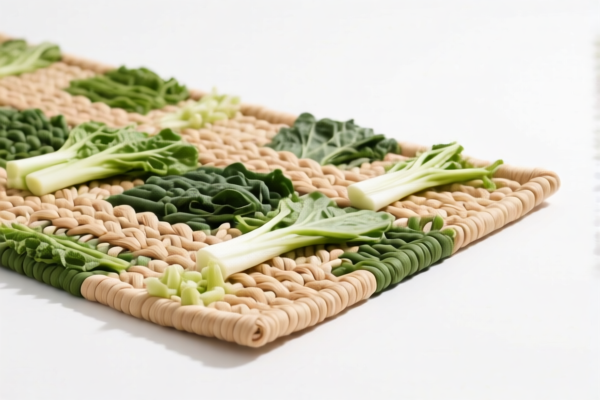
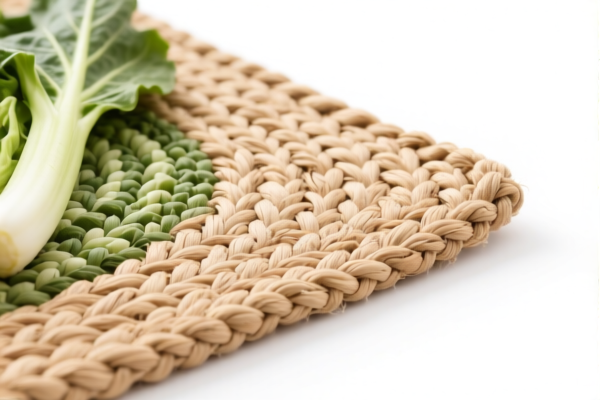
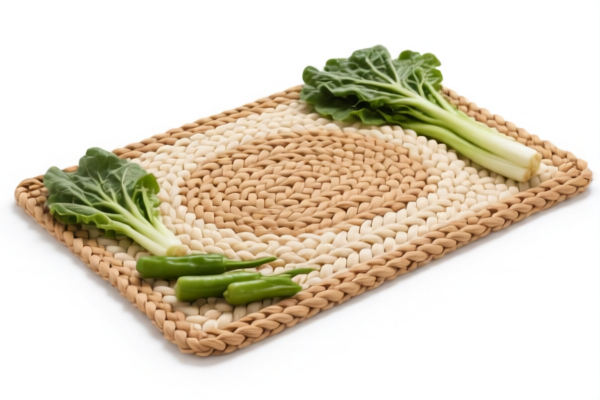
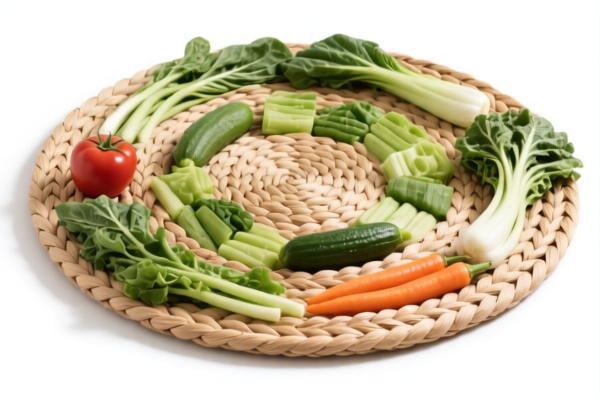
AI Analysis
🧶 Vegetable Fiber Woven Rugs (Entrance)
🌐 HS Code Reference & Customs Clearance Guide | 2026 Latest Tariff Analysis | Professional Level Entry Strategy
📌 I. Product Definition & Classification: Do You Really Understand "Plant Fiber Rugs"?
Vegetable fiber woven rugs, often used for entrances, balconies, or as general floor coverings, are distinct from synthetic textiles. In international trade, their classification hinges on the material composition (plant-based vs. synthetic), manufacturing process (woven vs. knitted), and specific sub-category within Chapter 46 (Basketweaving) or Chapter 57 (Carpets).
Plant Fiber Rugs: Made from materials such as sisal, jute, coir, bamboo, or seagrass. Woven Structure: Interlaced threads, distinct from knitted or tufted structures.
⚠️ Key Distinction Points:
- If the rug is classified under Chapter 46 (Basketwork/Braiding): It is often treated as a "weaving material" or specific basketware.
- If the rug is classified under Chapter 57 (Carpets & Floor Coverings): It is treated as a standard floor covering.
- Critical Factor: Customs authorities often scrutinize whether the item is primarily a "floor covering" (Ch. 57) or a "woven mat/matting" (Ch. 46). Misclassification leads to significant duty discrepancies.
📦 II. HS Code Classification Details (2026 Latest Tariff Authority Comparison)
| HS Code | Product Description | Application Scenario | Material Type |
|---|---|---|---|
5702.20.20.00 |
Woven carpets of vegetable textile materials, suitable for balcony or entrance | Balcony/Entrance mats, high-traffic areas | Plant Fiber |
5702.20.10.00 |
Woven carpets of vegetable textile materials, fitting general woven floor material features | General woven floor coverings, industrial/commercial use | Plant Fiber |
4601.29.80.00 |
Woven matting of vegetable materials, used as floor covering (matting) | Braided mats, decorative weavings used as floors | Plant Material |
4601.22.80.00 |
Woven goods of vegetable materials, used for ground covering | Specific woven floor mats, distinct from standard carpets | Plant Material |
6304.99.35.00 |
Non-knitted or crocheted furnishing articles, specifically rugs/mats (non-woven or non-standard weave) | Decorative rugs, non-standard weaves, "furnishing" classification | Plant Fiber |
🔍 Key Reminder:
- Codes5702.xx.xxare generally for standard woven carpets.
- Codes4601.xx.xxare often for basket-weave style mats or specific "matting."
- Code6304.99.35.00is a "catch-all" for non-knitted furnishing articles, often carrying lower base tariffs but subject to different surcharges.
💰 III. 2026 Latest Tariff Rate Breakdown (Including Surcharges & Policy Add-ons)
✅ Applicable Country: United States (US)
✅ Origin: China (CN)
✅ Effective Date: From November 10, 2025 (including subsequent imports)
🎯 1. 5702.20.20.00 & 5702.20.10.00 —— Woven Carpets (Vegetable Fiber)
| Item | Content |
|---|---|
| Base Tariff | 0% (ad valorem) |
| USITC Surcharge | +25% (From USITC Footnote 9903.88.01 / Section 301) |
| IEEPA Surcharge | +10% (Targeting China/Hong Kong products, effective from Nov 10, 2025) |
| Total Tariff | 35.0% |
| Tax Calculation | CIF Value × 35% |
| De Minimis Exemption | ❌ Not Eligible (deny_de_minimis) |
| Legal Basis Path | IEEPA:9903.01.25 → USITC:5702.20.20.00 → FOOTNOTE:9903.88.01 |
📌 Explanation:
- Although the base tariff is 0%, the Section 301 tariff (25%) and IEEPA tariff (10%) apply.
- Total cost increase: 35%. This is a high tariff category. Importers must account for this in pricing strategies.
🎯 2. 4601.29.80.00 & 4601.22.80.00 —— Woven Matting of Vegetable Materials
| Item | Content |
|---|---|
| Base Tariff | 0% (ad valorem) |
| USITC Surcharge | +25% (From USITC Footnote 9903.88.01 / Section 301) |
| IEEPA Surcharge | +10% (Targeting China/Hong Kong products, effective from Nov 10, 2025) |
| Total Tariff | 35.0% |
| Tax Calculation | CIF Value × 35% |
| De Minimis Exemption | ❌ Not Eligible (deny_de_minimis) |
| Legal Basis Path | IEEPA:9903.01.25 → USITC:4601.29.80.00 → FOOTNOTE:9903.88.01 |
📌 Note:
- Even if classified under Chapter 46 (Basketweaving), the same surcharges apply.
- Total tariff remains 35%. Do not assume Chapter 46 automatically means lower duties for Chinese origin goods under current US trade policy.
🎯 3. 6304.99.35.00 —— Non-Knitted/Crocheted Furnishing Articles
| Item | Content |
|---|---|
| Base Tariff | 11.3% |
| USITC Surcharge | +7.5% (Note: Lower surcharge applies here compared to Ch. 46/57) |
| IEEPA Surcharge | +10% (Targeting China/Hong Kong products) |
| Total Tariff | 28.8% |
| Tax Calculation | CIF Value × 28.8% |
| De Minimis Exemption | ❌ Not Eligible (deny_de_minimis) |
| Legal Basis Path | IEEPA:9901.25 → USITC:6304.99.35.00 |
📌 Key Insight:
- This is the only code in the dataset with a lower total tariff (28.8%).
- The base tariff (11.3%) is higher, but the USITC surcharge is only 7.5% (vs. 25% for others).
- Strategy: If the rug can be legally argued as a "furnishing article" rather than a "carpet" or "matting," this code offers a 6.2% savings per unit value. However, customs may challenge this classification if the item is clearly a floor rug.
🛠️ IV. Customs Clearance Practical Advice (Battle-Tested Pitfall Guide)
✅ 1. Required Documentation Checklist (Mandatory)
| Document | Must Provide | Description |
|---|---|---|
| ✅ Product Specification Sheet | ✔️ | Details material (e.g., "100% Sisal"), weave type, dimensions |
| ✅ Product Photos (Labeled) | ✔️ | Clear shots of front, back, and edge to confirm "woven" structure |
| ✅ Commercial Invoice | ✔️ | Must explicitly state "Vegetable Fiber Woven Rug" and HS Code |
| ✅ Bill of Lading/Air Waybill | ✔️ | Consistent description with invoice |
| ✅ Country of Origin Certificate | ✔️ | Proves Chinese origin (triggers surcharges) or non-Chinese origin (potential exemption) |
| ✅ Third-Party Test Report | ✔️ | Optional but helpful: Fiber content analysis to prove "plant-based" |
✅ 2. Declaration Tips (Key Mantra)
🔥 “Material First, Weave Second, Name Precise, Tax Less!”
| Situation | Correct Declaration | Wrong Practice |
|---|---|---|
| Standard Woven Rug | 5702.20.20.00 |
Misdeclare as 4601 → Risk of penalty |
| Braided/Decorative Mat | 4601.29.80.00 or 4601.22.80.00 |
Misdeclare as 5702 → Higher scrutiny |
| Furnishing/Rug Hybrid | 6304.99.35.00 (If justifiable) |
Misdeclare as 5702 → Missed savings opportunity |
| Mixed Material (e.g., Jute + Cotton) | Check main component | Assume 100% vegetable fiber → Classification error |
✅ 3. Special Case Handling
| Situation | Handling Advice |
|---|---|
| OEM Custom Rugs | Provide design drawings showing weave pattern to support 5702 vs 6304 classification |
| Rugs with Backing (Rubber/Fabric) | Still classified under primary fiber code (5702/4601) if backing is minor |
| Non-Chinese Origin | If sourced from Vietnam/India, apply for IEEPA Exemption → Tariff drops to Base Rate Only (0% or 11.3%) |
| De Minimis Shipment ( <$800) | ❌ Cannot use Section 321 for these HS codes. Full duty assessment applies regardless of value. |
🌍 V. Global Market Clearance Comparison (2026 Latest)
| Country/Region | Recommended HS Code | Tariff Rate (China Origin) | Certification Requirements | Notes |
|---|---|---|---|---|
| 🇺🇸 USA | 5702.20.20.00 / 6304.99.35.00 |
35.0% or 28.8% | None specific for fibers | High surcharges apply. No de minimis exemption. |
| 🇨🇳 China | 5702.20.20.00 |
5% - 10% | None | No surcharges |
| 🇪🇺 EU | 5702.20.20.00 |
12% | CE (if applicable) | No IEEPA/Section 301 |
| 🇦🇺 Australia | 5702.20.20.00 |
5% | None | Low duty |
| 🇬🇧 UK | 5702.20.20.00 |
12% | None | Post-Brexit tariff |
📌 Conclusion:
- USA is the most expensive market due to Section 301 + IEEPA surcharges.
- European/Australian markets have significantly lower duties.
- Strategy: For US-bound goods, consider supply chain diversification (e.g., source from non-China countries) to avoid the 35% total tariff.
📌 VI. Common Errors & Pitfalls Guide (Lessons Learned)
❌ Error 1: Declaring a "Woven Carpet" as "Home Furnishing Textile" to avoid classification scrutiny
👉 Consequence: Customs audits fiber content → Penalty + Back Taxes
❌ Error 2: Assuming "Plant Fiber" automatically qualifies for lower tariffs
👉 Consequence: Ignores Section 301 (25%) and IEEPA (10%) → Unexpected 35% bill
❌ Error 3: Using De Minimis ($800) for shipments under $800
👉 Consequence: Denied entry or forced full duty payment. These HS codes are excluded from de minimis exemption.
❌ Error 4: Vague Description "Rug" on Invoice
👉 Consequence: Customs flags for inspection → Delayed clearance → Demurrage charges
✅ Correct Practice:
“Woven Sisal Floor Rug, 5x7ft, 100% Natural Vegetable Fiber, Non-Knitted, for Entrance Use, Model XYZ”
🎯 VII. Conclusion: Professional Declaration, Save Time & Money!
🎯 Remember the Mantra:
🔹 “Plant Fiber? Check the Weave!
5702/4601= 35%,6304= 28.8%. No De Minimis!”
🔹 “Origin Matters! China = High Tax. Vietnam = Low Tax. Declare Accurately!”
📌 Pro Tip:
If your rugs are originally from Vietnam, India, or Indonesia, you may qualify for IEEPA Exemptions, reducing the total tariff to just the base rate (0% or 11.3%).
Recommend Advance Ruling from CBP if the classification between 5702 (Carpet) and 6304 (Furnishing) is ambiguous.
📣 Immediate Action:
📞 Contact a licensed customs broker + Provide Product Photos + Apply for HS Code Advance Ruling
🚀 Ensure your rugs clear customs smoothly, reduce costs, and maximize profit!
✨ Professional clearance starts with accurate classification!
💼 Every cent of tariff is worth calculating precisely!
Customer Reviews
About HS Code Classification
The Harmonized System (HS) is an internationally standardized nomenclature developed by the World Customs Organization (WCO) to classify traded products. Over 200 countries use the HS system as the basis for customs tariffs, trade statistics, and import/export regulations.
Each HS code follows a hierarchical structure:
- Chapter (2 digits) — Broad category of goods (e.g., Chapter 84: Machinery and Mechanical Appliances)
- Heading (4 digits) — More specific grouping within the chapter
- Subheading (6 digits) — Internationally standardized breakdown, used by all WCO member countries
- National subdivisions (8-10 digits) — Country-specific extensions for further classification, such as US HTSUS 10-digit codes
Correct HS code classification is essential for smooth customs clearance, accurate duty payment, and compliance with trade regulations. Misclassification can lead to customs delays, overpayment of duties, or penalties.
When importing from CN to US, the applicable tariff rates may include:
- Most-Favored-Nation (MFN) rate — The standard duty rate applied to WTO members
- General rate — Applied to countries without trade agreements
- Trade remedy duties — Additional tariffs such as Section 301 (anti-dumping), Section 232 (national security), or countervailing duties
The information provided on this page is for reference purposes only. For official classification, please consult with your local customs authority or a licensed customs broker.