Vegetable Fiber Woven Screens
CN → US| HS Code | Tariff Rate | Origin | Destination | Doc |
|---|---|---|---|---|
| 4601299000 | 43.0% | CN | US | Official Doc |
| 4602191800 | 39.5% | CN | US | Official Doc |
| 4601922000 | 41.6% | CN | US | Official Doc |
| 4602193500 | 35.0% | CN | US | Official Doc |
| 9403893020 | 35.0% | CN | US | Official Doc |
Product Images
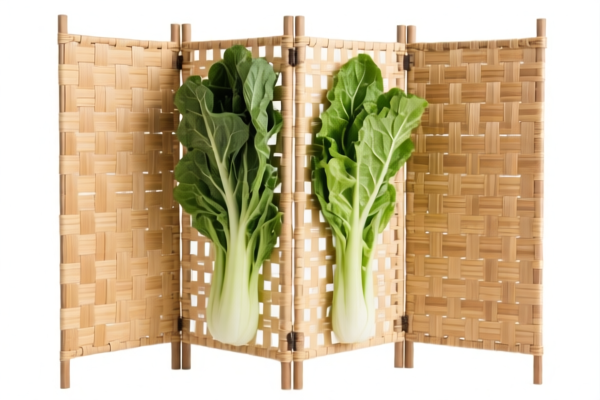
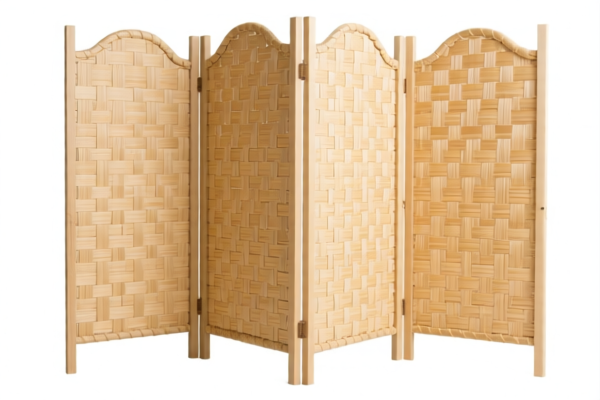
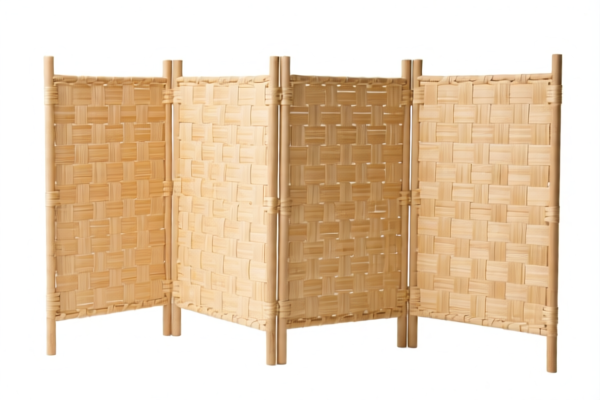
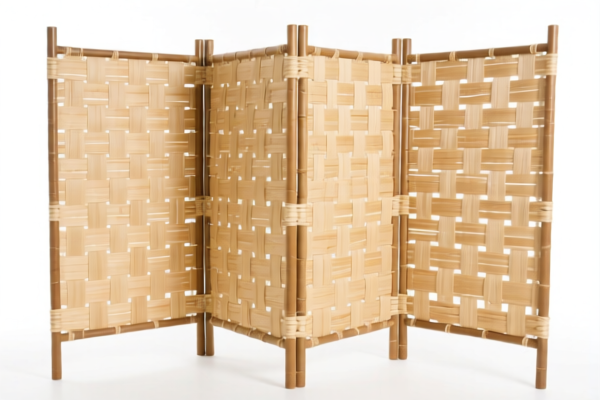
AI Analysis
🌿 Vegetable Fiber Woven Screens (Plant-Based Room Dividers)
🌐 HS Code Reference & Customs Clearance Guide | 2026 Latest Tariff Analysis | Professional Clearance Strategy
📌 I. Product Definition & Classification: Do You Really Understand "Woven Screens"?
Vegetable fiber woven screens are decorative or functional partitioning items made from natural plant materials. In international trade, the classification depends strictly on the material specificity, manufacturing form, and functional intent. They are generally categorized into two main groups:
- Woven Materials & Articles (Headings 4601/4602): If the screen is considered primarily a "woven article" or "matting," it falls under Chapter 46. This includes screens made from bamboo, rattan, seagrass, or other plant fibers that retain their woven structural integrity without being classified as furniture.
- Furniture (Heading 9403): If the screen is a standalone piece of furniture (e.g., a folding room divider with a frame and stable structure intended for furnishing interiors), it may be classified under Chapter 94.
⚠️ Key Distinction Point:
- If the item is a flat or semi-rigid woven panel used as a component or simple divider → Chapter 46 (4601/4602)
- If the item is a finished, freestanding furniture piece (like a folding room divider) → Chapter 94 (9403)
📦 II. HS Code Classification Details (2026 Latest Tariff Authority Comparison)
Based on the provided data, here are the specific HS Codes for Vegetable Fiber Woven Screens:
| HS Code | Product Description | Applicable Scenario | Key Characteristics |
|---|---|---|---|
4601.29.90.00 |
Woven screens of vegetable materials | Plant fiber woven screens, general use | Material: Vegetable fiber; Form: Woven material; Use: Screen |
4602.19.18.00 |
Other woven articles of vegetable materials | Plant fiber screens, specialized classification | Material: Vegetable fiber; Form: Other woven articles; Use: Screen |
4601.92.20.00 |
Other woven screens of vegetable fiber | General plant fiber woven products | Material: Vegetable fiber; Form: Screen/Woven product; Use: Other |
4602.19.35.00 |
Indoor natural grass woven screens | Screens made specifically from natural grass | Material: Natural grass; Form: Screen/Woven article; Use: Plant woven goods |
9403.89.30.20 |
Indoor natural grass woven screens | Classified as Furniture | Material: Grass woven; Form: Furniture; Use: Other furniture |
🔍 Important Note:
- HS Codes4601.29.90.00,4602.19.18.00,4601.92.20.00, and4602.19.35.00all classify the screen as a woven article (Chapter 46). The difference lies in the specific vegetable material (general fiber vs. natural grass) and the precise subheading interpretation. - HS Code9403.89.30.20classifies the same physical item (natural grass woven screen) as Furniture. This is a critical strategic choice. While the material is the same, the use and form drive this classification.
💰 III. 2026 Latest Tariff Rate Breakdown (Including Surtaxes & Policy Add-ons)
✅ Applicable Country: United States (US)
✅ Origin: China (CN)
✅ Effective Date: Post-2025 Tariff Regime (Based on provided data)
🎯 1. 4601.29.90.00 – Woven Screens of Vegetable Materials
| Item | Content |
|---|---|
| Base Duty Rate | 8.0% |
| Section 301 Surcharge | 25.0% |
| Section 122 Surcharge | 10.0% |
| Total Effective Rate | 43.0% |
| Tax Calculation | CIF Value × 43% |
| De Minimis Exemption? | ❌ No |
| Legal Basis Path | Base (8%) + 301 (25%) + 122 (10%) |
📌 Explanation:
- This code applies to general plant fiber woven screens.
- The 43% total duty is a combination of the standard MFN rate, the significant Section 301 punitive tariff, and the Section 122 trade surcharge.
- High Cost Warning: This is a high-duty category. Cost modeling must account for the full 43%.
🎯 2. 4602.19.18.00 – Other Woven Articles of Vegetable Materials
| Item | Content |
|---|---|
| Base Duty Rate | 4.5% |
| Section 301 Surcharge | 25.0% |
| Section 122 Surcharge | 10.0% |
| Total Effective Rate | 39.5% |
| Tax Calculation | CIF Value × 39.5% |
| De Minimis Exemption? | ❌ No |
| Legal Basis Path | Base (4.5%) + 301 (25%) + 122 (10%) |
📌 Explanation:
- This code is for "other" woven articles, potentially implying a different weaving structure or less specific vegetable material than4601.29.
- 39.5% Total Duty: Slightly lower than4601.29.90.00due to a lower base rate (4.5% vs. 8.0%), but still very high due to surcharges.
🎯 3. 4601.92.20.00 – Other Woven Screens of Vegetable Fiber
| Item | Content |
|---|---|
| Base Duty Rate | 6.6% |
| Section 301 Surcharge | 25.0% |
| Section 122 Surcharge | 10.0% |
| Total Effective Rate | 41.6% |
| Tax Calculation | CIF Value × 41.6% |
| De Minimis Exemption? | ❌ No |
| Legal Basis Path | Base (6.6%) + 301 (25%) + 122 (10%) |
📌 Explanation:
- A middle-ground classification for general plant fiber screens.
- 41.6% Total Duty: Reflects a moderate base rate with full surcharges.
🎯 4. 4602.19.35.00 – Indoor Natural Grass Woven Screens
| Item | Content |
|---|---|
| Base Duty Rate | 0.0% |
| Section 301 Surcharge | 25.0% |
| Section 122 Surcharge | 10.0% |
| Total Effective Rate | 35.0% |
| Tax Calculation | CIF Value × 35.0% |
| De Minimis Exemption? | ❌ No |
| Legal Basis Path | Base (0%) + 301 (25%) + 122 (10%) |
📌 Explanation:
- Strategic Advantage: This code has a 0% base duty for natural grass products.
- 35.0% Total Duty: Despite the 0% base, the surcharges push the total to 35%. However, this is the lowest total rate among the Chapter 46 options.
- Requirement: Must be clearly identified as "Natural Grass" and "Indoor" use.
🎯 5. 9403.89.30.20 – Indoor Natural Grass Woven Screens (Furniture)
| Item | Content |
|---|---|
| Base Duty Rate | 0.0% |
| Section 301 Surcharge | 25.0% |
| Section 122 Surcharge | 10.0% |
| Total Effective Rate | 35.0% |
| Tax Calculation | CIF Value × 35.0% |
| De Minimis Exemption? | ❌ No |
| Legal Basis Path | Base (0%) + 301 (25%) + 122 (10%) |
📌 Explanation:
- Furniture Classification: If the screen is considered furniture, it shares the 0% base duty and 35% total rate with4602.19.35.00.
- Strategic Choice: Choose this if the screen is a finished, stable furniture piece. Choose4602.19.35.00if it is a raw woven panel. Both yield the same total tax, but customs scrutiny may differ.
🛠️ IV. Customs Clearance Practical Advice (Pitfall Avoidance Guide)
✅ 1. Preparation Checklist (Essential Documents)
| Document | Required | Description |
|---|---|---|
| ✅ Product Specification Sheet | ✔️ | Detail material (e.g., "Seagrass," "Bamboo," "Natural Grass"), dimensions, weight, and weaving technique. |
| ✅ Product Photos (Clear) | ✔️ | Show the entire screen, close-ups of the weave, and any frames/hinges. Crucial for distinguishing "Woven Article" vs. "Furniture." |
| ✅ Commercial Invoice | ✔️ | Must explicitly state: "Vegetable Fiber Woven Screen," "Indoor Use," and specific material (e.g., "Natural Grass"). |
| ✅ Packing List | ✔️ | Itemize contents. If packaged with frames or hardware, declare as a complete unit. |
| ✅ Origin Certificate (CO) | ✔️ | Confirm origin as China to ensure correct application of Section 301 and Section 122 tariffs. |
✅ 2. Declaration Strategy (Key Rules)
🔥 "Be Specific, Be Accurate, Avoid Generic Terms!"
| Scenario | Correct Declaration | Incorrect Declaration |
|---|---|---|
| Natural Grass Screen | "Indoor Natural Grass Woven Screen, HS 4602.19.35.00" | "Plant Fiber Mat" or "Decorative Woven Panel" |
| General Plant Fiber Screen | "Woven Screen of Vegetable Material, HS 4601.29.90.00" | "Furniture Part" or "Textile Screen" |
| Furniture-style Divider | "Indoor Natural Grass Woven Screen, Furniture Use, HS 9403.89.30.20" | "Woven Art Piece" |
| Mixed Materials | Declare primary vegetable fiber content accurately. | Omitting material details → Seizure Risk |
📌 Critical Tip:
- If you classify as4602.19.35.00or9403.89.30.20, ensure the product is 100% natural grass or primarily identified as such. Mislabeling bamboo as "grass" can lead to customs rejection and penalties. - Both4602.19.35.00and9403.89.30.20offer the lowest total tax (35%). Use these if your product fits the criteria.
✅ 3. Special Circumstances Handling
| Situation | Handling Advice |
|---|---|
| OEM Custom Screens | Provide design drawings showing material composition. Avoid generic terms like "eco-friendly screen." |
| Screens with Metal Frames | If the frame is integral, 9403.89.30.20 (Furniture) is safer. If it's just a woven panel, use 4602.19.35.00. |
| Large Volume Shipments | Pre-apply for a Binding Tariff Ruling (BTR) from CBP to confirm the correct HS Code and avoid surprise audits. |
| Section 122 Impact | Remember that Section 122 applies to all these codes. It is non-negotiable. Factor this into pricing. |
🌍 V. Global Market Comparison (2026 Latest)
| Country/Region | Recommended HS Code | Total Tariff (China Origin) | Notes |
|---|---|---|---|
| 🇺🇸 United States | 4602.19.35.00 or 9403.89.30.20 |
35.0% | Lowest rate among options. Base duty 0% + Surcharges. |
| 🇺🇸 United States | 4601.29.90.00 |
43.0% | Higher base duty. Use only if material doesn't fit "grass." |
| 🇨🇳 China (Export) | Varies | See local export regulations | No export duty on these items typically, but verify. |
| 🇪🇺 European Union | 4601/4602/9403 | 5%-12% | No Section 301/122 surcharges. Much lower duty burden. |
| 🇨🇦 Canada | 4602.19.35.00 | 5% | No Section 301/122. Competitive advantage. |
📌 Conclusion:
- USA is the most challenging market due to Section 301 (25%) and Section 122 (10%) surcharges.
- Strategy: Aim for4602.19.35.00or9403.89.30.20to achieve the 35% total rate. Avoid generic classifications like4601.29.90.00unless necessary, as they carry higher base duties.
📌 VI. Common Errors & Pitfalls (Lessons Learned)
❌ Error 1: Declaring "Woven Screen" without specifying material
👉 Consequence: Customs may assign the highest default rate (e.g., 43%) or reject the declaration.
👉 Solution: Always specify "Natural Grass," "Bamboo," or "Rattan."
❌ Error 2: Classifying a finished furniture divider as a "woven mat" (4601.29.90.00)
👉 Consequence: Potential misclassification. If audited, you may face penalties or be forced to reclassify to 9403.89.30.20 (though tax is same here, documentation may be challenged).
👉 Solution: If it stands independently as furniture, use 9403.89.30.20.
❌ Error 3: Ignoring Section 122 Tariff
👉 Consequence: Underpaying duties by 10%, leading to back payments and interest.
👉 Solution: Always add 10% to the base rate for all these HS codes.
✅ Correct Practice:
"Indoor Natural Grass Woven Room Divider, Hand-woven Seagrass, Freestanding Furniture, Model XYZ, Origin: China"
🎯 VII. Conclusion: Professional Declaration, Cost Optimization!
🎯 Remember the Formula:
🔹 "Specific Material + Correct Form = Lowest Tax"
🔹 "35% is the Target: Use 4602.19.35.00 or 9403.89.30.20"
🔹 "Base Duty 0% + 301 (25%) + 122 (10%) = 35% Total"
📌 Pro Tip:
If your screens are made from non-grass plant fibers (e.g., bamboo), you may not qualify for the 0% base rate. In that case, use 4601.29.90.00 (43%) or 4602.19.18.00 (39.5%). Always verify the exact material composition before declaring.
📣 Immediate Action:
📞 Contact a licensed customs broker + Provide material samples + Request a Binding Tariff Ruling for your specific product.
🚀 Ensure your screens are clearly documented as "Natural Grass" to unlock the 35% total duty rate.
✨ Professional clearance starts with precise classification!
💼 Every percentage point in duty affects your profit margin!
Customer Reviews
About HS Code Classification
The Harmonized System (HS) is an internationally standardized nomenclature developed by the World Customs Organization (WCO) to classify traded products. Over 200 countries use the HS system as the basis for customs tariffs, trade statistics, and import/export regulations.
Each HS code follows a hierarchical structure:
- Chapter (2 digits) — Broad category of goods (e.g., Chapter 84: Machinery and Mechanical Appliances)
- Heading (4 digits) — More specific grouping within the chapter
- Subheading (6 digits) — Internationally standardized breakdown, used by all WCO member countries
- National subdivisions (8-10 digits) — Country-specific extensions for further classification, such as US HTSUS 10-digit codes
Correct HS code classification is essential for smooth customs clearance, accurate duty payment, and compliance with trade regulations. Misclassification can lead to customs delays, overpayment of duties, or penalties.
When importing from CN to US, the applicable tariff rates may include:
- Most-Favored-Nation (MFN) rate — The standard duty rate applied to WTO members
- General rate — Applied to countries without trade agreements
- Trade remedy duties — Additional tariffs such as Section 301 (anti-dumping), Section 232 (national security), or countervailing duties
The information provided on this page is for reference purposes only. For official classification, please consult with your local customs authority or a licensed customs broker.