Vegetable Tanned Cowhide
CN → US| HS Code | Tariff Rate | Origin | Destination | Doc |
|---|---|---|---|---|
| 4107111020 | 35.0% | CN | US | Official Doc |
| 4107111040 | 35.0% | CN | US | Official Doc |
| 4107113000 | 13.6% | CN | US | Official Doc |
Product Images
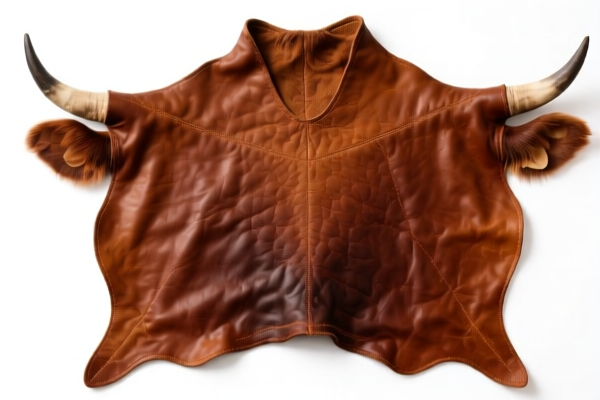
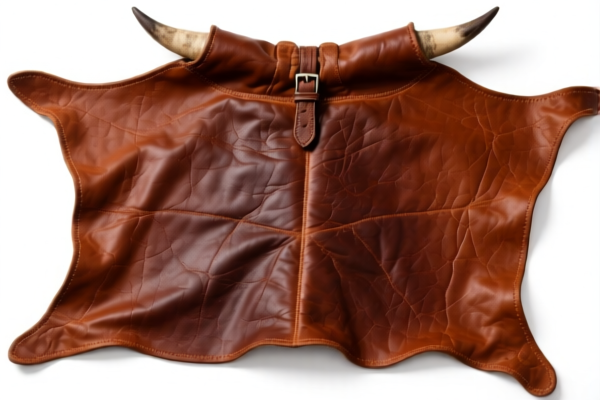
AI Analysis
🐄 Vegetable Tanned Cowhide (Plant-Tanned Leather)
🌐 HS Code Reference & Customs Clearance Guide | 2026 Latest Tariff Analysis | Professional Entry Strategy
📌 I. Product Definition & Classification: Do You Really Know "Vegetable Tanned Cowhide"?
Vegetable Tanned Cowhide is a premium natural leather material where the tanning process uses natural tannins derived from plants (such as bark, leaves, fruits, and woods) rather than synthetic chrome salts. It is prized for its durability, ability to age gracefully (patina), and eco-friendly characteristics.
In international trade, classification depends heavily on the finishing state and mechanical properties of the hide after tanning. It is generally categorized into:
Full Grain / Top Grain Vegetable Tanned Leather: The highest quality, often with minimal surface correction, retaining the natural grain structure. Split or Corrected Grain: May involve coating or buffing, potentially falling under different sub-categories depending on thickness and specific chemical treatment nuances.
⚠️ Key Distinction Point:
- If the leather is high-grade, fully tanned, and retains natural grain characteristics (often used for luxury goods, saddlery, or high-end footwear), it may fall under 4107.11.10.20 / 4107.11.10.40.
- If the leather is standard processed vegetable-tanned leather (possibly split, coated, or with less specific "vegetable tanning characteristics" emphasized in HS notes), it may fall under 4107.11.30.00.
- Crucial Note: The HS Code structure4107.11specifically refers to "Leather of bovine animals, full grain and top grain, vegetable tanned." The sub-codes differentiate by quality/processing details.
📦 II. HS Code Classification Details (2026 Latest Tariff Authority对照)
| HS Code | Product Description | Application Scenario | Key Classification Criteria |
|---|---|---|---|
4107.11.10.20 |
Vegetable Tanned Cowhide, conforms to specific bovine and tanning characteristics | High-end luxury goods, bespoke saddlery, premium footwear | ✅ Meets strict "vegetable tanning" definition with full grain/top grain integrity |
4107.11.10.40 |
Vegetable Tanned Cowhide, material and processing meet classification requirements | Industrial leather goods, durable accessories, specialized manufacturing | ✅ Meets specific "material and processing" criteria for this sub-code |
4107.11.30.00 |
Vegetable Tanned Cowhide, classified as tanned processed leather | Standard leather goods, mass-produced items, split leathers with vegetable tanning | ✅ Classified broadly as "tanned processed leather" under the bovine vegetable-tanned category |
🔍 Important Reminder:
- The primary distinction between4107.11.10.xxand4107.11.30.00often lies in specific national interpretations of "full grain/top grain" vs. general "tanned leather."
- Ensure documentation clearly states "Vegetable Tanned" to avoid misclassification as Chrome-Tanned Leather (which has different tax implications in some regions).
💰 III. 2026 Latest Tariff Rate Breakdown (Including Surcharges & Policy Add-ons)
✅ Applicable Country: United States (US)
✅ Origin: China (CN)
✅ Effective Date: 2025年11月10日起 (from Nov 10, 2025)
🎯 1. 4107.11.10.20 & 4107.11.10.40 —— High-Grade Vegetable Tanned Cowhide
| Item | Content |
|---|---|
| Base Tariff Rate | 0.0% (ad valorem) |
| Section 301 Surcharge (Additional Duty) | +25.0% |
| Section 122 Duty | +10.0% |
| Total Tax Rate | 35.0% |
| Tax Calculation | CIF Value × 35% |
| De Minimis Exemption Applicable? | ❌ No (deny_de_minimis) |
| Legal Basis Path | USITC:4107.11.10.20 → SECTION_301:4107.11.10.20 → SECTION_122:4107.11.10.20 |
📌 Explanation:
- Base Rate 0%: Standard MFN (Most Favored Nation) rate for certain bovine leathers.
- Section 301 +25%: Tariffs imposed on Chinese goods under the Trade Act of 1974, Section 301.
- Section 122 +10%: Additional duty under Section 122 of the Trade Act of 1962 (often used for national security or balance of payments reasons, applied to specific imports).
- Total 35%: A significant tariff burden. Cost calculation must include this.
🎯 2. 4107.11.30.00 —— Standard Vegetable Tanned Cowhide
| Item | Content |
|---|---|
| Base Tariff Rate | 3.6% (ad valorem) |
| Section 301 Surcharge (Additional Duty) | 0.0% |
| Section 122 Duty | +10.0% |
| Total Tax Rate | 13.6% |
| Tax Calculation | CIF Value × 13.6% |
| De Minimis Exemption Applicable? | ❌ No (deny_de_minimis) |
| Legal Basis Path | USITC:4107.11.30.00 → SECTION_122:4107.11.30.00 |
📌 Explanation:
- Base Rate 3.6%: Slightly higher base rate for this sub-category.
- Section 301 0%: Notably, this specific sub-code does not attract the 25% Section 301 surcharge.
- Section 122 +10%: Still subject to the 10% Section 122 duty.
- Total 13.6%: Significantly lower than the other two codes. This creates a strong incentive to ensure proper classification under4107.11.30.00if legally permissible.
🛠️ IV. Customs Clearance Practical Advice (实战避坑指南)
✅ 1. Required Documentation Checklist (All or Nothing)
| Document | Mandatory? | Description |
|---|---|---|
| ✅ Commercial Invoice | ✔️ | Must clearly state "Vegetable Tanned Cowhide," origin, HS Code, and value. |
| ✅ Packing List | ✔️ | Detail weights, dimensions, and number of hides/packages. |
| ✅ Bill of Lading / Air Waybill | ✔️ | Standard shipping documents. |
| ✅ Certificate of Origin (CO) | ✔️ | Essential for proving China origin (triggers Section 301/122). |
| ✅ Tanning Process Statement | ✔️ | Critical! Provide a technical statement confirming the use of plant-based tannins vs. chrome. This supports the HS Code 4107 classification. |
| ✅ Product Photos | ✔️ | Show grain texture, edge appearance, and any markings. |
| ✅ Import License | ✔️ | Check if specific agricultural/leather import quotas apply. |
✅ 2. Classification Strategy (Key Tips)
🔥 “Clarify Tanning Method, Check Section 301, Aim for Lower Rate!”
| Scenario | Correct Classification Strategy | Wrong Practice |
|---|---|---|
| High-End Full Grain Veg-Tan | Classify under 4107.11.10.20 or 4107.11.10.40 → 35% Tax |
Attempting to misclassify as 4107.11.30.00 to save tax → Risk of Penalty |
| Standard/Cheaper Veg-Tan | Classify under 4107.11.30.00 → 13.6% Tax |
Forcing classification under 10.xx codes unnecessarily → Higher Tax |
| Chrome-Tanned Cowhide | DO NOT use 4107.11.xx codes. Use appropriate Chrome-Tan codes. |
Mislabeling Chrome-Tan as Veg-Tan → Severe Fraud Penalties |
| Split Leather Veg-Tan | Ensure it meets "Full Grain/Top Grain" definition for 4107.11.10.xx. If not, 4107.11.30.00 may be more appropriate. |
Assuming all "Veg-Tan" is the same code. |
✅ 3. Special Circumstances Handling
| Situation | Handling Advice |
|---|---|
| OEM Custom Leather | Provide customer specifications + tanning agent list. Ensure tanning agent is explicitly plant-derived. |
| Mixed Shipment (Veg-Tan + Chrome-Tan) | Separate shipments! Do not mix. Misclassification of the entire shipment can lead to penalties on all goods. |
| Origin Dispute | If leather is tanned in Country A but cut in China, ensure Country of Origin rules (substantial transformation) are met. HS Code 4107 typically refers to the country of tanning. |
| Section 122 Exemption? | No general exemption for Section 122 duties on leather. Plan for the 10% cost. |
🌍 V. Global Major Market Comparison (2026 Latest)
| Country/Region | Recommended HS Code | Tariff (China Origin) | Certification Requirements | Notes |
|---|---|---|---|---|
| 🇺🇸 USA | 4107.11.10.20/40 or 30.00 |
35% or 13.6% | No specific FDA/CCC. But proof of Veg-Tan needed. | Section 122 & 301 apply. High cost. |
| 🇨🇳 China | 4107.11.xx |
5-10% (Import Duty) | No special import certs. | Lower tariffs. Good for re-export. |
| 🇪🇺 EU | 4107.11.xx |
4.5% (Standard) | REACH Compliance (Chemicals). | No Section 301/122. More stable. |
| 🇬🇧 UK | 4107.11.xx |
4.5% (Standard) | UK REACH Compliance. | Post-Brexit rules apply. |
| 🇯🇵 Japan | 4107.11.xx |
5.0% (Standard) | No specific leather certs. | FTA benefits may apply if RCEP used. |
📌 Conclusion:
- USA is the most costly market due to Section 301 (25%) and Section 122 (10%).
- EU/UK/JP have stable, lower tariffs (~4.5-5%) but strict REACH/Chemical regulations. Ensure tanning agents comply with European chemical laws.
- Strategy: If targeting the US, carefully justify the HS Code choice. If possible and accurate,4107.11.30.00saves 21.4% in taxes compared to10.20/40.
📌 VI. Common Errors & Pitfalls (Blood & Tears Lessons)
❌ Error 1: Misclassifying Chrome-Tanned Leather as Vegetable Tanned
👉 Consequence: HS Code mismatch → Penalties, Back Taxes, and Customs Hold.
❌ Error 2: Ignoring Section 122 Duty
👉 Consequence: Underestimating costs by 10% → Profit Margin Erosion.
❌ Error 3: Failing to Provide Tanning Proof
👉 Consequence: Customs questions the "Vegetable" claim → Delay in Clearance, Potential Re-classification.
❌ Error 4: Mixing HS Codes in One Shipment
👉 Consequence: Complex inspection, high chance of random audit and penalties.
✅ Correct Approach:
"Vegetable Tanned Cowhide, Full Grain, Tanned with Oak Bark Extract, Certified REACH Compliant, Origin: China, HS Code: 4107.11.10.20"
🎯 VII. Conclusion: Professional Declaration, Save Time, Reduce Costs!
🎯 Remember the Mantra:
🔹 "Veg-Tan Proof is Key, Section 122 is Always On."
🔹 "Choose Code Wisely: 35% vs 13.6%, Declaration Determines Your Cost."
📌 Pro Tip:
- If your vegetable-tanned leather is not classified under 4107.11.10.20/40, try to validate if 4107.11.30.00 is applicable. This can save you 21.4% in duties.
- For EU shipments, ensure your supplier provides REACH SVHC (Substances of Very High Concern) declarations, even though tariff is low.
📣 Immediate Action:
📞 Contact Your Customs Broker: Provide tanning details + product photos.
🚀 Request HS Code Advance Ruling: From US CBP or relevant authority to secure the correct, lower tariff rate.
💼 Your Profit Margin Depends on Precise Classification!
✨ Professional Customs Clearance Starts with Accurate Classification!
💼 Every Dollar Saved in Tariffs is a Dollar Added to Your Bottom Line!
Customer Reviews
About HS Code Classification
The Harmonized System (HS) is an internationally standardized nomenclature developed by the World Customs Organization (WCO) to classify traded products. Over 200 countries use the HS system as the basis for customs tariffs, trade statistics, and import/export regulations.
Each HS code follows a hierarchical structure:
- Chapter (2 digits) — Broad category of goods (e.g., Chapter 84: Machinery and Mechanical Appliances)
- Heading (4 digits) — More specific grouping within the chapter
- Subheading (6 digits) — Internationally standardized breakdown, used by all WCO member countries
- National subdivisions (8-10 digits) — Country-specific extensions for further classification, such as US HTSUS 10-digit codes
Correct HS code classification is essential for smooth customs clearance, accurate duty payment, and compliance with trade regulations. Misclassification can lead to customs delays, overpayment of duties, or penalties.
When importing from CN to US, the applicable tariff rates may include:
- Most-Favored-Nation (MFN) rate — The standard duty rate applied to WTO members
- General rate — Applied to countries without trade agreements
- Trade remedy duties — Additional tariffs such as Section 301 (anti-dumping), Section 232 (national security), or countervailing duties
The information provided on this page is for reference purposes only. For official classification, please consult with your local customs authority or a licensed customs broker.