Vehicle Body Parts
CN → US| HS Code | Tariff Rate | Origin | Destination | Doc |
|---|---|---|---|---|
| 8708295160 | 0.0% | CN | US | Official Doc |
| 8708292500 | 0.0% | CN | US | Official Doc |
| 8707100020 | 37.5% | CN | US | Official Doc |
| 8707100040 | 37.5% | CN | US | Official Doc |
| 8708994850 | 35.0% | CN | US | Official Doc |
Product Images
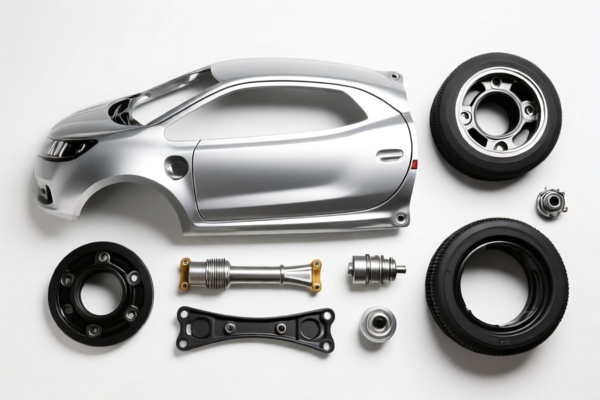

AI Analysis
🚗 Vehicle Body Parts & Body Kits (Automotive Body Components)
🌐 HS Code Reference & Customs Clearance Guide | 2026 Latest Tariff Breakdown | Strategic Compliance Strategy
📌 One: Product Definition & Classification: Do You Really Know "Body Parts"?
Vehicle Body Parts encompass a wide range of components used for the structure, appearance, and function of motor vehicles. In international trade, they are primarily categorized based on function (body assembly vs. parts) and material/form.
Key categories include:
- Complete Body Assemblies (8707): Full vehicle bodies, chassis, or cabs intended for assembly into complete vehicles.
- Body Parts & Accessories (8708): Individual components like bumpers, fenders, doors, hoods, and body kits (aerodynamic add-ons) that attach to an existing vehicle.
⚠️ Critical Distinction:
- If the item is a complete, self-contained body/cab (e.g., for a truck or specialized vehicle) → Likely 8707.
- If the item is a component or accessory (e.g., a bumper, side skirt, or "body kit") meant to be attached to a vehicle → Likely 8708.
📦 Two: HS Code Classification Details (2026 Tariff Authority对照)
Based on the provided data for Body Kits and related parts, here is the detailed breakdown:
| HS Code | Product Description | Rationale for Classification | Applicable Scenario |
|---|---|---|---|
| 8708.29.51.60 | Body Kits / Body Parts (General Category) | Defined as "body parts/accessories" fitting the definition of "other body parts." Matches component-level rules. | Standard body kits, aftermarket accessories, non-specialized body parts. |
| 8708.29.25.00 | Body Kits (Pressed Components) | Belongs to the "body parts" category; includes stamped/pressed parts; no material/form conflicts. | Stamped steel/aluminum body kits, pressed sheet metal components. |
| 8707.10.00.20 | Vehicle Body Assemblies | Functions as a vehicle body part; fits the definition of "body (including cab)"; no material conflicts. | Complete body shells, cabs, or major structural assemblies. |
| 8707.10.00.40 | Other Vehicle Bodies | Part of the vehicle body; consistent with "other vehicle body" category; no conflicts. | Non-standard bodies, specialized bodies for trucks/trailers. |
| 8708.99.48.50 | Air Conditioning Parts | Vehicle parts/accessories; logical fit for parts even if material isn't explicitly stated. | Note: Included for comparison; strictly for AC parts, not body kits. |
🔍 Key Insight:
- Body Kits (most common inquiry) generally fall under 8708 (Parts & Accessories), specifically sub-headings 8708.29.
- Complete Bodies fall under 8707. Confusing the two leads to significant tax discrepancies.
- Material/Form: For 8708.29.25.00, the presence of "pressed parts" is a key identifier for this specific sub-code.
💰 Three: 2026 Tariff Rate Breakdown (Including Surcharges & Policy Add-ons)
✅ Applicable Market: United States (US)
✅ Country of Origin: China (CN)
✅ Effective Date: Based on current "Section 301" and "122"条款 (10% Steel/Aluminum/Copper) policies.
🎯 1. HS Code 8708.29.51.60 — General Body Kits & Parts
| Item | Content |
|---|---|
| Base Tariff | 2.5% |
| Section 301 Surcharge | +25.0% (General US-China Trade War Tariff) |
| Section 122 Surcharge | +50.0% (Specific to 10% Steel/Aluminum/Copper products) |
| Total Tariff | 77.5% |
| Tax Calculation | CIF Value × 77.5% |
| De Minimis Exemption | ❌ NO (Strictly excluded) |
| Legal Path | HTS:8708.29.51.60 → 301:25% + 122:50% |
📌 Explanation:
- This is a High-Tax Category. The 50% "122 Clause" surcharge applies if the body kit contains significant steel, aluminum, or copper content.
- Total cost impact is nearly 80% on top of product value.
🎯 2. HS Code 8708.29.25.00 — Pressed Body Components
| Item | Content |
|---|---|
| Base Tariff | 2.5% |
| Section 301 Surcharge | +25.0% |
| Section 122 Surcharge | +10.0% (Standard "10% Steel/Aluminum" tier) |
| Total Tariff | 37.5% |
| Tax Calculation | CIF Value × 37.5% |
| De Minimis Exemption | ❌ NO |
| Legal Path | HTS:8708.29.25.00 → 301:25% + 122:10% |
📌 Explanation:
- This code often applies to pressed metal parts where the material content triggers a lower (10%) steel/aluminum surcharge rather than the full 50%.
- Crucial Strategy: Verify material composition to see if 10% or 50% applies.
🎯 3. HS Code 8707.10.00.20 / 8707.10.00.40 — Complete Vehicle Bodies
| Item | Content |
|---|---|
| Base Tariff | 2.5% |
| Section 301 Surcharge | +25.0% |
| Section 122 Surcharge | +10.0% (Standard Steel/Aluminum) |
| Total Tariff | 37.5% |
| Tax Calculation | CIF Value × 37.5% |
| De Minimis Exemption | ❌ NO |
| Legal Path | HTS:8707.10 → 301:25% + 122:10% |
📌 Explanation:
- Complete bodies (8707) attract 37.5% total tax.
- Difference: The 50% surcharge (seen in 8708.29.51.60) is NOT applied here, only the 10% steel/aluminum surcharge.
🎯 4. HS Code 8708.99.48.50 — Air Conditioning Parts (Reference Only)
| Item | Content |
|---|---|
| Base Tariff | 0.0% |
| Section 301 Surcharge | +25.0% |
| Section 122 Surcharge | +10.0% |
| Total Tariff | 35.0% |
| Tax Calculation | CIF Value × 35.0% |
📌 Note: This is for AC parts, not body kits. Included for completeness in the dataset.
🛠️ Four: Customs Clearance Practical Advice (Pitfall Avoidance)
✅ 1. Material Composition is King
🔥 Strategy: "Material determines the surcharge tier (10% vs. 50%)."
- Action: Before shipping, provide a Bill of Materials (BOM) detailing the percentage of Steel, Aluminum, and Copper in your body kit.
- Risk: If the product is 90% aluminum, it might fall under the 50% surcharge (8708.29.51.60). If it's mixed with plastic/low-alloy, it might qualify for the 10% tier (8708.29.25.00).
✅ 2. "Body Kit" vs. "Complete Body"
🔥 Strategy: "Don't confuse parts with whole structures."
- Action: Clearly define the product in the Commercial Invoice.
- Correct: "Aftermarket Body Kit (Bumper, Side Skirts, Spoiler)" → 8708.
- Incorrect: Calling a full set of panels a "Vehicle Body" when they are individual parts → 8707 (Different tax rules).
- Risk: Misclassification can lead to audits and penalties.
✅ 3. Packaging & Declaration
| Item | Requirement | Reason |
|---|---|---|
| Product Photos | Must show assembly state | To prove it's an accessory (8708) not a full body (8707). |
| BOM / Material Sheet | List % of Steel/Al/Cu | To justify the 10% vs. 50% surcharge calculation. |
| Part Numbers | List specific OEM/Aftermarket codes | Helps Customs verify "Parts & Accessories" classification. |
| HS Code Selection | 8708.29.25.00 preferred if possible | Lower total tax (37.5%) vs. 8708.29.51.60 (77.5%). |
✅ 4. Special Case: Aluminum/Steel Content
⚠️ Critical Warning:
- The 50% surcharge for 8708.29.51.60 is triggered by "Steel/Aluminum/Copper" content under Section 122.
- Action: If your body kit is mostly carbon fiber, plastic, or fiberglass, argue for 8708.29.25.00 to avoid the 50% spike.
🌍 Five: Global Market Comparison (2026 Context)
| Region | Recommended HS Code | Est. Tariff (China Origin) | Key Risk |
|---|---|---|---|
| 🇺🇸 USA | 8708.29.25.00 / 8708.29.51.60 | 37.5% ~ 77.5% | High Risk: 50% surcharge on metal-heavy kits. |
| 🇪🇺 EU | 8708.29 | 4.5% + VAT | No Section 301/122; stable rates. |
| 🇨🇳 China | 8708.29 | 0% - 2.5% | No export tax on body parts. |
| 🇯🇵 Japan | 8708.29 | 0% | Free trade agreement benefits. |
📌 Conclusion:
- The US market is the most hostile due to the 50% steel/aluminum surcharge on specific body kits.
- EU and Asia are safer markets for body kits.
- Strategy: Consider warehousing in Mexico or Canada (if applicable under USMCA) to potentially mitigate US tariffs.
📌 Six: Common Mistakes & How to Avoid Them
❌ Mistake 1: Assuming all body parts have the same tax.
👉 Reality: Metal-heavy kits (8708.29.51.60) = 77.5% vs. Pressed parts (8708.29.25.00) = 37.5%.
👉 Fix: Audit your material composition immediately.
❌ Mistake 2: Declaring a "Body Kit" as "Complete Body" (8707) to save tax.
👉 Reality: Customs may reject "Complete Body" if the item is just a bumper or spoiler.
👉 Fix: Use accurate descriptions: "Bumper Assembly," "Body Kit."
❌ Mistake 3: Ignoring the "122 Clause" Steel/Aluminum surcharge.
👉 Reality: The 50% add-on is automatic for specific metal components.
👉 Fix: Use non-metallic materials (plastic/composite) where possible to bypass the 50% tier.
✅ Correct Declaration Example:
"Aftermarket Polypropylene and Fiberglass Body Kit (Bumper, Side Skirts, Spoiler) for [Vehicle Model]. Material: 80% Plastic, 20% Fiberglass. HS Code: 8708.29.25.00."
🎯 Seven: Final Verdict & Action Plan
🎯 Remember the Rules:
🔹 "Metal = 50% Surcharge (If high content), Plastic = 10% Surcharge (If low content)."
🔹 "Complete Body (8707) = 37.5% | Parts (8708) = 37.5% ~ 77.5%."
🔹 "Don't guess the HS Code; verify material %!"
📌 Pro Tip:
If your body kits contain >10% Steel/Aluminum, you are likely facing the 50% surcharge.
Solution:
1. Switch to Carbon Fiber/Plastic dominated kits.
2. Declare under 8708.29.25.00 with strong material proof.
3. Apply for Section 301 Exclusions (if eligible).
📣 Immediate Action:
📞 Contact a Customs Broker to review your BOM (Bill of Materials).
🚀 Re-classify if you can shift from "Heavy Metal" to "Light Material" to save 40% in taxes!
✨ Professional Customs Compliance: Precision is Profit!
💼 Every percentage point of tax saves you thousands!
Customer Reviews
About HS Code Classification
The Harmonized System (HS) is an internationally standardized nomenclature developed by the World Customs Organization (WCO) to classify traded products. Over 200 countries use the HS system as the basis for customs tariffs, trade statistics, and import/export regulations.
Each HS code follows a hierarchical structure:
- Chapter (2 digits) — Broad category of goods (e.g., Chapter 84: Machinery and Mechanical Appliances)
- Heading (4 digits) — More specific grouping within the chapter
- Subheading (6 digits) — Internationally standardized breakdown, used by all WCO member countries
- National subdivisions (8-10 digits) — Country-specific extensions for further classification, such as US HTSUS 10-digit codes
Correct HS code classification is essential for smooth customs clearance, accurate duty payment, and compliance with trade regulations. Misclassification can lead to customs delays, overpayment of duties, or penalties.
When importing from CN to US, the applicable tariff rates may include:
- Most-Favored-Nation (MFN) rate — The standard duty rate applied to WTO members
- General rate — Applied to countries without trade agreements
- Trade remedy duties — Additional tariffs such as Section 301 (anti-dumping), Section 232 (national security), or countervailing duties
The information provided on this page is for reference purposes only. For official classification, please consult with your local customs authority or a licensed customs broker.