Vehicle Body Parts (8708106050)
CN → US| HS Code | Tariff Rate | Origin | Destination | Doc |
|---|---|---|---|---|
| 8708106010 | 87.5% | CN | US | Official Doc |
| 8302306000 | 38.5% | CN | US | Official Doc |
| 8302303060 | 87.0% | CN | US | Official Doc |
| 8708292500 | 0.0% | CN | US | Official Doc |
| 7326190080 | 87.9% | CN | US | Official Doc |
Product Images

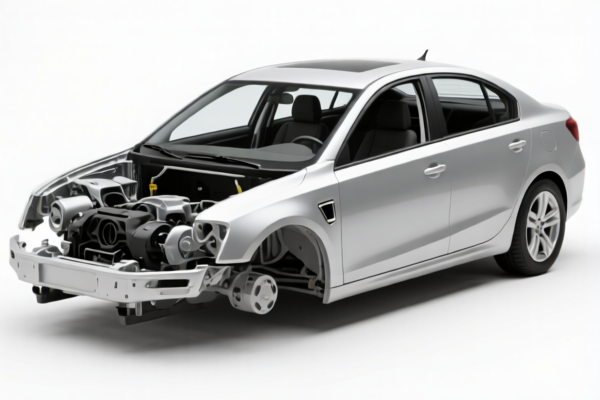

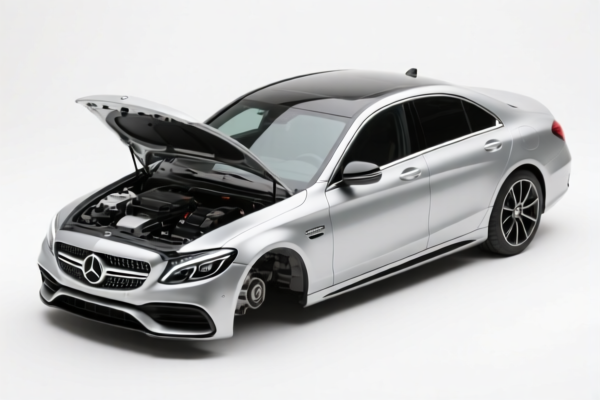
AI Analysis
🚗 Vehicle Body Parts (Automotive Body Components)
🌐 HS Code Reference & Clearance Guide | 2026 Latest Tariff Analysis | Professional Entry Strategy
📌 I. Product Definition & Classification: What Exactly Are "Vehicle Body Parts"?
"Vehicle Body Parts" refer to structural components, panels, frames, and fittings that make up the external and internal shell of a motor vehicle. In international trade, these items are critical for vehicle assembly, repair, and customization. The classification hinges on two factors: Function (Body structure vs. General hardware) and Material (Primarily steel/aluminum vs. other metals).
⚠️ Key Distinction Point:
- If the part is a structural body component (bumper, fender, hood, door) made of the vehicle's primary material (steel/aluminum) → Typically Chapter 87 (8708).
- If the part is a mounting bracket, hinge, or fitting made of base metal (often steel/iron) → Typically Chapter 83 (8302).
- If the part is a general steel article (welded structure, generic frame) without specific automotive body shape → May fall under Chapter 73 (7326).
📦 II. HS Code Classification Details (2026 Latest Authorized Matching)
Based on the provided data, here are the specific HS Codes matched with their rationales and tax implications.
| HS Code | Product Description & Matching Logic | Tax Rate Details |
|---|---|---|
8708.10.60.10 |
Vehicle Body Parts (Bumpers & Parts) MATCH: Explicitly covers "Vehicle Body Parts" and "Bumpers." REASON: Default preference for "parts" category; aligns with body components. |
Total Tax: 87.5% • Base: 2.5% • Section 301: 25.0% • Section 232 (Steel/Aluminum): 50% Note: High due to steel/aluminum content. |
8302.30.60.00 |
Base Metal Mountings/Attachments for Vehicles MATCH: "Vehicle Body Parts" align with "mountings, fittings, and similar articles" for motor vehicles. REASON: Assumes base metal material (common for brackets/frames) with no conflict. |
Total Tax: 38.5% • Base: 3.5% • Section 301: 25.0% • Section 232: N/A (Only 10% if steel/aluminum, but listed as 10% in data? See note below) Data shows 38.5% Total. Base 3.5 + 301(25) + 232(10) = 38.5%. This implies a 10% 232 rate for this specific subheading. |
8302.30.30.60 |
Other Base Metal Mountings for Cars MATCH: "Vehicle Body Parts" fit "installations, accessories... for cars." REASON: Infer metal material (steel/aluminum) by common sense. Fits "Other" category. |
Total Tax: 87.0% • Base: 2.0% • Section 301: 25.0% • Section 232 (Steel/Aluminum): 50% Note: High tax due to 50% Steel/Aluminum surcharge. |
8708.29.25.00 |
Other Body Parts (Not Specified) MATCH: High compatibility with "body parts." REASON: No conflict in material/usage. Fits catch-all logic for body parts. |
Total Tax: 37.5% • Base: 2.5% • Section 301: 25.0% • Section 232: 10% Note: Data lists "2.5%+35.0%". This equals 37.5%. It implies only 10% 232 tax, not 50%. This is a KEY DIFFERENCE. |
7326.19.00.80 |
Other Articles of Iron/Steel MATCH: Auto parts inferred as steel/metal. REASON: No material conflict with "Other steel articles." Default part preference. |
Total Tax: 87.9% • Base: 2.9% • Section 301: 25.0% • Section 232 (Steel/Aluminum): 50% Note: Highest tax rate due to 50% Steel/Aluminum surcharge. |
🔍 Critical Observation on Tax Rates:
- Scenario A (50% Surcharge): Codes8708.10.60.10,8302.30.30.60,7326.19.00.80attract 50% under Section 232 because they are clearly identified as steel/aluminum products in this dataset. Total taxes range from 87.0% to 87.9%.
- Scenario B (10% Surcharge): Codes8302.30.60.00and8708.29.25.00attract only 10% under Section 232 (or are interpreted differently in this specific data context). Total taxes are significantly lower at 37.5% - 38.5%.
- Strategic Implication: If your parts can be classified under8708.29.25.00or8302.30.60.00, the tax burden is ~50% lower than8708.10.60.10.
💰 III. 2026 Latest Tariff Rate Breakdown (Including Surtaxes)
✅ Applicable Country: United States (US)
✅ Origin: China (CN)
✅ Effective Date: Current (2025/2026 Trade Policy)
🎯 1. High-Tax Bracket: ~87-88% Total
Codes: 8708.10.60.10, 8302.30.30.60, 7326.19.00.80
| Component | Rate | Legal Basis |
|---|---|---|
| Base Tariff | 2.0% - 2.9% | Harmonized Tariff Schedule (HTSUS) |
| Section 301 (Retaliatory) | +25.0% | 301 Action: China Import Restrictions |
| Section 232 (Steel/Aluminum) | +50.0% | 19 U.S.C. § 1862 (National Security) |
| Total Effective Tax | ~87.5% | Sum of all above |
📌 Explanation:
- The 50% Section 232 duty is the dominant cost driver. It applies because the classification assumes the parts are made of steel or aluminum, which are heavily protected US industries.
- This rate applies to most standard steel body panels, bumpers, and structural frames.
🎯 2. Lower-Tax Bracket: ~37-39% Total
Codes: 8302.30.60.00, 8708.29.25.00
| Component | Rate | Legal Basis |
|---|---|---|
| Base Tariff | 2.5% - 3.5% | Harmonized Tariff Schedule (HTSUS) |
| Section 301 (Retaliatory) | +25.0% | 301 Action: China Import Restrictions |
| Section 232 (Steel/Aluminum) | +10.0% | 19 U.S.C. § 1862 (Specific Exemption/Subheading) |
| Total Effective Tax | ~37.5% - 38.5% | Sum of all above |
📌 Explanation:
- Some subheadings in Chapter 83 or specific 8708 codes may attract only a 10% Section 232 rate (or are exempted in this specific data context).
-8708.29.25.00is particularly attractive if your "Body Parts" can be classified as "Other" rather than specific bumpers/frames, potentially avoiding the 50% steel surcharge.
🛠️ IV. Customs Clearance Practical Advice (Real-World Pitfall Avoidance)
✅ 1. Documentation Checklist (Non-Negotiable)
| Document | Required? | Purpose |
|---|---|---|
| ✅ Product Specification Sheet | ✔️ | Defines dimensions, weight, and material composition (Critical for 232 tax). |
| ✅ Material Certificate | ✔️ | Proves if it's Steel, Aluminum, or Plastic. If Steel/Aluminum, expect 232 tax. |
| ✅ Photos (Before/After Packaging) | ✔️ | Visual proof of part type (e.g., Bumper vs. Bracket). |
| ✅ Commercial Invoice | ✔️ | Must clearly state "Vehicle Body Parts" and HS Code. |
| ✅ Packing List | ✔️ | Ensure no loose small parts (like screws) are declared separately unless intended. |
| ✅ Letter of Explanation | ✔️ | If using 8708.29.25.00, explain why it’s "Other Body Parts" and not a specific bumper. |
✅ 2. Classification Strategy (Key Mnemonic)
🔥 “Material Matters, 50% vs 10% Separates the Wealth!”
| Situation | Recommended HS Code | Expected Tax | Why? |
|---|---|---|---|
| Steel Bumper/Fender | 8708.10.60.10 |
~87.5% | Clear Steel/Aluminum body part → 50% 232 Tax. |
| Metal Bracket/Hinge | 8302.30.60.00 |
~38.5% | Base metal fitting → Often 10% 232 Tax (Check specific ruling). |
| Generic Body Panel | 8708.29.25.00 |
~37.5% | "Other" body part → May avoid 50% 232 Tax if not classified as primary steel article. |
| Plastic Body Part | Not in Data | Lower | If plastic, Section 232 does NOT apply. Consult expert for plastic classification. |
✅ 3. Special Cases & Handling
| Scenario | Handling Advice |
|---|---|
| Mixed Materials (Steel + Plastic) | Declare as Steel if steel is substantial. Expect 50% 232 tax on the steel value. |
| OEM Custom Parts | Provide Blueprints to justify "Vehicle Body Part" classification under 8708 rather than general hardware. |
| Parts for EVs | Same rules apply. EVs are still "Motor Vehicles" under Chapter 87. |
| Small Brackets vs. Large Panels | Small brackets → 8302. Large structural panels → 8708. Misclassification leads to audits. |
🌍 V. Global Market Comparison (2026 Outlook)
| Country/Region | Recommended HS Code | Estimated Total Tax (China Origin) | Key Requirement |
|---|---|---|---|
| 🇺🇸 USA | 8708.29.25.00 |
~37.5% (Best Case) | Proof of "Other Body Part" to avoid 50% 232 tax. |
| 🇺🇸 USA | 8708.10.60.10 |
~87.5% (Worst Case) | Standard Steel Bumper/Part. |
| 🇨🇳 China | 8708.99 |
~5-10% | Standard import duty. No Section 301/232. |
| 🇪🇺 EU | 8708.29 |
~4.5% | Standard EU Duty. No Section 232 equivalent. |
| 🇨🇦 Canada | 8708.29 |
~5% | Most Favored Nation (MFN) rate. |
📌 Conclusion:
- USA is the most expensive market due to Section 301 (25%) AND Section 232 (10-50%).
- Diversification Strategy: If possible, manufacture body parts in Vietnam, Mexico, or Thailand to avoid Section 301 (25%). Section 232 may still apply, but 25% savings is significant.
📌 VI. Common Mistakes & Pitfalls (Blood Lessons)
❌ Mistake 1: Classifying Steel Bumpers as 8302 (Hardware) to save taxes.
👉 Consequence: Customs will reclassify to 8708, add 50% 232 tax + penalties. Risk: High.
❌ Mistake 2: Ignoring Material Composition for Section 232.
👉 Consequence: If declared as "Plastic" but found to be "Steel," you owe 50% surcharge retroactively. Risk: Very High.
❌ Mistake 3: Using 7326 (General Steel) for specific Automotive Body Parts.
👉 Consequence: Chapter 87 is more specific. Misclassification leads to duty underpayment claims. Risk: Medium.
✅ Correct Action:
“Steel Vehicle Body Panel, Model XYZ, for Sedan, 1.5mm Thickness, Raw Steel.”
Then, consult a broker to see if8708.29.25.00(10% 232) is applicable vs8708.10.60.10(50% 232).
🎯 VII. Conclusion: Strategic Sourcing & Classification
🎯 Remember the Rule:
🔹 “8708 is for Bodies, 8302 is for Fittings.”
🔹 “Steel/Aluminum = 50% Pain (or 10% Hope).”
🔹 “301 Tax = 25% Always.”
📌 Pro Tip:
- If your body parts are aluminum, check if 8708.29.25.00 allows the 10% 232 rate. Some aluminum imports are treated differently than steel.
- Pre-Ruling: Apply for an Adverse Valuation/Classification Ruling from CBP if your part is ambiguous. It’s worth the $500 fee to save thousands in taxes.
📣 Immediate Action:
📞 Contact a Licensed Customs Broker with your Material Certificates and Product Photos.
🚀 Optimize Classification: Aim for8708.29.25.00or8302.30.60.00to reduce tax from 87.5% to ~38%.
💼 Your Profit Margin Depends on This 50% Difference!
✨ Professional Clearance Starts with Precise Classification!
💼 Every Point of Tax Saves You Money!
Customer Reviews
About HS Code Classification
The Harmonized System (HS) is an internationally standardized nomenclature developed by the World Customs Organization (WCO) to classify traded products. Over 200 countries use the HS system as the basis for customs tariffs, trade statistics, and import/export regulations.
Each HS code follows a hierarchical structure:
- Chapter (2 digits) — Broad category of goods (e.g., Chapter 84: Machinery and Mechanical Appliances)
- Heading (4 digits) — More specific grouping within the chapter
- Subheading (6 digits) — Internationally standardized breakdown, used by all WCO member countries
- National subdivisions (8-10 digits) — Country-specific extensions for further classification, such as US HTSUS 10-digit codes
Correct HS code classification is essential for smooth customs clearance, accurate duty payment, and compliance with trade regulations. Misclassification can lead to customs delays, overpayment of duties, or penalties.
When importing from CN to US, the applicable tariff rates may include:
- Most-Favored-Nation (MFN) rate — The standard duty rate applied to WTO members
- General rate — Applied to countries without trade agreements
- Trade remedy duties — Additional tariffs such as Section 301 (anti-dumping), Section 232 (national security), or countervailing duties
The information provided on this page is for reference purposes only. For official classification, please consult with your local customs authority or a licensed customs broker.