Vehicle Body Parts (8708926000)
CN → US| HS Code | Tariff Rate | Origin | Destination | Doc |
|---|---|---|---|---|
| 8708106010 | 87.5% | CN | US | Official Doc |
| 8302306000 | 38.5% | CN | US | Official Doc |
| 8302303060 | 87.0% | CN | US | Official Doc |
| 7326190080 | 87.9% | CN | US | Official Doc |
Product Images
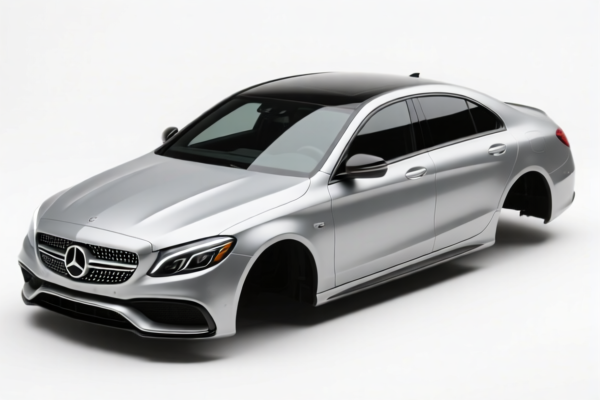
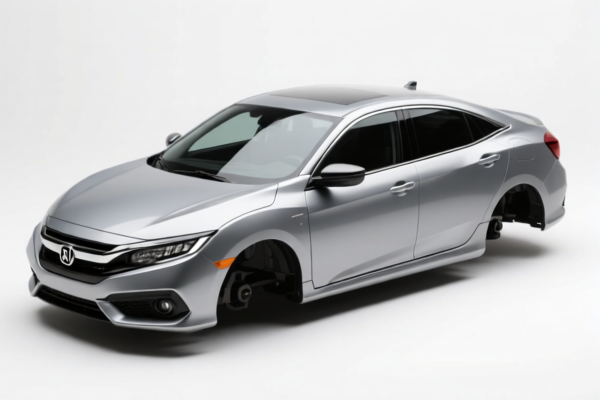
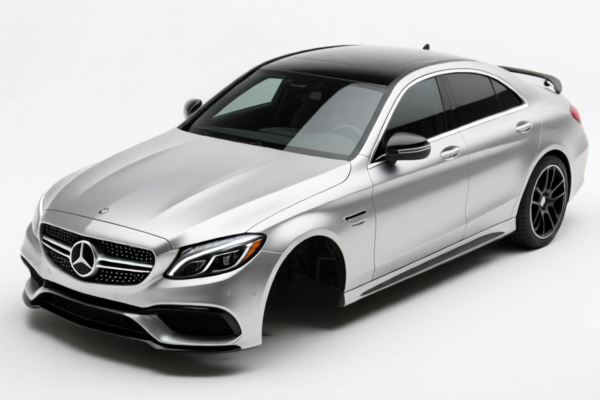

AI Analysis
🚗 Vehicle Body Parts (General Category Analysis)
🌐 HS Code Reference & Customs Clearance Guide | 2026 Latest Tariff Analysis | Professional Clearance Strategy
📌 I. Product Definition & Classification: What are "Vehicle Body Parts"?
"Vehicle Body Parts" is a broad industrial term referring to components that make up the structural frame, outer shell, or protective elements of a motor vehicle. In international trade, these are typically categorized under Chapter 87 (Vehicles other than railway or tramway rolling stock) or Chapter 83 (Base metal articles) depending on material and specific function.
Key Distinction Points: * Specific vs. Generic: If the part is specifically designed for a car bumper, it may fall under 8708.10. If it is a generic mounting bracket, lock, or hinge made of base metal, it may fall under 8302. If it is a miscellaneous steel制品, it may fall under 7326. * Material Basis: The HS Code determination heavily relies on whether the part is considered a "specialized automotive part" (Ch. 87) or a "general base metal article" (Ch. 83/73).
⚠️ Critical Note:
- The user input(8708926000)appears to be a generic or internal code, not a standard 10-digit US HTSUS code.
- Based on the provided<DATA>, the analysis focuses on four potential HS Codes with varying tariff implications due to Section 301, 232, and IEEPA tariffs.
📦 II. HS Code Classification Details (Based on Provided Data)
The following analysis is strictly derived from the provided <DATA> JSON content.
| HS Code | Product Description & Logic | Total Tax Rate | Key Tariff Components |
|---|---|---|---|
8708.10.60.10 |
Vehicle Body Parts Logic: Matches "Car Bumpers & Parts" (Body Components). Default preference for "parts" category. |
87.5% | Base: 2.5% + Sec 301: 25.0% + IEEPA 122: 10% + Sec 232 (Steel/Alu/Cu): 50% |
8302.30.60.00 |
Mounting Hardware / Accessories Logic: "Vehicle Body Parts" match "Mounting articles & accessories for vehicles". Assumed base metal material. |
38.5% | Base: 3.5% + Sec 301: 25.0% + IEEPA 122: 10% (No Sec 232) |
8302.30.30.60 |
Other Base Metal Mounting Parts Logic: Similar to above, classified under "Other" base metal mounting articles. Assumed metallic material. |
87.0% | Base: 2.0% + Sec 301: 25.0% + IEEPA 122: 10% + Sec 232 (Steel/Alu/Cu): 50% |
7326.19.00.80 |
Other Steel Articles Logic: Miscellaneous steel parts not specified elsewhere. Fits "Other Steel Articles" fallback. |
87.9% | Base: 2.9% + Sec 301: 25.0% + IEEPA 122: 10% + Sec 232 (Steel/Alu/Cu): 50% |
💰 III. 2026 Latest Tariff Rate Breakdown (Detailed)
✅ Applicable Country: United States (US)
✅ Origin: China (CN) (Implied by the high "Additional Tariffs" typical of US-China trade context)
✅ Context: The taxes listed include Base Rates, Section 301 (Trade War), Section 122 (IEEPA), and Section 232 (Steel/Aluminum).
🎯 1. 8708.10.60.10 — Car Bumpers & Parts (Highest Risk)
| Item | Content |
|---|---|
| Base Duty | 2.5% |
| Section 301 Duty | +25.0% |
| IEEPA Section 122 Duty | +10.0% |
| Section 232 Duty (Steel/Alu/Cu) | +50.0% |
| Total Effective Rate | 87.5% |
| Calculation | CIF Value × 87.5% |
| De Minimis Exemption | ❌ NOT AVAILABLE |
📌 Explanation:
- This code is targeted as a "Car Bumper." Bumpers often contain steel/aluminum reinforcements, triggering the 50% Section 232 tariff.
- Combined with the 25% Section 301 and 10% IEEPA tariffs, the total duty exceeds 87%, making this one of the highest-cost categories.
🎯 2. 8302.30.60.00 — Base Metal Mounting Accessories (Lower Risk)
| Item | Content |
|---|---|
| Base Duty | 3.5% |
| Section 301 Duty | +25.0% |
| IEEPA Section 122 Duty | +10.0% |
| Section 232 Duty | 0% |
| Total Effective Rate | 38.5% |
| Calculation | CIF Value × 38.5% |
| De Minimis Exemption | ❌ NOT AVAILABLE |
📌 Explanation:
- This code classifies items as "Base metal mountings" (e.g., brackets, hinges).
- Crucially, it does NOT include the 50% Section 232 steel tariff. This makes it significantly cheaper than other options.
- However, it requires proving the item is a "mounting/accessory" and not a primary "body panel" or "bumper."
🎯 3. 8302.30.30.60 — Other Base Metal Articles
| Item | Content |
|---|---|
| Base Duty | 2.0% |
| Section 301 Duty | +25.0% |
| IEEPA Section 122 Duty | +10.0% |
| Section 232 Duty (Steel/Alu/Cu) | +50.0% |
| Total Effective Rate | 87.0% |
| Calculation | CIF Value × 87.0% |
| De Minimis Exemption | ❌ NOT AVAILABLE |
📌 Explanation:
- Similar to8708.10.60.10, this code attracts the heavy 50% steel tariff if the item contains steel/aluminum.
- The lower base rate (2.0%) saves only 0.5% compared to the bumper code, but the total remains prohibitively high.
🎯 4. 7326.19.00.80 — Other Steel Articles
| Item | Content |
|---|---|
| Base Duty | 2.9% |
| Section 301 Duty | +25.0% |
| IEEPA Section 122 Duty | +10.0% |
| Section 232 Duty (Steel/Alu/Cu) | +50.0% |
| Total Effective Rate | 87.9% |
| Calculation | CIF Value × 87.9% |
| De Minimis Exemption | ❌ NOT AVAILABLE |
📌 Explanation:
- This is a "catch-all" for steel articles. It incurs the highest total duty (87.9%) because it combines the base rate with all additional tariffs.
- Only use if the part cannot be classified as a specific vehicle part or mounting hardware.
🛠️ IV. Customs Clearance Practical Advice (Pitfall Avoidance)
✅ 1. Strategic HS Code Selection
The difference between 38.5% and 87.5% is massive. Your primary goal should be to justify a classification under 8302.30.60.00 (or similar non-232 codes) if possible.
| Scenario | Recommended Approach | Why? |
|---|---|---|
| Bumpers, Fenders, Hoods | Likely 8708.10.60.10 |
These are defined as "Parts of Bodies." High tariff unavoidable. |
| Mounting Brackets, Hinges, Latches | Aim for 8302.30.60.00 |
These are "Mounting Articles." If structured correctly, they may avoid the 50% steel tariff. |
| Generic Steel Brackets | Aim for 8302.30.60.00 or 7326.19.00.80 |
Check if it fits "Base metal mountings" better than "Other steel articles." |
✅ 2. Documentation Requirements
To support a lower-tariff classification (e.g., 8302.30.60.00), you must provide:
| Document | Purpose |
|---|---|
| Detailed Product Description | Explicitly state "Mounting Bracket," "Hinge," or "Accessories," NOT "Car Body Panel." |
| Technical Drawings | Show that the part is for attachment/mounting, not structural body integrity. |
| Material Composition Report | Prove if the item contains significant steel/aluminum. If it's mostly plastic/non-metal, Section 232 may not apply at all (though <DATA> assumes metal). |
| Fitment Guide | Proof that it is an accessory, not a primary body part. |
✅ 3. Critical Warnings
🔥 The "Steel/Aluminum" Trap:
If your "Vehicle Body Part" contains steel, aluminum, or copper (even as a structural component), it is highly likely to be subject to the 50% Section 232 Tariff.
- Code8302.30.60.00is the ONLY option in the data that excludes the 50% steel tariff.
- To use this, you must argue the item is a "base metal article" (accessory) rather than a "vehicle part" (structural).⚠️ De Minimis (Section 321) is OFF:
All codes listed have 87.5% / 38.5% / 87.0% / 87.9% total tax. There is no de minimis exemption. Every shipment is subject to these duties, regardless of value.
🌍 V. Global Market Comparison (2026)
| Market | Likely HS Code | Est. Duty Rate | Notes |
|---|---|---|---|
| 🇺🇸 USA (China Origin) | 8302.30.60.00 (Best Case) |
38.5% | Avoids 50% steel tariff if classified as mounting hardware. |
| 🇺🇸 USA (China Origin) | 8708.10.60.10 (Worst Case) |
87.5% | Applies if classified as bumper/body panel with steel content. |
| 🇨🇳 China | Varies | 0-10% | Generally lower duties, but focus is on US import costs here. |
| 🇪🇺 EU | 8708 (Parts) | Varies (usually 0-4.5%) | EU does not have Section 301/232 tariffs. Much cheaper. |
📌 Conclusion:
For imports into the US from China, the classification is critical.
- If the part is a bracket, hinge, or latch, fight for8302.30.60.00to save ~49% in duties.
- If the part is a bumper, fender, or door, expect 87.5% duty.
📌 VI. Common Errors & Pitfalls
❌ Error 1: Listing the item simply as "Car Part"
👉 Consequence: Customs may default to 8708 or 7326, triggering the 50% steel tariff.
✅ Fix: Be specific. "Aluminum Mounting Bracket for Vehicle Body."
❌ Error 2: Ignoring Section 232 Material Content
👉 Consequence: If steel is found, the 50% penalty applies even to 8302 codes unless specifically exempted.
✅ Fix: Ensure the product definition aligns with non-steel base metals or specific exemption categories if possible.
❌ Error 3: Assuming "De Minimis" Applies
👉 Consequence: Under $800 shipments will still be taxed if declared under these HS codes.
✅ Fix: Budget for the full tax rate in all pricing models.
🎯 VII. Final Recommendation
🎯 Key Takeaway:
"Classification is King. 38.5% vs 87.5% is a Battle."
- Audit your parts: Are they structural body panels (Bumpers/Fenders) or mounting hardware (Brackets/Hinges)?
- If Hardware: Push for
8302.30.60.00. This is the only path to avoid the crippling 50% steel tariff. - If Structural: Prepare for ~87.5% duty. Explore duty drawback programs or supply chain shifts if margins are tight.
📣 Immediate Action:
📞 Contact a Customs Broker to review the Technical Specifications of your "Vehicle Body Parts."
📝 Request a Tariff Classification Ruling for critical items to secure the8302.30.60.00rate.
🚀 Do not ship without verifying if your part is considered "Steel/Aluminum" under Section 232.
✨ Smart Classification, Smarter Profits!
💼 Every percentage point saved is pure margin.
Customer Reviews
About HS Code Classification
The Harmonized System (HS) is an internationally standardized nomenclature developed by the World Customs Organization (WCO) to classify traded products. Over 200 countries use the HS system as the basis for customs tariffs, trade statistics, and import/export regulations.
Each HS code follows a hierarchical structure:
- Chapter (2 digits) — Broad category of goods (e.g., Chapter 84: Machinery and Mechanical Appliances)
- Heading (4 digits) — More specific grouping within the chapter
- Subheading (6 digits) — Internationally standardized breakdown, used by all WCO member countries
- National subdivisions (8-10 digits) — Country-specific extensions for further classification, such as US HTSUS 10-digit codes
Correct HS code classification is essential for smooth customs clearance, accurate duty payment, and compliance with trade regulations. Misclassification can lead to customs delays, overpayment of duties, or penalties.
When importing from CN to US, the applicable tariff rates may include:
- Most-Favored-Nation (MFN) rate — The standard duty rate applied to WTO members
- General rate — Applied to countries without trade agreements
- Trade remedy duties — Additional tariffs such as Section 301 (anti-dumping), Section 232 (national security), or countervailing duties
The information provided on this page is for reference purposes only. For official classification, please consult with your local customs authority or a licensed customs broker.