Vehicle Body Parts (8708947000)
CN → US| HS Code | Tariff Rate | Origin | Destination | Doc |
|---|---|---|---|---|
| 8708106010 | 87.5% | CN | US | Official Doc |
| 8302306000 | 38.5% | CN | US | Official Doc |
| 8302303060 | 87.0% | CN | US | Official Doc |
| 7326190080 | 87.9% | CN | US | Official Doc |
Product Images

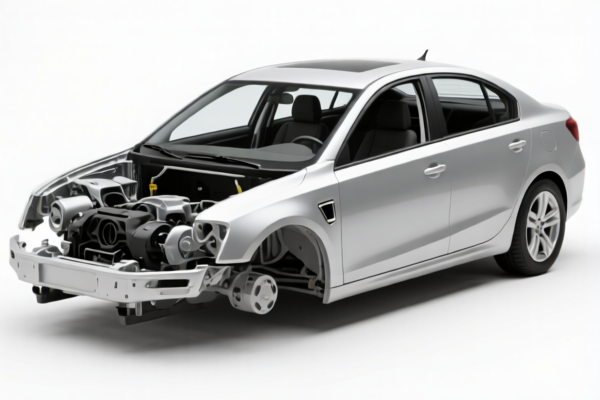

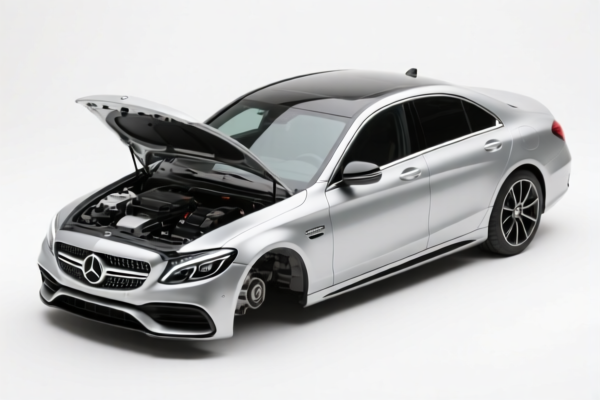
AI Analysis
🚗 Vehicle Body Parts (HS Code 8708.94.70.00 Reference)
🌐 HS Code Classification & Customs Clearance Guide | 2026 Tax & Tariff Breakdown | Strategic Compliance
📌 I. Product Definition: What Are "Vehicle Body Parts"?
"Vehicle Body Parts" is a broad category in international trade, referring to components that make up the external or structural shell of an automobile. In the Harmonized System (HS), these fall under Heading 87.08: Parts and accessories of the motor vehicles of headings 87.01 to 87.05.
However, because the term "Vehicle Body Parts" is generic, customs authorities require precise classification based on material and specific function. The provided data highlights four potential classifications, each with drastically different tax implications due to trade wars (Section 301, Section 232) and material-specific duties.
⚠️ Key Distinction:
- Metallic Parts (Steel/Aluminum): Subject to higher combined tariffs due to Section 232/301 duties.
- Non-Metallic Parts (Plastic/Rubber): Generally lower base duties, but still subject to Section 301.
- Specific Assembly Types: "Bumpers" often have specific sub-headings different from general "body panels."
📦 II. HS Code Classification Matrix (Based on Provided Data)
The following table breaks down the four potential HS Codes derived from the input data. Note the significant variation in tax rates based on the material inference made by the classification engine.
| HS Code | Classification Description | Material/Logic Assumption | Total Tax Rate (Est.) | Key Duty Components |
|---|---|---|---|---|
| 8708.10.60.10 | Bumper Systems & Parts | Classified specifically as "Bumpers" (Vehicle Body Parts subset). Metal assumption applied. | 87.5% | Base 2.5% + Sec 301 (25%) + Sec 232 (10%) + Metal Duty (50%) |
| 8302.30.60.00 | Mounting Hardware & Fittings | Classified as "Mountings/Accessories" made of Base Metal (Iron/Steel). | 38.5% | Base 3.5% + Sec 301 (25%) + Sec 232 (10%) |
| 8302.30.30.60 | Other Base Metal Mountings | Classified as "Other Base Metal Mountings/Accessories." Metal assumption applied. | 87.0% | Base 2.0% + Sec 301 (25%) + Sec 232 (10%) + Metal Duty (50%) |
| 7326.19.00.80 | Other Steel Articles | Classified as generic "Steel Articles" (Fallback for metal parts not fitting other specific headings). | 87.9% | Base 2.9% + Sec 301 (25%) + Sec 232 (10%) + Metal Duty (50%) |
🔍 Critical Insight:
- The lowest risk rate (38.5%) applies if the parts are classified as accessories/hardware (HS 8302) and do not trigger the additional 50% "Steel/Aluminum/Copper" surcharge.
- The highest rates (~87-88%) apply if the parts are considered structural body panels or bumpers subject to the full Section 232 (10%) and Metal Surcharge (50%).
💰 III. Detailed Tax Breakdown & Legal Basis (2026 Context)
✅ Applicable Market: United States (US)
✅ Origin: China (CN)
✅ Effective Date: Post-2025 Trade Policy Updates
🎯 Scenario A: The "Hardware/Accessory" Path (HS 8302.30.60.00)
Best Case for Cost Optimization
| Component | Rate | Legal Basis | Notes |
|---|---|---|---|
| Base Duty | 3.5% | HTSUS 8302.30.60 | Standard rate for base metal mountings. |
| Section 301 Duty | 25.0% | 19 CFR 1239.3 | "List 4A" tariffs on Chinese goods. |
| Section 232 Duty | 10.0% | 19 CFR 1238.2 | Tariffs on steel/iron products (applies here). |
| Total Rate | 38.5% | No additional 50% metal surcharge. |
📌 Why this works:
This classification assumes the item is an accessory (like brackets, clips, or trim) rather than a primary body panel. It avoids the aggressive 50% "122-Clause" metal surcharge seen in other codes.
🎯 Scenario B: The "Bumper/Panel" Path (HS 8708.10.60.10)
Highest Risk / Highest Cost
| Component | Rate | Legal Basis | Notes |
|---|---|---|---|
| Base Duty | 2.5% | HTSUS 8708.10 | Parts of bumpers. |
| Section 301 Duty | 25.0% | 19 CFR 1239.3 | "List 4A" tariffs. |
| Section 232 Duty | 10.0% | 19 CFR 1238.2 | Steel/Iron tariffs. |
| Metal Surcharge | 50.0% | 122-Clause / Section 232 Agg. | Specific surcharge for Steel/Aluminum/Copper articles. |
| Total Rate | 87.5% | Extremely high cost. |
📌 Why this happens:
Customs views bumpers and major body panels as "Steel/Aluminum Articles." The 50% surcharge is added on top of the base and Section 301/232 duties, making these imports prohibitively expensive unless duty-free exemptions are secured.
🎯 Scenario C: The "Generic Steel" Path (HS 7326.19.00.80)
Fallback Risk
| Component | Rate | Legal Basis | Notes |
|---|---|---|---|
| Base Duty | 2.9% | HTSUS 7326.19 | Other articles of iron or steel. |
| Section 301 Duty | 25.0% | 19 CFR 1239.3 | "List 4A" tariffs. |
| Section 232 Duty | 10.0% | 19 CFR 1238.2 | Steel/Iron tariffs. |
| Metal Surcharge | 50.0% | 122-Clause / Section 232 Agg. | Same aggressive metal surcharge. |
| Total Rate | 87.9% | Slightly higher base than bumpers. |
📌 Warning:
Classifying as "Other Steel Articles" is a common error when the specific automotive part code is not used correctly. It triggers the same punitive metal tariffs.
🛠️ IV. Customs Clearance Strategy & Recommendations
To minimize liability and ensure smooth clearance, follow this strategic roadmap:
✅ 1. Optimize Classification (Target HS 8302.30.60.00)
- Strategy: If the "Vehicle Body Parts" are small components, brackets, clips, or trim pieces, explicitly classify them as "Mountings, Fittings, or Accessories" under HS 8302.
- Benefit: Reduces total duty from ~87.5% to 38.5% (a ~50% reduction in tax liability).
- Requirement: Ensure the product description on the invoice avoids the word "Body" if possible, using terms like "Vehicle Mounting Hardware," "Automotive Trim Components," or "Fastening Accessories."
✅ 2. Material Declaration Accuracy
- Strategy: Clearly state the material in the commercial invoice.
- Risk: If you declare "Plastic" for a part that is actually steel, you risk severe penalties. If you declare "Steel," you must accept the 301/232 duties.
- Action: Provide Material Safety Data Sheets (MSDS) or Mill Certificates to prove composition. If the part is Aluminum, note that it may also be subject to the 50% surcharge depending on current interpretation.
✅ 3. Invoice & Packing List Precision
- Do NOT use vague terms like "Car Parts" or "Vehicle Body Parts" on the commercial invoice.
- Use Specific Descriptions:
- ❌ "Vehicle Body Parts"
- ✅ "Steel Mounting Brackets for Automotive Bumper Assembly, Model XYZ, Made in China"
- HS Code Verification: Ensure the HS code on the entry matches the specific sub-heading of the physical goods.
✅ 4. Duty Mitigation Options
- Section 321 (De Minimis): ❌ Not Applicable. As noted in the reference data, these items are not eligible for de minimis (under $800) exemption due to the nature of the goods (likely List 4A or 232 items).
- Exclusion Process: Check if your specific HS code (e.g., 8708.10.60.10) was eligible for the Section 301 Exclusion Process in previous years. While many exclusions have expired, some specific automotive parts may still have mechanisms.
- Free Trade Agreements (FTA): ❌ Not Applicable for China-origin goods. No FTA benefits apply.
🌍 V. Global Market Comparison (2026)
| Market | HS Code (Auto Parts) | Approx. Duty (China Origin) | Key Consideration |
|---|---|---|---|
| 🇺🇸 USA | 8708.94.70.00 (or 8302/8708 variants) | 38.5% - 87.9% | High Section 301/232 tariffs. Classification is critical. |
| 🇨🇳 China | 8708.94.70.00 | ~5-10% (Import Duty) | Low entry duty, but export taxes may apply for steel. |
| 🇪🇺 EU | 8708.94.70.00 | 4.5% (Standard) | No Section 301/232 equivalents. Safe market for steel auto parts. |
| 🇬🇧 UK | 8708.94.70.00 | 4.5% (Standard) | Similar to EU post-Brexit. |
| 🇲🇽 Mexico | 8708.94.70.00 | 0-5% (Under USMCA if qualified) | Strategic Hub: Manufacture in Mexico to avoid US tariffs. |
📌 Strategic Conclusion:
The US market is the most expensive for Chinese vehicle body parts due to layered tariffs.
Recommendation: Consider supply chain diversification (e.g., assembling in Mexico or Vietnam) or re-classifying non-structural parts as hardware/accessories (HS 8302) to leverage the lower 38.5% rate.
📌 VI. Common Pitfalls & Avoidance Guide
❌ Pitfall 1: Using "Vehicle Body Parts" as the sole description.
👉 Result: Customs may default to the highest-duty "Steel Article" classification (HS 7326) or "Bumper" classification (HS 8708) with 50% surcharges.
✅ Fix: Specify "Steel Mounting Bracket" or "Plastic Trim Piece" and use the corresponding HS code.
❌ Pitfall 2: Ignoring Section 232 (Steel/Aluminum) impact.
👉 Result: Unexpected 10% + 50% surcharges on invoices.
✅ Fix: Confirm if the part is truly "Steel/Aluminum" and budget accordingly, or switch to non-metallic materials if feasible.
❌ Pitfall 3: Assuming all auto parts are under HS 8708.
👉 Result: Missing the lower-rate HS 8302 classification for accessories.
✅ Fix: Audit the component. If it’s a clip, bracket, or fastener, HS 8302 is likely more accurate and cheaper.
🎯 VII. Final Recommendation
🎯 For Cost Efficiency:
Aim for HS 8302.30.60.00 (38.5% total tax) if the parts are functional accessories/mountings.
Avoid HS 8708.10.60.10 (87.5% total tax) for large body panels unless absolutely necessary.
🚀 Action Plan:
1. Audit your bill of materials (BOM) to identify non-structural parts.
2. Update product descriptions on invoices to reflect specific function (e.g., "Mounting Hardware").
3. Consult a licensed customs broker to file a Binding Ruling with US CBP for your specific SKUs before shipping.
📣 Pro Tip:
"In US Customs, specificity saves money. A 'Bracket' is cheaper than a 'Body Part.' A 'Mounting Accessory' is cheaper than a 'Steel Article.' Know your component!"
✨ Precise Classification. Lower Duties. Faster Clearance.
💼 Optimize your supply chain strategy today.
Customer Reviews
About HS Code Classification
The Harmonized System (HS) is an internationally standardized nomenclature developed by the World Customs Organization (WCO) to classify traded products. Over 200 countries use the HS system as the basis for customs tariffs, trade statistics, and import/export regulations.
Each HS code follows a hierarchical structure:
- Chapter (2 digits) — Broad category of goods (e.g., Chapter 84: Machinery and Mechanical Appliances)
- Heading (4 digits) — More specific grouping within the chapter
- Subheading (6 digits) — Internationally standardized breakdown, used by all WCO member countries
- National subdivisions (8-10 digits) — Country-specific extensions for further classification, such as US HTSUS 10-digit codes
Correct HS code classification is essential for smooth customs clearance, accurate duty payment, and compliance with trade regulations. Misclassification can lead to customs delays, overpayment of duties, or penalties.
When importing from CN to US, the applicable tariff rates may include:
- Most-Favored-Nation (MFN) rate — The standard duty rate applied to WTO members
- General rate — Applied to countries without trade agreements
- Trade remedy duties — Additional tariffs such as Section 301 (anti-dumping), Section 232 (national security), or countervailing duties
The information provided on this page is for reference purposes only. For official classification, please consult with your local customs authority or a licensed customs broker.