Vehicle Body Parts (8708947550)
CN → US| HS Code | Tariff Rate | Origin | Destination | Doc |
|---|---|---|---|---|
| 8708106010 | 87.5% | CN | US | Official Doc |
| 8302306000 | 38.5% | CN | US | Official Doc |
| 8302303060 | 87.0% | CN | US | Official Doc |
| 8708292500 | 0.0% | CN | US | Official Doc |
Product Images
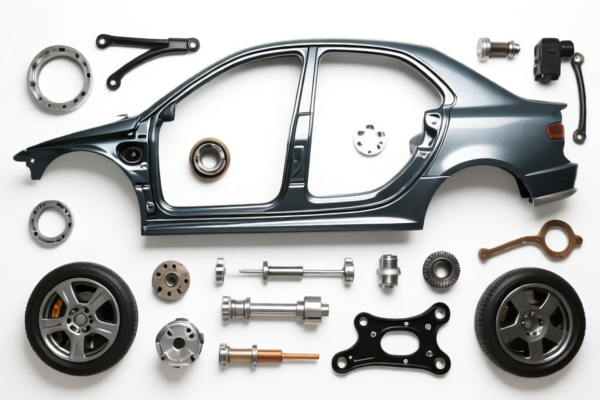
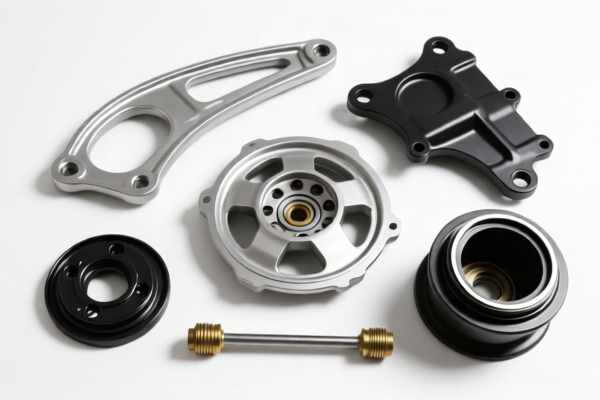
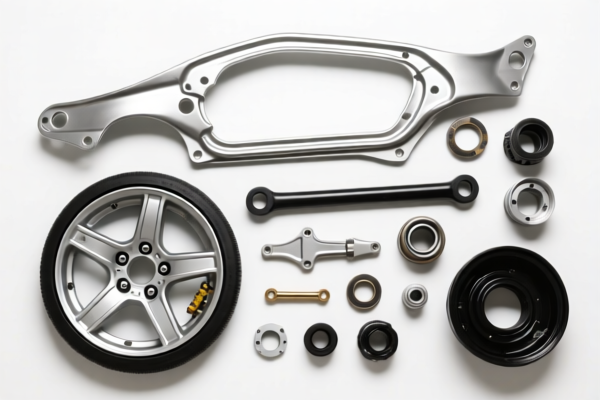
AI Analysis
🚗 Vehicle Body Parts (HS Code Reference: 8708/8302 Series)
🌐 HS Code Reference & Customs Clearance Guide | 2026 Latest Tariff Analysis | Professional Customs Strategy
📌 1. Product Definition: What Are "Vehicle Body Parts"?
"Vehicle Body Parts" is a broad category referring to components that make up the structural or aesthetic shell of an automobile. In international trade, these parts are not confined to a single HS Code because their classification depends heavily on material, specific function (e.g., bumpers vs. mounts), and manufacturing process.
The product name "Vehicle Body Parts" lacks specific material and functional detail, triggering a "Default Part Principle" in classification. This means customs authorities often look at: 1. Is it a specific bumper? → Chapter 87 (8708). 2. Is it a metal mount/accessory? → Chapter 83 (8302). 3. Is it a stamped metal part? → Chapter 87 (8708.29).
⚠️ Critical Distinction:
- If the part is a bumper (specifically designed for crash absorption/impact), it falls under 8708.10 or 8708.29.
- If the part is a metal mount, bracket, or fitting made of base metals, it may fall under 8302.30.
- If the specific form is unknown, customs may default to the most common "part" classification, leading to varying tax rates based on the assumed material (e.g., steel vs. aluminum).
📦 2. HS Code Classification Details (Based on Provided Data)
Based on the input data, there are four primary classification paths for "Vehicle Body Parts." Each path assumes different material or functional attributes due to the vague product name.
| HS Code | Product Description | Matching Logic (Summary) | Total Tax Rate (US) |
|---|---|---|---|
| 8708.10.60.10 | Bumper Parts | Matches "Vehicle Body Parts" as a body component. Default "parts" principle applied. | 87.5% |
| 8302.30.60.00 | Base Metal Mounts/Accessories | Matches "Vehicle Body Parts" as accessories/fittings. Assumed to be made of base metal (steel/aluminum). | 38.5% |
| 8302.30.30.60 | Other Base Metal Mounts | Matches "Vehicle Body Parts" as installation fittings. Assumed metal material. | 87.0% |
| 8708.29.25.00 | Other Body Parts (Stamped) | Matches "Vehicle Body Parts" as general body components. No conflict with material/usage. | 37.5% |
🔍 Key Insight:
- The same product name ("Vehicle Body Parts") can lead to drastically different tax rates (37.5% to 87.5%) depending on how the customs broker interprets the material (base metal vs. other) and specific type (bumper vs. generic part).
- HS 8708 codes generally attract higher duties due to specific USITC notes for steel/aluminum products.
- HS 8302 codes represent "base metal mounts," which may be viewed as simpler accessories, but still face significant tariffs.
💰 3. 2026 Latest Tariff Rate Breakdown (Detailed Analysis)
✅ Applicable Country: United States (US)
✅ Origin: China (CN)
✅ Effective Date: 2025/2026 Tariff Schedule
🎯 1. 8708.10.60.10 — Bumper Parts (Highest Risk)
| Item | Content |
|---|---|
| Base Duty | 2.5% |
| Section 301 Duty | +25.0% |
| Section 232 Duty (Steel/Aluminum) | +50.0% |
| Total Rate | 87.5% |
| Calculation | CIF Value × 87.5% |
| Legal Path | USITC:8708.10.60.10 → Section 301: 25% → Section 232: 50% |
📌 Explanation:
- This code targets bumper parts.
- The 50% additional duty is under Section 232 (National Security imports of steel and aluminum products). Since bumpers are often steel or aluminum, this surcharge applies.
- Total 87.5% is extremely high. Any misclassification away from this code could save significant costs.
🎯 2. 8302.30.60.00 — Base Metal Mounts & Accessories (Lowest Rate)
| Item | Content |
|---|---|
| Base Duty | 3.5% |
| Section 301 Duty | +25.0% |
| Section 232 Duty | None (Assumed not to be primary steel/aluminum structural parts, or excluded) |
| Total Rate | 38.5% |
| Calculation | CIF Value × 38.5% |
| Legal Path | USITC:8302.30.60.00 → Section 301: 25% |
📌 Explanation:
- This code classifies the part as a mount or fitting (装具/附件) made of base metal.
- It avoids the Section 232 steel/aluminum surcharge (50%), which drastically reduces the total duty from ~87% to 38.5%.
- Strategy: If the part can be justified as a "mount" or "accessory" rather than a "bumper" or "body panel," this is the preferred classification.
🎯 3. 8302.30.30.60 — Other Base Metal Mounts
| Item | Content |
|---|---|
| Base Duty | 2.0% |
| Section 301 Duty | +25.0% |
| Section 232 Duty (Steel/Aluminum) | +50.0% |
| Total Rate | 87.0% |
| Calculation | CIF Value × 87.0% |
| Legal Path | USITC:8302.30.30.60 → Section 301: 25% → Section 232: 50% |
📌 Explanation:
- Similar to 8302.30.60.00, but falls under a different sub-category ("Other") that triggers the Section 232 steel/aluminum tax.
- The total duty is nearly identical to the bumper code (87.0%).
- Risk: High. Ensure the product description clearly distinguishes it from structural steel/aluminum components if possible.
🎯 4. 8708.29.25.00 — Other Body Parts (Stamped/Metallurgical)
| Item | Content |
|---|---|
| Base Duty | 2.5% |
| Section 301 Duty | +25.0% |
| Section 232 Duty | None (Not explicitly listed in the summary as attracting 50%) |
| Total Rate | 37.5% |
| Calculation | CIF Value × 37.5% |
| Legal Path | USITC:8708.29.25.00 → Section 301: 25% |
📌 Explanation:
- This code covers other body parts (e.g., stamped panels, frames) not specifically listed as bumpers.
- It applies the Section 301 tariff (25%) but avoids the Section 232 steel/aluminum surcharge (50%) in this specific sub-category interpretation.
- Total 37.5% makes this a competitive classification if the part is indeed a general body component (not a bumper) and can be argued against the steel/aluminum surcharge.
🛠️ 4. Customs Clearance Practical Advice (Pitfall Avoidance)
✅ 1. Documentation Checklist (Essential)
| Document | Required? | Explanation |
|---|---|---|
| ✅ Product Specifications | ✔️ | Must detail material (e.g., "Steel," "Aluminum," "Plastic"), weight, and dimensions. |
| ✅ Technical Drawings | ✔️ | To prove if the part is a bumper (8708.10) or a mount/accessory (8302). |
| ✅ Photos (Labeled) | ✔️ | Clear images of the part, including any logos, part numbers, and mounting points. |
| ✅ Commercial Invoice | ✔️ | Description must be precise: e.g., "Steel Mounting Bracket for Vehicle Body" vs. "Vehicle Body Parts." |
| ✅ Bill of Lading | ✔️ | Ensure HS Codes are correctly listed on the B/L to match the entry. |
| ✅ Origin Certificate | ✔️ | Required for China-origin goods to confirm Section 301 applicability. |
✅ 2. Classification Strategy (Key Mnemonic)
🔥 "Define Material, Define Function, Avoid the 50% Trap!"
| Scenario | Recommended HS Code | Tax Rate | Action |
|---|---|---|---|
| Part is a Bumper | 8708.10.60.10 |
87.5% | Accept high duty; no easy workaround. |
| Part is a Mount/Bracket | 8302.30.60.00 |
38.5% | Best Case. Justify as "accessory/mount," not structural body part. |
| Part is a Stamped Panel | 8708.29.25.00 |
37.5% | Good Case. Justify as "other body part," not bumper, and argue against Section 232 if possible. |
| Part is General Metal Fitting | 8302.30.30.60 |
87.0% | High Risk. Avoid if possible; it attracts Section 232 tax. |
📌 Critical Warning:
- Do NOT use "Vehicle Body Parts" as the sole description. It is too vague.
- Specific descriptions save money.
- ❌ Bad: "Vehicle Body Parts" → Customs may default to highest duty code.
- ✅ Good: "Aluminum Vehicle Mounting Bracket, Not a Bumper" → May qualify for 38.5% or 37.5%.
- ✅ Good: "Plastic Bumper Cover" → May avoid Section 232 (if plastic), but still has Section 301.
✅ 3. Special Considerations
| Situation | Advice |
|---|---|
| Material is Plastic | If the part is plastic, it may avoid Section 232 (Steel/Aluminum tax). Re-evaluate HS Code for plastic body parts (e.g., 8708.99). This could lower the 50% surcharge. |
| OEM Parts | Provide OEM certificates to prove the part is for a specific vehicle model, supporting the "body part" classification under 8708. |
| Used vs. New | If used, different rules may apply (Chapter 87 vs. 83). Ensure "New" is stated if applicable. |
| Pre-Ruling | Strongly Recommend filing an Advance Ruling (Pre-Ruling) with US CBP. Given the 50% variance between 37.5% and 87.5%, a pre-ruling based on your specific product photos and specs is crucial to avoid surprise audits and back-taxes. |
🌍 5. Global Market Comparison (2026)
| Country/Region | Recommended HS Code (Example) | Est. Duty (China Origin) | Notes |
|---|---|---|---|
| 🇺🇸 USA | 8302.30.60.00 |
38.5% | Avoids Section 232. High risk if misclassified as steel bumper. |
| 🇨🇳 China | 8708.99 (Import) |
~5-10% | Lower base duty, but check for local anti-dumping if applicable. |
| 🇪🇺 EU | 8708.99 |
0-4.5% | No Section 301/232. Lower overall cost, but strict CE/EC type approval. |
| 🇨🇦 Canada | 8708.99 |
0% (CUSMA if eligible) | Check CUSMA eligibility for duty-free entry. |
📌 Conclusion for US Importers:
- The US market is the most expensive due to Section 301 (25%) and potential Section 232 (50%) tariffs.
- Total duties can exceed 80% if misclassified.
- Precision in product description is the single most important factor in reducing costs.
📌 6. Common Mistakes & Pitfalls
❌ Mistake 1: Using generic "Vehicle Body Parts" on the Invoice
👉 Consequence: Customs may default to the highest duty code (8708.10.60.10) → 87.5% tax.
❌ Mistake 2: Ignoring Material Composition
👉 Consequence: If you declare "Plastic" but it's "Steel," you avoid Section 301/232 incorrectly → Audit & Penalties.
❌ Mistake 3: Confusing Bumpers with Mounts
👉 Consequence: A bumper classified as a mount (8302) may be rejected by CBP as misclassification → Delay & Re-filing Fees.
❌ Mistake 4: Not Checking Section 232 Applicability
👉 Consequence: Assuming all base metal parts avoid the 50% steel/aluminum tax. 8302.30.30.60 does NOT avoid it.
✅ Correct Approach:
"Aluminum Mounting Bracket for Sedan, Part No. XYZ, Not a Bumper, New Condition"
🎯 7. Conclusion: Precision Saves Money!
🎯 Remember the Rule:
🔹 "Vague Name = High Tax. Specific Description = Lower Tax."
🔹 "Bumper = 87.5%. Mount = 38.5%. Panel = 37.5%."
🔹 "Check Steel/Aluminum: Section 232 adds 50%!"
📌 Pro Tip:
If your parts are steel or aluminum, carefully evaluate if they can be classified as accessories/mounts (8302) rather than body panels/bumpers (8708) to potentially avoid the Section 232 50% surcharge, depending on the specific sub-code.
Apply for an Advance Ruling before shipping your first container to lock in the correct HS Code and duty rate.
📣 Immediate Action:
📞 Contact Your Customs Broker with detailed photos and material specs.
🚀 Do Not Ship with generic "Vehicle Body Parts" description.
💼 Get Pre-Ruling to save up to 50% in duties.
✨ Professional Customs Clearance Starts with Accurate Classification!
💼 Every percentage point matters in 2026 tariffs!
Customer Reviews
About HS Code Classification
The Harmonized System (HS) is an internationally standardized nomenclature developed by the World Customs Organization (WCO) to classify traded products. Over 200 countries use the HS system as the basis for customs tariffs, trade statistics, and import/export regulations.
Each HS code follows a hierarchical structure:
- Chapter (2 digits) — Broad category of goods (e.g., Chapter 84: Machinery and Mechanical Appliances)
- Heading (4 digits) — More specific grouping within the chapter
- Subheading (6 digits) — Internationally standardized breakdown, used by all WCO member countries
- National subdivisions (8-10 digits) — Country-specific extensions for further classification, such as US HTSUS 10-digit codes
Correct HS code classification is essential for smooth customs clearance, accurate duty payment, and compliance with trade regulations. Misclassification can lead to customs delays, overpayment of duties, or penalties.
When importing from CN to US, the applicable tariff rates may include:
- Most-Favored-Nation (MFN) rate — The standard duty rate applied to WTO members
- General rate — Applied to countries without trade agreements
- Trade remedy duties — Additional tariffs such as Section 301 (anti-dumping), Section 232 (national security), or countervailing duties
The information provided on this page is for reference purposes only. For official classification, please consult with your local customs authority or a licensed customs broker.