Vehicle Body Parts (8708951000)
CN → US| HS Code | Tariff Rate | Origin | Destination | Doc |
|---|---|---|---|---|
| 8708106010 | 87.5% | CN | US | Official Doc |
| 8302306000 | 38.5% | CN | US | Official Doc |
| 8302303060 | 87.0% | CN | US | Official Doc |
| 8708292500 | 0.0% | CN | US | Official Doc |
| 7326190080 | 87.9% | CN | US | Official Doc |
Product Images



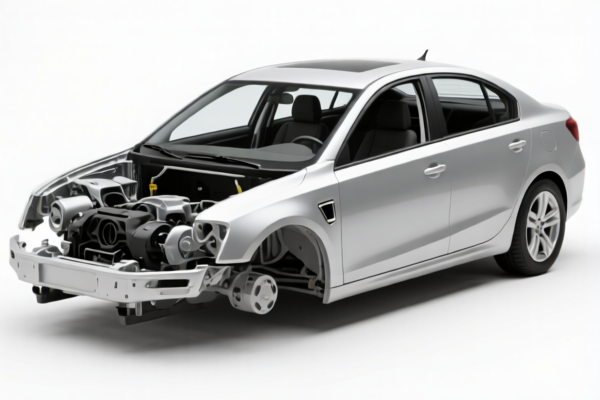
AI Analysis
🚗 Vehicle Body Parts (HS Code 8708.95.10.00)
🌐 HS Code Reference & Customs Clearance Guide | 2026 Latest Tariff Analysis | Professional Clearance Strategy
📌 I. Product Definition & Classification: What Are "Vehicle Body Parts"?
Vehicle Body Parts refer to components that make up the external or internal structure of a motor vehicle, excluding wheels, seats, or interior trim unless specified. In international trade, these parts are generally categorized under Chapter 87: Vehicles Other Than Railway or Tramway Rolling Stock, specifically under heading 8708: Parts and accessories of the motor vehicles of headings 87.01 to 87.05.
⚠️ Key Distinction:
- If the part is structural (e.g., bumpers, fenders, hoods, doors, frames) → It falls under 8708.
- If the part is decorative or mounting hardware (e.g., clips, brackets, mounts) → It might fall under Chapter 83 (Base Metal Articles) or 8708.99 depending on specificity.
- Critical Rule: The classification depends heavily on the primary function and material of the part.
📦 II. HS Code Classification Details (2026 Latest Tariff Authoritative Comparison)
Based on your provided data, here are the potential HS Codes and their corresponding tax implications for "Vehicle Body Parts." Note that 8708.95.10.00 is a common US HTS code for "Parts and accessories of the bodies (including cabs) of motor vehicles," but the actual duty rate can vary significantly based on material and additional tariffs.
| HS Code | Product Description | Applicability | Material Conflict? | Total Tax Rate |
|---|---|---|---|---|
8708.95.10.00 |
Parts and accessories of the bodies (including cabs) of motor vehicles | General body parts (bumpers, fenders, etc.) | ❌ No (Specific to auto bodies) | See Section III |
8708.10.60.10 |
Bumpers and parts thereof | Specifically for bumper systems | ✅ Matches (Bumper is a body part) | 87.5% |
8302.30.60.00 |
Base metal fittings, mountings, and similar articles | For mounting hardware/clips if not integral to body | ⚠️ Partial (If used as mount) | 38.5% |
8302.30.30.60 |
Base metal fittings for furniture, doors, etc. | Unlikely for auto bodies unless generic mounts | ⚠️ Low (Too generic) | 87.0% |
8708.29.25.00 |
Other parts and accessories of bodies | General body parts not covered elsewhere | ✅ Matches | 2.5% + 35.0% |
7326.19.00.80 |
Other articles of iron or steel | If the part is steel and not specifically classified elsewhere | ⚠️ Conflict (8708 usually prevails, but used as fallback) | 87.9% |
🔍 Important Note:
- 8708.95.10.00 is a generic code for body parts. However, specific parts like bumpers (8708.10) or frames may have their own subheadings.
- If the part is made of base metals (steel/aluminum) and is considered a fitting rather than a structural body part, customs may reclassify it under 8302 or 7326, leading to higher tariffs due to additional duties.
- Always prioritize Chapter 87 for automotive body parts unless the part is clearly a generic fastener or bracket.
💰 III. 2026 Latest Tariff Rate Breakdown (Including Surtaxes & Policy Add-ons)
✅ Applicable Country: United States (US)
✅ Origin: China (CN)
✅ Effective Date: From November 10, 2025 (and subsequent imports)
🎯 1. 8708.95.10.00 – General Body Parts (The Standard Classification)
| Item | Content |
|---|---|
| Base Duty Rate | 2.5% (ad valorem) |
| Section 301 Surtax | +25% (USITC Footnote 9903.88.01) |
| IEEPA Surtax | +10% (China-specific, from Nov 10, 2025) |
| Total Rate | 37.5% |
| Tax Calculation | CIF Value × 37.5% |
| De Minimis Exemption | ❌ Not Eligible (deny_de_minimis) |
| Legal Basis Path | IEEPA:9903.01.25 → IEEPA:9903.01.24 → USITC:8708.95.10.00 |
📌 Explanation:
- The base duty is low (2.5%), but the Section 301 and IEEPA surtaxes push the total to 37.5%.
- This is the most common classification for general body parts (e.g., hoods, fenders, doors).
🎯 2. 8708.10.60.10 – Bumpers and Parts Thereof
| Item | Content |
|---|---|
| Base Duty Rate | 2.5% |
| Section 301 Surtax | +25% |
| IEEPA Surtax | +10% |
| 122 Clause Surtax | +50% (If made of steel, aluminum, or copper) |
| Total Rate | 87.5% |
| Tax Calculation | CIF Value × 87.5% |
| De Minimis Exemption | ❌ Not Eligible |
| Legal Basis Path | IEEPA:9903.01.25 → 122:Steel/Aluminum/Copper → USITC:8708.10.60.10 |
📌 Warning:
- Bumpers are often made of steel or plastic. If they contain metal components (e.g., reinforcement bars, brackets), they may be subject to the 122 Clause 50% surtax.
- This results in a sky-high total rate of 87.5%.
- Plastic-only bumpers may avoid the 122 Clause, but the Section 301 and IEEPA taxes still apply.
🎯 3. 8302.30.60.00 – Base Metal Fittings (Mounts/Clips)
| Item | Content |
|---|---|
| Base Duty Rate | 3.5% |
| Section 301 Surtax | +25% |
| IEEPA Surtax | +10% |
| Total Rate | 38.5% |
| Tax Calculation | CIF Value × 38.5% |
| De Minimis Exemption | ❌ Not Eligible |
| Legal Basis Path | IEEPA:9903.01.24 → USITC:8302.30.60.00 |
📌 Note:
- If the "body part" is actually a bracket, clip, or mount made of base metal, customs may classify it here.
- The rate is slightly higher than the base 8708 rate but significantly lower than bumper rates with 122 Clause.
🎯 4. 7326.19.00.80 – Other Steel Articles (Fallback)
| Item | Content |
|---|---|
| Base Duty Rate | 2.9% |
| Section 301 Surtax | +25% |
| IEEPA Surtax | +10% |
| 122 Clause Surtax | +50% (If steel) |
| Total Rate | 87.9% |
| Tax Calculation | CIF Value × 87.9% |
| De Minimis Exemption | ❌ Not Eligible |
| Legal Basis Path | IEEPA:9903.01.25 → 122:Steel → USITC:7326.19.00.80 |
📌 Warning:
- This is a fallback category if the part is not clearly defined as an auto part.
- If classified here, it incurs the maximum 122 Clause surtax (50%), resulting in the highest total rate (87.9%).
- Avoid this classification by providing clear evidence that the part is a specific automotive component.
🎯 5. 8708.29.25.00 – Other Body Parts (No 122 Clause)
| Item | Content |
|---|---|
| Base Duty Rate | 2.5% |
| Section 301 Surtax | +25% |
| IEEPA Surtax | +10% |
| Total Rate | 2.5% + 35.0% |
| Tax Calculation | CIF Value × 37.5% (if no 122 Clause) |
| De Minimis Exemption | ❌ Not Eligible |
| Legal Basis Path | IEEPA:9903.01.24 → USITC:8708.29.25.00 |
📌 Note:
- This code may apply to non-metallic or specifically defined body parts that do not trigger the 122 Clause.
- Verify if the part material qualifies for exemption from the 122 Clause.
🛠️ IV. Customs Clearance Practical Advice (Battle-Tested Pitfall Guide)
✅ 1. Required Documentation Checklist (All Are Mandatory)
| Document | Mandatory | Description |
|---|---|---|
| ✅ Product Specifications | ✔️ | Dimensions, material composition (steel/aluminum/plastic), weight |
| ✅ Engineering Drawings | ✔️ | Shows how the part fits into the vehicle body |
| ✅ Product Photos | ✔️ | Clear images of the part, including any labels or part numbers |
| ✅ Letter of Explanation | ✔️ | Explicitly state: "This part is for automotive body assembly, not general hardware" |
| ✅ Commercial Invoice | ✔️ | Must include accurate HS Code and detailed description |
| ✅ Packing List | ✔️ | List all items to prevent misclassification of accessories |
| ✅ Origin Certificate | ✔️ | If applicable, for preferential treatment (though limited for China origin) |
✅ 2. Declaration Tips (Key Mantras)
🔥 “Define Function, Specify Material, Avoid Generic Terms!”
| Scenario | Correct Declaration | Incorrect Declaration |
|---|---|---|
| Steel Bumper | "Automotive Steel Bumper, Part No. XYZ, for Model ABC" | "Steel Car Part" |
| Plastic Fender | "ABS Plastic Front Fender, Auto Body Part" | "Plastic Body Part" |
| Metal Bracket | "Steel Mounting Bracket for Automotive Body, Part No. XYZ" | "Base Metal Bracket" |
| General Body Panel | "Automotive Hood, Steel, Part No. XYZ" | "Vehicle Part" |
✅ 3. Special Case Handling
| Scenario | Handling Advice |
|---|---|
| OEM Custom Parts | Provide OEM drawings and purchase orders to prove automotive-specific use |
| Mixed Material Parts | Disclose material composition clearly. If >50% steel, expect 122 Clause risks |
| Used vs. New | Used parts may face additional scrutiny. Declare as "Used" if applicable |
| Bumper with Sensors | If it includes electronics, consider if it should be classified under Chapter 85 (Electrical). However, structural parts remain under 8708 |
🌍 V. Global Market Clearance Comparison (2026 Latest)
| Country/Region | Recommended HS Code | Tariff (China Origin) | Certification Requirements | Notes |
|---|---|---|---|---|
| 🇺🇸 USA | 8708.95.10.00 |
37.5% (Base) / 87.5% (Bumpers w/ 122) | No specific certification | High risk of 122 Clause for metal parts |
| 🇨🇳 China | 8708.95.10.00 |
5% | CCC (if applicable) | No additional surtaxes |
| 🇪🇺 EU | 8708.95.10.00 |
4.5% (Standard) | CE (if electronic components) | No Section 301/IEEPA equivalent |
| 🇬🇧 UK | 8708.95.10.00 |
4.5% (Standard) | UKCA (if applicable) | Post-Brexit rules apply |
| 🇨🇦 Canada | 8708.95.10.00 |
0% (Under CUSMA) | No specific certification | Preferential rate for US/Mexico origin |
📌 Conclusion:
- USA is the most challenging market due to Section 301, IEEPA, and 122 Clause surtaxes.
- EU/UK have moderate tariffs but no additional political surtaxes.
- Canada offers duty-free access under CUSMA if originating from US/Mexico.
📌 VI. Common Errors & Pitfall Guide (Blood-Tested Lessons)
❌ Error 1: Declaring a steel bumper as a general "steel part" → Result: 87.9% tariff under 7326
👉 Fix: Declare as "Automotive Bumper" under 8708.10 to access potential lower rates or clear classification.
❌ Error 2: Not disclosing material composition → Result: Customs may apply the highest possible surtax (122 Clause 50%)
👉 Fix: Clearly state material (e.g., "Steel," "ABS Plastic," "Aluminum") in the declaration.
❌ Error 3: Using vague terms like "Car Part" → Result: High risk of misclassification and audit
👉 Fix: Use specific terms like "Front Fender," "Rear Bumper," "Hood."
❌ Error 4: Ignoring the 122 Clause for metal parts → Result: Unexpected 50% surtax
👉 Fix: Check if the part contains steel, aluminum, or copper. If yes, prepare for the 122 Clause.
✅ Correct Practice:
"Automotive Steel Front Bumper, Part No. XYZ, For Model ABC, Material: Steel, HS Code: 8708.10.60.10"
🎯 VII. Conclusion: Professional Declaration for Cost Efficiency
🎯 Remember the Mantras:
🔹 "Function First, Material Second, Avoid 122 Clause if Possible!"
🔹 "Bumpers are Expensive (87.5%), General Parts are Moderate (37.5%), Brackets are Variable (38.5%)"
🔹 "Specific Declaration Saves Thousands in Tariffs!"
📌 Pro Tips:
- If your parts are plastic-based, emphasize this to avoid the 122 Clause.
- Consider pre-classification rulings from US Customs (CBP) for high-volume shipments.
- For bumpers, explore if they can be classified as accessories rather than structural parts to potentially reduce surtaxes (though difficult).
📣 Immediate Action:
📞 Contact a licensed customs broker + Provide product specs + Request HS Code pre-ruling
🚀 Ensure your "Vehicle Body Parts" clear customs efficiently and cost-effectively!
✨ Professional clearance starts with precise classification!
💼 Every percentage point of tariff matters!
Customer Reviews
About HS Code Classification
The Harmonized System (HS) is an internationally standardized nomenclature developed by the World Customs Organization (WCO) to classify traded products. Over 200 countries use the HS system as the basis for customs tariffs, trade statistics, and import/export regulations.
Each HS code follows a hierarchical structure:
- Chapter (2 digits) — Broad category of goods (e.g., Chapter 84: Machinery and Mechanical Appliances)
- Heading (4 digits) — More specific grouping within the chapter
- Subheading (6 digits) — Internationally standardized breakdown, used by all WCO member countries
- National subdivisions (8-10 digits) — Country-specific extensions for further classification, such as US HTSUS 10-digit codes
Correct HS code classification is essential for smooth customs clearance, accurate duty payment, and compliance with trade regulations. Misclassification can lead to customs delays, overpayment of duties, or penalties.
When importing from CN to US, the applicable tariff rates may include:
- Most-Favored-Nation (MFN) rate — The standard duty rate applied to WTO members
- General rate — Applied to countries without trade agreements
- Trade remedy duties — Additional tariffs such as Section 301 (anti-dumping), Section 232 (national security), or countervailing duties
The information provided on this page is for reference purposes only. For official classification, please consult with your local customs authority or a licensed customs broker.