Vehicle Body Parts (HS 8707905060)
CN → US| HS Code | Tariff Rate | Origin | Destination | Doc |
|---|---|---|---|---|
| 8708292500 | 0.0% | CN | US | Official Doc |
| 8302303060 | 87.0% | CN | US | Official Doc |
| 8708106010 | 87.5% | CN | US | Official Doc |
| 8302306000 | 38.5% | CN | US | Official Doc |
| 8802609040 | 35.0% | CN | US | Official Doc |
Product Images
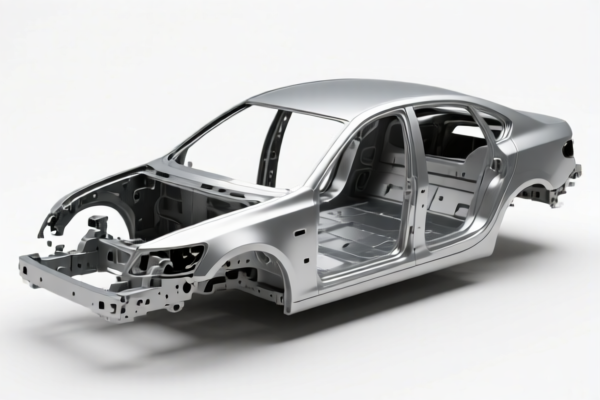
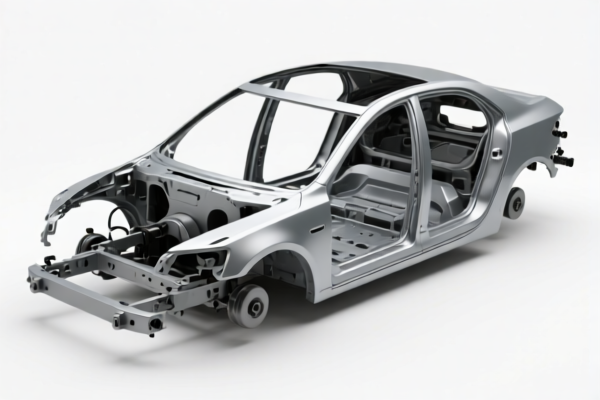
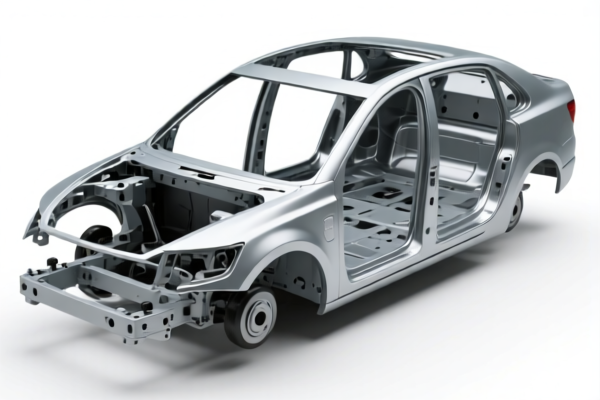

AI Analysis
🚗 Vehicle Body Parts (Generic Automotive Components)
🌐 HS Code Reference & Customs Clearance Guide | 2026 Latest Tariff Analysis | Professional Clearance Strategy
📌 I. Product Definition & Classification: What Exactly Are "Vehicle Body Parts"?
"Vehicle Body Parts" is a broad term in international trade, referring to structural components, cladding, and fittings for automobiles. In the context of US import regulations (specifically regarding Chinese origin goods), the classification depends heavily on material, specific location (e.g., bumper vs. generic fitting), and function.
Key Categories: 1. Structural/Bumper Parts: Direct replacements for exterior body panels, bumpers, or fenders. 2. Mounting/Fitting Accessories: Brackets, hinges, handles, and clips used to attach parts to the vehicle. 3. Generic/Unspecified Parts: Items that do not fit neatly into specific named categories, often defaulting to "Other" or "Miscellaneous" buckets.
⚠️ Critical Distinction:
- If the part is a bumper or specific body panel (hood, door) → Usually falls under 8708.
- If the part is a metal fitting, bracket, or hinge (even if used for the body) → Often falls under 8302 (Base Metal Fittings).
- Material Assumption: Without specific declaration, customs often assumes "Base Metal" (Steel/Aluminum) for body parts, triggering additional steel/aluminum tariffs.
📦 II. HS Code Classification Details (2026 Latest Tariff Authority Reference)
Based on the provided data, here are the most likely HS Codes for "Vehicle Body Parts" entering the US from China, along with their specific logic and tax implications.
| HS Code | Product Description | Matching Logic & Summary | Total Tax Rate (China Origin) |
|---|---|---|---|
| 8708.29.25.00 | Other Vehicle Body Parts (General/Bottom-up Category) | The term "Vehicle Body Parts" highly matches the generic description of body parts. This is a "catch-all" for body parts not specifically listed elsewhere (like bumpers). | 37.5% (2.5% Base + 25% Sec 301 + 10% 122 Clause) |
| 8302.30.30.60 | Base Metal Fittings for Vehicles (Metal Assumed) | "Vehicle Body Parts" are inferred to be metal mounting fixtures/accessories. Classifies as "Other" base metal fittings. Triggers Steel/Aluminum Surcharge. | 87.0% (2.0% Base + 25% Sec 301 + 10% 122 Clause + 50% Steel/Al) |
| 8708.10.60.10 | Bumpers and Parts Thereof | "Vehicle Body Parts" are default-aligned to bumpers as a primary body component. Follows the "Parts" preference rule. Triggers Steel/Aluminum Surcharge. | 87.5% (2.5% Base + 25% Sec 301 + 10% 122 Clause + 50% Steel/Al) |
| 8302.30.60.00 | Other Base Metal Fittings for Vehicles | High compatibility with "Vehicles... fittings and similar articles." No material conflict assumed (Base Metal). | 38.5% (3.5% Base + 25% Sec 301 + 10% 122 Clause) |
| 8802.60.90.40 | Other Spacecraft/Space Vehicle Parts (Low Probability/Default) | Note: This classification suggests a mismatch or default to "Other" where no automotive code fits. "Vehicle Parts" matched loosely to "Space Vehicle" in the provided data logic as a "Default" category. Use with Extreme Caution. | 35.0% (0.0% Base + 25% Sec 301 + 10% 122 Clause) |
🔍 Key Insight:
- The highest taxes (87%+) apply if the part is classified under 8708 (Bumpers) or 8302 (Fittings) AND is made of Steel, Aluminum, or Copper.
- The lower taxes (35-38%) apply if classified under generic body parts (8708.29) or non-ferrous/base metal fittings without the specific steel/aluminum surcharge.
💰 III. 2026 Latest Tariff Rate Breakdown (Including Additional Taxes)
✅ Country of Origin: United States (US)
✅ Exporting Country: China (CN)
✅ Effective Date: Post-November 2025 (Including 122 Clause & Section 301)
🎯 1. 8708.29.25.00 — Other Vehicle Body Parts (Non-Specific)
| Item | Details |
|---|---|
| Base Tariff | 2.5% |
| Section 301 Tariff | +25.0% |
| Section 122 Tariff | +10.0% |
| Steel/Al Surcharge | None (Not explicitly triggered in this summary) |
| Total Effective Rate | 37.5% |
| Calculation | CIF Value × 37.5% |
| De Minimis Exemption | ❌ Not Eligible (Deny De Minimis) |
📌 Explanation:
- This is the "safest" generic classification if the part is not a bumper or specific metal fitting.
- It avoids the 50% Steel/Aluminum tariff, which is the biggest cost driver.
🎯 2. 8302.30.30.60 — Base Metal Fittings (Steel/Aluminum Assumed)
| Item | Details |
|---|---|
| Base Tariff | 2.0% |
| Section 301 Tariff | +25.0% |
| Section 122 Tariff | +10.0% |
| Steel/Al Surcharge | +50.0% |
| Total Effective Rate | 87.0% |
| Calculation | CIF Value × 87.0% |
| De Minimis Exemption | ❌ Not Eligible |
📌 Warning:
- This code triggers the Section 232 Steel/Aluminum Tariff (50%).
- If your part is plastic, glass, or fabric, do not use this code unless declared correctly. Misclassification here leads to massive overpayment.
🎯 3. 8708.10.60.10 — Bumpers and Parts
| Item | Details |
|---|---|
| Base Tariff | 2.5% |
| Section 301 Tariff | +25.0% |
| Section 122 Tariff | +10.0% |
| Steel/Al Surcharge | +50.0% |
| Total Effective Rate | 87.5% |
| Calculation | CIF Value × 87.5% |
| De Minimis Exemption | ❌ Not Eligible |
📌 Warning:
- Bumpers are heavily scrutinized. If made of steel/aluminum, the 50% surcharge applies.
- Plastic bumpers may still face high duties depending on specific subheading nuances, but data shows 87.5% here.
🎯 4. 8302.30.60.00 — Other Base Metal Fittings
| Item | Details |
|---|---|
| Base Tariff | 3.5% |
| Section 301 Tariff | +25.0% |
| Section 122 Tariff | +10.0% |
| Steel/Al Surcharge | None (Not explicitly triggered in this summary) |
| Total Effective Rate | 38.5% |
| Calculation | CIF Value × 38.5% |
📌 Note:
- This is a favorable code for metal brackets/hinges if they do not fall under the specific "Steel/Aluminum" surcharge criteria of other codes.
- Verify if the specific metal type (Steel/Al) triggers the 50% add-on under USITC interpretations.
🎯 5. 8802.60.90.40 — Other Space Vehicle Parts (Default/Unlikely)
| Item | Details |
|---|---|
| Base Tariff | 0.0% |
| Section 301 Tariff | +25.0% |
| Section 122 Tariff | +10.0% |
| Steel/Al Surcharge | None |
| Total Effective Rate | 35.0% |
| Calculation | CIF Value × 35.0% |
📌 Critical Warning:
- This code is for Spacecraft/Space Vehicles.
- Using this for Automotive parts is a high-risk misclassification.
- While the tax is low (35%), customs may reject it for being factually incorrect, leading to seizures, fines, or retroactive duty claims under the correct automotive code (87xx/83xx).
- Only use if the product is genuinely for aerospace/rocketry.
🛠️ IV. Customs Clearance Practical Advice (Pitfall Avoidance Guide)
✅ 1. Documentation Checklist (Essential)
| Document | Mandatory? | Purpose |
|---|---|---|
| ✅ Product Specifications | ✔️ | Must detail material (Steel, Plastic, Aluminum, etc.), weight, and dimensions. |
| ✅ Material Declaration | ✔️ | Crucial for determining if the 50% Steel/Al Surcharge applies. |
| ✅ Product Photos (Marked) | ✔️ | Show part number, mounting points, and any logos. |
| ✅ Commercial Invoice | ✔️ | Must clearly state "Vehicle Body Parts" and specify the HS Code and Country of Origin. |
| ✅ Bill of Lading | ✔️ | Ensure weight and volume match invoice. |
| ✅ Certificate of Origin (CO) | ✔️ | Required for Section 301 and 122 tariff assessments. |
✅ 2. Classification Strategy (Key Mantras)
🔥 "Material Determines Surcharge, Function Determines Chapter, Specificity Determines Rate!"
| Scenario | Recommended HS Code | Risk Level |
|---|---|---|
| Plastic Bumper | 8708.29.25.00 or 8708.10.60.10 (Check plastic surcharge rules) |
Medium (Verify plastic vs. metal classification) |
| Steel Bracket/Clip | 8302.30.30.60 |
High (Expect 87%+ tax due to Steel Surcharge) |
| Aluminum Trim | 8302.30.30.60 |
High (Expect 87%+ tax due to Al Surcharge) |
| General Body Panel (Steel) | 8708.29.25.00 |
Medium-Low (Avoids 50% surcharge if not classified as "Bumper/Fitting" with specific steel criteria) |
| Spacecraft Part | 8802.60.90.40 |
Extreme Risk (Only if genuine aerospace part) |
✅ 3. Special Cases
| Case | Handling Advice |
|---|---|
| Composite Materials | If part is >50% steel by value/weight, Steel Surcharge likely applies. |
| Plastic Parts | Generally do not trigger Steel/Al Surcharge. Aim for 8708.29.25.00. |
| Mixed Container | Separate declarations for Plastic vs. Metal parts are critical to avoid blanket steel surcharges. |
| OEM Parts | Provide OEM documentation to prove intended use (Automotive vs. Aerospace). |
🌍 V. Global Market Comparison (2026 Latest)
| Market | Recommended HS Code | Approx. Tax (China Origin) | Key Requirement |
|---|---|---|---|
| 🇺🇸 USA | 8708.29.25.00 (Plastic/General) or 8302 (Metal) |
37.5% - 87.5% | Strict Steel/Al Declaration, FCC (if electronic), DOT (if safety-related) |
| 🇨🇳 China | 8708.99.90 (Other) |
~5-10% | CCC Certification (if applicable) |
| 🇪🇺 EU | 8708.99 |
~4-10% | CE Marking, REACH Compliance |
| 🇬🇧 UK | 8708.99 |
~4-10% | UKCA Marking |
📌 Conclusion:
- The US market is uniquely expensive for Chinese automotive parts due to Section 301 (25%), Section 122 (10%), and Section 232 (50%) tariffs.
- Plastic parts are significantly cheaper to import than Metal parts.
- Misclassification (e.g., using8802for auto parts) is a common but dangerous error that can lead to audits.
📌 VI. Common Mistakes & Pitfalls (Lessons Learned)
❌ Mistake 1: Classifying Steel Bumpers as 8708.29.25.00 to avoid the 50% Steel Surcharge.
👉 Consequence: Customs audit reveals steel content → Back taxes + 50% surcharge + Penalties.
❌ Mistake 2: Using 8802.60.90.40 (Spacecraft) for Automotive Parts to save taxes.
👉 Consequence: Customs rejection, shipment held, potential fraud allegations.
❌ Mistake 3: Ignoring Section 122 Tariff (10%).
👉 Consequence: Unexpected duty charge at border. All Chinese imports subject to this.
❌ Mistake 4: Assuming all "Body Parts" are the same.
👉 Consequence: 8708.10 (Bumpers) has different tax logic than 8708.29 (Other).
✅ Correct Approach:
"Plastic Exterior Trim, Model XYZ, Made of PP/ABS, For 2026 Ford F-150, HS 8708.29.25.00"
🎯 VII. Conclusion: Professional Clearance, Cost Optimization!
🎯 Remember the Mantra:
🔹 "Plastic is King (Lower Tax), Steel is King (Higher Tax)."
🔹 "Check the Material, Check the Surcharge, Avoid the Spacecraft Trap."📌 Pro Tip:
- If possible, design parts with higher plastic content or non-ferrous metals (if allowed) to mitigate the 50% Steel/Al Surcharge.
- Always request a Binding Tariff Information (BTI) or Advance Ruling from US Customs (CBP) for high-value shipments.
📣 Immediate Action:
📞 Consult a Licensed Customs Broker
📄 Provide Detailed Material Breakdown
🚀 Ensure Accurate HS Code Classification to Avoid Seizures!
✨ Professional Clearance Starts with Precise Classification!
💼 Your Cost Savings Are Calculated in Every Digit!
Customer Reviews
About HS Code Classification
The Harmonized System (HS) is an internationally standardized nomenclature developed by the World Customs Organization (WCO) to classify traded products. Over 200 countries use the HS system as the basis for customs tariffs, trade statistics, and import/export regulations.
Each HS code follows a hierarchical structure:
- Chapter (2 digits) — Broad category of goods (e.g., Chapter 84: Machinery and Mechanical Appliances)
- Heading (4 digits) — More specific grouping within the chapter
- Subheading (6 digits) — Internationally standardized breakdown, used by all WCO member countries
- National subdivisions (8-10 digits) — Country-specific extensions for further classification, such as US HTSUS 10-digit codes
Correct HS code classification is essential for smooth customs clearance, accurate duty payment, and compliance with trade regulations. Misclassification can lead to customs delays, overpayment of duties, or penalties.
When importing from CN to US, the applicable tariff rates may include:
- Most-Favored-Nation (MFN) rate — The standard duty rate applied to WTO members
- General rate — Applied to countries without trade agreements
- Trade remedy duties — Additional tariffs such as Section 301 (anti-dumping), Section 232 (national security), or countervailing duties
The information provided on this page is for reference purposes only. For official classification, please consult with your local customs authority or a licensed customs broker.