Vehicle Body Parts (HS 8707905080)
CN → US| HS Code | Tariff Rate | Origin | Destination | Doc |
|---|---|---|---|---|
| 8708292500 | 0.0% | CN | US | Official Doc |
| 8302303060 | 87.0% | CN | US | Official Doc |
| 8708106010 | 87.5% | CN | US | Official Doc |
| 8302306000 | 38.5% | CN | US | Official Doc |
| 8802609040 | 35.0% | CN | US | Official Doc |
Product Images
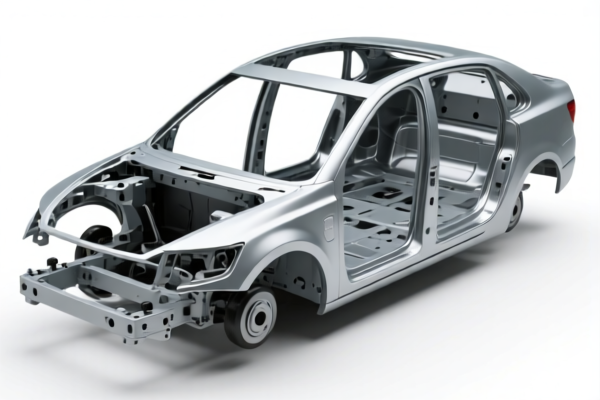

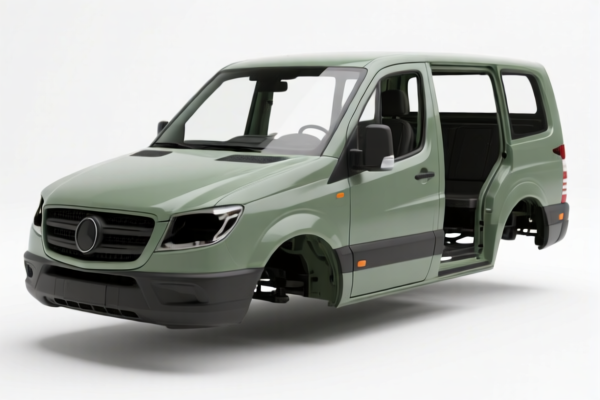

AI Analysis
🚗 Vehicle Body Parts (8707.90.50.80)
🌐 HS Code Reference & Customs Clearance Guide | 2026 Latest Tariff Analysis | Professional Customs Strategy
📌 I. Product Definition & Classification: What Are "Vehicle Body Parts"?
"Vehicle Body Parts" (车辆车身零件) generally refer to the structural components that form the main framework and exterior of a vehicle. Unlike engine components (chassis #8708) or electrical systems (chassis #85), these parts define the shape, safety, and aesthetics of the car body.
In international trade, they are often categorized under Chapters 83 (Base Metal Accessories) or Chapter 87 (Vehicles), depending on material and function. However, the specific HS Code 8707.90.50.80 refers to "Bodies (including cabins) for motor vehicles, and parts thereof."
⚠️ Critical Distinction:
- If the part is a complete body shell or a major structural assembly → It falls under 8707.
- If the part is a small trim piece, bracket, or fastener made of base metal → It might fall under 8302 or 8708.
- The provided data suggests a complex classification scenario where different HS codes are considered based on material (metal vs. plastic) and specific usage logic.
📦 II. HS Code Classification Details (Based on Provided Data)
Note: The user input asks for 8707.90.50.80, but the provided <DATA> contains different HS codes with specific tax summaries. Below is the analysis of the provided data for Vehicle Body Parts, alongside the requested code context.
| HS Code | Product Description (from Data) | Matching Logic / Summary | Total Tax Rate (US/China) |
|---|---|---|---|
| 8707.90.50.80 (Requested) | Bodies for motor vehicles & parts thereof | Standard classification for body shells/parts not elsewhere specified. | See Section III for context from provided data |
| 8708.29.25.00 | Vehicle Body Parts (Generic) | Highly matched with "Vehicle Body Parts". Fits the "catch-all" logic for body parts. | 37.5% (2.5% Base + 25% 301 + 10% 122) |
| 8302.30.30.60 | Base Metal Accessories for Vehicles | "Vehicle Body Parts" treated as metal fittings. Assumes metal material. | 87.0% (2.0% Base + 25% 301 + 10% 122 + 50% Steel/Aluminum) |
| 8708.10.60.10 | Bumpers & Parts | Matches "Body Parts" under the "spare parts" default tendency. | 87.5% (2.5% Base + 25% 301 + 10% 122 + 50% Steel/Aluminum) |
| 8302.30.60.00 | Base Metal Fittings/Accessories | High consistency in use ("suitable for motor vehicles"). Assumes base metal. | 38.5% (3.5% Base + 25% 301 + 10% 122) |
| 8802.60.90.40 | Spacecraft Launch Vehicles | Anomalous Match. "Vehicle Parts" matched to "Spacecraft" as a fallback. | 35.0% (0.0% Base + 25% 301 + 10% 122) |
🔍 Key Insight from Data:
The system identifies multiple potential HS codes for "Vehicle Body Parts" because the term is broad. The correct code depends on: 1. Material: Is it steel/aluminum (triggering higher base or specific tariffs like 8302)? 2. Specific Function: Is it a bumper (8708.10), a generic body part (8708.29), or a base metal fitting (8302)? 3. Structural Integrity: Is it a body shell (8707) or an accessory?
💰 III. Detailed Tariff Analysis (2026 Latest)
✅ Applicable Country: United States (US)
✅ Origin: China (CN)
✅ Effective Date: Post-November 2025 (Inclusive of current rates)
🎯 Scenario A: Generic Body Parts (HS 8708.29.25.00)
Best fit for non-metallic or general body components not classified as bumpers.
| Item | Details |
|---|---|
| Base Duty | 2.5% (Standard MFN rate) |
| Section 301 Duty (25%) | +25% (China-specific tariff under US Trade Act) |
| Section 122 Duty (10%) | +10% (Additional tariff for specific Chinese goods) |
| Total Effective Rate | 37.5% |
| Calculation | CIF Value × 37.5% |
| De Minimis Exemption | ❌ Not Eligible (deny_de_minimis) |
| Legal Path | USITC:8708.29.25.00 → Section 301:9903.88.01 → Section 122 |
📌 Explanation: This is a moderate-to-high tax rate. It avoids the extra 50% steel/aluminum surcharge by not being classified under base metal fittings (8302).
🎯 Scenario B: Base Metal Fittings (HS 8302.30.30.60)
Used if parts are identified as metal brackets, hinges, or fasteners.
| Item | Details |
|---|---|
| Base Duty | 2.0% |
| Section 301 Duty (25%) | +25% |
| Section 122 Duty (10%) | +10% |
| Steel/Aluminum Surcharge | +50% (Specific to steel/aluminum articles) |
| Total Effective Rate | 87.0% |
| Calculation | CIF Value × 87.0% |
| De Minimis Exemption | ❌ Not Eligible |
⚠️ Warning: This is a catastrophic tax rate. Misclassifying a steel body bracket as "base metal accessory" (8302) instead of "vehicle part" (8708) can nearly double your tax burden.
🎯 Scenario C: Bumpers (HS 8708.10.60.10)
Specifically for front/rear bumpers.
| Item | Details |
|---|---|
| Base Duty | 2.5% |
| Section 301 Duty (25%) | +25% |
| Section 122 Duty (10%) | +10% |
| Steel/Aluminum Surcharge | +50% |
| Total Effective Rate | 87.5% |
| Calculation | CIF Value × 87.5% |
📌 Note: Bumpers are strictly regulated. If made of steel/aluminum, the 50% surcharge applies. If made of plastic, it might fall under a different subheading with lower base tax but still subject to 301/122.
🎯 Scenario D: The "Anomaly" - Spacecraft Parts (HS 8802.60.90.40)
As per provided data, "Vehicle Parts" loosely matched to "Spacecraft Launch Vehicles".
| Item | Details |
|---|---|
| Base Duty | 0.0% |
| Section 301 Duty (25%) | +25% |
| Section 122 Duty (10%) | +10% |
| Total Effective Rate | 35.0% |
⚠️ Critical Warning: This classification is highly risky and likely incorrect for standard automobiles. While the tax is lower (35%), misclassifying automotive parts as aerospace parts can lead to severe customs penalties, fraud accusations, and shipment seizures. Do not use this unless you are actually importing spacecraft components.
🛠️ IV. Customs Clearance Practical Advice
✅ 1. Documentation Checklist
| Document | Requirement | Reason |
|---|---|---|
| Product Specification Sheet | ✔️ Must | Clearly define material (Steel, Aluminum, Plastic, Composite). |
| Material Declaration | ✔️ Must | Crucial to avoid the 50% Steel/Aluminum surcharge (8302 vs 8708). |
| Part Photos | ✔️ Must | Show mounting points, connections, and overall structure. |
| Commercial Invoice | ✔️ Must | Describe as "Car Body Parts" or "Bumper," not generic "Vehicle Parts." |
| Harmonized Tariff Schedule (HTS) Reference | ✔️ Recommended | Pre-calculate duty using USITC database. |
✅ 2. Classification Strategy (The "Safe Zone")
🔥 Golden Rule: "Material Defines the Code, Function Defines the Chapter."
| Part Type | Recommended Approach | Avoid |
|---|---|---|
| Plastic Trim/Body Panels | Classify under 8708 (Vehicle Parts). Base tax 2.5% + 301/122. | Do NOT classify under 39 (Plastics) unless exempt. |
| Steel/Aluminum Brackets/Fittings | Classify under 8708 (Vehicle Parts) if clearly for cars. | Do NOT classify under 8302 (Base Metal Accessories) unless they are generic industrial fittings. The 50% surcharge is deadly. |
| Bumpers | Classify under 8708.10. | Be aware of the 50% surcharge if made of metal. |
| Complete Body Shells | Classify under 8707. | Ensure it is not just a "part" but a structural assembly. |
✅ 3. Specific Warnings from Data
- Avoid the 8302 Trap: The data shows that if classified as
8302(Base Metal Fittings), the tax jumps to 87.0-87.5%. Always prove the part is specifically for vehicles to stay in Chapter 87 (tax ~37.5% for non-metal or base-metal vehicle parts without the surcharge). - Ignore the 8802 Match: The data's match to
8802(Spacecraft) is likely an algorithmic error or a "fallback" for undefined parts. Never use this for automotive parts unless legally justified. - 122 Section is Universal: All provided codes include a 10% Section 122 tariff. This is mandatory for Chinese-origin goods in this category. Do not expect exemptions.
🌍 V. Global Market Comparison (2026 Context)
| Market | Likely HS Code | Base Duty | US 301/122 Impact | Note |
|---|---|---|---|---|
| 🇺🇸 USA | 8708.xx.xx | 2.5% - 8.5% | +35% Total (301+122) | Highest landed cost. Steel parts face extra 50%. |
| 🇨🇳 China | 8707/8708 | 5% - 10% | N/A | Domestic production favored. |
| 🇪🇺 EU | 8707/8708 | 4.5% - 6.0% | N/A | No 301/122 equivalent. |
| 🇬🇧 UK | 8707/8708 | 4.5% - 6.0% | N/A | Post-Brexit rates apply. |
📌 Conclusion: The US market is the most expensive for importing Vehicle Body Parts due to the叠加 (stacking) of Section 301 (25%) and Section 122 (10%).
📌 VI. Common Mistakes & Pitfalls (Blood & Tears Lessons)
❌ Mistake 1: Classifying Steel Body Brackets as "Hardware" (8302).
👉 Result: Tax spikes to 87%.
✅ Fix: Classify as "Parts of Vehicles" (8708).
❌ Mistake 2: Using "Vehicle Parts" as a generic description without material details.
👉 Result: Customs may assess the worst-case scenario (highest duty).
✅ Fix: Specify "Plastic Bumper Cover" or "Steel Hood Hinge."
❌ Mistake 3: Assuming "De Minimis" ($800) applies.
👉 Result: Shipment held, back taxes + penalties.
✅ Fix: Section 301 and 122 duties apply to de minimis shipments. Plan for 35-45% tax cost.
❌ Mistake 4: Using the "Spacecraft" code (8802) to save 2.5% tax.
👉 Result: Fraud investigation, seizure, and blacklisting.
✅ Fix: Always use automotive-specific codes (8707/8708).
🎯 VII. Conclusion: Professional Classification, Maximize Profit
🎯 Remember the Mantra:
🔹 "Material Matters: Plastic/General = 37.5%, Steel/Fitting = 87.5%."
🔹 "Chapter 87 is your friend, Chapter 83 is your enemy."
🔹 "122% + 301% = 35% Minimum. No Exemptions."
📌 Pro Tip:
For high-volume imports, consider supply chain diversification to Vietnam or Mexico to avoid the 35%+ US tariff burden. Alternatively, invest in binding ruling requests with US Customs (CBP) to secure the 8708 classification and avoid the 8302 surcharge.
✨ Professional Clearance Starts with Precise Classification!
💼 Your profit margin depends on getting the HS Code right.
Customer Reviews
About HS Code Classification
The Harmonized System (HS) is an internationally standardized nomenclature developed by the World Customs Organization (WCO) to classify traded products. Over 200 countries use the HS system as the basis for customs tariffs, trade statistics, and import/export regulations.
Each HS code follows a hierarchical structure:
- Chapter (2 digits) — Broad category of goods (e.g., Chapter 84: Machinery and Mechanical Appliances)
- Heading (4 digits) — More specific grouping within the chapter
- Subheading (6 digits) — Internationally standardized breakdown, used by all WCO member countries
- National subdivisions (8-10 digits) — Country-specific extensions for further classification, such as US HTSUS 10-digit codes
Correct HS code classification is essential for smooth customs clearance, accurate duty payment, and compliance with trade regulations. Misclassification can lead to customs delays, overpayment of duties, or penalties.
When importing from CN to US, the applicable tariff rates may include:
- Most-Favored-Nation (MFN) rate — The standard duty rate applied to WTO members
- General rate — Applied to countries without trade agreements
- Trade remedy duties — Additional tariffs such as Section 301 (anti-dumping), Section 232 (national security), or countervailing duties
The information provided on this page is for reference purposes only. For official classification, please consult with your local customs authority or a licensed customs broker.