Vehicle Body Parts (HS 8708911000)
CN → US| HS Code | Tariff Rate | Origin | Destination | Doc |
|---|---|---|---|---|
| 7326190080 | 87.9% | CN | US | Official Doc |
| 7326908688 | 87.9% | CN | US | Official Doc |
| 8708916000 | 35.0% | CN | US | Official Doc |
| 8708916000 | 35.0% | CN | US | Official Doc |
| 8409999190 | 37.5% | CN | US | Official Doc |
Product Images
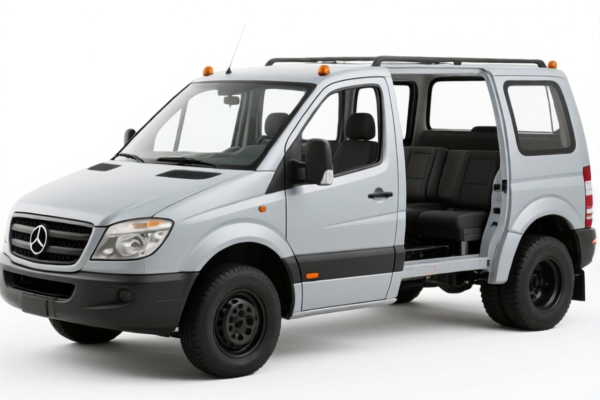
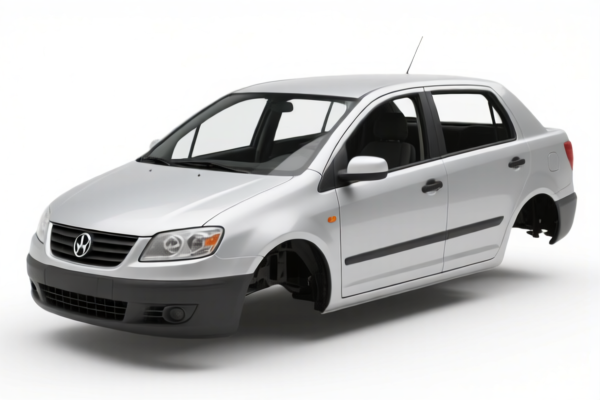

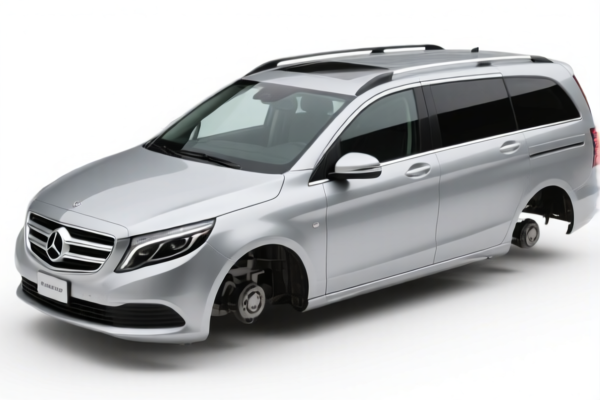
AI Analysis
🚗 Vehicle Body Parts (Automotive Components)
🌐 HS Code Reference & Customs Clearance Guide | 2026 Latest Tariff Analysis | Professional Clearance Strategy
📌 I. Product Definition & Classification: Do You Really Understand "Vehicle Body Parts"?
Vehicle body parts encompass a wide range of components used in the construction, assembly, and repair of motor vehicles. In international trade, these parts are typically categorized by their material and specific function. However, for general "Vehicle Body Parts" without specific functional details (like brakes or lights), customs authorities often look at material composition and chapter headings to determine the correct Harmonized System (HS) code.
⚠️ Key Distinction Point:
- If the part is a specific automotive component defined under Chapter 87 (e.g., radiators, brakes) →归入 8708 series.
- If the part is a generic metal fabrication (steel/iron) not specifically defined elsewhere →归入 7326 or 7326 series.
- If it is a mechanical part for engines/vehicles not elsewhere specified →归入 8409 series.
📦 II. HS Code Classification Details (Based on Provided Data Analysis)
The following HS codes are derived from the specific matching logic provided in your data. Note that "Vehicle Body Parts" is a generic term, and the correct classification depends heavily on the material and exact function.
| HS Code | Product Description | Matching Logic Summary | Total Tax Rate |
|---|---|---|---|
7326.19.00.80 |
Other articles of iron or steel | Material-Based: Matches "auto parts" made of steel/metal. No material conflict with Chapter 73. Default tendency for metal parts. | 87.9% |
7326.90.86.88 |
Other articles of iron or steel | Material-Based: "Body parts" inferred as metal/steel components. Fits "other articles" category for iron/steel. | 87.9% |
8708.91.60.00 |
Parts and accessories of motor vehicles (specifically radiator-related in some interpretations, but broadly automotive parts) | Functional-Based: "Body parts" fall under automotive parts (Chapter 87). No material conflict with Chapter 87. High relevance to vehicle components. | 35.0% |
8708.91.60.00 |
Parts and accessories of motor vehicles | Functional-Based: Explicitly covers "parts of motor vehicles." "Body parts" are integral to vehicles. No conflict. | 35.0% |
8409.99.91.90 |
Parts suitable for use solely or principally with spark-ignition internal combustion engines | General Automotive Part: "Body parts" considered general auto parts. No obvious material/form conflict with "other parts" category. | 37.5% |
🔍 Critical Insight:
- HS 8708 codes generally have the lowest base tax (0%) but are still subject to additional tariffs.
- HS 7326 codes have a higher base tax (2.9%) and are often viewed as "generic metal goods" rather than "specific automotive components," leading to the same high total tax in this specific trade environment due to additive tariffs.
- HS 8409 is a middle ground, often used for mechanical engine parts, but may apply to general vehicle components if not otherwise specified.
💰 III. 2026 Latest Tariff Rate Breakdown (Including Surtaxes & Policy Additions)
✅ Applicable Country: USA (US)
✅ Origin: China (CN)
✅ Effective Date: 2025/2026 (Subject to current trade policies)
🎯 1. 7326.19.00.80 & 7326.90.86.88 – Articles of Iron or Steel
(Highest Cost Scenario)
| Item | Detail |
|---|---|
| Base Tariff | 2.9% (ad valorem) |
| Section 301 Surcharge | +25.0% (USITC Footnote 9903.88.01) |
| Section 122 Tariff | +10% (Specific to Steel/Aluminum/Copper products) |
| Additional Surcharge | +50% (122 Clause for Steel/Aluminum/Copper Products) |
| Total Effective Rate | 87.9% |
| Calculation | CIF Value × 87.9% |
| De Minimis Exemption | ❌ Not Eligible |
| Legal Basis | USITC:7326 → FOOTNOTE:122 → IEEPA:301 |
📌 Explanation:
- These codes are treated as generic steel products.
- The 50% additional tariff (often referred to as Section 122 or similar steel-specific surcharges) is applied on top of the 25% Section 301 tariff and 2.9% base.
- Result: This is the most expensive classification. Avoid if possible.
🎯 2. 8708.91.60.00 – Parts of Motor Vehicles
(Recommended Scenario - Lowest Cost)
| Item | Detail |
|---|---|
| Base Tariff | 0.0% (ad valorem) |
| Section 301 Surcharge | +25.0% (USITC Footnote 9903.88.01) |
| Section 122 Tariff | +10% |
| Total Effective Rate | 35.0% |
| Calculation | CIF Value × 35.0% |
| De Minimis Exemption | ❌ Not Eligible |
| Legal Basis | IEEPA:9903.01.25 → USITC:8708.91.60.00 → FOOTNOTE:9903.88.01 |
📌 Explanation:
- Chapter 87 parts have a 0% base tariff.
- Only the 25% Section 301 and 10% Section 122 (if applicable to the specific metal content interpretation) apply.
- Note: Some interpretations may exclude the 50% steel surcharge for finished automotive parts, resulting in the 35% total. This is significantly cheaper than the 87.9% rate.
🎯 3. 8409.99.91.90 – Other Parts for Internal Combustion Engines
(Middle Ground)
| Item | Detail |
|---|---|
| Base Tariff | 2.5% (ad valorem) |
| Section 301 Surcharge | +25.0% |
| Section 122 Tariff | +10% |
| Total Effective Rate | 37.5% |
| Calculation | CIF Value × 37.5% |
| De Minimis Exemption | ❌ Not Eligible |
| Legal Basis | IEEPA:9903.01.24 → USITC:8409.99.91.90 |
📌 Explanation:
- Slightly higher base (2.5%) than Chapter 87 (0%).
- Same surcharges apply.
- Useful if the part is strictly mechanical and not clearly "body" or "steel fabrication."
🛠️ IV. Customs Clearance Practical Advice (Avoid Pitfalls)
✅ 1. Documentation Checklist (Essential)
| Document | Required | Notes |
|---|---|---|
| ✅ Product Specification Sheet | ✔️ | Must detail material (e.g., "Steel," "Aluminum"), dimensions, and function. |
| ✅ Product Photos | ✔️ | Clear images showing part number, brand, and any labeling. |
| ✅ Commercial Invoice | ✔️ | Must describe item as "Vehicle Body Part" or specific name (e.g., "Steel Bumper Bracket"), NOT generic "Auto Part." |
| ✅ Packing List | ✔️ | List quantities and weights accurately. |
| ✅ Certificate of Origin (CO) | ✔️ | Required to determine origin (China vs. other) for tariff calculation. |
✅ 2. Declaration Strategy (Key Tips)
🔥 "Be Specific, Avoid 'General', Use '8708' if Possible!"
| Situation | Correct Declaration | Incorrect Declaration |
|---|---|---|
| Steel Bumper/Fender | "Steel Vehicle Body Part, Model XYZ" → HS 8708.91.60.00 | "Steel Sheet" → HS 7326 (Higher Risk) |
| Plastic Trim/Molding | "Plastic Auto Trim" → Check 8708 or 3926 | "Plastic Part" → Vague, may trigger inspection |
| Engine Bracket | "Auto Engine Part" → HS 8409.99.91.90 | "Metal Bracket" → HS 7326 |
| Generic "Auto Parts" | ❌ Do Not Use | Leads to manual review and potential misclassification |
✅ 3. Special Considerations
- Material Declaration: Clearly state if the part is Steel, Aluminum, or Plastic. If it's steel, the 122 Clause may apply, but Chapter 87 often benefits from lower base rates.
- Pre-Ruling Application: For large shipments, apply for an Advance Ruling from US Customs and Border Protection (CBP) to confirm the HS code. This provides legal certainty.
- Origin Check: Ensure the CO accurately reflects the country of manufacture. If parts are assembled in China but sourced globally, rules of origin may differ.
🌍 V. Global Market Comparison (2026)
| Country/Region | Recommended HS Code | Tariff (China Origin) | Certification | Notes |
|---|---|---|---|---|
| 🇺🇸 USA | 8708.91.60.00 |
35.0% | N/A | Best rate for auto parts. Avoid 7326 (87.9%). |
| 🇨🇳 China | 8708.99.90.00 |
~5-10% | CCC | Lower tariffs for domestic consumption. |
| 🇪🇺 EU | 8708.99.00 |
4.5% | CE (if applicable) | No Section 301 equivalent. |
| 🇲🇽 Mexico | 8708.99.00 |
0-5% (T-MEC) | N/A | Preferential rates under USMCA. |
📌 Conclusion:
- USA is the most challenging market due to Section 301 and Section 122 tariffs.
- HS 8708 is the optimal choice for "Vehicle Body Parts" to minimize the total tax burden (35% vs 87.9%).
- Avoid HS 7326 unless the part is truly a raw steel fabrication not specifically designed for automotive use.
📌 VI. Common Errors & Pitfalls (Lessons Learned)
❌ Error 1: Declaring "Steel Body Part" under HS 7326
👉 Consequence: 87.9% Tax → Profit margin destroyed.
❌ Error 2: Declaring "Auto Part" under HS 9999 (General)
👉 Consequence: Manual inspection, delays, potential misclassification fine.
❌ Error 3: Ignoring Section 122 Steel Tariffs
👉 Consequence: Even with 8708, if the part is deemed "steel product" rather than "auto part," you may face additional surcharges.
✅ Correct Approach:
"Vehicle Body Part, Steel, Model ABC, for Sedan XYZ" → HS 8708.91.60.00 → 35% Total Tax
🎯 VII. Conclusion: Strategic Classification for Cost Efficiency
🎯 Key Takeaway:
🔹 "Chapter 87 is King for Auto Parts."
🔹 "Steel Generic Codes (7326) are Costly Traps."
🔹 "35% vs 87.9% is a Battle for Margins."📌 Action Item:
- Verify the exact material and function of the "Vehicle Body Part."
- Prioritize HS 8708.91.60.00 if the part is clearly automotive.
- If material is ambiguous, consult a customs broker for Pre-Ruling.
- Ensure all documentation explicitly states "Automotive Part" to support Chapter 87 classification.
📣 Immediate Action:
📞 Contact your customs broker today.
📄 Provide product specs and photos.
🚀 Secure HS 8708 classification to save 52.9% in taxes compared to generic steel codes.
✨ Professional Clearance Starts with Accurate Classification!
💼 Every Percent Saved is Pure Profit!
Customer Reviews
About HS Code Classification
The Harmonized System (HS) is an internationally standardized nomenclature developed by the World Customs Organization (WCO) to classify traded products. Over 200 countries use the HS system as the basis for customs tariffs, trade statistics, and import/export regulations.
Each HS code follows a hierarchical structure:
- Chapter (2 digits) — Broad category of goods (e.g., Chapter 84: Machinery and Mechanical Appliances)
- Heading (4 digits) — More specific grouping within the chapter
- Subheading (6 digits) — Internationally standardized breakdown, used by all WCO member countries
- National subdivisions (8-10 digits) — Country-specific extensions for further classification, such as US HTSUS 10-digit codes
Correct HS code classification is essential for smooth customs clearance, accurate duty payment, and compliance with trade regulations. Misclassification can lead to customs delays, overpayment of duties, or penalties.
When importing from CN to US, the applicable tariff rates may include:
- Most-Favored-Nation (MFN) rate — The standard duty rate applied to WTO members
- General rate — Applied to countries without trade agreements
- Trade remedy duties — Additional tariffs such as Section 301 (anti-dumping), Section 232 (national security), or countervailing duties
The information provided on this page is for reference purposes only. For official classification, please consult with your local customs authority or a licensed customs broker.