Vehicle Body Parts (HS 8708915000)
CN → US| HS Code | Tariff Rate | Origin | Destination | Doc |
|---|---|---|---|---|
| 7326190080 | 87.9% | CN | US | Official Doc |
| 7326908688 | 87.9% | CN | US | Official Doc |
| 8708916000 | 35.0% | CN | US | Official Doc |
| 8708916000 | 35.0% | CN | US | Official Doc |
| 8409999190 | 37.5% | CN | US | Official Doc |
Product Images
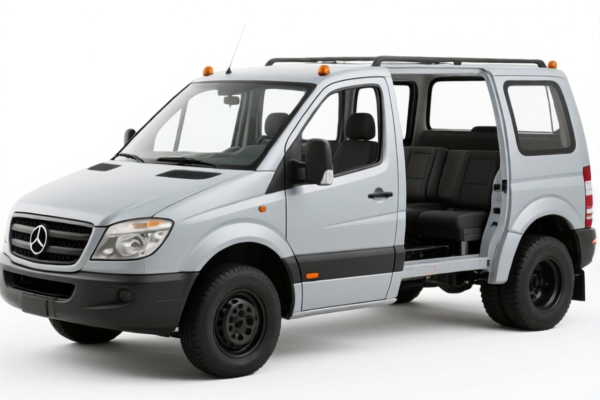
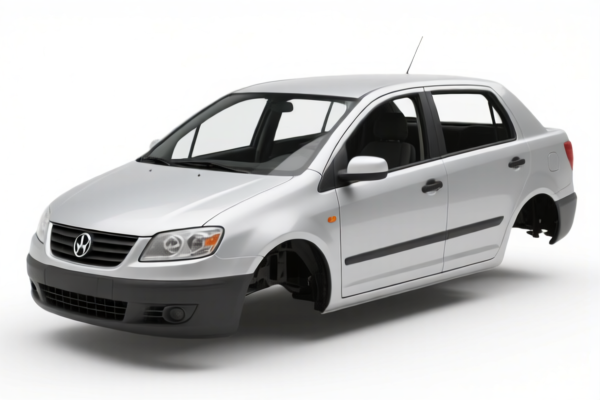

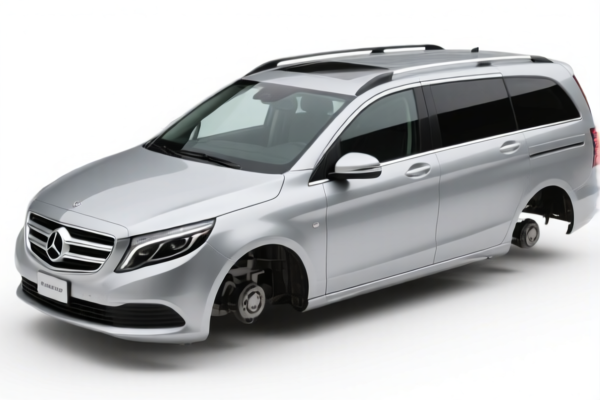
AI Analysis
🚗 Vehicle Body Parts (Motor Vehicle Bodies; Parts Thereof)
🌐 HS Code Reference & Clearance Guide | 2026 Latest Tariff Analysis | Professional Customs Strategy
📌 I. Product Definition & Classification: What Are "Vehicle Body Parts"?
"Vehicle Body Parts" generally refer to components that form the structure or exterior of a motor vehicle. In international trade, these are primarily classified under Chapter 87 (Vehicles other than railway or tramway rolling stock).
However, the final HS Code depends heavily on the specific material, function, and precise sub-category (e.g., radiator parts, general body parts). Based on the provided data, here are the potential classifications for Vehicle Body Parts, ranging from specific automotive parts to general metal goods.
⚠️ Key Distinction Point:
- If the part is specifically for radiators or specific vehicle systems → HS 8708
- If the part is a generic steel/metal structure without specific automotive function → HS 7326
- If the part is for engines (less likely for "body") → HS 8409
📦 II. HS Code Classification Details (Based on Provided Data)
| HS Code | Product Description | Summary of Reasoning | Total Tax Rate |
|---|---|---|---|
| 8708.91.60.00 | Parts of bodies, including radiators | Primary Automotive Match: "Body parts" fall under Chapter 87. Specifically, 8708.91 covers "Parts and accessories of bodies (including cabs)." The summary notes that "body parts" align with this category, specifically referencing radiator parts as a sub-category. | 35.0% |
| 8409.99.91.90 | Parts of engines | General Parts Match: Classified as "other parts" of engines. The reasoning states that since "body parts" are automotive components, they may fall under general "other parts" if no specific body code is used. However, this is less precise for body parts than 8708. | 37.5% |
| 7326.19.00.80 | Other articles of iron or steel | Material-Based Match: If the part is made of steel/iron but lacks specific automotive functional classification, it defaults to "Other articles of iron or steel." This is a "catch-all" for metal auto parts not specifically listed elsewhere. | 87.9% |
| 7326.90.86.88 | Other articles of iron or steel | Generic Metal Match: Similar to above, this is a broad category for steel articles. The reasoning suggests that "body parts" are likely metal/steel and fit this "other articles" category if not specifically identified as 8708 parts. | 87.9% |
🔍 Critical Note:
- HS 8708.91.60.00 is the most accurate for automotive-specific body parts (including radiators).
- HS 7326 codes carry significantly higher taxes (87.9%) due to additional tariffs on steel/aluminum products. Avoid using these unless the part is generic hardware (e.g., brackets, frames) with no specific automotive function.
💰 III. 2026 Latest Tariff Rate Breakdown (Including Additional Taxes)
✅ Applicable Country: United States (US)
✅ Origin: China (CN)
✅ Effective Date: From November 10, 2025 (for subsequent imports)
🎯 1. 8708.91.60.00 – Parts of Bodies (Radiators Included)
| Item | Content |
|---|---|
| Base Duty Rate | 0.0% (ad valorem) |
| USITC Additional Duty | +25.0% (Under Section 301) |
| IEEPA Additional Duty | +10.0% (For China-origin products, per Section 122) |
| Total Tax Rate | 35.0% |
| Tax Calculation | CIF Value × 35% |
| De Minimis Exemption | ❌ Not Eligible (deny_de_minimis) |
| Legal Basis | IEEPA:9903.01.24 → USITC:8708.91.60.00 |
📌 Explanation:
- This is the most favorable classification for automotive body parts.
- Base duty is 0%, but 35% additional tariffs apply due to US-China trade policies.
- Recommendation: Use this code if the part is identifiable as a vehicle body component (e.g., fenders, doors, radiator supports).
🎯 2. 8409.99.91.90 – Other Engine Parts
| Item | Content |
|---|---|
| Base Duty Rate | 2.5% |
| USITC Additional Duty | +25.0% |
| IEEPA Additional Duty | +10.0% |
| Total Tax Rate | 37.5% |
| Tax Calculation | CIF Value × 37.5% |
| De Minimis Exemption | ❌ Not Eligible |
| Legal Basis | IEEPA:9903.01.24 → USITC:8409.99.91.90 |
📌 Note:
- Slightly higher than 8708.91.60.00 due to the 2.5% base duty.
- Only use if the part is ambiguous and cannot be classified under 8708.
🎯 3. 7326.19.00.80 & 7326.90.86.88 – Other Iron/Steel Articles
| Item | Content |
|---|---|
| Base Duty Rate | 2.9% |
| USITC Additional Duty | +25.0% |
| Section 122 Duty | +50.0% (On steel, aluminum, copper articles) |
| Total Tax Rate | 87.9% |
| Tax Calculation | CIF Value × 87.9% |
| De Minimis Exemption | ❌ Not Eligible |
| Legal Basis | IEEPA:9903.01.24 → USITC:7326.19.00.80 / 7326.90.86.88 → FOOTNOTE:122 |
📌 Warning:
- This is the highest tax bracket.
- The 50% Section 122 duty applies specifically to steel, aluminum, and copper articles.
- Only use if the part is a generic steel item (e.g., a simple bracket, frame) with no specific automotive function. Do not use for recognizable body parts (like doors or hoods) as this invites customs scrutiny and potential reclassification.
🛠️ IV. Clearance Practical Advice (Risk Avoidance Guide)
✅ 1. Required Documentation (Mandatory)
| Document | Must Provide? | Description |
|---|---|---|
| ✅ Product Specification Sheet | ✔️ | Dimensions, material (steel/aluminum), weight, dimensions. |
| ✅ Part Number & OEM Reference | ✔️ | Links the part to a specific vehicle model (e.g., "Ford F-150 Door Panel"). |
| ✅ Product Photos (Clear) | ✔️ | Must show the part’s shape, mounting points, and any labels. |
| ✅ Commercial Invoice | ✔️ | Clearly state "Vehicle Body Part" or specific name (e.g., "Radiator Support"). Avoid vague terms like "Metal Part." |
| ✅ Packing List | ✔️ | Detail packaging to prevent damage claims. |
✅ 2. Declaration Tips (Key Mantras)
🔥 "Specific Name, Correct Chapter, Avoid 'Steel' Trap!"
| Scenario | Correct Declaration | Incorrect Practice |
|---|---|---|
| Recognizable Body Part (e.g., Door, Fender, Hood) | HS 8708.91.60.00 | Misdeclare as "Steel Plate" → 87.9% Tax |
| Radiator or Cooling Part | HS 8708.91.60.00 | Declare as "General Metal" → 87.9% Tax |
| Generic Metal Bracket (No Auto Function) | HS 7326.19.00.80 | Declare as "Auto Part" → Risk of reclassification |
| Engine Component | HS 8409.99.91.90 | Use Body Part code → Incorrect Classification |
✅ 3. Special Situations
| Situation | Handling Advice |
|---|---|
| OEM Custom Parts | Provide the OEM part number and vehicle compatibility. This strengthens the case for HS 8708. |
| Mixed Materials | If the part is primarily steel but has plastic/rubber components, still classify under HS 8708 if the steel structure defines its function. |
| Used Parts | Ensure "Used" is clearly marked. Some auto parts have additional restrictions when used. |
| Kit Sales | If selling a "Body Kit" (bumpers, spoilers, side skirts), declare as HS 8708.91.60.00 for the main components. Do not split into separate "steel articles" for each piece. |
🌍 V. Global Market Comparison (2026 Latest)
| Country/Region | Recommended HS Code | Tax Rate (China Origin) | Certification/Notes |
|---|---|---|---|
| 🇺🇸 USA | 8708.91.60.00 |
35.0% | High tariffs apply. Must be specific. |
| 🇨🇳 China | 8708.91.60.00 |
~5% | No additional Section 122 tariffs. |
| 🇪🇺 EU | 8708.91.60.00 |
0% (if eligible) | Check for anti-dumping duties on steel. |
| 🇨🇦 Canada | 8708.91.60.00 |
0% (under USMCA if eligible) | Preferential tariff if made in North America. |
📌 Conclusion:
- The USA imposes a 35% effective tariff on automotive body parts (HS 8708).
- Misclassifying as "Steel Articles" (HS 7326) leads to an 87.9% tax, which is 52.9% more expensive.
- Always use HS 8708 for identifiable vehicle body parts to minimize tax risk.
📌 VI. Common Mistakes & Pitfalls (Lessons Learned)
❌ Mistake 1: Declaring "Vehicle Body Parts" as "Iron Articles" (HS 7326)
👉 Consequence: Tax jumps from 35% to 87.9%. Potential penalty for misclassification.
❌ Mistake 2: Vague Description ("Metal Part for Car")
👉 Consequence: Customs may request additional info, delay clearance, or assign the highest duty rate (87.9%) due to uncertainty.
❌ Mistake 3: Splitting a "Body Kit" into individual steel brackets
👉 Consequence: Each bracket taxed at 87.9%. Total tax exceeds product value.
✅ Correct Practice:
"Rear Bumper Cover for Toyota Camry 2021-2023, Plastic/Steel Composite, OEM Part # 52120-09L01"
Use HS 8708.91.60.00
🎯 VII. Conclusion: Precise Classification Saves Money!
🎯 Remember the Mantra:
🔹 "Auto Part? Use 8708. Steel Only? Use 7326. Don't Mix!"
🔹 "35% vs 87.9%: A 52.9% Difference. Choose Wisely!"
📌 Pro Tip:
- For high-value shipments, apply for an Advance Ruling from US Customs (CBP) to confirm the HS Code (preferably 8708.91.60.00) before shipping.
- Ensure your commercial invoice matches the HS Code description exactly.
- Avoid generic terms like "Steel Part" for automotive components. Use specific names like "Door Panel," "Fender," "Radiator Support," etc.
📣 Action Required:
📞 Contact your customs broker with product photos and OEM part numbers.
🚀 Verify HS 8708.91.60.00 for accurate 35% taxation.
💼 Save 52.9% in taxes by avoiding the "Steel Articles" trap!
✨ Professional Customs Clearance Starts with Accurate Classification!
💼 Every dollar saved in duty is profit retained!
Customer Reviews
About HS Code Classification
The Harmonized System (HS) is an internationally standardized nomenclature developed by the World Customs Organization (WCO) to classify traded products. Over 200 countries use the HS system as the basis for customs tariffs, trade statistics, and import/export regulations.
Each HS code follows a hierarchical structure:
- Chapter (2 digits) — Broad category of goods (e.g., Chapter 84: Machinery and Mechanical Appliances)
- Heading (4 digits) — More specific grouping within the chapter
- Subheading (6 digits) — Internationally standardized breakdown, used by all WCO member countries
- National subdivisions (8-10 digits) — Country-specific extensions for further classification, such as US HTSUS 10-digit codes
Correct HS code classification is essential for smooth customs clearance, accurate duty payment, and compliance with trade regulations. Misclassification can lead to customs delays, overpayment of duties, or penalties.
When importing from CN to US, the applicable tariff rates may include:
- Most-Favored-Nation (MFN) rate — The standard duty rate applied to WTO members
- General rate — Applied to countries without trade agreements
- Trade remedy duties — Additional tariffs such as Section 301 (anti-dumping), Section 232 (national security), or countervailing duties
The information provided on this page is for reference purposes only. For official classification, please consult with your local customs authority or a licensed customs broker.