Vehicle Body Parts (HS 8708916000)
CN → US| HS Code | Tariff Rate | Origin | Destination | Doc |
|---|---|---|---|---|
| 7326190080 | 87.9% | CN | US | Official Doc |
| 7326908688 | 87.9% | CN | US | Official Doc |
| 8708916000 | 35.0% | CN | US | Official Doc |
| 8708916000 | 35.0% | CN | US | Official Doc |
| 8409999190 | 37.5% | CN | US | Official Doc |
Product Images
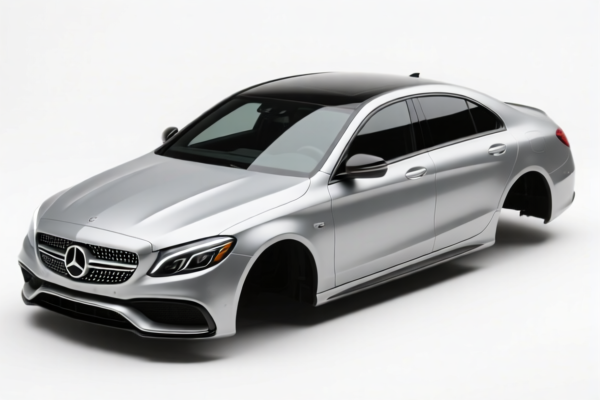
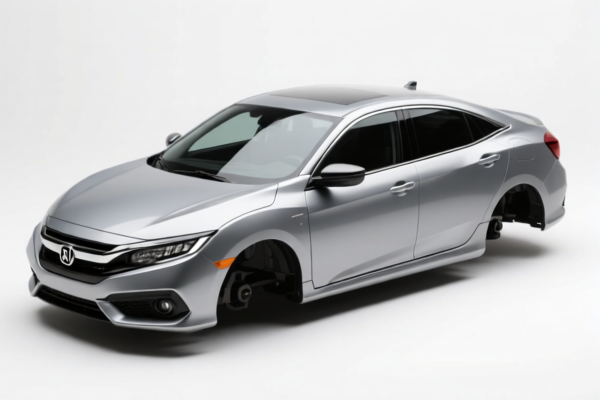
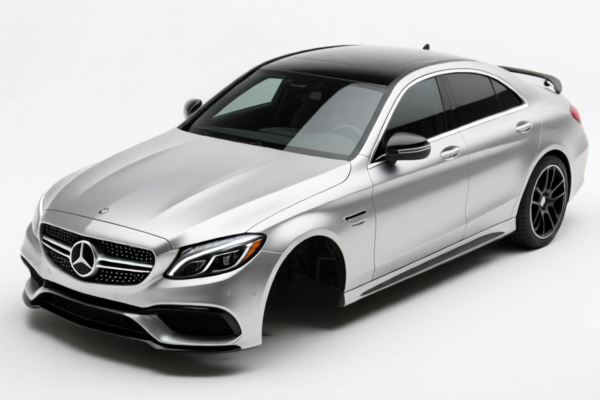

AI Analysis
🚗 Vehicle Body Parts (Specifically: Radiator & Heating System Components)
HS Code Focus: 8708.91.60.00
🌐 HS Code Reference & Clearance Guide | 2026 Latest Tariff Analysis | Professional Customs Strategy
📌 I. Product Definition & Classification: Decoding "Vehicle Body Parts" vs. Specific HS Codes
In international trade, the term "Vehicle Body Parts" is often a generic descriptor that causes classification ambiguity. However, under the Harmonized System (HS), classification depends on specific function and material.
The Conflict:
- Generic Interpretation: "Body parts" often implies structural panels (doors, hoods, fenders) made of steel/aluminum → May lean toward Ch. 73 (Iron/Steel) or Ch. 84 (Machinery).
- Specific Interpretation (HS 8708.91.60.00): This code specifically covers "Parts of radiators and heating systems" for motor vehicles.
⚠️ Critical Distinction:
- If the part is a structural body panel (e.g., door, bumper, chassis frame) made of steel → It likely belongs to 7326.19.00.80 or 7326.90.86.88.
- If the part is a cooling/heating component (e.g., radiator, heater core, hoses, fittings) → It belongs to 8708.91.60.00.
The provided data suggests a strong alignment with 8708.91.60.00 due to the "default preference for spare parts" principle when no material conflict exists with the specific sub-heading for radiator/heating parts.
📦 II. HS Code Classification Details (2026 Latest Tariff Reference)
Based on the provided data, here are the potential HS Codes for "Vehicle Body Parts," ranked by relevance and tax impact:
| HS Code | Product Description | Tax Rate (Total) | Key Reason for Match |
|---|---|---|---|
8708.91.60.00 |
Parts of radiators and heating systems for motor vehicles | 35.0% | Best Match: "Body parts" may include cooling/heating modules. No material conflict; default to specific vehicle part. |
8409.99.91.90 |
Other parts for internal combustion engines | 37.5% | Alternative: If the part is engine-adjacent or considered a general "other part." Slightly higher tax. |
7326.19.00.80 |
Other articles of iron or steel (Miscellaneous Steel Products) | 87.9% | Fallback: If deemed purely a steel structural component without specific vehicle part status. High Risk. |
7326.90.86.88 |
Other articles of iron or steel (Miscellaneous Steel Products) | 87.9% | Fallback: Same as above. High tax burden due to "steel product" classification. |
🔍 Key Insight:
-8708.91.60.00(35%) is significantly cheaper than7326.xxxxxxxx(87.9%).
- Misclassifying a specific vehicle part as a generic "steel product" can double your tax burden.
- The summary notes: "No material conflict with 'Other steel products'... default preference for spare parts applies." This supports8708.91.60.00if the part can be functionally linked to cooling/heating systems.
💰 III. 2026 Latest Tariff Rate Breakdown (Including Surtaxes & Policies)
✅ Applicable Country: United States (US)
✅ Origin: China (CN)
✅ Effective Date: Nov 10, 2025 (and ongoing)
🎯 1. 8708.91.60.00 — Parts of Radiators & Heating Systems (Recommended)
| Item | Detail |
|---|---|
| Base Tariff | 0.0% (ad valorem) |
| Section 301 Surtax | +25.0% (USITC Footnote 9903.88.01) |
| IEEPA Surtax | +10.0% (China/Origin-specific, per 122 Clause) |
| Total Tariff Rate | 35.0% |
| Tax Calculation | CIF Value × 35% |
| De Minimis Exemption? | ❌ NO (deny_de_minimis) |
| Legal Basis Path | IEEPA:9903.01.24 → USITC:8708.91.60.00 → FOOTNOTE:9903.88.01 |
📌 Explanation:
- Base 0%: Vehicle parts often have low base tariffs.
- 25% Section 301: Standard surtax for Chinese goods.
- 10% IEEPA: Additional surtax for China-origin goods under specific emergency powers.
- Total 35%: This is the lowest possible rate among the options provided.
🎯 2. 7326.19.00.80 & 7326.90.86.88 — Steel Articles (High Risk)
| Item | Detail |
|---|---|
| Base Tariff | 2.9% |
| Section 301 Surtax | +25.0% |
| IEEPA/122 Clause | +50.0% (Specific surtax for steel/aluminum/copper products under 122 Clause) |
| Total Tariff Rate | 87.9% |
| Tax Calculation | CIF Value × 87.9% |
| De Minimis Exemption? | ❌ NO |
| Legal Basis Path | IEEPA:9903.01.25 → USITC:7326.19.00.80 → FOOTNOTE:9903.88.01 |
📌 Warning:
- The 10% "122 Clause" surtax for steel escalates to 50% for steel products under certain conditions.
- Total 87.9% is extremely high and likely to make imports unprofitable unless value-added significantly.
🛠️ IV. Customs Clearance Practical Advice (Avoid Pitfalls)
✅ 1. Documentation Checklist (Must-Have)
| Document | Required? | Notes |
|---|---|---|
| ✅ Product Specification Sheet | ✔️ | Must clearly define if the part is for cooling/heating (supports 8708.91.60.00) or structural (supports 7326). |
| ✅ Technical Drawing / Schematic | ✔️ | Essential to prove function (e.g., fluid channels, heat exchange surfaces). |
| ✅ Product Photos (Label & Assembly) | ✔️ | Show model number, brand, and any identification marks. |
| ✅ Commercial Invoice | ✔️ | Description: "Radiator Parts for [Vehicle Make/Model]" or "Vehicle Body Structural Component." |
| ✅ Certificate of Origin (CO) | ✔️ | Required for tariff verification. |
| ✅ Packing List | ✔️ | Clearly list components to avoid "split shipment" penalties. |
✅ 2. Declaration Strategy (Key Keywords)
🔥 Rule of Thumb: "Function Defines Code, Not Just Name."
| Scenario | Correct Declaration | Incorrect Declaration |
|---|---|---|
| Part is a Radiator/Heater Core | 8708.91.60.00 - "Parts of Radiators for Vehicles" |
"Vehicle Body Parts" → Risk of 87.9% |
| Part is a Steel Bracket/Frame | 7326.19.00.80 - "Steel Articles, Other" |
8708.91.60.00 → Misclassification Penalty |
| Part is a General Body Panel | 7326.90.86.88 - "Steel Articles, Other" |
8708.91.60.00 → Misclassification Penalty |
📌 Critical Tip:
- If your "Body Part" is any part related to the cooling system (radiator, heater, fan, hose), use8708.91.60.00.
- If it is purely structural (door, hood, fender, frame), use7326.xxxx.
- Do not use "Vehicle Body Parts" as the sole description. Be specific!
✅ 3. Special Cases & Mitigation
| Situation | Advice |
|---|---|
| OEM Custom Parts | Provide OEM blueprints to prove specific vehicle application. |
| Mixed Shipments | Declare separately. Do not lump steel structural parts with cooling parts. |
| Origin Fraud | Ensure CO matches the actual country of manufacture. Transshipment may trigger additional scrutiny. |
| Pre-Ruling Request | Highly Recommended: Submit an Advance Ruling to US Customs (CBP) with technical specs to lock in 8708.91.60.00 if applicable. |
🌍 V. Global Clearance Comparison (2026)
| Country/Region | Recommended HS Code | Estimated Tariff (China Origin) | Certification | Notes |
|---|---|---|---|---|
| 🇺🇸 USA | 8708.91.60.00 |
35.0% | FCC/SAE (if applicable) | Lowest Risk if functional match is proven. |
| 🇨🇳 China | 8708.91.60.00 |
~10-15% | CCC (if applicable) | Lower base tariff, no 301/IEEPA. |
| 🇪🇺 EU | 8708.91.60.00 |
4.5% | CE/Eco-design | No surtaxes. |
| 🇲🇽 Mexico | 8708.91.60.00 |
0% (under USMCA) | NOM | Beneficial for North American trade. |
📌 Conclusion:
- USA Market: The 35% rate for8708.91.60.00is the optimal path.
- Avoid7326unless the part is definitively a non-functional steel article, due to the 87.9% rate.
📌 VI. Common Mistakes & Pitfalls (Lessons Learned)
❌ Mistake 1: Using "Vehicle Body Parts" as the generic description.
👉 Consequence: Customs may default to the highest tariff or require additional documentation, causing delays.
👉 Fix: Specify function: "Radiator Support," "Heater Core," "Cooling Fan Shroud."
❌ Mistake 2: Classifying a cooling part as a "Steel Article."
👉 Consequence: Tax jumps from 35% to 87.9%.
👉 Fix: Provide technical diagrams showing fluid pathways or heat exchange functions.
❌ Mistake 3: Ignoring the 122 Clause for Steel.
👉 Consequence: Unexpected 50% surtax on steel products.
👉 Fix: Verify if the part falls under "Steel Products" definitions. If it’s a vehicle-specific part, argue for Chapter 87.
🎯 VII. Final Recommendation
🎯 Action Plan:
1. Analyze the Part: Is it for cooling/heating? → Use 8708.91.60.00.
2. Prepare Docs: Technical specs, drawings, and photos.
3. Declare Precisely: "Parts of Radiators and Heating Systems for Motor Vehicles."
4. Calculate Cost: CIF × 35% = Total Duty.
5. Consider Pre-Ruling: Submit to CBP for certainty.
🔹 "Function over Form, Specific over Generic, Accuracy over Savings."
🔹 HS Code8708.91.60.00saves you ~53% in tariffs compared to7326.
📌 Pro Tip:
If your parts are OEM for specific brands (Toyota, Ford, etc.), include the Vehicle Make/Model in the description to strengthen the "Vehicle Part" argument under Chapter 87.
📣 Immediate Action:
📞 Consult a Customs Broker
📄 Submit Technical Specifications
🚀 Optimize Tariff from 87.9% to 35%!
✨ Precise Classification = Profitable Trade!
💼 Don’t let generic names cost you half your margin!
Customer Reviews
About HS Code Classification
The Harmonized System (HS) is an internationally standardized nomenclature developed by the World Customs Organization (WCO) to classify traded products. Over 200 countries use the HS system as the basis for customs tariffs, trade statistics, and import/export regulations.
Each HS code follows a hierarchical structure:
- Chapter (2 digits) — Broad category of goods (e.g., Chapter 84: Machinery and Mechanical Appliances)
- Heading (4 digits) — More specific grouping within the chapter
- Subheading (6 digits) — Internationally standardized breakdown, used by all WCO member countries
- National subdivisions (8-10 digits) — Country-specific extensions for further classification, such as US HTSUS 10-digit codes
Correct HS code classification is essential for smooth customs clearance, accurate duty payment, and compliance with trade regulations. Misclassification can lead to customs delays, overpayment of duties, or penalties.
When importing from CN to US, the applicable tariff rates may include:
- Most-Favored-Nation (MFN) rate — The standard duty rate applied to WTO members
- General rate — Applied to countries without trade agreements
- Trade remedy duties — Additional tariffs such as Section 301 (anti-dumping), Section 232 (national security), or countervailing duties
The information provided on this page is for reference purposes only. For official classification, please consult with your local customs authority or a licensed customs broker.