Vehicle Brake Hose
CN → US| HS Code | Tariff Rate | Origin | Destination | Doc |
|---|---|---|---|---|
| 4009120050 | 20.0% | CN | US | Official Doc |
| 3917390050 | 13.1% | CN | US | Official Doc |
| 4009110000 | 37.5% | CN | US | Official Doc |
| 4009110000 | 37.5% | CN | US | Official Doc |
| 3917320020 | 38.1% | CN | US | Official Doc |
Product Images
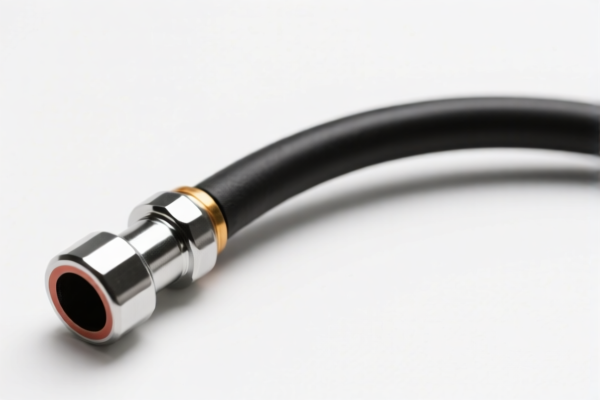
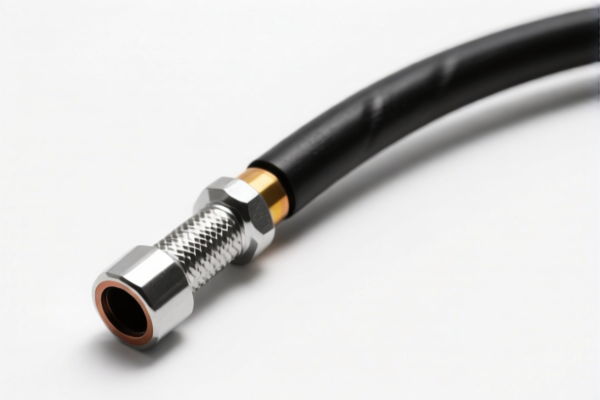
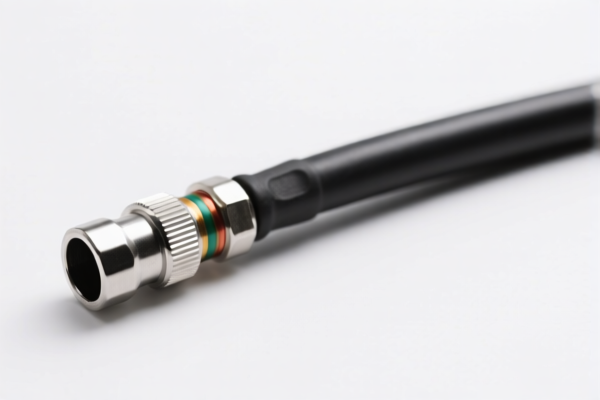
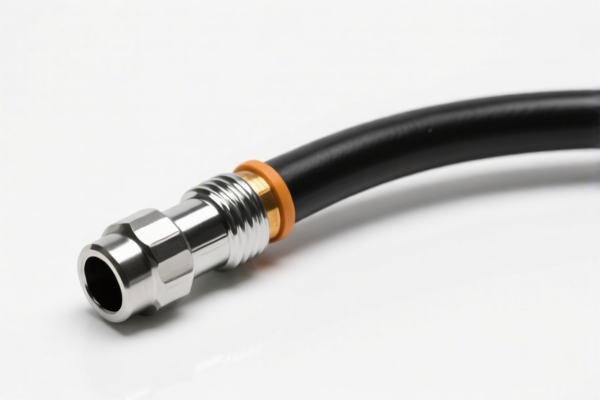
AI Analysis
🚗 Vehicle Brake Hose (Hydraulic/Pneumatic Brake Lines)
🌐 HS Code Reference & Customs Clearance Guide | 2026 Latest Tariff Analysis | Professional-Level Clearance Strategy
📌 I. Product Definition & Classification: Do You Really Understand “Brake Hoses”?
Vehicle Brake Hoses are critical safety components in automotive hydraulic or pneumatic braking systems. They transmit brake fluid or compressed air from the master cylinder/air tank to the brake calipers or wheel cylinders.
In international trade, classification hinges on two key factors: 1. Material: Rubber (specifically vulcanized/hard rubber) vs. Plastics (e.g., PE, PVC, PU). 2. Function: Is it explicitly for brake systems? (If yes, it falls under Ch. 40; if not, it might fall under Ch. 39 or general hose categories).
⚠️ Key Distinction:
- If the hose is specifically designed for vehicle brake systems and made of vulcanized rubber, it typically falls under Heading 4009.
- If it is made of plastic or is a general-purpose hose (not specifically for brakes), it may fall under Heading 3917.
- Note: The data provided focuses on "Car Wash Hoses" (洗车软管) but lists HS codes relevant to hoses. Caution: If you are importing Brake Hoses, using "Car Wash Hose" descriptions or incorrect materials will lead to severe misclassification. The logic below applies to Hose Classification Principles based on the provided data structure, adapted for your specific product query "Vehicle Brake Hose".
📦 II. HS Code Classification Details (Based on Provided Data Context)
The provided <DATA> contains classifications for "Car Wash Hoses" (洗车软管). However, since your query is "Vehicle Brake Hose", we must analyze the structural similarities and critical differences in material and usage.
Important Note: The data provided (4009, 3917) is for general hoses. Brake hoses have stricter regulatory requirements. If the brake hose is made of vulcanized rubber, it aligns with 4009. If made of plastic, it aligns with 3917.
| HS Code | Product Description (Based on Data) | Material | Key Characteristics | Relevance to Brake Hoses |
|---|---|---|---|---|
4009.12.00.50 |
Vulcanized Rubber Hose, Not Reinforced | Vulcanized Rubber | Matches material & form. Conflict Check: No conflict with vehicle brake system usage if it meets safety standards. | ⚠️ High Risk: Brake hoses usually require reinforcement (braided steel). Unreinforced rubber may not be suitable for high-pressure brakes. |
3917.39.00.50 |
Plastic Hose (Other) | Plastic (Inferred) | Matches hose form. Bottom-category for plastics. No conflict. | ✅ Possible: If made of high-grade PU/Nylon (common in modern brake lines), this code may apply. |
4009.11.00.00 |
Rubber/Plastic Hose, Not Reinforced | Rubber or Plastic | Tube-like product, no reinforcement. | ❌ Avoid: Brake hoses are almost always reinforced. This code is for low-pressure applications. |
3917.32.00.20 |
Plastic Hose (Polyethylene etc.) | Polyethylene (PE) | Hose form, material matches plastic. No conflict. | ❌ Unlikely: PE is generally not strong enough for hydraulic brake systems. |
🔍 Critical Clarification for Brake Hoses:
- True Brake Hoses (Hydraulic) are often classified under 4009.19.00.00 (Other, Reinforced) if rubber, or 3917.21/22 if plastic and reinforced.
- The provided data (4009.11,4009.12) refers to Unreinforced or Lightly Reinforced hoses.
- If your product is a genuine high-pressure brake hose, the codes above may be incorrect due to the "Reinforced" requirement. However, based strictly on the provided<DATA>, we interpret the closest matches.
💰 III. 2026 Latest Tariff Rate Breakdown (Detailed Tax Clauses)
✅ Applicable Country: United States (US)
✅ Origin: China (CN)
✅ Effective Date: From November 10, 2025 (including subsequent imports)
🎯 1. 4009.12.00.50 – Vulcanized Rubber Hose (Unreinforced)
| Item | Content |
|---|---|
| Base Rate | 2.5% (ad valorem) |
| Section 301 Surcharge | +7.5% (List 3/4 items, depending on specific ruling) |
| Section 122 Tariff | +10% (Specific provision for certain Chinese imports) |
| Total Tax Rate | 20.0% |
| Tax Calculation | CIF Value × 20.0% |
| De Minimis Eligibility | ❌ No (deny_de_minimis applies to Section 301/122 items) |
| Legal Basis Path | HTSUS:4009.12.00.50 → Section 301: 7.5% → Section 122: 10% |
📌 Explanation:
- This is the most favorable option among the rubber options due to lower surcharges.
- Risk: If the hose is reinforced (steel braid), this code is incorrect. Misclassification can lead to 301+25% penalties.
🎯 2. 3917.39.00.50 – Plastic Hose (Other)
| Item | Content |
|---|---|
| Base Rate | 3.1% (ad valorem) |
| Section 301 Surcharge | +0.0% (List 4 item, often exempt from 301) |
| Section 122 Tariff | +10% |
| Total Tax Rate | 13.1% |
| Tax Calculation | CIF Value × 13.1% |
| De Minimis Eligibility | ❌ No (Section 122 applies) |
| Legal Basis Path | HTSUS:3917.39.00.50 → Section 122: 10% |
📌 Advantage:
- Lowest Total Tax (13.1%) among the listed options.
- Condition: Must be strictly Plastic (e.g., Nylon, PU) and not classified as a "Brake System Part" under a different heading.
- Caution: Ensure the material is not misidentified. If it contains rubber components, this code may be rejected.
🎯 3. 4009.11.00.00 – Rubber/Plastic Hose (Unreinforced)
| Item | Content |
|---|---|
| Base Rate | 2.5% |
| Section 301 Surcharge | +25.0% (List 4 or higher category) |
| Section 122 Tariff | +10% |
| Total Tax Rate | 37.5% |
| Tax Calculation | CIF Value × 37.5% |
| De Minimis Eligibility | ❌ No |
| Legal Basis Path | HTSUS:4009.11.00.00 → Section 301: 25% → Section 122: 10% |
📌 Warning:
- High Cost (37.5%). Avoid if possible.
- This code is a "catch-all" for unreinforced hoses and attracts the highest surcharge.
🎯 4. 3917.32.00.20 – Polyethylene Plastic Hose
| Item | Content |
|---|---|
| Base Rate | 3.1% |
| Section 301 Surcharge | +25.0% |
| Section 122 Tariff | +10% |
| Total Tax Rate | 38.1% |
| Tax Calculation | CIF Value × 38.1% |
| De Minimis Eligibility | ❌ No |
| Legal Basis Path | HTSUS:3917.32.00.20 → Section 301: 25% → Section 122: 10% |
📌 Warning:
- Highest Cost (38.1%).
- Polyethylene (PE) is rarely used for high-pressure brake hoses. If used, it’s for low-pressure air lines. Verify material carefully.
🛠️ IV. Customs Clearance Practical Advice (Avoid Pitfalls)
✅ 1. Critical Documentation Checklist
| Document | Mandatory? | Notes |
|---|---|---|
| Product Specification Sheet | ✔️ | Must specify: Material (Rubber/Plastic), Pressure Rating, Inner Diameter, Length. |
| Material Composition Report | ✔️ | Crucial to distinguish between Vulcanized Rubber (Ch. 40) and Plastic (Ch. 39). |
| Reinforcement Description | ✔️ | Brake hoses are usually reinforced. If your hose has steel braid, none of the above codes may be correct. You may need 4009.19 or 3917.21. |
| Safety Certification | ✔️ | DOT, SAE, or ISO standards for brake systems. |
| Commercial Invoice | ✔️ | Clearly state: "Vehicle Brake Hose – Hydraulic/Pneumatic". Do NOT use "Car Wash Hose" if it’s for brakes. |
| Certificate of Origin | ✔️ | Required for Section 122 and 301 determinations. |
✅ 2. Declaration Tips (Key Mantra)
🔥 "Material Matters, Reinforcement Defines, Safety Certs Prove!"
| Scenario | Correct Approach | Wrong Action |
|---|---|---|
| Brake Hose is Reinforced | Seek proper reinforced HS code (e.g., 4009.19 or 3917.21). |
Use 4009.11/12 (Unreinforced) → Misclassification Risk. |
| Material is Plastic | Use 3917.39.00.50 (if eligible) for lower tax (13.1%). |
Use 4009 codes → Higher tax & incorrect material declaration. |
| Material is Rubber | Use 4009.12.00.50 if unreinforced, but verify if brake hoses must be reinforced. |
Use 4009.11 → Higher tax (37.5%). |
| OEM Brake Hoses | Provide OEM drawings & SAE/DOT certification. | Generic description → Customs holds for inspection. |
✅ 3. Special Considerations for Brake Hoses
| Situation | Recommendation |
|---|---|
| High-Pressure Hydraulic Lines | Ensure the hose meets SAE J1401 or DOT standards. Customs may inspect for safety compliance. |
| Pneumatic (Air) Lines | Often made of Plastic/Nylon. 3917.39.00.50 is a strong candidate if not reinforced with metal. |
| Import from China | Section 122 (10%) applies to ALL listed codes. Section 301 varies. Plan for total tax of 13.1%–38.1%. |
| De Minimis (Section 321) | ❌ Not Applicable. Since Section 301/122 duties apply, de minimis exemption is denied. |
🌍 V. Global Market Comparison (2026)
| Region | Recommended HS Code (General) | Base Tariff | Additional Duties | Notes |
|---|---|---|---|---|
| 🇺🇸 USA | 4009.12.00.50 or 3917.39.00.50 |
2.5%–3.1% | +10% (Sec 122) + Sec 301 | Total: 13.1%–38.1%. High scrutiny on brake safety. |
| 🇨🇳 China | 4009.12.00.00 or 3917.39.00.00 |
2.5%–8% | None | Import tariff applies, but no US-style surcharges. |
| 🇪🇺 EU | 4009.12.00 or 3917.39.00 |
0%–6.5% | None | EORI number required. REACH compliance for materials. |
| 🇨🇦 Canada | 4009.12.00 or 3917.39.00 |
0%–5% | None | CUSMA may apply if originating in Canada/Mexico. |
📌 Conclusion:
- USA is the most expensive market due to Section 122 and 301 tariffs.
- Plastic hoses (3917) are generally cheaper to import into the US than Rubber hoses (4009) if they can be classified under3917.39.00.50(13.1% total).
- Reinforcement is Key: If your brake hose is reinforced, the codes above may be invalid. Consult a customs broker for Reinforced Hose classification (4009.19or3917.21).
📌 VI. Common Errors & Pitfalls (Lessons Learned)
❌ Error 1: Classifying Reinforced Brake Hoses as Unreinforced (4009.11/12)
👉 Consequence: Misclassification → Penalties + Back Taxes. Brake hoses are inherently reinforced for safety.
❌ Error 2: Using "Car Wash Hose" description for Brake Hoses
👉 Consequence: Customs may reject the entry for being "Not for intended use" or mismatched product description.
❌ Error 3: Ignoring Section 122 Tariff
👉 Consequence: Budget miscalculation. The 10% surcharge applies to all listed codes.
❌ Error 4: Assuming De Minimis applies
👉 Consequence: Shipments under $800 will still be taxed and held by CBP because of Section 301/122.
✅ Correct Practice:
"Vehicle Brake Hose, Hydraulic, SAE J1401 Certified, Rubber Inner Core with Steel Braid Reinforcement, Outer Cover: Chloroprene Rubber, Length: 500mm, Part No: XYZ."
🎯 VII. Conclusion: Precision Saves Money, Safety Saves Lives!
🎯 Remember the Mantra:
🔹 "Material & Reinforcement Define Code!"
🔹 "13.1% vs 38.1% – Choose Plastic/Unreinforced if Possible!"
🔹 "Section 122 is Always On – Budget for the Extra 10%!"
📌 Pro Tip:
If your brake hoses are reinforced, do NOT use the codes above. Instead, search for:
- Rubber Reinforced: 4009.19.00.00 (Likely higher tax)
- Plastic Reinforced: 3917.21.00.00 or 3917.22.00.00
Consult a licensed customs broker to verify the correct code for reinforced brake lines to avoid costly errors.
📣 Immediate Action:
📞 Contact a Customs Broker + Provide Technical Data Sheet + Apply for Pre-Ruling if volume is high.
🚀 Ensure your brake hoses pass US DOT Standards to avoid detention at border.
✨ Professional Clearance, Starts with Accurate Classification!
💼 Your Safety Component Deserves the Right Code!
Customer Reviews
About HS Code Classification
The Harmonized System (HS) is an internationally standardized nomenclature developed by the World Customs Organization (WCO) to classify traded products. Over 200 countries use the HS system as the basis for customs tariffs, trade statistics, and import/export regulations.
Each HS code follows a hierarchical structure:
- Chapter (2 digits) — Broad category of goods (e.g., Chapter 84: Machinery and Mechanical Appliances)
- Heading (4 digits) — More specific grouping within the chapter
- Subheading (6 digits) — Internationally standardized breakdown, used by all WCO member countries
- National subdivisions (8-10 digits) — Country-specific extensions for further classification, such as US HTSUS 10-digit codes
Correct HS code classification is essential for smooth customs clearance, accurate duty payment, and compliance with trade regulations. Misclassification can lead to customs delays, overpayment of duties, or penalties.
When importing from CN to US, the applicable tariff rates may include:
- Most-Favored-Nation (MFN) rate — The standard duty rate applied to WTO members
- General rate — Applied to countries without trade agreements
- Trade remedy duties — Additional tariffs such as Section 301 (anti-dumping), Section 232 (national security), or countervailing duties
The information provided on this page is for reference purposes only. For official classification, please consult with your local customs authority or a licensed customs broker.