Vehicle Brake Hose Elbow Fitting
CN → US| HS Code | Tariff Rate | Origin | Destination | Doc |
|---|---|---|---|---|
| 4009120020 | 20.0% | CN | US | Official Doc |
| 4009220020 | 37.5% | CN | US | Official Doc |
| 8708998105 | 37.5% | CN | US | Official Doc |
| 8708995500 | 37.5% | CN | US | Official Doc |
| 7307290090 | 90.0% | CN | US | Official Doc |
Product Images
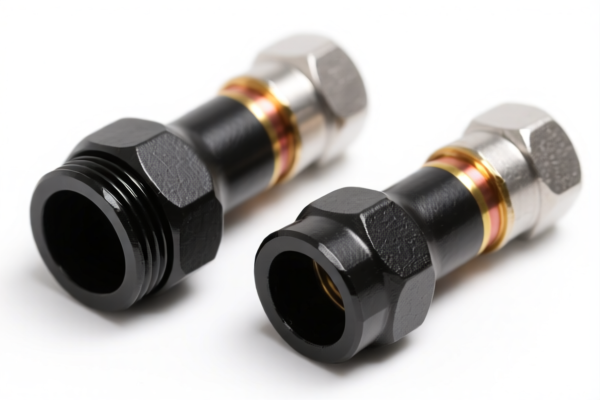
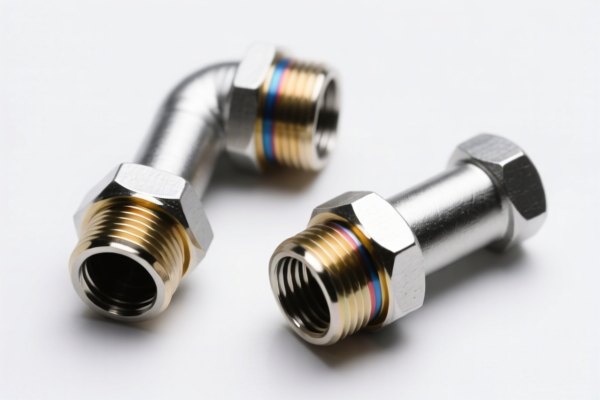
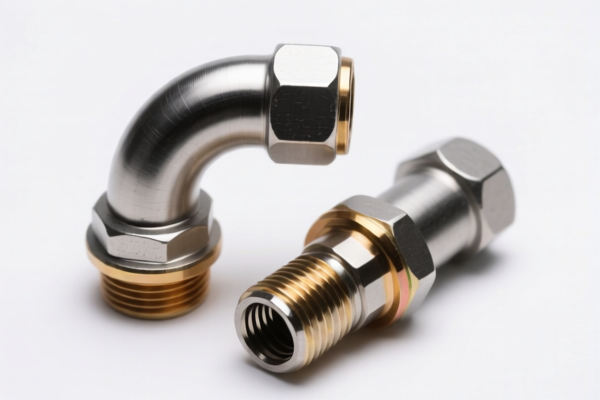
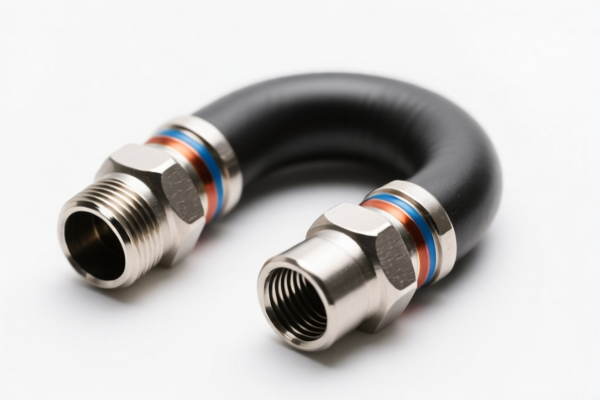
AI Analysis
🚗 Vehicle Brake Hose Elbow Fitting (Automotive Brake Systems)
🌐 HS Code Reference & Customs Clearance Guide | 2026 Latest Tariff Analysis | Professional Clearance Strategy
📌 I. Product Definition & Classification: What is a "Brake Hose Elbow Fitting"?
Vehicle brake hose elbow fittings are critical components of the automotive braking system. They serve as connectors that link rigid brake lines to flexible brake hoses, or connect different sections of brake lines, ensuring the transmission of brake fluid pressure while accommodating vibration and movement.
In international trade, classification depends heavily on: 1. Material: Is it made of rubber, plastic, or metal? 2. Form: Is it a flexible hose with fittings, or just the metal/rubber connector? 3. Function: Is it classified as a "part of the vehicle" or a "general pipe fitting"?
⚠️ Critical Distinction:
- If the item is a flexible rubber hose with metal fittings designed specifically for brake fluid transmission → It falls under Chapter 40 (Rubber Articles) or Chapter 87 (Vehicle Parts).
- If the item is purely metal (e.g., steel/stainless steel elbow) used as a pipe fitting → It falls under Chapter 73 (Iron/Steel Articles).
- Misclassification Risk: Declaring a rubber-hose assembly as a "metal fitting" or vice versa can lead to severe duty penalties and clearance delays.
📦 II. HS Code Classification Details (2026 Latest Tariff Authority)
Based on the product "Vehicle Brake Hose Elbow Fitting," the correct HS Code depends on the specific construction (Rubber vs. Metal). Below are the 5 most likely classifications from the provided dataset:
| HS Code | Product Description | Key Features | Duty Rate |
|---|---|---|---|
4009.12.00.20 |
Brake Rubber Hoses & Joints | Material: Vulcanized Rubber; Form: Hoses & Joints; Used for vehicle brakes. | 20.0% |
4009.22.00.20 |
Brake Rubber Hoses & Joints | Material: Vulcanized Rubber; Form: Piping & Hoses with Accessories; For specific vehicle brakes. | 37.5% |
8708.99.81.05 |
Hoses with Fittings for Vehicle Brakes | Use: Automotive Brakes; Material: Rubber/Plastic treated as similar in brake context. | 37.5% |
8708.99.55.00 |
Parts of Vehicle Brake Systems | Contains rubber; Meets characteristics of vibration-absorbing or related products. | 37.5% |
7307.29.00.90 |
Brake Pipe Fittings (Joints) | Type: Pipe Fittings; Inferred Material: Metal (Steel/Stainless); Fallback for other categories. | 90.0% |
🔍 Key Takeaway:
- Rubber Assemblies (4009series or8708series) have lower base duties but attract high additional tariffs (total 20%–37.5%).
- Metal Fittings (7307) have a much higher total duty (90.0%) due to the combination of steel/aluminum penalties and general additional tariffs.
- Always verify the material before declaring. A "fitting" that is part of a rubber hose assembly should NOT be declared as a standalone metal fitting if it comes pre-assembled.
💰 III. 2026 Latest Tariff Rate Breakdown (Including Surtaxes & Policy Add-ons)
✅ Applicable Country: United States (US)
✅ Origin: China (CN)
✅ Effective Date: From November 10, 2025 (including subsequent imports)
🎯 1. 4009.12.00.20 – Brake Rubber Hoses & Joints (Simple Form)
| Item | Detail |
|---|---|
| Base Tariff | 2.5% (Most Favored Nation) |
| Section 301 Surcharge | +7.5% (Additional Tariff) |
| Section 122 Tariff | +10% (Specific Trade Action Tariff) |
| Total Effective Rate | 20.0% |
| Calculation | CIF Value × 20% |
| De Minimis Exemption | ❌ Not Eligible (Denied) |
| Legal Basis | Section 301 + Section 122 applicable to rubber articles from China. |
📌 Explanation:
- This is the lowest duty option among rubber brake components.
- It applies to simple rubber hoses with basic joints, without complex accessories or specialized piping configurations.
🎯 2. 4009.22.00.20 – Brake Rubber Hoses with Accessories
| Item | Detail |
|---|---|
| Base Tariff | 2.5% |
| Section 301 Surcharge | +25.0% (Higher additional tariff) |
| Section 122 Tariff | +10% |
| Total Effective Rate | 37.5% |
| Calculation | CIF Value × 37.5% |
| De Minimis Exemption | ❌ Not Eligible |
| Legal Basis | Higher surcharge applies to hoses with complex accessories/specific vehicle designs. |
📌 Note:
- If your product includes brackets, clamps, or specialized connectors as "accessories," it likely falls here.
- Duty increases significantly by 17.5% compared to the basic hose version.
🎯 3. 8708.99.81.05 – Hoses with Fittings for Vehicle Brakes
| Item | Detail |
|---|---|
| Base Tariff | 2.5% |
| Section 301 Surcharge | +25.0% |
| Section 122 Tariff | +10% |
| Total Effective Rate | 37.5% |
| Calculation | CIF Value × 37.5% |
| De Minimis Exemption | ❌ Not Eligible |
📌 Context:
- Classified under Chapter 87 (Vehicle Parts).
- Used when the hose is considered a "part of the vehicle" rather than a general rubber article.
- Common for OEM replacements where the part number links directly to a vehicle model.
🎯 4. 8708.99.55.00 – Parts of Vehicle Brake Systems (Rubber Inclusion)
| Item | Detail |
|---|---|
| Base Tariff | 2.5% |
| Section 301 Surcharge | +25.0% |
| Section 122 Tariff | +10% |
| Total Effective Rate | 37.5% |
| Calculation | CIF Value × 37.5% |
📌 Context:
- Applies if the component is viewed as a shock-absorbing or vibration-dampening part of the brake system.
- Often used for flexible couplings or specialized rubber joints that reduce noise/vibration.
🎯 5. 7307.29.00.90 – Metal Brake Pipe Fittings (Joints)
| Item | Detail |
|---|---|
| Base Tariff | 5.0% |
| Section 301 Surcharge | +25.0% |
| Section 122 Tariff | +10% |
| Steel/Aluminum/Copper Surcharge | +50.0% (Specific to metal products) |
| Total Effective Rate | 90.0% |
| Calculation | CIF Value × 90% |
| De Minimis Exemption | ❌ Not Eligible |
📌 Warning:
- This is the highest duty category.
- Only applies if the item is purely metal (e.g., steel elbow fitting) and not a rubber hose assembly.
- If you import a "brake hose fitting" that is a rubber-to-metal crimped joint, declaring it as "Metal Fitting" is risky and may be challenged if the rubber component is significant.
🛠️ IV. Customs Clearance Practical Advice (Avoiding Pitfalls)
✅ 1. Required Documentation Checklist
| Document | Required | Purpose |
|---|---|---|
| ✅ Product Specifications | ✔️ | Must detail material (Rubber vs. Steel), pressure rating, and connection type. |
| ✅ Technical Drawings | ✔️ | Show if the item is a hose assembly or a standalone fitting. |
| ✅ Photos (Clear) | ✔️ | Must show the entire product, including any rubber/metal interfaces. |
| ✅ Commercial Invoice | ✔️ | Description must match HS Code exactly (e.g., "Rubber Brake Hose with Fittings"). |
| ✅ Country of Origin Certificate | ✔️ | Critical for applying correct Section 301/122 tariffs. |
| ✅ Packing List | ✔️ | Clarify if fittings are sold separately or pre-assembled with hoses. |
✅ 2. Declaration Strategy (Key Mantras)
🔥 “Material Determines Code, Assembly Determines Duty!”
| Scenario | Correct Declaration | Risk if Wrong |
|---|---|---|
| Rubber Hose + Metal Crimped Joints | 4009.12.00.20 or 4009.22.00.20 |
Declaring as metal (7307) → 90% Duty (Overpayment) |
| Standalone Metal Elbow | 7307.29.00.90 |
Declaring as rubber (4009) → Underpayment (Penalty/Fine) |
| Complete Brake Hose Assembly | 8708.99.81.05 |
Declaring as part (8708.99.55) → Potential dispute if not vibration-related |
| Loose Rubber Coupler | 4009.12.00.20 |
Declaring as vehicle part (8708) → Higher duty (37.5% vs 20%) |
⚠️ Crucial Tip:
- If the product is a pre-assembled hose with elbows, classify as Rubber Article (4009) if the rubber is the primary material.
- If you are importing only the metal elbow (no rubber), then use7307.
- Never split a single hose assembly into "hose" and "fitting" on the invoice to avoid scrutiny; declare as one unit.
✅ 3. Special Cases & Handling
| Situation | Recommendation |
|---|---|
| Hybrid Parts (Rubber + Metal) | Provide photos showing the crimping/joining process. Argue for Chapter 40 if rubber >50% by weight/value. |
| OEM vs. Aftermarket | Both can use 8708 codes if marked as "Vehicle Parts." OEM often easier to justify 8708.99.81.05. |
| High-Pressure vs. Low-Pressure | Ensure specs match "Brake System" standards. Low-pressure air lines may fall under different codes (less duty). |
| Pre-Avance Ruling | Strongly Recommended for large shipments. Request an Advance Ruling from CBP to lock in 4009 vs 7307 classification. |
🌍 V. Global Market Comparison (2026 Latest)
| Country/Region | Recommended HS Code | Tariff (China Origin) | Certification | Remarks |
|---|---|---|---|---|
| 🇺🇸 USA | 4009.12.00.20 (Rubber) |
20.0% | DOT, SAE, FMVSS | 7307 attracts 90% duty. |
| 🇨🇳 China | 4009.12.00.20 |
~2.5% | CCC (if applicable) | Low import duty, no Section 301. |
| 🇪🇺 EU | 4009.12.00.00 |
0–4% (Varies) | E-Mark, REACH | No Section 301/122 equivalents. |
| 🇬🇧 UK | 4009.12.00.00 |
0–4% | UKCA | Post-Brexit rules apply. |
| 🇦🇺 Australia | 4009.12.00.00 |
5% | SFS | No additional US-style surcharges. |
📌 Conclusion:
- USA is the most challenging market due to Section 301 & 122 tariffs.
- EU/UK/AU are far more favorable for rubber brake parts.
- Metal fittings face high duties globally, but especially in the US under steel/aluminum surcharges.
📌 VI. Common Mistakes & Pitfalls (Lessons Learned)
❌ Mistake 1: Declaring a rubber hose with metal ends as "Metal Pipe Fitting" (7307).
👉 Consequence: You might think you're paying 90%, but if challenged, you could be fined for misclassification. Conversely, if you should have paid 90% but paid 20%, you face back duties + penalties.
❌ Mistake 2: Ignoring Section 122 Tariff.
👉 Consequence: Forgetting to add the 10% Section 122 tariff leads to underpayment and potential seizure of goods.
❌ Mistake 3: Using vague descriptions like "Brake Part" or "Hose Fitting".
👉 Consequence: Customs cannot determine if it’s rubber (4009) or metal (7307). Results in detention and request for additional info.
❌ Mistake 4: Assuming De Minimis ($800) applies.
👉 Consequence: Brake parts are explicitly excluded from de minimis exemptions for China-origin goods. Shipments under $800 will still incur duties and may be held.
✅ Correct Practice:
"Automotive Brake Hose Assembly, Vulcanized Rubber with Crimped Steel Fittings, 1/4" Diameter, FMVSS-106 Compliant, Model BHK-2026, Origin: China"
🎯 VII. Conclusion: Precision Classification Saves Money!
🎯 Remember the Mantras:
🔹 "Rubber Hose? Go with
4009(20%–37.5%). Metal Only?7307(90%). Don't mix them!"
🔹 "Section 301 + 122 = High Duty. Declare accurately to avoid penalties."
🔹 "Pre-assembled = One Line Item. Do not split hose and fitting."
📌 Pro Tip:
If your brake hose fittings are originally from Vietnam, Mexico, or Thailand, you may qualify for IEEPA Exemptions or lower tariffs due to FTAs (e.g., USMCA).
Recommendation: Apply for an Advance Ruling from US Customs and Border Protection (CBP) if shipping large volumes. This locks in your HS Code and duty rate, providing legal certainty.
📣 Immediate Action:
📞 Contact a professional customs broker + Provide product photos + Request HS Code Pre-ruling
🚀 Ensure your Vehicle Brake Hose Elbow Fittings clear customs smoothly, minimize costs, and avoid delays!
✨ Professional Clearance Starts with Accurate Classification!
💼 Every percentage point in duty matters to your bottom line!
Customer Reviews
About HS Code Classification
The Harmonized System (HS) is an internationally standardized nomenclature developed by the World Customs Organization (WCO) to classify traded products. Over 200 countries use the HS system as the basis for customs tariffs, trade statistics, and import/export regulations.
Each HS code follows a hierarchical structure:
- Chapter (2 digits) — Broad category of goods (e.g., Chapter 84: Machinery and Mechanical Appliances)
- Heading (4 digits) — More specific grouping within the chapter
- Subheading (6 digits) — Internationally standardized breakdown, used by all WCO member countries
- National subdivisions (8-10 digits) — Country-specific extensions for further classification, such as US HTSUS 10-digit codes
Correct HS code classification is essential for smooth customs clearance, accurate duty payment, and compliance with trade regulations. Misclassification can lead to customs delays, overpayment of duties, or penalties.
When importing from CN to US, the applicable tariff rates may include:
- Most-Favored-Nation (MFN) rate — The standard duty rate applied to WTO members
- General rate — Applied to countries without trade agreements
- Trade remedy duties — Additional tariffs such as Section 301 (anti-dumping), Section 232 (national security), or countervailing duties
The information provided on this page is for reference purposes only. For official classification, please consult with your local customs authority or a licensed customs broker.