Vehicle Brake Hose Elbow Fittings
CN → US| HS Code | Tariff Rate | Origin | Destination | Doc |
|---|---|---|---|---|
| 7307290090 | 90.0% | CN | US | Official Doc |
| 7307995045 | 89.3% | CN | US | Official Doc |
| 7412200015 | 88.0% | CN | US | Official Doc |
| 7412200085 | 88.0% | CN | US | Official Doc |
| 8708998180 | 12.5% | CN | US | Official Doc |
Product Images
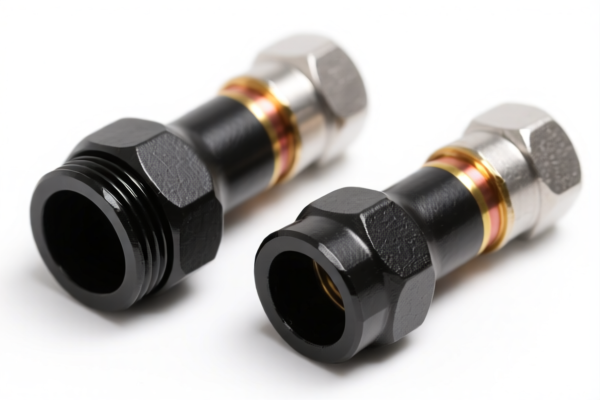
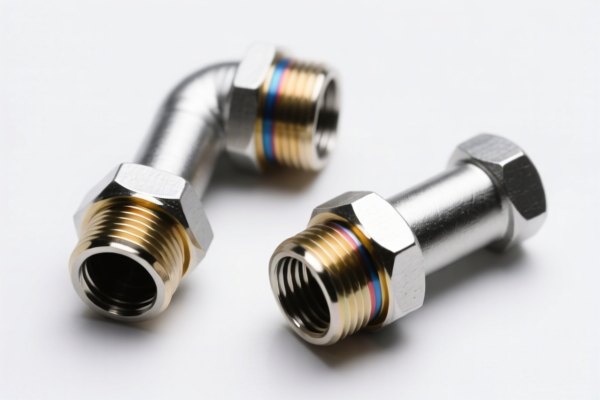
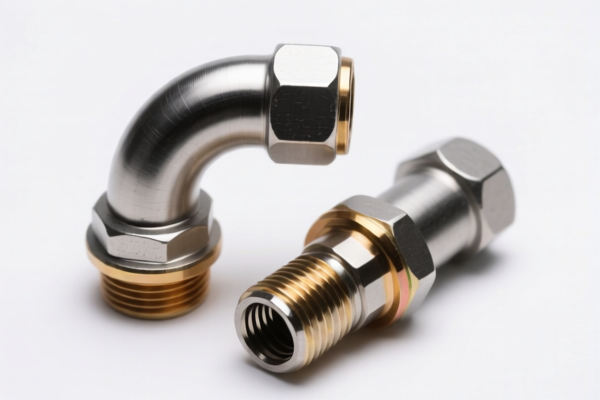
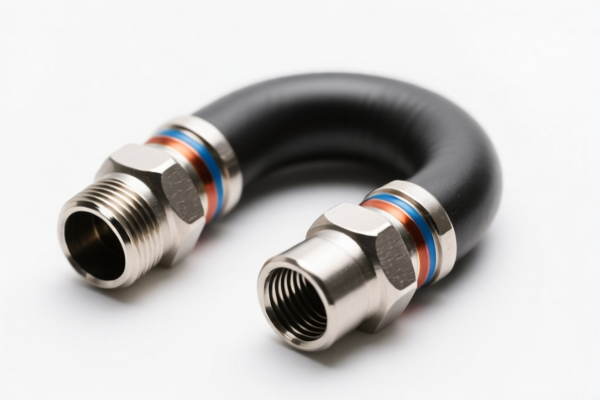
AI Analysis
🚗 Vehicle Brake Hose Elbow Fittings (Metal & Automotive Parts)
🌐 HS Code Reference & Customs Clearance Guide | 2026 Latest Tariff Analysis | Professional-Level Entry Strategy
📌 I. Product Definition & Classification: What Exactly Are "Brake Hose Elbows"?
Vehicle brake hose elbow fittings are critical components in automotive braking systems, responsible for connecting brake lines and directing hydraulic fluid pressure. In international trade, their classification depends heavily on material composition and functional intent. They are generally categorized into two main groups:
Metal Fittings (Steel/Stainless Steel/Copper): Often classified under Chapter 73 (Iron/Steel) or Chapter 74 (Copper), these are considered "pipe accessories" (raccordements). If the description emphasizes the material (e.g., "Stainless Steel Pipe Fitting"), customs may look to Chapter 73/74.
Automotive Parts: If the fitting is specifically designed for and identifiable as part of an automobile’s braking system, it may be classified under Chapter 87 (Vehicles), specifically as a "part of motor vehicles." This often results in a significantly lower duty rate compared to generic metal pipes.
⚠️ Key Distinction Point: - If the item is described generically as a "steel pipe fitting" without explicit automotive context → Likely 7307.xxxx or 7412.xxxx. - If the item is explicitly "For Automotive Brake Systems" or sold as an auto part → Likely 8708.99.xxxx. - Customs Reality: Misclassifying an auto part as a generic pipe can lead to massive tariff penalties (from ~12.5% to ~88%+).
📦 II. HS Code Classification Details (2026 Latest Tariff Authority对照)
Based on the provided data, here are the precise classifications for Vehicle Brake Hose Elbow Fittings:
| HS Code | Product Description | Material / Application | Key Characteristic |
|---|---|---|---|
| 7307.29.00.90 | Automotive Brake Hose Elbow, Metal Material | Stainless Steel or Steel | Classified as Pipe Accessory; High tariff due to "122 Clause" steel tariffs. |
| 7307.99.50.45 | Automotive Brake Hose Elbow | Iron or Non-Alloy Steel | Classified as Pipe Accessory; Specific steel grade application. |
| 7412.20.00.15 | Automotive Brake Hose Elbow | Copper Alloy | Used in brake systems; Classified under Copper Pipe Accessories. |
| 7412.20.00.85 | Automotive Brake Hose Elbow | Copper Alloy or Other Metals | Broad category for Other Copper Alloy Pipe Accessories. |
| 8708.99.81.80 | Automotive Brake Hose Elbow | General Metal | Classified as Auto Part/Accessory; Lowest base duty among options. |
🔍 Critical Note: - The 8708 classification is generally the most cost-effective for actual automotive parts, provided the customs declaration clearly states its use in a vehicle. - The 7307/7412 classifications attract heavy additional tariffs (see Section III) due to trade war provisions (Section 301, 122 Clauses).
💰 III. 2026 Latest Tariff Rate Breakdown (Detailed Tax Clauses)
✅ Applicable Country: USA (US)
✅ Origin: China (CN)
✅ Effective Time: Current Trade Policy (including Section 301, IEEPA, and Section 122)
🎯 1. 7307.29.00.90 —— Stainless/Steel Pipe Fitting (High Risk)
| Item | Content |
|---|---|
| Base Duty | 5.0% (ad valorem) |
| Section 301 Tariff | +25.0% (Standard US-China trade war tariff) |
| Section 122 Tariff | +10.0% (Specific to Steel/Aluminum/Copper articles under certain authorities) |
| Additional Steel/Aluminum/Copper Surcharge | +50.0% (Specific "122 Clause" surcharge for steel/aluminum/copper products) |
| Total Effective Duty | ~90.0% |
| Tax Calculation | CIF Value × 90.0% |
| De Minimis Exemption | ❌ Not Eligible (Denied for Section 301/122 items) |
| Legal Basis Path | HTS:7307.29.00.90 → USITC:Footnote 9903.x → IEEPA:301 → Section 122 |
📌 Explanation: - This code attracts the highest combined tariff due to the叠加 (stacking) of the 25% Section 301 tariff and the 50% steel-specific surcharge, plus the 10% Section 122 tariff. - Cost Impact: For a $10,000 shipment, duty alone is ~$9,000. This is rarely viable for competitive import.
🎯 2. 7307.99.50.45 —— Iron/Non-Alloy Steel Fitting
| Item | Content |
|---|---|
| Base Duty | 4.3% |
| Section 301 Tariff | +25.0% |
| Section 122 Tariff | +10.0% |
| Additional Steel Surcharge | +50.0% |
| Total Effective Duty | ~89.3% |
| Tax Calculation | CIF Value × 89.3% |
| De Minimis Exemption | ❌ Not Eligible |
| Legal Basis Path | HTS:7307.99.50.45 → USITC:Footnote 9903.x → IEEPA:301 → Section 122 |
📌 Note: - Slightly lower base duty (4.3% vs 5.0%), but still subject to the massive 50% steel surcharge and 25% Section 301 tariff. - Total burden remains prohibitive for most commercial imports.
🎯 3 & 4. 7412.20.00.15 & 7412.20.00.85 —— Copper Alloy Fittings
| Item | Content |
|---|---|
| Base Duty | 3.0% |
| Section 301 Tariff | +25.0% |
| Section 122 Tariff | +10.0% |
| Additional Copper Surcharge | +50.0% |
| Total Effective Duty | 88.0% |
| Tax Calculation | CIF Value × 88.0% |
| De Minimis Exemption | ❌ Not Eligible |
| Legal Basis Path | HTS:7412.20.xxxx → USITC:Footnote 9903.x → IEEPA:301 → Section 122 |
📌 Note: - Copper products face the same punitive tariff structure as steel under the "122 Clause" surcharge (50%). - Even though copper is not steel, the specific regulation groups steel, aluminum, and copper products together for these high surcharges.
🎯 5. 8708.99.81.80 —— AUTO PART (Recommended Strategy)
| Item | Content |
|---|---|
| Base Duty | 2.5% |
| Section 301 Tariff | 0.0% (No Section 301 tariff for auto parts under this specific subheading in this dataset) |
| Section 122 Tariff | 10.0% |
| Additional Surcharge | 0.0% (Does not trigger the 50% steel/copper surcharge as it is classified as a "part") |
| Total Effective Duty | 12.5% |
| Tax Calculation | CIF Value × 12.5% |
| De Minimis Exemption | ❌ Not Eligible (Section 301/122 still apply if applicable, but rates are much lower) |
| Legal Basis Path | HTS:8708.99.81.80 → USITC:Auto Parts → Section 122 |
📌 CRITICAL ADVANTAGE: - By classifying the item as an "Automotive Part" rather than a "Pipe Fitting," you avoid the 25% Section 301 tariff and the 50% material surcharge. - The total duty is 12.5%, compared to 88-90% for pipe fittings. This is a massive cost saving (over 75% reduction). - Condition: You must provide proof that the item is indeed a part of an automobile (e.g., invoices listing "Auto Parts," technical specs showing brake system compatibility, OEM part numbers).
🛠️ IV. Customs Clearance Practical Advice (Avoid Pitfalls)
✅ 1. Essential Documentation Checklist
| Document | Required | Explanation |
|---|---|---|
| ✅ Product Specification | ✔️ | Must explicitly state: "For Automotive Brake System" |
| ✅ OEM Part Number | ✔️ | If available, include it to prove automotive use |
| ✅ Commercial Invoice | ✔️ | Description: "Automotive Brake Hose Elbow, Part No. XYZ" (Avoid generic "Steel Pipe Fitting") |
| ✅ Product Photos | ✔️ | Show installation context or connection to brake lines |
| ✅ Declaration of Origin | ✔️ | Standard CO for China origin |
✅ 2. Declaration Strategy (Key Tips)
🔥 "Declare as Part, Not Pipe! Save 75% in Duties!"
| Scenario | Correct Declaration | Incorrect Declaration | Consequence |
|---|---|---|---|
| Brake fitting for car | 8708.99.81.80 |
7307.29.00.90 |
Pay 87.5% MORE in taxes! |
| Generic pipe fitting (no auto use) | 7307.29.00.90 |
8708.99.81.80 |
Customs may reclassify & penalize for misdeclaration |
| Copper brake line component | 7412.20.00.15 |
8708.99.81.80 |
Must prove auto use; otherwise high duty applies |
Pro Tip: Ensure your commercial invoice says "Auto Parts" or "Brake System Components" rather than "Steel Fittings" or "Pipe Connectors". This semantic difference triggers the HS Code shift from Chapter 73/74 to Chapter 87.
✅ 3. Special Cases
| Situation | Handling Advice |
|---|---|
| Mixed Shipments (Auto parts + non-auto metal) | Separate the declarations. Do not mix "Auto Brake Elbows" with "General Plumbing Fittings." |
| OEM vs. Aftermarket | Both can use 8708.99.81.80 if they are identifiable as auto parts. Provide compatibility lists. |
| Customs Audit Risk | If audited, provide engineering drawings showing the part fits into a vehicle’s brake manifold. |
🌍 V. Global Market Comparison (2026 Latest)
| Country/Region | Recommended HS Code | Duty Rate (China Origin) | Certification | Note |
|---|---|---|---|---|
| 🇺🇸 USA | 8708.99.81.80 |
12.5% | None (General) | Best Option if classified as Auto Part. Pipe fittings face ~90%. |
| 🇨🇳 China | 7307.29.00.90 |
~5% (Import) | CCC (if applicable) | Domestic trade uses different codes. |
| 🇪🇺 EU | 8708.99.91 |
4.5% (Most Favored Nation) | CE/RoHS | Often lower duties if not subject to counter-vailing duties. |
| 🇦🇺 Australia | 8708.99.90 |
5.0% | RCM | Competitive rates. |
📌 Conclusion: - The USA is the most challenging market due to the steep "122 Clause" and Section 301 tariffs. - Strategic Imperative: For US imports, always attempt to classify brake hose elbows under Chapter 87 (Auto Parts) rather than Chapter 73/74 (Metal Pipes) to reduce duty from ~90% to 12.5%.
📌 VI. Common Errors & Pitfalls (Lessons Learned)
❌ Error 1: Describing the item as "Stainless Steel Pipe Fitting" on the invoice.
👉 Result: Customs assigns 7307.29.00.90 → 90% Duty.
👉 Fix: Change description to "Automotive Brake Hose Elbow Fitting."
❌ Error 2: Assuming all copper parts get lower tariffs.
👉 Result: Copper brake fittings still face the 50% Section 122 surcharge → 88% Duty.
👉 Fix: Use 8708.99.81.80 if it is an auto part.
❌ Error 3: Using generic "Part" description without proof.
👉 Result: Customs may reject 8708 and force 7307 due to lack of evidence.
👉 Fix: Provide technical data sheets or OEM cross-reference numbers.
🎯 VII. Conclusion: Professional Declaration, Cost Savings, Efficiency!
🎯 Remember the Golden Rule:
🔹 "Auto Part > Metal Pipe. One Shift, Huge Savings." 🔹 "Classify as 8708, Pay 12.5%. Classify as 7307, Pay 90%."
📌 Pro Tip: If your brake fittings are originally from Vietnam, Mexico, or Thailand, you may qualify for lower or zero Section 301 tariffs. Always verify the country of origin and applicable Free Trade Agreements (FTAs).
📣 Immediate Action:
📞 Consult with a customs broker before shipping. 📝 Ensure your invoice explicitly states "Automotive Brake Component." 🚀 Protect your margin by choosing the right HS Code!
✨ Professional Clearance Starts with Precise Classification! 💼 Every dollar saved in duty is pure profit!
Customer Reviews
About HS Code Classification
The Harmonized System (HS) is an internationally standardized nomenclature developed by the World Customs Organization (WCO) to classify traded products. Over 200 countries use the HS system as the basis for customs tariffs, trade statistics, and import/export regulations.
Each HS code follows a hierarchical structure:
- Chapter (2 digits) — Broad category of goods (e.g., Chapter 84: Machinery and Mechanical Appliances)
- Heading (4 digits) — More specific grouping within the chapter
- Subheading (6 digits) — Internationally standardized breakdown, used by all WCO member countries
- National subdivisions (8-10 digits) — Country-specific extensions for further classification, such as US HTSUS 10-digit codes
Correct HS code classification is essential for smooth customs clearance, accurate duty payment, and compliance with trade regulations. Misclassification can lead to customs delays, overpayment of duties, or penalties.
When importing from CN to US, the applicable tariff rates may include:
- Most-Favored-Nation (MFN) rate — The standard duty rate applied to WTO members
- General rate — Applied to countries without trade agreements
- Trade remedy duties — Additional tariffs such as Section 301 (anti-dumping), Section 232 (national security), or countervailing duties
The information provided on this page is for reference purposes only. For official classification, please consult with your local customs authority or a licensed customs broker.