Vehicle Brake System Components
CN → US| HS Code | Tariff Rate | Origin | Destination | Doc |
|---|---|---|---|---|
| 6813200015 | 35.0% | CN | US | Official Doc |
| 8431499084 | 85.0% | CN | US | Official Doc |
| 8708301090 | 35.0% | CN | US | Official Doc |
| 6813810050 | 35.0% | CN | US | Official Doc |
Product Images
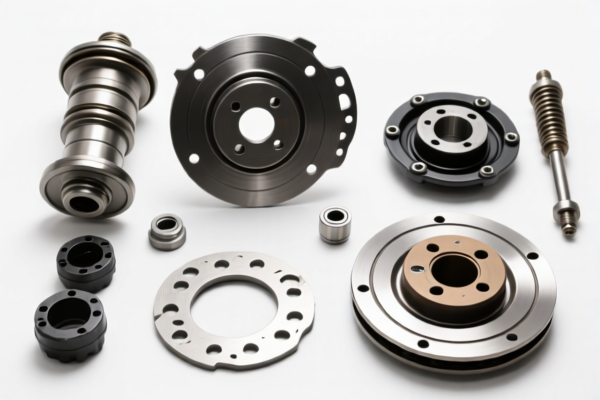
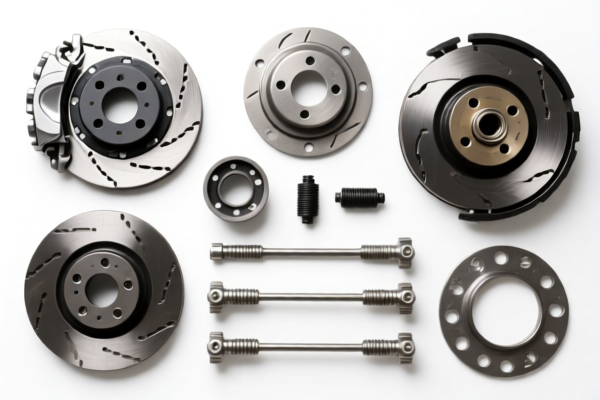
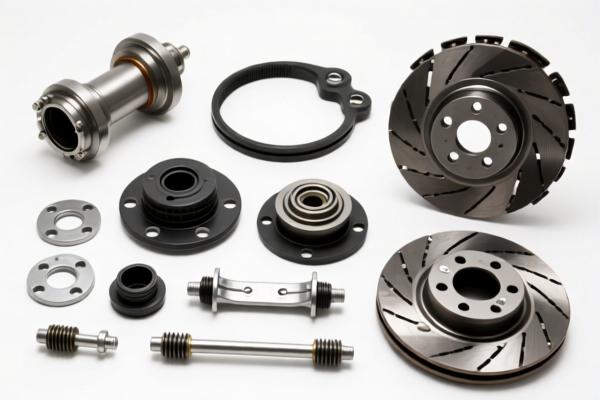
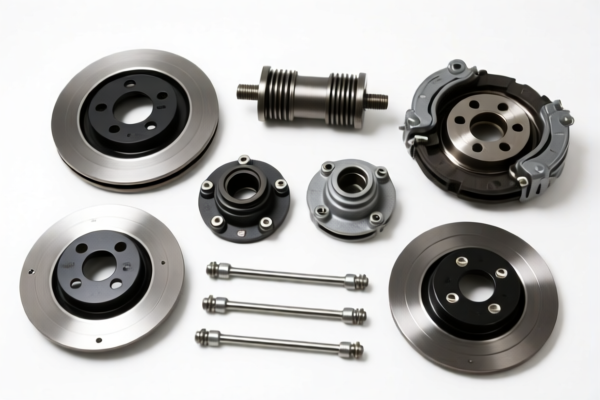
AI Analysis
🚗 Vehicle Brake System Components (Brake Accessories/Parts)
🌐 HS Code Reference & Customs Clearance Guide | 2026 Latest Tariff Analysis | Professional Clearance Strategy
📌 I. Product Definition & Classification: Do You Really Understand "Brake Parts"?
Vehicle brake system components are critical safety parts responsible for slowing down or stopping vehicles. In international trade, these parts are classified based on their material composition, specific function, and whether they are specialized mechanical parts. The key challenge lies in determining whether the part is a generic mechanical component (Chapter 84/87) or a specific friction material product (Chapter 68).
⚠️ Key Classification Criteria: - Friction Material Based: If the part is primarily made of friction materials (asbestos, aramid, carbon, organic composites) designed for braking surfaces → Likely 6813. - General Mechanical Part: If it is a structural metal part (caliper, bracket, housing) not specifically defined elsewhere → Likely 8431 or 8708. - Auto-Specific Part: If it is a spare part specifically identifiable as belonging to a motor vehicle → Likely 8708.
📦 II. HS Code Classification Details (2026 Latest Tariff Authority Comparison)
| HS Code | Product Description | Application Scenario | Material/Type |
|---|---|---|---|
6813.20.00.15 |
Brake accessories; use consistent with brakes, form is accessory, material inferred as friction material | Brake pads, brake shoes, friction linings | Friction Materials |
8431.49.90.84 |
Brake accessories, belongs to mechanical parts, matches spare parts/components fallback category | Mechanical brackets, non-friction structural supports | Steel, Aluminum, Copper |
8708.30.10.90 |
Brake accessories, accessory corresponds to parts, belongs to other fallback category, no use conflict | General vehicle brake spare parts, unidentified specific type | Mixed/Mechanical |
6813.81.00.50 |
Brake accessories, use for braking, belongs to other category, inferred as friction material products | Other friction-based brake components | Friction Materials |
🔍 Important Reminder: - Friction vs. Metal: If the product is a brake pad or lining, it often falls under 6813. If it is a brake caliper or mounting bracket, it may fall under 8431 or 8708. - "Fallback" Categories: Codes like
8708.30.10.90and8431.49.90.84are used when the part doesn't fit neatly into a specific subheading. Customs officers have discretion here, which can lead to higher scrutiny.
💰 III. 2026 Latest Tariff Rate Details (Including Surcharges & Policy Add-ons)
✅ Applicable Country: United States (US) ✅ Origin: China (CN) ✅ Effective Time: Ongoing (Subject to Section 301 & IEEPA)
🎯 1. 6813.20.00.15 & 6813.81.00.50 —— Friction Material Brake Accessories
| Item | Content |
|---|---|
| Base Tariff | 0% (ad valorem) |
| Section 301 Surcharge | +25% (USITC Footnote) |
| IEEPA Surcharge (Section 122/Related) | +10% (Targeting China/HK products) |
| Total Tax Rate | 35.0% |
| Tax Calculation | CIF Value × 35% |
| De Minimis Exemption | ❌ Not Available (deny_de_minimis) |
| Legal Basis Path | IEEPA:9903.01.25 → USITC:6813.xx.xx.xx → FOOTNOTE:9903.88.01 |
📌 Explanation: - The 25% Section 301 tariff applies to many industrial and automotive parts from China. - The 10% IEEPA surcharge is an additional levy under emergency economic powers. - Total 35% is a significant cost burden for friction material goods.
🎯 2. 8431.49.90.84 —— Mechanical Brake Accessories (Steel/Aluminum/Copper)
| Item | Content |
|---|---|
| Base Tariff | 0% |
| Section 301 Surcharge | +25% |
| IEEPA Surcharge | +10% |
| Steel/Aluminum/Copper Surcharge | +50% (Critical Addition) |
| Total Tax Rate | 85.0% |
| Tax Calculation | CIF Value × 85% |
| De Minimis Exemption | ❌ Not Available |
| Legal Basis Path | IEEPA:9901.25 → IEEPA:9903.01.24 → USITC:8431.49.90.84 → FOOTNOTE:Steel/Metal |
📌 Critical Warning: - If your brake parts are made of steel, aluminum, or copper (e.g., calipers, pistons, mounting brackets), they are subject to an additional 50% tariff on top of the 35%. - Total Rate: 85% is extremely high and makes direct import of metallic brake parts from China nearly prohibitive without restructuring.
🎯 3. 8708.30.10.90 —— General Auto Brake Parts (Fallback Category)
| Item | Content |
|---|---|
| Base Tariff | 0% |
| Section 301 Surcharge | +25% |
| IEEPA Surcharge | +10% |
| Total Tax Rate | 35.0% |
| Tax Calculation | CIF Value × 35% |
| De Minimis Exemption | ❌ Not Available |
| Legal Basis Path | IEEPA:9903.01.25 → USITC:8708.30.10.90 → FOOTNOTE:9903.88.01 |
📌 Note: - This code is often used as a "catch-all" for brake parts that don't fit specific mechanical descriptions. - While the rate is lower than metallic parts (85%), it is still high at 35%. - Customs may challenge this classification if the part is clearly identifiable as a specific mechanical component (leading to the 85% rate) or a friction product (leading to 35% but different duty-free status).
🛠️ IV. Customs Clearance Practical Advice (Pitfall Avoidance Guide)
✅ 1. Required Documentation Checklist (None Can Be Omitted)
| Document | Required | Description |
|---|---|---|
| ✅ Product Specification Sheet | ✔️ | Must detail material composition (e.g., % steel vs. % friction material), dimensions, and intended vehicle model. |
| ✅ Material Test Report | ✔️ | Crucial for 8431 vs 6813 distinction. Must prove if it's a metal part or friction composite. |
| ✅ Product Photos (Labeled) | ✔️ | Show part number, branding, and physical structure. |
| ✅ Commercial Invoice | ✔️ | Clearly state "Brake System Component" and HS Code. |
| ✅ Packing List | ✔️ | Separate lists for metallic vs. friction parts if mixed shipments. |
| ✅ Certificate of Origin (CO) | ✔️ | If from non-China origin, may reduce taxes. |
✅ 2. Declaration Strategy (Key Mnemonic)
🔥 "Material First, Function Second, Metal High Tax, Friction Medium Tax!"
| Scenario | Correct Declaration | Risk if Misdeclared |
|---|---|---|
| Brake Pads/Shoes | 6813.20.00.15 or 6813.81.00.50 |
Misclassifying as 8708 is less risky than misclassifying metal parts. |
| Metal Brackets/Housings | 8431.49.90.84 |
Expect 85% Tax. Try to argue for 8708 if possible, but customs may challenge. |
| Unidentified Brake Part | 8708.30.10.90 |
Use only if classification is truly ambiguous. Be prepared for audit. |
| Mixed Shipment | Split Declaration | Declaring a metal bracket as a "brake accessory" under 8708 to avoid 50% surcharge is high-risk fraud. |
✅ 3. Special Case Handling
| Scenario | Handling Advice |
|---|---|
| OEM Brake Parts | Provide OEM design drawings to prove it's a vehicle-specific part (8708), not a generic mechanical part (8431). |
| Ceramic/Carbon Brake Parts | These are friction materials → Go with 6813. Avoid 8431 unless it's a metal carrier plate. |
| Importing to Avoid 85% Tax | Do not split metal parts into non-metal categories. Customs uses X-ray and material analysis. Penalties include seizure and fines. |
🌍 V. Global Market Comparison (2026 Latest)
| Country/Region | Recommended HS Code | Tariff (China Origin) | Certification | Notes |
|---|---|---|---|---|
| 🇺🇸 USA | 6813 / 8708 / 8431 |
35% - 85% | DOT, SAE, FCC (if electronic) | Highest tariff risk due to 301/IEEPA. |
| 🇨🇳 China | 6813 / 8708 |
5% - 10% | CCC (if applicable) | Lower taxes, but check import restrictions. |
| 🇪🇺 EU | 8708 |
0% - 4.5% | E-mark (homologation) | No Section 301 tariffs, but strict safety regs. |
| 🇲🇽 Mexico | 8708 |
0% (under USMCA) | NOM | If assembled in USMCA region, avoid US tariffs. |
📌 Conclusion: - USA is the most expensive market due to trade war tariffs. - Metallic brake parts (8431) face punitive 85% tariffs. - Friction parts (6813) and Generic Auto Parts (8708) face 35% tariffs.
📌 VI. Common Errors & Pitfalls (Lessons Learned from Blood & Tears)
❌ Error 1: Declaring a Metal Brake Caliper as 8708.30.10.90 to avoid the 50% steel surcharge.
👉 Consequence: Customs audit reveals steel content → Back taxes + 85% penalty + seizure.
❌ Error 2: Mixing Brake Pads (Friction) and Brake Calipers (Metal) in one box without separate line items. 👉 Consequence: Customs may apply the highest rate (85%) to the entire shipment or delay for material testing.
❌ Error 3: Using vague descriptions like "Car Parts" on the invoice. 👉 Consequence: Customs rejects declaration, demands re-submission, causes demurrage charges (daily fees at port).
❌ Error 4: Ignoring IEEPA 10% Surcharge on all goods. 👉 Consequence: Underpayment of duties → Account frozen by CBP.
✅ Correct Practice:
"Ceramic Brake Pad Set, Model XYZ, Friction Material Composition: 40% Aramid, 30% Resin, 30% Fillers. HS: 6813.20.00.15" "Steel Brake Caliper Bracket, Part ABC, Metal Alloy. HS: 8431.49.90.84"
🎯 VII. Conclusion: Precise Classification Saves Millions!
🎯 Remember the Mnemonic:
🔹 "Friction 35, Metal 85, Auto 35, Don't Guess, Get it Right!" 🔹 "HS Code Determines Life or Death of Profit, 50% Difference Means Bankruptcy!"
📌 Pro Tip:
If your brake parts are originally from Vietnam, Mexico, or Thailand, you may apply for USMCA/EFTA exemptions, reducing tariffs to 0%~5%. Consider pre-advance ruling with CBP to confirm if your specific metal part is classified under
8431(85%) or8708(35%).
📣 Immediate Action:
📞 Contact a licensed customs broker + Provide material test reports + Apply for HS Code Advance Ruling 🚀 Let your brake parts clear customs smoothly, efficiently, and profitably!
✨ Professional Clearance Starts with Accurate Classification! 💼 Every cent of your cost deserves precise calculation!
Customer Reviews
About HS Code Classification
The Harmonized System (HS) is an internationally standardized nomenclature developed by the World Customs Organization (WCO) to classify traded products. Over 200 countries use the HS system as the basis for customs tariffs, trade statistics, and import/export regulations.
Each HS code follows a hierarchical structure:
- Chapter (2 digits) — Broad category of goods (e.g., Chapter 84: Machinery and Mechanical Appliances)
- Heading (4 digits) — More specific grouping within the chapter
- Subheading (6 digits) — Internationally standardized breakdown, used by all WCO member countries
- National subdivisions (8-10 digits) — Country-specific extensions for further classification, such as US HTSUS 10-digit codes
Correct HS code classification is essential for smooth customs clearance, accurate duty payment, and compliance with trade regulations. Misclassification can lead to customs delays, overpayment of duties, or penalties.
When importing from CN to US, the applicable tariff rates may include:
- Most-Favored-Nation (MFN) rate — The standard duty rate applied to WTO members
- General rate — Applied to countries without trade agreements
- Trade remedy duties — Additional tariffs such as Section 301 (anti-dumping), Section 232 (national security), or countervailing duties
The information provided on this page is for reference purposes only. For official classification, please consult with your local customs authority or a licensed customs broker.