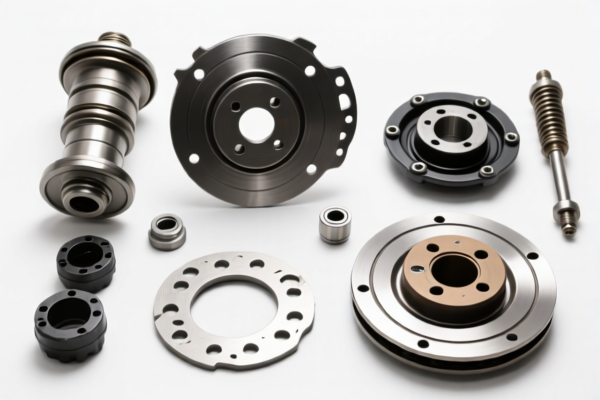
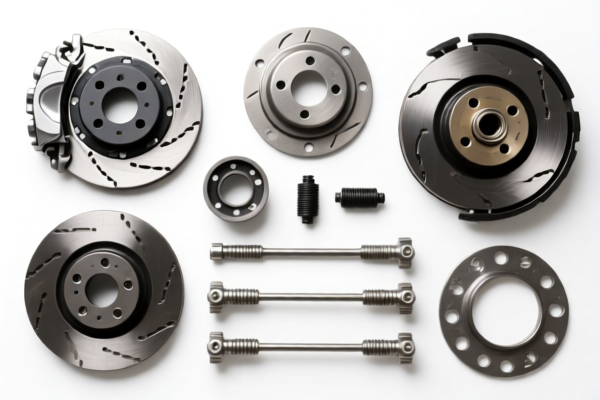
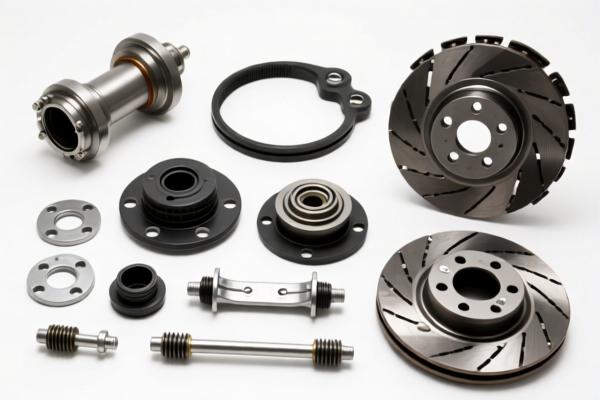
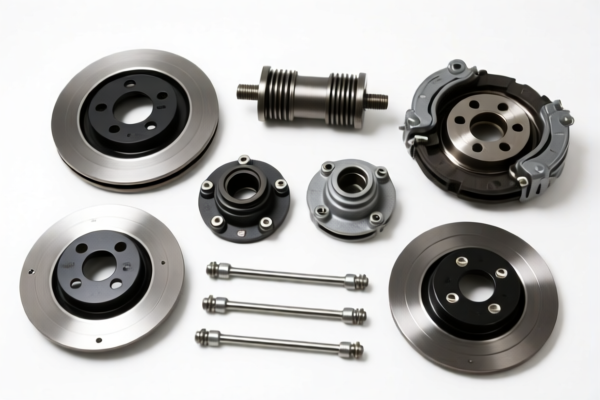
Vehicle Brake System Parts
CN → US| HS Code | Tariff Rate | Origin | Destination | Doc |
|---|---|---|---|---|
| 6813200015 | 35.0% | CN | US | Official Doc |
| 8431499084 | 85.0% | CN | US | Official Doc |
| 8708301090 | 35.0% | CN | US | Official Doc |
| 6813810050 | 35.0% | CN | US | Official Doc |
Product Images
AI Analysis
🚗 Vehicle Brake System Parts (制动配件)
🌐 HS Code Reference & Customs Clearance Guide | 2026 Latest Tariff Analysis | Professional Clearance Strategy
📌 I. Product Definition & Classification: What Exactly Are "Brake Parts"?
Vehicle brake system parts are critical safety components used in automobiles, trucks, and other motor vehicles to slow down or stop motion. In international trade, these parts are not unified under a single category but are classified based on material composition, specific function, and structural form.
Friction Materials (Linings/Pads): If the part is made primarily of composite friction material (asbestos-free organic, semi-metallic, or ceramic) and functions as a wearable interface, it falls under Chapter 68. Mechanical Components (Hoses/Cylinders/Mounts): If the part is a mechanical accessory like a hose, bracket, or caliper mount, it often falls under the "catch-all" machinery spare parts category (Chapter 84). Vehicle-Specific Spare Parts: If the part is clearly identifiable as a spare part for a specific vehicle system (like the brake system itself), it may fall under Chapter 87.
⚠️ Key Classification Distinction:
- If the part is a friction lining/pad → Look to 6813 (Chapter 68: Mineral Products).
- If the part is a mechanical fitting/hose/bracket → Look to 8431 (Chapter 84: Machinery Nuts & Bolts).
- If the part is a generic brake assembly part → Look to 8708 (Chapter 87: Vehicle Parts).
📦 II. HS Code Classification Details (2026 Latest Tariff Authority Comparison)
Based on the provided data, here are the four potential HS Codes and their logical justification for "Vehicle Brake System Parts":
| HS Code | Product Description | Classification Logic | Material/Type |
|---|---|---|---|
6813.20.00.15 |
Brake Accessories (Friction Material) | Deduced Material: The summary states the form is accessories with the same function as brakes, inferred as friction material. | Composite Friction Material |
8431.49.90.84 |
Brake Accessories (Mechanical Nuts & Bolts) | Catch-All Category: Belongs to mechanical components. Matches the "Spares/Components" default principle for machinery. | Steel/Aluminum/Copper Products |
8708.30.10.90 |
Brake Accessories (Vehicle Parts) | Deductive Category: Corresponds to the part classification of braking systems. Belongs to the "Other" catch-all category with no usage conflict. | General Vehicle Brake Parts |
6813.81.00.50 |
Brake Accessories (Default Principle) | Usage Principle: Belongs to brake-use categories. Matches the default principle for "Spares/Components." | Mineral-Based Friction/Sealing |
🔍 Critical Reminder:
- Material is King: If it’s a friction pad/lining,6813is the most technically accurate.
- Mechanical Fit: If it’s a hose, line, or bracket,8431or8708are more appropriate.
- No Conflict:8708.30.10.90is a strong candidate if the part is exclusively for braking but doesn’t fit neatly into8431or6813.
💰 III. 2026 Latest Tariff Rate Breakdown (Including Surcharges & Policy Add-ons)
✅ Applicable Country: United States (US)
✅ Origin: China (CN)
✅ Effective Date: Current rates apply including subsequent imports
🎯 1. 6813.20.00.15 & 6813.81.00.50 —— Friction Brake Parts (Chapter 68)
| Item | Content |
|---|---|
| Base Duty Rate | 0.0% |
| Section 301 Surcharge | +25.0% |
| IEEPA Surcharge (122 Clause) | +10.0% |
| Total Tax Rate | 35.0% |
| Tax Calculation | CIF Value × 35% |
| Material Specifics | No additional steel/aluminum surcharge applied in this specific summary line. |
| Legal Path | Base: 0% → 301: 25% → 122 Clause: 10% |
📌 Explanation:
- These codes are favored for friction-based brake components (pads, linings).
- The 35% total rate is significantly lower than the 85% rate for mechanical metals, making this a preferred classification if the material allows.
🎯 2. 8708.30.10.90 —— Vehicle Brake Parts (Chapter 87)
| Item | Content |
|---|---|
| Base Duty Rate | 0.0% |
| Section 301 Surcharge | +25.0% |
| IEEPA Surcharge (122 Clause) | +10.0% |
| Total Tax Rate | 35.0% |
| Tax Calculation | CIF Value × 35% |
| Category | Other vehicle parts (Deductive category). |
| Legal Path | Base: 0% → 301: 25% → 122 Clause: 10% |
📌 Explanation:
- This code is for generic brake parts that don’t fit neatly into machinery or specific friction categories.
- Same low rate (35%) as friction parts, making it cost-effective if the product documentation supports it.
🎯 3. 8431.49.90.84 —— Mechanical Brake Parts (Chapter 84)
| Item | Content |
|---|---|
| Base Duty Rate | 0.0% |
| Section 301 Surcharge | +25.0% |
| IEEPA Surcharge (122 Clause) | +10.0% |
| Steel/Aluminum/Copper Surcharge | +50.0% |
| Total Tax Rate | 85.0% |
| Tax Calculation | CIF Value × 85% |
| Category | Mechanical parts, specifically for steel, aluminum, or copper products. |
| Legal Path | Base: 0% → 301: 25% → 122 Clause: 10% → Steel/Al/Cu: 50% |
⚠️ CRITICAL WARNING:
- This code incurs an additional 50% tariff for steel, aluminum, or copper products.
- If your brake part is a metal hose, bracket, or caliper, do NOT use this code without verifying exemptions.
- Total 85% is prohibitively high. Try to classify metal parts under8708or6813if legally defensible to save 50%.
🛠️ IV. Customs Clearance Practical Advice (Battle-Tested Pitfall Avoidance)
✅ 1. Documentation Checklist (Must-Haves)
| Document | Required | Explanation |
|---|---|---|
| ✅ Product Spec Sheet | ✔️ | Must clearly state Material (e.g., "Asbestos-free organic friction," "Steel housing," "Rubber hose"). |
| ✅ Function Description | ✔️ | Explain if it’s a wear item (pad) vs. structural item (bracket). |
| ✅ HS Code Justification | ✔️ | Brief memo explaining why 6813 or 8708 was chosen over 8431. |
| ✅ Commercial Invoice | ✔️ | Must match HS Code description exactly (e.g., "Brake Lining" vs. "Brake Bracket"). |
| ✅ Bill of Lading | ✔️ | Ensure packaging details don’t contradict the declared content. |
✅ 2. Declaration Strategy (Key Mantra)
🔥 “Material Determines Code, Metal Triggers 50%, Friction Saves Money!”
| Scenario | Recommended HS Code | Avoid |
|---|---|---|
| Brake Pads/Linings | 6813.20.00.15 or 6813.81.00.50 |
8431.49.90.84 (Triggers 50% metal tax) |
| Brake Hoses/Fittings | 8708.30.10.90 |
8431.49.90.84 (Unless specifically justified) |
| Brake Calipers/Housings | 8708.30.10.90 |
8431.49.90.84 (High risk of 85% tax) |
| Generic Mechanical Parts | 8708.30.10.90 |
6813 (If not friction material) |
✅ 3. Special Considerations
| Situation | Handling Advice |
|---|---|
| Mixed Shipments | Separate friction parts (6813/8708 at 35%) from metal mechanical parts (8431 at 85%). Do not bundle. |
| OEM Parts | Provide OEM authorization and part numbers to support 8708.30.10.90 as "Vehicle Parts." |
| Aftermarket Friction | Emphasize "Friction Material" composition to justify 6813 codes. |
| Steel/Aluminum Content | If the part is >10% steel/aluminum, avoid 8431.49.90.84 unless you have a waiver. |
🌍 V. Global Market Comparison (2026 Latest)
| Country/Region | Recommended HS Code | Estimated Duty | Note |
|---|---|---|---|
| 🇺🇸 USA | 6813.20.00.15 / 8708.30.10.90 |
35% | Avoid 8431.49.90.84 (85%) |
| 🇨🇳 China | 6813.20.00.15 / 8708.30.10.90 |
0-10% | No additional 301/IEEPA surcharges |
| 🇪🇺 EU | 6813.20.00.15 / 8708.30.10.90 |
0-4% | No Section 301/IEEPA surcharges |
| 🇨🇦 Canada | 6813.20.00.15 / 8708.30.10.90 |
0-5% | No additional surcharges |
📌 Conclusion:
- USA is the only market with punitive surcharges.
- 35% is the "Sweet Spot" for brake parts if classified correctly under6813or8708.
- 85% is the "Trap" for8431due to the steel/aluminum surcharge.
📌 VI. Common Mistakes & Pitfall Guide (Blood & Tears Lessons)
❌ Mistake 1: Declaring a steel brake bracket as 6813 (Friction Material)
👉 Consequence: Customs will reject, reclassify to 8431, and charge 85% + penalties.
❌ Mistake 2: Declaring brake pads as 8431.49.90.84
👉 Consequence: Unnecessary 85% tax instead of 35%. Huge cost increase.
❌ Mistake 3: Mixing "Brake Pads" and "Brake Hoses" in one line item
👉 Consequence: Customs may apply the highest tax rate (85%) to the entire shipment if misclassified.
✅ Correct Practice:
- Brake Pads: "Asbestos-free Organic Brake Lining, HS 6813.20.00.15"
- Brake Hose: "Rubber Brake Hose for Vehicle, HS 8708.30.10.90"
🎯 VII. Conclusion: Smart Classification Saves 50%
🎯 Remember the Mantra:
🔹 "Friction is 35%, Metal Mechanic is 85%. Don't pay the 50% steel tax!"
🔹 "Choose 6813 or 8708 for brake parts. Avoid 8431 unless you love high taxes!"
📌 Pro Tip:
If your brake parts are not made in China (e.g., Vietnam, Thailand, Mexico), you may exempt the IEEPA/301 surcharges, reducing the total tax to 0-4%.
Always request a Pre-Ruling from US Customs and Border Protection (CBP) for new product lines to lock in the 35% rate.
📣 Take Action Now:
📞 Verify your material composition.
📄 Choose6813.20.00.15or8708.30.10.90.
🚀 Avoid8431.49.90.84unless absolutely necessary.
✨ Professional Clearance Starts with Accurate Classification!
💼 Every 50% Saved is Pure Profit!
Customer Reviews
About HS Code Classification
The Harmonized System (HS) is an internationally standardized nomenclature developed by the World Customs Organization (WCO) to classify traded products. Over 200 countries use the HS system as the basis for customs tariffs, trade statistics, and import/export regulations.
Each HS code follows a hierarchical structure:
- Chapter (2 digits) — Broad category of goods (e.g., Chapter 84: Machinery and Mechanical Appliances)
- Heading (4 digits) — More specific grouping within the chapter
- Subheading (6 digits) — Internationally standardized breakdown, used by all WCO member countries
- National subdivisions (8-10 digits) — Country-specific extensions for further classification, such as US HTSUS 10-digit codes
Correct HS code classification is essential for smooth customs clearance, accurate duty payment, and compliance with trade regulations. Misclassification can lead to customs delays, overpayment of duties, or penalties.
When importing from CN to US, the applicable tariff rates may include:
- Most-Favored-Nation (MFN) rate — The standard duty rate applied to WTO members
- General rate — Applied to countries without trade agreements
- Trade remedy duties — Additional tariffs such as Section 301 (anti-dumping), Section 232 (national security), or countervailing duties
The information provided on this page is for reference purposes only. For official classification, please consult with your local customs authority or a licensed customs broker.