Vehicle Display Screen
CN → US| HS Code | Tariff Rate | Origin | Destination | Doc |
|---|---|---|---|---|
| 9031808085 | 10.0% | CN | US | Official Doc |
| 8528592500 | 17.5% | CN | US | Official Doc |
| 9031499000 | 35.0% | CN | US | Official Doc |
| 8528520000 | 10.0% | CN | US | Official Doc |
Product Images


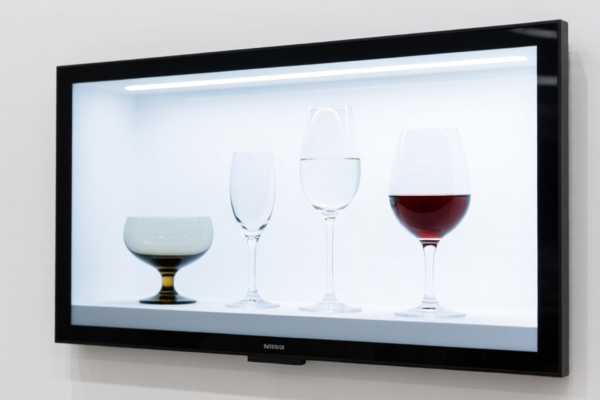

AI Analysis
🚗🖥️ Vehicle Display Screen (Automotive Monitors)
🌐 HS Code Classification & Duty Breakdown | 2026 U.S. Import Strategy | Critical Compliance Guide
📌 I. Product Definition: What Exactly is a "Vehicle Display Screen"?
A Vehicle Display Screen is not a generic monitor; it is a specialized electronic component designed specifically for integration into automotive systems (dashboards, infotainment, rear-seat entertainment, or ADAS). Its classification depends heavily on: 1. Function: Is it primarily a monitor for data processing (8528) or a measurement/inspection instrument (9031)? 2. Size: Is the diagonal size under 34.29 cm (approx. 13.5 inches)? This is a critical threshold for subheading 8528.59. 3. Integration: Is it a standalone unit or a specialized sensor/indicator?
⚠️ Critical Distinction:
- If it functions as a general-purpose monitor (even for cars) → Chapter 85 (Electrical Machinery).
- If it functions as a specific measurement/inspection instrument (e.g., testing vehicle performance data) → Chapter 90 (Optical/Medical Instruments).
- Note: Misclassification here can lead to tax disparities of 10% vs. 35%, or even customs seizures.
📦 II. HS Code Classification Matrix (2026 U.S. Tariff Schedule)
Based on the latest U.S. Harmonized Tariff Schedule (HTSUS) and specific 122 Clauses:
| HS Code | Product Description | Diagnostic Logic | Total Tax Rate |
|---|---|---|---|
| 8528.52.00.00 | Vehicle Monitor (General Purpose) | The "Safest" Baseline. Fits the definition of a monitor for automatic data processing. No material/size conflict. | 10.0% |
| 8528.59.25.00 | Vehicle Monitor (< 34.29 cm Diagonal) | The "Small Screen" Rule. Specifically targets displays with diagonals under 13.5 inches. Matches size constraints perfectly. | 17.5% |
| 9031.80.80.85 | Vehicle Monitor (Instrument/Measurement) | The "Specialized Tool" Category. Classified as an "Instrument" for measurement/inspection. A "catch-all" for functional logic. | 10.0% |
| 9031.49.90.00 | Vehicle Monitor (Optical/Display) | The "Optical Instrument" Trap. Treated as an optical device. Highest tax bracket due to "Other" classification under optical instruments. | 35.0% |
🔍 Key Logic Check:
- 8528.52.00.00 is often preferred for standard infotainment screens to minimize duty. - 8528.59.25.00 applies strictly if the screen size is < 34.29 cm (e.g., small digital dash clusters). - 9031 series (9031.80 or 9031.49) are reserved if the screen is part of a testing apparatus or strictly defined as an optical measurement device. Avoid this unless the product is strictly a testing instrument.
💰 III. Detailed Tariff & Tax Structure Analysis (The 122 Clause Impact)
Context: The U.S. imposes complex "Additional Duties" (Section 301 / 122 Clause) on Chinese-origin goods. The Total Tax is a sum of the Base Rate + Section 301 Additional Duty + 122 Clause Additional Duty.
🎯 1. Base Tariff (MFN Rate)
- Base Duty: 0.0% for all listed HS Codes.
- Explanation: The U.S. generally applies a 0% base duty on many electronic display components and instruments. The cost comes from Additional Duties.
🎯 2. The "122 Clause" Additional Duty (Section 301 / China Specific)
- Rate: +10.0% for all listed items.
- Legal Basis: This is the standard additional duty applied to Chinese-origin goods under the "Section 301" trade action (often referred to in trade databases as the 122 Clause for specific product lists).
- Impact: This is a non-negotiable surcharge for Chinese imports.
🎯 3. Section 301 Additional Duty (The Variable Component)
This is where the rates diverge significantly:
| HS Code | Section 301 Rate | Calculation Logic |
|---|---|---|
| 8528.52.00.00 | 0.0% | Standard "Monitor" classification (List 3 exclusion or specific exemption). |
| 9031.80.80.85 | 0.0% | "Catch-all" instrument classification often avoids higher tiers. |
| 8528.59.25.00 | 7.5% | Small screens (<13.5") attract a specific additional duty tier. |
| 9031.49.90.00 | 25.0% | High Risk. Classified as "Other Optical Instruments," subject to the maximum tier of the Section 301 list. |
📊 Final Duty Calculation Summary
| HS Code | Base (0%) | Add. Duty (301) | 122 Clause (10%) | TOTAL EFFECTIVE RATE |
|---|---|---|---|---|
| 8528.52.00.00 | 0% | 0% | 10% | 10.0% ✅ (Lowest Cost) |
| 9031.80.80.85 | 0% | 0% | 10% | 10.0% ✅ (Lowest Cost) |
| 8528.59.25.00 | 0% | 7.5% | 10% | 17.5% ⚠️ (Moderate) |
| 9031.49.90.00 | 0% | 25% | 10% | 35.0% ❌ (Highest Cost) |
📌 Critical Insight:
- Choosing 9031.49.90.00 over 8528.52.00.00 increases your duty by 25 percentage points (from 10% to 35%). - The 10% 122 Clause is a constant for all these items if originating from China.
🛠️ IV. Clearance & Compliance Strategy (Actionable Advice)
✅ 1. Classification Strategy: "The 8528 Preference"
- Recommendation: Whenever possible, classify the product under
8528.52.00.00(General Monitor) or8528.59.25.00(Small Screen). - Why: These fall under Chapter 85 (Electrical Machinery) and often attract 0% Section 301 additional duty (except for the 7.5% on small screens), keeping the total tax at 10% or 17.5%.
- Avoid:
9031.49.90.00. Unless the screen is solely for a high-end optical testing instrument, this classification triggers a 25% Section 301 surcharge. Do not use "Instrument" logic for standard automotive infotainment.
✅ 2. Documentation Requirements (The "Must-Haves")
To prevent customs from re-classifying you to the 35% bracket, you must provide:
* Technical Specification Sheet: Must clearly state "Vehicle Monitor" or "Infotainment Display."
* Diagonal Measurement: Explicitly state the diagonal length in inches/cm. If >13.5 inches, use 8528.52.00.00. If <13.5 inches, use 8528.59.25.00.
* Functional Description: Explicitly state: "Used for displaying navigation, media, and vehicle status in automotive applications." Do not use terms like "Measurement Device" or "Inspection Instrument" unless true.
* Part Numbers: Provide manufacturer part numbers that align with automotive supply chains.
✅ 3. Risk Mitigation: The "Material Conflict" Check
- Material: Ensure the screen is not being sold as a "Glass Panel" (which might fall under Chapter 70 or 8524). It must be a complete unit with a driver circuit.
- Origin: If the goods are not from China, the 10% 122 Clause and 301 duties may not apply (check FTA eligibility). If from China, assume the 10% + variable rate.
✅ 4. Declaration Wording (Customs Entry)
- Recommended: "Vehicle Monitor, LCD, Diagonal 10.25 inches, with driver circuit, for automotive dashboard use, Model XYZ."
- Avoid: "Optical Measurement Device," "Inspection Instrument," or "Display Panel."
🚀 V. Final Verdict & Recommendation
| Priority | HS Code | Total Tax | Strategy |
|---|---|---|---|
| 🥇 Best | 8528.52.00.00 | 10.0% | Use for all standard vehicle screens > 13.5 inches. Lowest risk, lowest cost. |
| 🥈 Good | 8528.59.25.00 | 17.5% | Use only if screen is strictly < 13.5 inches. |
| 🥉 Use with Caution | 9031.80.80.85 | 10.0% | Only if the device is a specialized testing tool embedded with a screen. |
| ❌ Avoid | 9031.49.90.00 | 35.0% | High Risk. Only for specialized optical instruments. Do not use for standard car screens. |
🚨 Final Warning:
The 35% tax rate (9031.49.90.00) is likely a classification trap for standard vehicle monitors. Unless your product is a specialized optical sensor with a display screen, do not use this code. It will destroy your profit margin. Stick to Chapter 85 codes (8528.x) for automotive displays.
📌 Pro Tip: Always request a Binding Tariff Ruling (BTR) from U.S. Customs and Border Protection (CBP) if your product size falls on the borderline (e.g., exactly 34.29 cm). This protects you from retroactive tax claims.
Customer Reviews
About HS Code Classification
The Harmonized System (HS) is an internationally standardized nomenclature developed by the World Customs Organization (WCO) to classify traded products. Over 200 countries use the HS system as the basis for customs tariffs, trade statistics, and import/export regulations.
Each HS code follows a hierarchical structure:
- Chapter (2 digits) — Broad category of goods (e.g., Chapter 84: Machinery and Mechanical Appliances)
- Heading (4 digits) — More specific grouping within the chapter
- Subheading (6 digits) — Internationally standardized breakdown, used by all WCO member countries
- National subdivisions (8-10 digits) — Country-specific extensions for further classification, such as US HTSUS 10-digit codes
Correct HS code classification is essential for smooth customs clearance, accurate duty payment, and compliance with trade regulations. Misclassification can lead to customs delays, overpayment of duties, or penalties.
When importing from CN to US, the applicable tariff rates may include:
- Most-Favored-Nation (MFN) rate — The standard duty rate applied to WTO members
- General rate — Applied to countries without trade agreements
- Trade remedy duties — Additional tariffs such as Section 301 (anti-dumping), Section 232 (national security), or countervailing duties
The information provided on this page is for reference purposes only. For official classification, please consult with your local customs authority or a licensed customs broker.