Vehicle Parts and Accessories
CN → US| HS Code | Tariff Rate | Origin | Destination | Doc |
|---|---|---|---|---|
| 8512909000 | 37.5% | CN | US | Official Doc |
| 8708106050 | 87.5% | CN | US | Official Doc |
| 8512202080 | 35.0% | CN | US | Official Doc |
| 8708295160 | 0.0% | CN | US | Official Doc |
Product Images
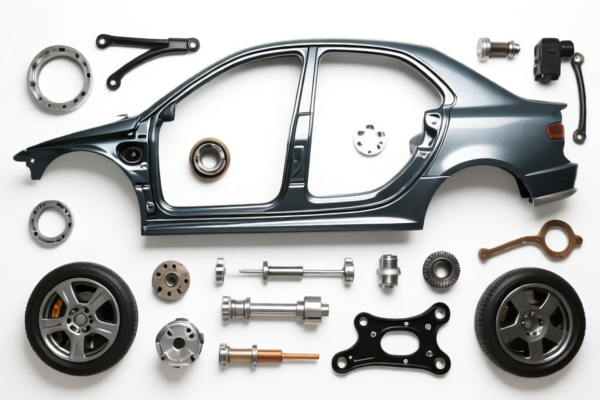
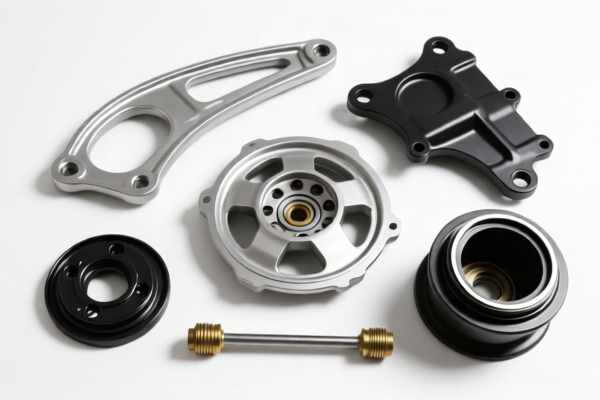
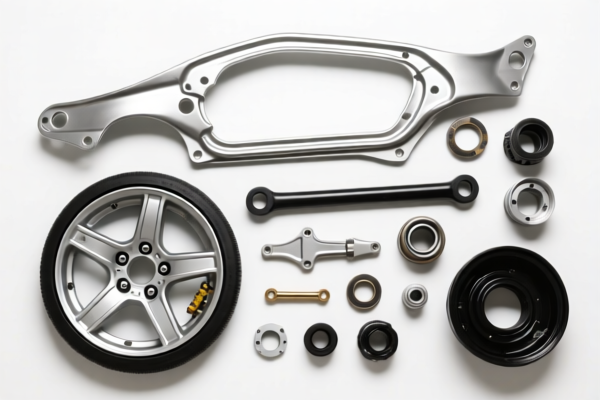
AI Analysis
🚗 Vehicle Parts & Accessories (Automotive Components)
🌐 HS Code Reference & Customs Clearance Guide | 2026 Tax Regulations Analysis | Professional Clearance Strategy
📌 I. Product Definition: What Exactly Are "Vehicle Parts"?
Vehicle parts and accessories cover a wide range of components used in motor vehicles, from lighting systems to structural body parts. In international trade, accurate classification is critical because tax rates vary drastically depending on whether the item is considered an "electrical component" (Chapter 85) or a "mechanical/body part" (Chapter 87), and whether specific materials (steel, aluminum, copper) are involved.
⚠️ Key Classification Logic:
- Electrical/Lighting Components: Typically fall under Chapter 85 (e.g., headlights, signal lights).
- Mechanical/Body Components: Typically fall under Chapter 87 (e.g., bumpers, frames, brackets).
- Material Impact: Items made of Steel, Aluminum, or Copper often attract additional surcharges under specific trade clauses (e.g., 122 Clause), significantly increasing the total tax burden.
📦 II. HS Code Classification Details (2026 Latest Tariff Authority)
Based on the provided data, here are the four specific HS Codes for Vehicle Parts, their summaries, and tax implications.
| HS Code | Product Description & Summary | Application Logic | Total Tax Rate |
|---|---|---|---|
| 8512.90.90.00 | Auto Parts (Lighting/Signal Accessories) Belongs to parts category; classified as "Other" (catch-all). Purpose aligns with vehicle parts. |
Lighting/Signal devices without specific sub-heading match. | 37.5% |
| 8708.10.60.50 | Auto Parts (Body/Chassis Parts) Vehicle parts category; matches "parts and accessories". Classified as catch-all. |
Body parts, frames, or general mechanical attachments. | 87.5% |
| 8512.20.20.80 | Auto Parts (Lighting/Signal Devices) Belongs to spare parts/components. No conflict with vehicle lighting purpose. |
Specific lighting equipment (e.g., headlights, taillights). | 35.0% |
| 8708.29.51.60 | Auto Parts (Body Parts & Accessories) Matches "other parts and accessories" highly. |
Bumpers, fenders, or other body panels. | 2.5% + 85.0% |
💰 III. 2026 Latest Tariff Rate Breakdown (Including Surcharges)
✅ Applicable Country: United States (US)
✅ Origin: China (CN)
✅ Effective Time: Current regulations apply (2025-2026 window)
🎯 1. 8512.90.90.00 —— Auto Parts (General Lighting/Signal "Catch-All")
| Item | Detail |
|---|---|
| Base Tariff | 2.5% (Ad Valorem) |
| Section 301 Surcharge | +25.0% (Standard for Chapter 85 goods from China) |
| 122 Clause Surcharge | +10.0% |
| Material Surcharge | None (Not specified as Steel/Aluminum/Copper for this specific code) |
| Total Tax Rate | 37.5% |
| Tax Calculation | CIF Value × 37.5% |
| De Minimis Exemption | ❌ Not Available (High-risk classification) |
| Legal Basis Path | Base: 2.5% → Sec 301: 25% → 122 Clause: 10% |
📌 Interpretation:
This code is often used for generic electrical lighting components that do not fit into more specific sub-headings. The total tax of 37.5% is moderate compared to body parts but still significant. It avoids the heavy material surcharges.
🎯 2. 8708.10.60.50 —— Auto Parts (General Body/Chassis "Catch-All")
| Item | Detail |
|---|---|
| Base Tariff | 2.5% (Ad Valorem) |
| Section 301 Surcharge | +25.0% |
| 122 Clause Surcharge | +10.0% |
| Material Surcharge (Steel/Al/Cu) | +50.0% |
| Total Tax Rate | 87.5% |
| Tax Calculation | CIF Value × 87.5% |
| De Minimis Exemption | ❌ Not Available |
| Legal Basis Path | Base: 2.5% → Sec 301: 25% → 122 Clause: 10% → Material Surcharge: 50% |
📌 Critical Warning:
This is the highest tax bracket. The 87.5% total includes a massive 50% surcharge for Steel, Aluminum, or Copper products.
- If your part is made of these materials and classified here, the tax burden is extreme.
- Ensure the material composition is correctly declared to avoid disputes, but be prepared for this high rate if classified under this "catch-all" body part code.
🎯 3. 8512.20.20.80 —— Auto Parts (Specific Lighting/Signal Devices)
| Item | Detail |
|---|---|
| Base Tariff | 0.0% (Ad Valorem) |
| Section 301 Surcharge | +25.0% |
| 122 Clause Surcharge | +10.0% |
| Material Surcharge | None (Electrical assembly) |
| Total Tax Rate | 35.0% |
| Tax Calculation | CIF Value × 35.0% |
| De Minimis Exemption | ❌ Not Available |
| Legal Basis Path | Base: 0% → Sec 301: 25% → 122 Clause: 10% |
📌 Optimization Note:
This code offers the lowest total tax (35.0%) among the lighting categories because the Base Tariff is 0%.
- Strategy: If your product is a lighting device (headlight, taillight, signal light), ensure it fits the specific description of8512.20rather than the catch-all8512.90. This saves 2.5% immediately.
🎯 4. 8708.29.51.60 —— Auto Parts (Specific Body Parts)
| Item | Detail |
|---|---|
| Base Tariff | 2.5% (Ad Valorem) |
| Section 301 Surcharge | +25.0% |
| 122 Clause Surcharge | +10.0% |
| Material Surcharge (Steel/Al/Cu) | +50.0% |
| Total Tax Rate | 2.5% + 85.0% (Net 87.5%) |
| Tax Calculation | CIF Value × 87.5% |
| De Minimis Exemption | ❌ Not Available |
| Legal Basis Path | Base: 2.5% → Sec 301: 25% → 122 Clause: 10% → Material Surcharge: 50% |
📌 Comparison:
Similar to8708.10.60.50, this code attracts the full 50% material surcharge. The notation "2.5% +85.0%" indicates the base is 2.5%, and the additional levies sum to 85%.
- High Risk: Like the other body part code, this is heavily penalized if made of steel, aluminum, or copper.
🛠️ IV. Customs Clearance Practical Advice (Pitfall Avoidance Guide)
✅ 1. Documentation Checklist (Mandatory)
| Document | Requirement | Description |
|---|---|---|
| ✅ Product Specification Sheet | ✔️ | Must detail material composition (Steel/Al/Cu vs. Plastic/Other), dimensions, and function. |
| ✅ Material Certificate | ✔️ | Crucial for Chapters 87. Proves if the item contains Steel/Aluminum/Copper to avoid misclassification of surcharges. |
| ✅ Product Photos | ✔️ | Clear images showing the part, including any brand markings or model numbers. |
| ✅ Commercial Invoice | ✔️ | Must clearly state "Auto Parts" and the specific HS Code. |
| ✅ Packing List | ✔️ | Detail individual items vs. complete assemblies. |
✅ 2. Declaration Strategy (Key Tips)
🔥 "Lighting 0% Base, Body 2.5% Base; Steel/Al/Cu = +50% Pain!"
| Scenario | Recommended HS Code | Tax Rate | Warning |
|---|---|---|---|
| Headlight/Taillight | 8512.20.20.80 |
35.0% | Lower base rate (0%) makes this optimal for lighting. |
| Generic Electrical Part | 8512.90.90.00 |
37.5% | Use only if it doesn't fit specific lighting codes. |
| Bumper/Fender (Steel/Al) | 8708.10.60.50 or 8708.29.51.60 |
87.5% | Extreme High Tax. Avoid if possible by checking for more specific sub-headings or alternative materials. |
| Plastic Body Trim | Check Specific 8708 Sub-heading | May vary | If plastic, it does not attract the 50% material surcharge. Ensure documentation confirms non-metallic composition. |
📌 Critical Insight:
- The 50% surcharge is applied specifically to Steel, Aluminum, and Copper products under the 122 Clause/Section 301 extensions.
- If your "Body Part" is made of plastic, rubber, or fiberglass, it should NOT incur the 50% surcharge. Misdeclaring material can lead to audits, but correctly declaring non-metallic materials can reduce tax from 87.5% to ~37.5% (Base + 25% + 10%).
✅ 3. Special Considerations
| Situation | Handling Advice |
|---|---|
| Mixed Material Parts | If a part is 90% plastic with a small steel bracket, declare based on essential character but provide proof of material composition. |
| OEM vs. Aftermarket | Both are subject to the same HS codes. Ensure the invoice describes the function, not just "OEM Part". |
| Kit Assembly | If selling a "Lighting Kit" (bulbs + wiring), declare as the primary component (usually lighting) to benefit from the 0% base if applicable. |
🌍 V. Global Market Clearance Comparison (2026 Latest)
| Country/Region | Recommended HS Code | Estimated Tax (China Origin) | Certification Required | Notes |
|---|---|---|---|---|
| 🇺🇸 USA | 8512.20.20.80 (Lighting) |
35.0% | FCC, DOT (if road-legal) | Highest tax for metal body parts (87.5%). |
| 🇺🇸 USA | 8708.xxxx (Body) |
37.5% - 87.5% | DOT, SAE | Tax depends heavily on material (Steel/Al triggers +50%). |
| 🇨🇳 China | 8512.20.20.80 |
Low (5-10%) | CCC (if applicable) | No 301/122 surcharges domestically. |
| 🇪🇺 EU | 8512.20.20.80 |
~2.7% + VAT | E-Mark, CE | No Section 301 equivalent; standard WTO rates. |
| 🇲🇽 Mexico | 8512.20.20.80 |
~5-10% | NOM | Beneficial under USMCA if rules of origin met. |
📌 Conclusion:
- USA is the most challenging market due to Section 301 and 122 Clause surcharges.
- Material Composition is the single biggest factor in tax optimization for body parts.
- Lighting parts generally enjoy lower base rates (0%) compared to body parts (2.5%).
📌 VI. Common Mistakes & Pitfalls (Blood Lessons)
❌ Mistake 1: Declaring a Steel Bumper as 8708.29 without noting material
👉 Consequence: Customs may apply the 50% surcharge anyway if detected, or audit the value.
👉 Solution: Clearly state "Steel" or "Aluminum" in materials section.
❌ Mistake 2: Misclassifying Headlights as 8708 (Body Parts)
👉 Consequence: Wrong HS Code leads to penalty + potential higher tax if not optimized for the 0% base.
👉 Solution: Always prioritize Chapter 85 for electrical lighting functions.
❌ Mistake 3: Ignoring the 122 Clause
👉 Consequence: Forgetting the +10% surcharge leads to underpayment and fines.
👉 Solution: Always calculate Base + 25% + 10% + Material Surcharge.
✅ Correct Approach:
"Automotive LED Headlight, Model XYZ, Plastic Housing, Electrical Assembly, FCC Certified, HS Code 8512.20.20.80"
🎯 VII. Conclusion: Professional Declaration, Cost Efficiency!
🎯 Remember the Formula:
🔹 Lighting: Target
8512.20→ 0% Base → Total 35%
🔹 Body (Metal): Target8708→ 2.5% Base → Total 87.5% (Steel/Al/Cu)
🔹 Body (Non-Metal): Target8708→ 2.5% Base → Total ~37.5% (No material surcharge)🔹 "Material is King: Steel/Al/Cu = +50% Pain! Plastic = Save Big!"
📌 Pro Tip:
If your vehicle parts are made of Plastic, Rubber, or Fiberglass, ensure your documentation explicitly states "Non-Metallic Composition". This can save you 50% in surcharges on body parts, dropping the tax from 87.5% to ~37.5%.
📣 Immediate Action:
📞 Contact your customs broker to verify material composition documentation.
🚀 Apply for Advance Rulings if importing large volumes of mixed-material parts.
💼 Precise classification saves thousands.
✨ Professional Clearance Starts with Accurate Classification!
💼 Every percentage point counts in your profit margin!
Customer Reviews
About HS Code Classification
The Harmonized System (HS) is an internationally standardized nomenclature developed by the World Customs Organization (WCO) to classify traded products. Over 200 countries use the HS system as the basis for customs tariffs, trade statistics, and import/export regulations.
Each HS code follows a hierarchical structure:
- Chapter (2 digits) — Broad category of goods (e.g., Chapter 84: Machinery and Mechanical Appliances)
- Heading (4 digits) — More specific grouping within the chapter
- Subheading (6 digits) — Internationally standardized breakdown, used by all WCO member countries
- National subdivisions (8-10 digits) — Country-specific extensions for further classification, such as US HTSUS 10-digit codes
Correct HS code classification is essential for smooth customs clearance, accurate duty payment, and compliance with trade regulations. Misclassification can lead to customs delays, overpayment of duties, or penalties.
When importing from CN to US, the applicable tariff rates may include:
- Most-Favored-Nation (MFN) rate — The standard duty rate applied to WTO members
- General rate — Applied to countries without trade agreements
- Trade remedy duties — Additional tariffs such as Section 301 (anti-dumping), Section 232 (national security), or countervailing duties
The information provided on this page is for reference purposes only. For official classification, please consult with your local customs authority or a licensed customs broker.