Vehicle Parts and Accessories (HS 8708704560)
CN → US| HS Code | Tariff Rate | Origin | Destination | Doc |
|---|---|---|---|---|
| 8708292500 | 0.0% | CN | US | Official Doc |
| 8302303060 | 87.0% | CN | US | Official Doc |
| 8708106010 | 87.5% | CN | US | Official Doc |
| 8302306000 | 38.5% | CN | US | Official Doc |
| 8802609040 | 35.0% | CN | US | Official Doc |
Product Images
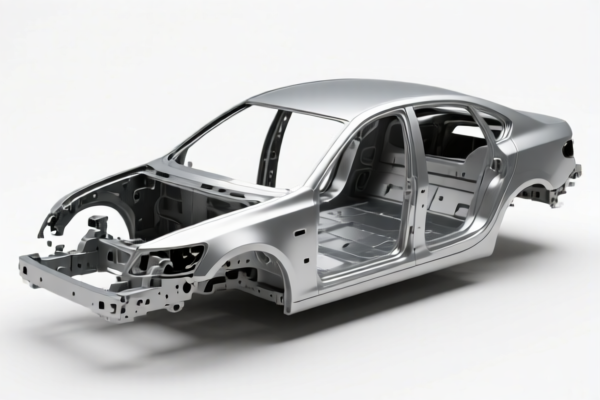
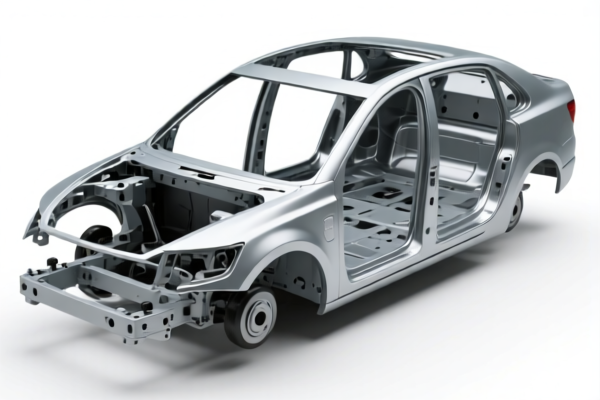

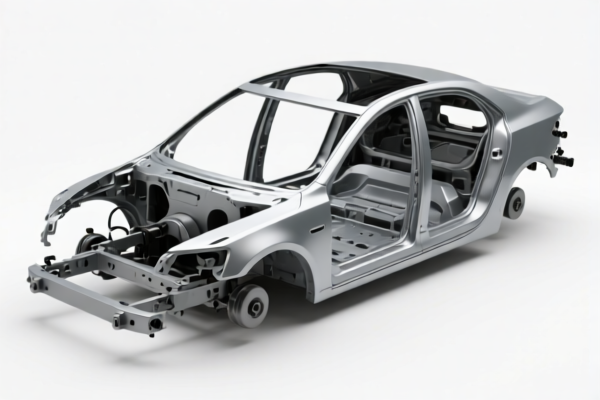
AI Analysis
🚗 Vehicle Parts and Accessories (HS 8708 / 8302 / 8802)
🌐 HS Code Reference & Customs Clearance Guide | 2026 Latest Tariff Analysis | Professional Customs Strategy
📌 Part 1: Product Definition & Classification: Do You Really Know "Vehicle Parts"?
Vehicle parts and accessories are a broad category in international trade, covering everything from structural body components to mounting hardware and specialized aerospace-related parts. Because "vehicle parts" is not a single HS Code but a family of codes, misclassification is the #1 cause of customs delays and penalty fees.
In the provided data, we analyze five distinct HS Codes. To determine the correct code, you must identify: 1. The Specific Function: Is it a structural body part, a mounting bracket, or a spare part for a different vehicle type (e.g., aircraft)? 2. The Material: Is it made of base metals (steel, aluminum, copper)? 3. The Application: Is it for standard road vehicles (HS 87) or other categories?
⚠️ Key Distinction Point: - If it is a structural body component (bumper, fender, roof) → Likely HS 8708. - If it is a mounting accessory/hardware (brackets, hinges, locks) made of metal → Likely HS 8302. - If it is a specialized part for non-road vehicles (e.g., spacecraft) → Likely HS 8802.
📦 Part 2: HS Code Classification Details (2026 Latest Tariff Authority)
The following table maps the specific HS Codes from your data to their product descriptions, usage scenarios, and material implications.
| HS Code | Product Description | Usage Scenario | Material/Type Implication |
|---|---|---|---|
8708.29.25.00 |
Body Parts for Motor Vehicles | General vehicle body components; fits "catch-all" logic for body parts. | Vehicle-specific; no specific base metal conflict noted. |
8302.30.30.60 |
Mountings & Accessories for Vehicles | Installations, attachments, and similar articles for automobiles. | Base Metal (Steel/Aluminum/Copper inferred). |
8708.10.60.10 |
Bumpers and Parts Thereof | Car bumpers; classified under body parts. | Base Metal (Steel/Aluminum/Copper). |
8302.30.60.00 |
Fittings & Accessories for Vehicles | General vehicle fittings and accessories. | Base Metal (Typical for this category). |
8802.60.90.40 |
Parts of Spacecraft & Launch Vehicles | Non-standard vehicle parts; "catch-all" for aerospace/launch parts. | No obvious material conflict; specialized aerospace parts. |
🔍 Critical Reminder: - HS 8708 items are generally body parts (bumper, hood, fender). - HS 8302 items are generally hardware/mounts (brackets, hinges, base metal attachments). - HS 8802 is for Spacecraft/Launch Vehicles, NOT standard cars. Misdeclaring a car part as aerospace can raise serious security/red flag issues.
💰 Part 3: 2026 Latest Tariff Rate Breakdown (Including Add-ons)
✅ Applicable Country: United States (US)
✅ Origin: China (CN)
✅ Effective Date: Current (Includes Section 301 & IEEPA surcharges)
🎯 1. 8708.29.25.00 – Body Parts (General)
| Item | Content |
|---|---|
| Base Tariff | 2.5% |
| Section 301 Surcharge | +25.0% |
| IEEPA Section 122 Surcharge | +10.0% |
| Total Tariff Rate | 35.0% |
| Calculation Method | CIF Value × 35% |
| De Minimis Exemption? | ❌ No (Deny De Minimis) |
| Legal Basis | Base 2.5% + Sec 301 25% + IEEPA 10% |
📌 Explanation:
- This code benefits from a low base tariff but is hit by the full package of US trade barriers (301 + 122). - Total 35% is high but lower than the base-metal heavy codes below.
🎯 2. 8302.30.30.60 – Mountings/Accessories (Base Metal)
| Item | Content |
|---|---|
| Base Tariff | 2.0% |
| Section 301 Surcharge | +25.0% |
| IEEPA Section 122 Surcharge | +10.0% |
| Steel/Aluminum/Copper Surcharge | +50.0% |
| Total Tariff Rate | 87.0% |
| Calculation Method | CIF Value × 87.0% |
| De Minimis Exemption? | ❌ No (Deny De Minimis) |
| Legal Basis | Base 2.0% + Sec 301 25% + IEEPA 10% + Base Metal 50% |
📌 Warning:
- This is an EXTREMELY HIGH tariff (87%). - Why? Because it is classified as Base Metal (Steel/Aluminum/Copper) accessories. - The 50% Additional Tariff on steel/aluminum/copper products stacks on top of the 301 and 122 tariffs. - Must have precise material documentation.
🎯 3. 8708.10.60.10 – Bumpers & Parts (Base Metal)
| Item | Content |
|---|---|
| Base Tariff | 2.5% |
| Section 301 Surcharge | +25.0% |
| IEEPA Section 122 Surcharge | +10.0% |
| Steel/Aluminum/Copper Surcharge | +50.0% |
| Total Tariff Rate | 87.5% |
| Calculation Method | CIF Value × 87.5% |
| De Minimis Exemption? | ❌ No (Deny De Minimis) |
| Legal Basis | Base 2.5% + Sec 301 25% + IEEPA 10% + Base Metal 50% |
📌 Warning:
- Similar to8302, if your bumper is made of steel, aluminum, or copper, it attracts the 50% metal surcharge. - Total 87.5% is one of the highest possible rates. - Strategy: If your bumper is plastic (PP, ABS), ensure the HS Code description allows for non-metal classification to avoid this penalty. If it is metal, this cost is unavoidable.
🎯 4. 8302.30.60.00 – Fittings & Accessories (Base Metal)
| Item | Content |
|---|---|
| Base Tariff | 3.5% |
| Section 301 Surcharge | +25.0% |
| IEEPA Section 122 Surcharge | +10.0% |
| Total Tariff Rate | 38.5% |
| Calculation Method | CIF Value × 38.5% |
| De Minimis Exemption? | ❌ No (Deny De Minimis) |
| Legal Basis | Base 3.5% + Sec 301 25% + IEEPA 10% |
📌 Note:
- This code does not list the 50% metal surcharge in the provided data. This suggests it may be classified differently regarding the specific metal surcharge lists, or the surcharge is embedded/different. - Total 38.5% is moderate but still significant.
🎯 5. 8802.60.90.40 – Spacecraft/Launch Parts
| Item | Content |
|---|---|
| Base Tariff | 0.0% |
| Section 301 Surcharge | +25.0% |
| IEEPA Section 122 Surcharge | +10.0% |
| Total Tariff Rate | 35.0% |
| Calculation Method | CIF Value × 35.0% |
| De Minimis Exemption? | ❌ No (Deny De Minimis) |
| Legal Basis | Base 0% + Sec 301 25% + IEEPA 10% |
📌 Note:
- Zero base tariff, but the 35% surcharge applies due to origin (China). - Only use if genuinely for spacecraft/launch vehicles. Misuse is a federal offense.
🛠️ Part 4: Customs Clearance Practical Advice (Pitfall Avoidance Guide)
✅ 1. Documentation Checklist (Essential)
| Document | Required | Notes |
|---|---|---|
| ✅ Product Specifications | ✔️ | Must specify Material (Steel, Aluminum, Plastic, etc.). Critical for HS 8708/8302 metal surcharges. |
| ✅ Material Certificate | ✔️ | Proof of composition for base metal items. |
| ✅ Product Photos | ✔️ | Clear images showing branding, model, and part type. |
| ✅ Commercial Invoice | ✔️ | Must clearly state "Vehicle Part" + "HS Code" + "Country of Origin: China". |
| ✅ Packing List | ✔️ | Ensure no mixing of different HS Codes in one shipment to avoid confusion. |
| ✅ Intended Use Declaration | ✔️ | Explicitly state "For Passenger Motor Vehicles" (HS 87) vs. "For Aerospace" (HS 88). |
✅ 2. Declaration Strategy (Key Mantra)
🔥 “Material Defines Metal, Function Defines Body, Accuracy Saves Millions!”
| Scenario | Correct Declaration | Incorrect Practice | Consequence |
|---|---|---|---|
| Plastic Bumper | 8708.10.60.10 (If allowed) |
Declare as "Metal Bumper" | Overpay 50% metal surcharge. |
| Steel Bracket | 8302.30.30.60 |
Declare as "General Part" | Underpayment + Penalty. |
| Plastic Bracket | 8302.30.60.00 (Check metal list) |
Assume all brackets are metal | Potential surcharge error. |
| Spacecraft Part | 8802.60.90.40 |
Declare as "Car Part" | Security Alert / Seizure. |
📌 Key Advice:
- HS 8708 vs. HS 8302: If it is a structural body part (bumper, fender), use 8708. If it is a mounting hardware (bracket, hinge, lock), use 8302. - Base Metal Surcharge (50%): This is the biggest risk. Steel, Aluminum, and Copper items in HS 8302 and HS 8708 (if material-specific) may incur this. Plastic/Rubber parts generally do NOT. Always declare material!
✅ 3. Special Cases
| Scenario | Handling Advice |
|---|---|
| OEM Custom Parts | Provide the OEM design spec to prove function. |
| Mixed Materials | If a bumper has steel frame + plastic cover, declare based on principal character. If steel is dominant, 50% surcharge may apply. |
| Aerospace Confusion | Never declare standard car parts as "Spacecraft Parts" just to save money. The 35% rate is not a "discount" enough to risk fraud charges. |
🌍 Part 5: Global Market Comparison (2026)
| Country/Region | Recommended HS Code (Example) | Tariff Rate (China Origin) | Certification | Notes |
|---|---|---|---|---|
| 🇺🇸 USA | 8708 / 8302 / 8802 |
35% – 87.5% | None (General) | Highest tariffs. Metal surcharges apply. |
| 🇨🇳 China | 8708 / 8302 |
0% - 5% | CCC (if applicable) | No US-style surcharges. |
| 🇪🇺 EU | 8708 |
0% | ECE R-Type | No additional US-style tariffs. |
| 🇦🇺 Australia | 8708 |
5% | ADR | Moderate tariffs. |
📌 Conclusion:
- The USA is the only major market with these complex Section 301 + IEEPA + Metal Surcharge structures. - Cost Impact: A $10,000 shipment of metal vehicle parts could face $8,750 in duties. A $10,000 shipment of plastic parts might face only $3,500–$3,850. - Material Declaration is King.
📌 Part 6: Common Mistakes & Pitfall Guide (Lessons Learned)
❌ Mistake 1: Declaring a Steel Bumper as "General Vehicle Part" without specifying material.
👉 Result: Customs assesses it as base metal → 87.5% tariff. You paid 35% initially → Back taxes + Penalties.
❌ Mistake 2: Declaring a Plastic Bracket under 8302.30.30.60 assuming it triggers the 50% surcharge.
👉 Result: If the code specifically targets base metal items and your item is plastic, you may be overpaying. Check the specific subheading for material exemptions.
❌ Mistake 3: Confusing Body Parts (8708) with Accessories (8302).
👉 Result: Wrong HS code → Delayed customs release → Storage fees.
✅ Correct Approach:
"Automobile Bumper, Model XYZ, PP Plastic, for Sedan ABC, HS 8708.10.60.10, Origin: China"
🎯 Part 7: Conclusion: Precision Saves Money!
🎯 Remember the Mantra:
🔹 "Plastic is Cheap (35-38%), Steel is Expensive (87%). Declare Material First!"
🔹 "Body Part = 8708, Hardware = 8302. Don't Mix Them!"
🔹 "Spacecraft Parts ≠ Car Parts. Don't Risk Fraud!"
📌 Pro Tip:
If your parts are Plastic or Rubber, ensure your HS Code selection reflects non-metal classification to avoid the 50% surcharge.
Always get a Pre-Ruling (Advance Ruling) from US Customs (CBP) for high-value shipments to confirm the correct HS Code and tariff rate.
📣 Immediate Action:
📞 Contact a Licensed Customs Broker
📸 Provide Material Spec Sheets
🚀 Optimize Your Supply Chain for 35% Tariff, Not 87%!
✨ Professional Clearance Starts with Accurate Classification!
💼 Every Percentage Point Matters in Global Trade!
Customer Reviews
About HS Code Classification
The Harmonized System (HS) is an internationally standardized nomenclature developed by the World Customs Organization (WCO) to classify traded products. Over 200 countries use the HS system as the basis for customs tariffs, trade statistics, and import/export regulations.
Each HS code follows a hierarchical structure:
- Chapter (2 digits) — Broad category of goods (e.g., Chapter 84: Machinery and Mechanical Appliances)
- Heading (4 digits) — More specific grouping within the chapter
- Subheading (6 digits) — Internationally standardized breakdown, used by all WCO member countries
- National subdivisions (8-10 digits) — Country-specific extensions for further classification, such as US HTSUS 10-digit codes
Correct HS code classification is essential for smooth customs clearance, accurate duty payment, and compliance with trade regulations. Misclassification can lead to customs delays, overpayment of duties, or penalties.
When importing from CN to US, the applicable tariff rates may include:
- Most-Favored-Nation (MFN) rate — The standard duty rate applied to WTO members
- General rate — Applied to countries without trade agreements
- Trade remedy duties — Additional tariffs such as Section 301 (anti-dumping), Section 232 (national security), or countervailing duties
The information provided on this page is for reference purposes only. For official classification, please consult with your local customs authority or a licensed customs broker.