Vehicle Receiver
CN → US| HS Code | Tariff Rate | Origin | Destination | Doc |
|---|---|---|---|---|
| 8527294000 | 35.0% | CN | US | Official Doc |
| 8527214080 | 35.0% | CN | US | Official Doc |
| 9031808085 | 10.0% | CN | US | Official Doc |
| 9031499000 | 35.0% | CN | US | Official Doc |
| 8512300040 | 37.5% | CN | US | Official Doc |
Product Images
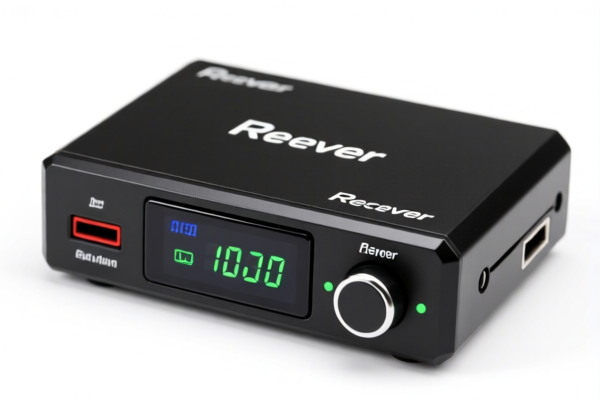
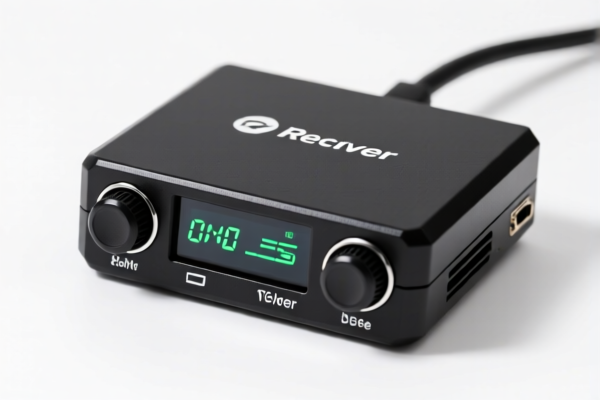
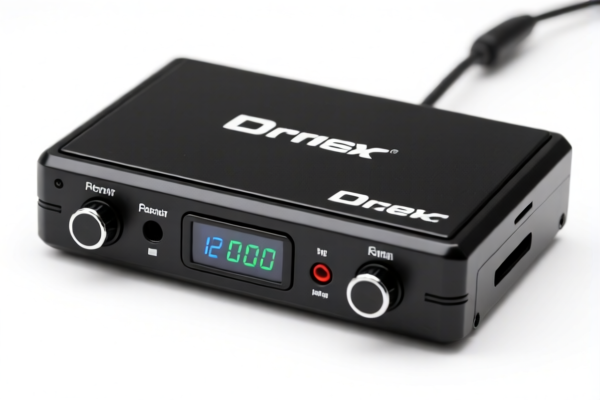
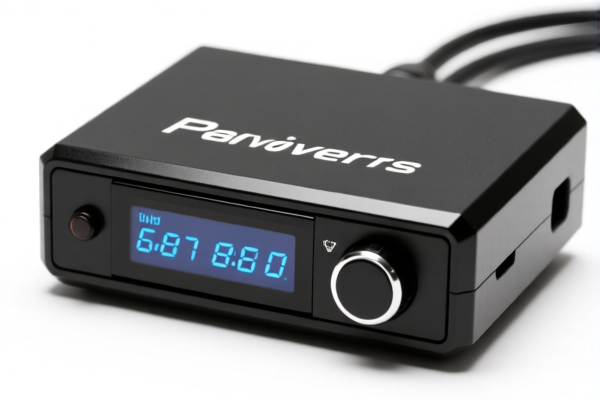
AI Analysis
🚗 Vehicle Receiver (Automotive Radio/Infotainment Unit)
🌐 HS Code Reference & Customs Clearance Guide | 2026 Latest Tariff Analysis | Professional-Level Entry Strategy
📌 I. Product Definition & Classification: What Exactly Is a "Vehicle Receiver"?
A "Vehicle Receiver" typically refers to the core electronic unit in an automobile that receives broadcast signals (AM/FM, Satellite, Digital Audio) and often processes audio/video output. In international trade, its classification depends heavily on functional specificity and physical form.
Key Distinctions: * Dedicated Radio Receiver: Specifically designed for vehicle installation, with car-specific interfaces (ISO connectors, power specs). → Chapter 85 * General Measurement/Testing Device: If the unit is primarily used for diagnosing vehicle signal strength or testing receiver circuits (rather than playing audio for passengers). → Chapter 90 * Signal/Lighting Equipment: If it functions primarily as a safety signal device or has integrated lighting/navigation signaling roles. → Chapter 85 (Other)
⚠️ Critical Classification Point:
- If it is a standard car radio/head unit intended for passenger use → Likely 8527.29 or 8527.21.
- If it is a diagnostic tool for testing vehicle electronics → Likely 9031.80 or 9031.49.
- If it is a safety signal transmitter/receiver → Likely 8512.30.
📦 II. HS Code Classification Details (2026 Latest Tariff Authority Comparison)
Based on the provided data, here are the four potential HS Codes and their corresponding rationales:
| HS Code | Product Description | Rationale for Classification | Primary Function |
|---|---|---|---|
8527.29.40.00 |
Radio-Receiver, Not Fitted with Television Reception Apparatus, for Motor Vehicles | Exact Match: The summary explicitly states the "use (vehicle-mounted)" and "form (radio receiver)" are completely matched. This is the most precise classification for standard automotive radios. | Playing AM/FM/Satellite Audio |
8527.21.40.80 |
Other Radio-Receiver Devices, for Motor Vehicles | Functional Match: Fits the "vehicle-mounted" use and "audio receiving" attribute but falls under "other types" (perhaps if it includes digital streaming or hybrid functions not strictly defined as standard broadcast). | Hybrid/Modern Automotive Audio |
9031.80.80.85 |
Other Measuring/Inspecting Instruments & Machines | Diagnostic Use: Classified as a device for "detecting or processing vehicle status." If the receiver is used for testing signal integrity or vehicle diagnostics rather than entertainment, it falls here. | Vehicle Diagnostics/Signal Testing |
9031.49.90.00 |
Other Optical Instruments & Equipment | Optical/Advanced Detection: Classified under optical instruments. This may apply if the receiver involves laser/LiDAR signal reception for autonomous driving or advanced sensor fusion, not just audio. | LiDAR/Sensor Data Reception |
8512.30.00.40 |
Electrical Lighting or Signal Equipment | Signal/Safety Function: Inferred as a "signal/detection device" for vehicles. If the primary purpose is safety signaling (e.g., emergency lights, collision warning receivers) rather than entertainment, it goes here. | Safety Signals/Warning Systems |
🔍 Key Reminder:
- Standard Car Radio → Go with 8527.29.40.00 (Lowest risk, most direct description).
- Diagnostic/Test Unit → Go with 9031.80.80.85 (Avoids high tariffs if justified as medical/industrial instrument).
- LiDAR/Sensor Receiver → Go with 9031.49.90.00 (Specific to optical sensing).
💰 III. 2026 Latest Tariff Rate Details (Including Surtaxes, Policy Surcharges)
✅ Applicable Country: United States (US)
✅ Origin: China (CN)
✅ Effective Time: November 10, 2025 onwards
🎯 1. 8527.29.40.00 & 8527.21.40.80 —— Automotive Radio Receivers
| Item | Detail |
|---|---|
| Base Duty Rate | 0.0% |
| USITC Surtax (Section 301) | +25.0% |
| IEEPA Surtax (Section 122) | +10.0% |
| Total Effective Rate | 35.0% |
| Calculation Basis | CIF Value × 35% |
| De Minimis Exemption | ❌ Not Applicable |
| Legal Path | IEEPA:9903.01.25 → USITC:8527.29.40.00 → FOOTNOTE:9903.88.01 |
📌 Explanation:
- These are considered "Consumer Electronics" for vehicles.
- Total Tax: 35%. This is a high tariff bracket due to the combination of Section 301 and IEEPA measures.
- Warning: Misclassifying this as a generic instrument to avoid taxes may trigger audits.
🎯 2. 9031.80.80.85 —— Diagnostic/Testing Instruments
| Item | Detail |
|---|---|
| Base Duty Rate | 0.0% |
| USITC Surtax | 0.0% |
| IEEPA Surtax | +10.0% |
| Total Effective Rate | 10.0% |
| Calculation Basis | CIF Value × 10% |
| De Minimis Exemption | ❌ Not Applicable |
| Legal Path | IEEPA:9903.01.24 → USITC:9031.80.80.85 |
📌 Explanation:
- If your product is a professional diagnostic tool (not a passenger radio), this code offers a significant tax advantage (10% vs 35%).
- Requirement: Must provide technical documentation proving its use for measurement, testing, or inspection of vehicle systems, not entertainment.
🎯 3. 9031.49.90.00 —— Optical/Sensor Receivers
| Item | Detail |
|---|---|
| Base Duty Rate | 0.0% |
| USITC Surtax | +25.0% |
| IEEPA Surtax | +10.0% |
| Total Effective Rate | 35.0% |
| Calculation Basis | CIF Value × 35% |
| De Minimis Exemption | ❌ Not Applicable |
| Legal Path | IEEPA:9903.01.25 → USITC:9031.49.90.00 |
📌 Explanation:
- Despite being "optical instruments," it still incurs the 35% total tax due to Section 301 and IEEPA.
- Justification: Must be clearly defined as optical sensing equipment (e.g., LiDAR receivers), not standard radio.
🎯 4. 8512.30.00.40 —— Electrical Signal Equipment
| Item | Detail |
|---|---|
| Base Duty Rate | 2.5% |
| USITC Surtax | +25.0% |
| IEEPA Surtax | +10.0% |
| Total Effective Rate | 37.5% |
| Calculation Basis | CIF Value × 37.5% |
| De Minimis Exemption | ❌ Not Applicable |
| Legal Path | IEEPA:9903.01.25 → USITC:8512.30.00.40 |
📌 Explanation:
- This is the highest tax rate (37.5%).
- Only use if the product is strictly a safety signal device (e.g., emergency beacon receiver). Not recommended for standard vehicle receivers.
🛠️ IV. Customs Clearance Practical Advice (Real-World Pitfall Avoidance)
✅ 1. Essential Documentation Checklist
| Document | Required? | Description |
|---|---|---|
| ✅ Technical Specification Sheet | ✔️ | Must clearly state: Function (Radio vs. Diagnostic), Input Voltage, Frequency Range, Interfaces. |
| ✅ Circuit Diagram / Block Diagram | ✔️ | Proves whether the device includes amplifiers/speakers (Radio) or sensors/processors (Diagnostic). |
| ✅ Product Photos (Label/Port) | ✔️ | Show model number, input/output ports (e.g., OBD-II port for diagnostics vs. AUX/USB for radio). |
| ✅ Third-Party Test Report | ✔️ | FCC ID (for radio) or Calibration Certificate (for diagnostic tools). |
| ✅ Commercial Invoice | ✔️ | Description must match HS Code rationale (e.g., "Automotive Radio Receiver" vs. "Vehicle Signal Diagnostic Tool"). |
| ✅ Origin Certificate (CO) | ✔️ | If non-China origin, may qualify for exemptions. |
✅ 2. Declaration Strategy (Key Mantra)
🔥 "Function Defines Code, Not Just Name."
| Scenario | Correct Declaration | Wrong Declaration | Result |
|---|---|---|---|
| Standard Car Radio | 8527.29.40.00 - "Automotive Radio Receiver" |
Mislabel as "Diagnostic Tool" | Risk of Audit & Penalty |
| Diagnostic Scanner | 9031.80.80.85 - "Vehicle Signal Tester" |
Mislabel as "Car Radio" | Overpay Tax (35% vs 10%) |
| LiDAR Receiver | 9031.49.90.00 - "Optical Sensor Receiver" |
Mislabel as "Car Radio" | 35% Tax (No Benefit) |
| Emergency Beacon Receiver | 8512.30.00.40 - "Safety Signal Receiver" |
Mislabel as "Car Radio" | 37.5% Tax (Highest) |
✅ 3. Special Circumstances Handling
| Situation | Handling Advice |
|---|---|
| OEM/ODM Units | Provide Customer PO + Design Specs. If customized for diagnostics, argue for 9031 classification. |
| Hybrid Units (Radio + Nav) | Still classified as 8527 (Radio). Navigation is secondary to broadcasting. |
| Used/Refurbished Units | Additional FDA/EPA/FCC restrictions may apply. Ensure clean data wipe and certified recycling. |
| Pre-Installation Testing | If sold as a "Testing Tool" for factories, use 9031.80. Must include test probes/cables in shipment. |
🌍 V. Global Market Clearance Comparison (2026 Latest)
| Country/Region | Recommended HS Code | Duty Rate (China Origin) | Certification Required | Notes |
|---|---|---|---|---|
| 🇺🇸 USA | 8527.29.40.00 |
35% (Total) | FCC + RoHS | High tax due to Section 301 & IEEPA. |
| 🇨🇳 China | 8527.29.40.00 |
5% | CCC + RoHS | Low import duty, no surtaxes. |
| 🇪🇺 EU | 8527.29.40.00 |
0% (if CE) | CE + ErP | No surtaxes. Friendly for automotive electronics. |
| 🇬🇧 UK | 8527.29.40.00 |
0% (if UKCA) | UKCA | Post-Brexit standards. |
| 🇦🇺 Australia | 8527.29.40.00 |
5% | RCM | No surtaxes. |
📌 Conclusion:
- USA is the most expensive market due to political surtaxes.
- EU/UK/Asia offer low/no duties but require strict EMC/Safety Certifications (CE/UKCA).
- Strategic Advice: For US market, consider shifting origin to Vietnam/Mexico to avoid 35% surtax if possible.
📌 VI. Common Mistakes & Pitfall Guide (Lessons from Experience)
❌ Mistake 1: Calling a Radio a "Diagnostic Tool" to get 10% tax
👉 Consequence: Customs inspection reveals audio output → Retroactive 35% tax + Penalty.
❌ Mistake 2: Calling a Radio a "Sensor" (9031.49)
👉 Consequence: No optical components → Reclassification to 8527 + 35% tax.
❌ Mistake 3: Ignoring FCC ID for US Imports
👉 Consequence: Goods detained at port → Return to sender or Destruction.
❌ Mistake 4: Using "Electrical Lighting" (8512) for a Radio
👉 Consequence: Highest Tax (37.5%) due to misclassification error.
✅ Correct Approach:
"Automotive Radio Receiver, 12V/24V, AM/FM/Satellite, HDMI Input, Model ABC, FCC ID: XYZ123"
🎯 VII. Conclusion: Precision in Classification Saves Millions!
🎯 Remember the Mantra:
🔹 "Radio = 35%, Diagnostic = 10%, Sensor = 35%, Signal = 37.5%!"
🔹 "Don't guess, document! HS Code defines your profit margin!"
📌 Pro Tip:
If your "Vehicle Receiver" is originally from Vietnam, Mexico, or Thailand, you may qualify for IEEPA Exemptions, reducing the total tax to 0%~5%.
Recommendation: Apply for an Advance Ruling (Pre-classification) before shipping to the US to avoid unexpected costs.
📣 Immediate Action:
📞 Contact a professional customs broker + Provide Product Specs + Apply for HS Code Advance Ruling
🚀 Ensure your Vehicle Receiver clears customs smoothly, efficiently, and profitably!
✨ Professional clearance starts with precise classification!
💼 Every cent of tax saved is pure profit!
Customer Reviews
About HS Code Classification
The Harmonized System (HS) is an internationally standardized nomenclature developed by the World Customs Organization (WCO) to classify traded products. Over 200 countries use the HS system as the basis for customs tariffs, trade statistics, and import/export regulations.
Each HS code follows a hierarchical structure:
- Chapter (2 digits) — Broad category of goods (e.g., Chapter 84: Machinery and Mechanical Appliances)
- Heading (4 digits) — More specific grouping within the chapter
- Subheading (6 digits) — Internationally standardized breakdown, used by all WCO member countries
- National subdivisions (8-10 digits) — Country-specific extensions for further classification, such as US HTSUS 10-digit codes
Correct HS code classification is essential for smooth customs clearance, accurate duty payment, and compliance with trade regulations. Misclassification can lead to customs delays, overpayment of duties, or penalties.
When importing from CN to US, the applicable tariff rates may include:
- Most-Favored-Nation (MFN) rate — The standard duty rate applied to WTO members
- General rate — Applied to countries without trade agreements
- Trade remedy duties — Additional tariffs such as Section 301 (anti-dumping), Section 232 (national security), or countervailing duties
The information provided on this page is for reference purposes only. For official classification, please consult with your local customs authority or a licensed customs broker.