Vehicle Rubber Parts
CN → US| HS Code | Tariff Rate | Origin | Destination | Doc |
|---|---|---|---|---|
| 4016996050 | 37.5% | CN | US | Official Doc |
| 3926905900 | 37.4% | CN | US | Official Doc |
| 8431499038 | 85.0% | CN | US | Official Doc |
| 8431499090 | 85.0% | CN | US | Official Doc |
| 4016996010 | 37.5% | CN | US | Official Doc |
Product Images
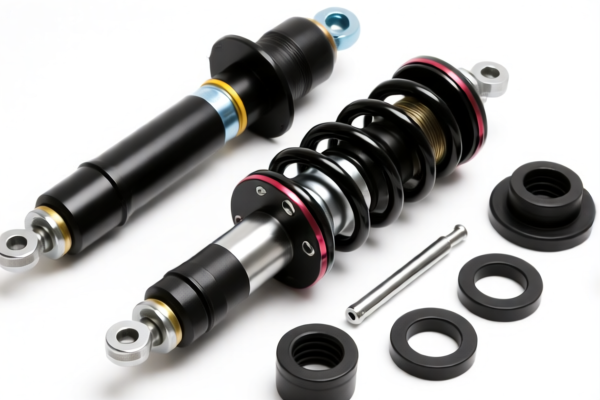
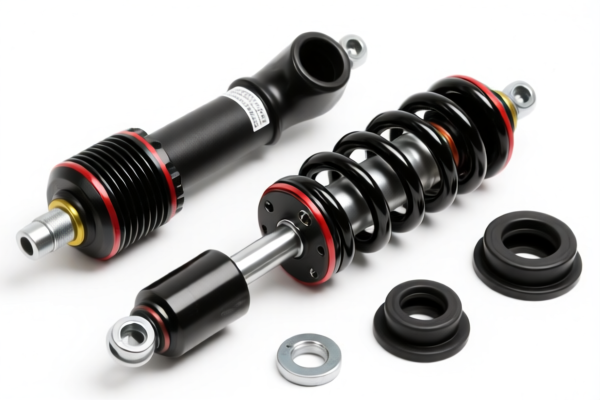
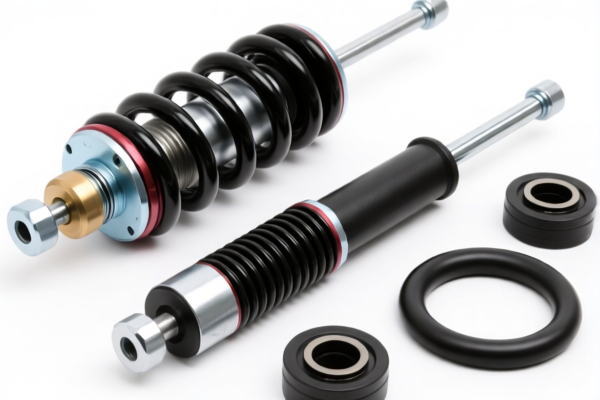
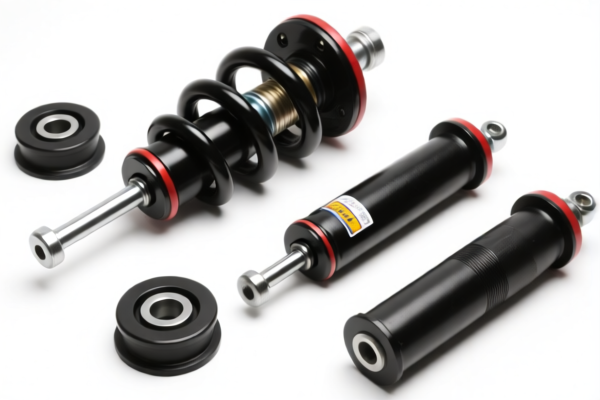
AI Analysis
🚗 Vehicle Rubber Parts: The Ultimate Clearance Guide | 2026 HS Code & Tax Breakdown
🌐 HS Code Reference & Customs Clearance Strategy | 2026 Latest Tariff Analysis | Professional Compliance Guide
📌 I. Product Definition: What Exactly Are "Vehicle Rubber Parts"?
Vehicle Rubber Parts are essential components in automotive manufacturing, used for sealing, vibration damping, fluid transportation, and grip. In international trade, these parts are often misclassified because they fall into multiple HS chapters depending on material composition, specific function, and whether they are considered "mechanical parts."
⚠️ Key Classification Logic:
- If the part is primarily vulcanized rubber and not specifically defined elsewhere → Chapter 40 (Rubber)
- If the part is considered a general plastic component without specific rubber definition → Chapter 39 (Plastics)
- If the part is deemed a mechanical accessory for engines/machinery (less common for pure rubber) → Chapter 84 (Machinery)
📦 II. HS Code Classification Details (2026 Latest Tariff Authority Comparison)
Based on the provided data, here are the 5 potential HS codes for "Vehicle Rubber Parts," ranked by logical fit and cost efficiency.
| HS Code | Product Description | Matching Logic | Total Tax Rate |
|---|---|---|---|
4016.99.60.50 |
Other vulcanized rubber articles, other | Best Fit: Name contains "Rubber" (matches vulcanized rubber material); "Vehicle Parts" fits the "Other" catch-all category for rubber products with no material conflict. | 37.5% |
4016.99.60.10 |
Other vulcanized rubber articles, other | Strong Fit: Matches material (Rubber) & Form (Parts/Accessories); uses "Default Tendency for Accessories" rule since specific use is not detailed. | 37.5% |
3926.90.59.00 |
Other articles of plastics | Fallback Option: Considered "Accessories/Components"; although material is plastic (not rubber), Chapter 39 is a "catch-all" for polymers. High logical relevance to rubber as both are polymer materials. | 37.4% |
8431.49.90.38 |
Parts suitable for use solely or principally with machinery of heading 8425–8430 | Risk High: Matches "Accessory/Part" form; but "Rubber" has no specific material conflict in "Other" categories. Note: High tax due to steel/aluminum/copper surcharges if mixed. | 85.0% |
8431.49.90.90 |
Other parts suitable for use solely or principally with machinery of heading 8425–8430 | Risk High: Same as above; "Parts" match + "Rubber" in "Other" category. High risk of misclassification if the part is purely rubber and not a mechanical assembly. | 85.0% |
🔍 Key Takeaway:
- Chapters 40 & 39 are significantly cheaper (37-37.5%) than Chapter 84 (85%).
- Misclassification Risk: Declaring rubber parts as "Machinery Parts" (Chapter 84) triggers higher tariffs due to specific surcharges.
- Best Choice:4016.99.60.50or4016.99.60.10are the most legally sound for pure rubber components.
💰 III. 2026 Detailed Tariff Rate Explanation (Including Surcharges)
✅ Applicable Country: United States (US)
✅ Origin: China (CN)
✅ Effective Date: 2025/2026 Import Cycle
🎯 1. 4016.99.60.50 & 4016.99.60.10 —— Vulcanized Rubber Articles (Recommended)
| Item | Content |
|---|---|
| Base Tariff | 2.5% (ad valorem) |
| Section 301 Surcharge | +25.0% (USITC Footnote for Chinese goods) |
| IEEPA Surcharge | +10% (Targeting Chinese/Hong Kong products) |
| Total Tax Rate | 37.5% |
| Tax Calculation | CIF Value × 37.5% |
| De Minimis Eligibility | ❌ No (Denied) |
| Legal Path | Base: 4016 → Section 301: 25% → IEEPA: 10% |
📌 Explanation:
- These codes fall under Chapter 40 (Rubber).
- The 37.5% total includes the base tariff (2.5%) plus the heavy Section 301 (25%) and IEEPA (10%) surcharges.
- This is the most cost-effective and compliant classification for rubber parts.
🎯 2. 3926.90.59.00 —— Other Articles of Plastics (Fallback)
| Item | Content |
|---|---|
| Base Tariff | 2.4% |
| Section 301 Surcharge | +25.0% |
| IEEPA Surcharge | +10% |
| Total Tax Rate | 37.4% |
| Tax Calculation | CIF Value × 37.4% |
| De Minimis Eligibility | ❌ No |
| Legal Path | Base: 3926 → Section 301: 25% → IEEPA: 10% |
📌 Note:
- Only use this if the part is not purely rubber or if customs accepts it as a "general polymer accessory."
- Slightly cheaper (0.1%) than Chapter 40, but higher compliance risk if material is clearly rubber.
🎯 3. 8431.49.90.38 & 8431.49.90.90 —— Machinery Parts (High Risk)
| Item | Content |
|---|---|
| Base Tariff | 0.0% |
| Section 301 Surcharge | +25.0% |
| IEEPA Surcharge | +10% |
| Steel/Aluminum/Copper Surcharge | +50.0% (If applicable) |
| Total Tax Rate | 85.0% |
| Tax Calculation | CIF Value × 85.0% |
| De Minimis Eligibility | ❌ No |
📌 Warning:
- These codes are for mechanical parts. If you declare rubber gaskets or seals as "machinery parts," you may trigger the 50% steel/aluminum surcharge if any metal components are present.
- Avoid unless the part is a complex mechanical assembly containing significant metal. Pure rubber parts should NOT go here.
🛠️ IV. Customs Clearance Practical Advice (Pitfall Avoidance Guide)
✅ 1. Required Documentation Checklist
| Document | Mandatory | Notes |
|---|---|---|
| ✅ Product Specification Sheet | ✔️ | Must clearly state material (e.g., "Vulcanized Rubber, EPDM, NBR") and function. |
| ✅ Material Certificate | ✔️ | Proof of rubber composition to support Chapter 40 classification. |
| ✅ Commercial Invoice | ✔️ | Description should be precise: "Vehicle Rubber Seal, Not Mechanical Part." |
| ✅ Packing List | ✔️ | Ensure no mixed shipments with steel parts that could trigger surcharges. |
| ✅ HS Code Pre-ruling | ✔️ | Highly recommended to lock in 4016.99.60.50 and avoid audits. |
✅ 2. Declaration Tips (Golden Rules)
🔥 "Material First, Function Second, Avoid 'Machinery'!"
| Scenario | Correct Declaration | Wrong Practice |
|---|---|---|
| Rubber Gasket/Seal | 4016.99.60.50 |
Declaring as "Auto Part" → Leads to audit |
| Rubber Hose | 4016.99.60.50 |
Declaring as "Machinery Part" → 85% Tax! |
| Rubber Bumper (Pure) | 4016.99.60.50 |
Declaring as "Plastic Article" → Risky |
| Mixed Rubber/Metal Part | Check metal content | If >50% metal, may need Chapter 84 |
✅ 3. Special Cases
| Scenario | Advice |
|---|---|
| OEM Vehicle Parts | Provide OEM contract + part number; ensure description matches "Rubber," not "Assembly." |
| Tires vs. Parts | Tires are Chapter 40.11-40.12; Accessories are Chapter 40.16. Do not confuse! |
| Recycled Rubber | Same code, but may require additional environmental compliance documents. |
🌍 V. Global Market Comparison (2026)
| Country | Recommended HS Code | Tax Rate (China Origin) | Key Requirement |
|---|---|---|---|
| 🇺🇸 USA | 4016.99.60.50 |
37.5% | Section 301 + IEEPA apply |
| 🇨🇳 China | 4016.99.60.50 |
~5-10% (Varies) | No surcharges |
| 🇪🇺 EU | 4016.99.90 |
0-6.5% | CE/REACH compliance |
| 🇲🇽 Mexico | 4016.99.99 |
0% (Under USMCA if processed) | Proof of Origin |
📌 Conclusion:
- The US market is the most expensive due to 37.5% combined tariffs.
- Misclassifying as Machinery Parts (85%) is a critical error that can triple your costs.
- Always prioritize Chapter 40 for pure rubber components.
📌 VI. Common Mistakes & Pitfalls (Lessons Learned)
❌ Mistake 1: Declaring rubber gaskets as "Auto Accessories" without specifying material.
👉 Result: Customs may apply general "Other Parts" rate or audit for fraud.
❌ Mistake 2: Using 8431 codes for rubber parts to avoid "higher base rates."
👉 Result: 85% Tax! Base rate is 0%, but surcharges make it 85%. Never do this for rubber.
❌ Mistake 3: Ignoring the IEEPA 10% surcharge in cost calculations.
👉 Result: Underestimating landed cost by 10%. Always include IEEPA in CIF calculations.
✅ Correct Practice:
"Vulcanized Rubber Seal for Vehicle Engine, Model XYZ, 100% Rubber, No Metal Components"
🎯 VII. Conclusion: Professional Classification Saves Money!
🎯 Remember This Formula:
🔹 Pure Rubber = Chapter 40 (37.5%)
🔹 Mixed/Mechanical = Chapter 84 (85%)
🔹 Never Guess! Get an HS Code Pre-Ruling.
📌 Pro Tip:
If your vehicle parts are manufactured in Vietnam, Mexico, or Thailand, you may qualify for IEEPA exemptions or lower rates under trade agreements (USMCA, FTAA).
Action Step:
📞 Consult a customs broker + Submit product photos + Apply for Advance Ruling
🚀 Ensure smooth clearance, minimize tax burden, and maximize profit margins!
✨ Professional Clearance Starts with Accurate Classification!
💼 Every Percentage Point Counts in 2026 Tariffs!
Customer Reviews
About HS Code Classification
The Harmonized System (HS) is an internationally standardized nomenclature developed by the World Customs Organization (WCO) to classify traded products. Over 200 countries use the HS system as the basis for customs tariffs, trade statistics, and import/export regulations.
Each HS code follows a hierarchical structure:
- Chapter (2 digits) — Broad category of goods (e.g., Chapter 84: Machinery and Mechanical Appliances)
- Heading (4 digits) — More specific grouping within the chapter
- Subheading (6 digits) — Internationally standardized breakdown, used by all WCO member countries
- National subdivisions (8-10 digits) — Country-specific extensions for further classification, such as US HTSUS 10-digit codes
Correct HS code classification is essential for smooth customs clearance, accurate duty payment, and compliance with trade regulations. Misclassification can lead to customs delays, overpayment of duties, or penalties.
When importing from CN to US, the applicable tariff rates may include:
- Most-Favored-Nation (MFN) rate — The standard duty rate applied to WTO members
- General rate — Applied to countries without trade agreements
- Trade remedy duties — Additional tariffs such as Section 301 (anti-dumping), Section 232 (national security), or countervailing duties
The information provided on this page is for reference purposes only. For official classification, please consult with your local customs authority or a licensed customs broker.