Vehicle Socket Wrench for Repair
CN → US| HS Code | Tariff Rate | Origin | Destination | Doc |
|---|---|---|---|---|
| 8204110030 | 44.0% | CN | US | Official Doc |
| 8205513060 | 38.7% | CN | US | Official Doc |
| 8205906000 | 0.0% | CN | US | Official Doc |
| 8204200000 | 44.0% | CN | US | Official Doc |
Product Images
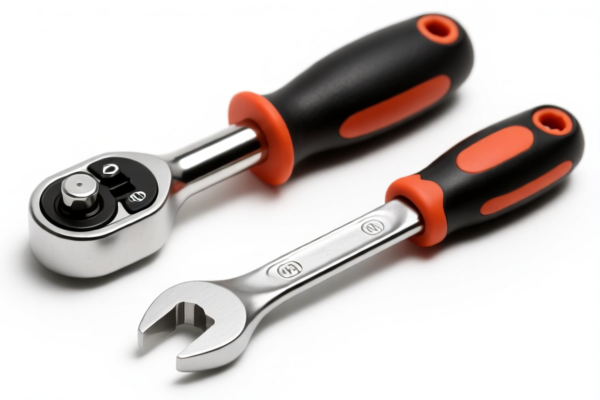
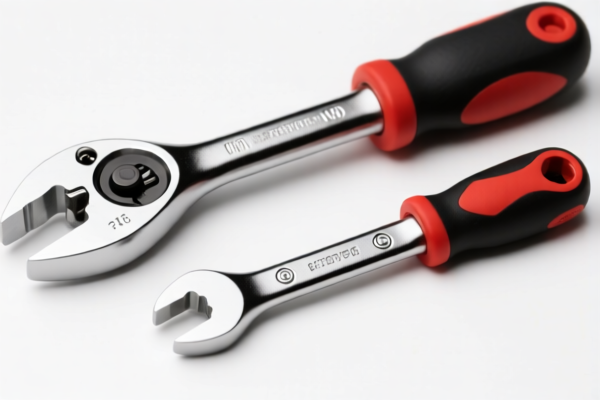
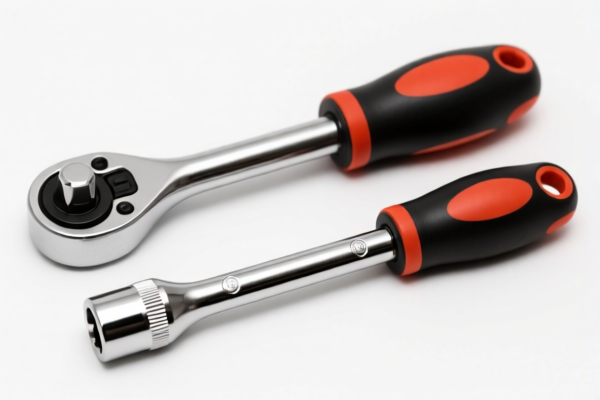
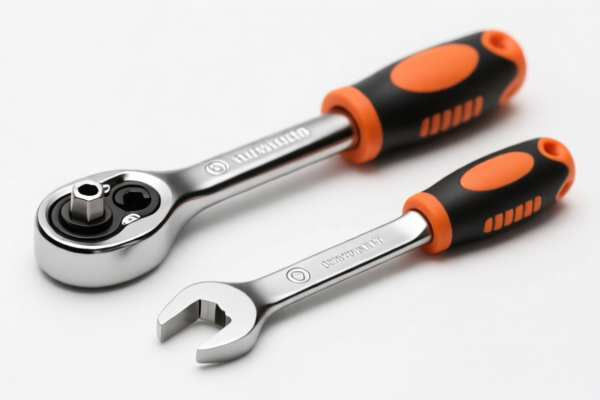
AI Analysis
🛠️ Vehicle Socket Wrench Sets for Repair (Hand Tools)
🌐 HS Code Reference & Customs Clearance Guide | 2026 Latest Tariff Analysis | Professional Clearance Strategy for USA/China Trade
📌 I. Product Definition & Classification: Do You Really Understand "Socket Wrench Sets"?
A "Vehicle Socket Wrench" (typically a socket wrench set or ratchet set) is a fundamental mechanical tool used for automotive repair and industrial maintenance. In international trade, classification depends heavily on material composition, configuration, and specific design.
It is generally categorized into two main types:
1. Powered/Drivable Socket Sets (Power Tool Accessories):
- If the set includes a pneumatic or electric drive mechanism (not just the socket head), it might fall under power tool accessories.
- However, standard "Vehicle Socket Wrench" implies manual hand tools.
2. Manual Socket & Ratchet Sets (Hand Tools):
- Consisting of sockets, ratchets, extensions, and possibly a carrying case.
- Key Distinction: Are they classified by their specific shape (chucks/ratchets) or as a mixed set of various hand tools?
⚠️ Critical Classification Point:
- If the set is predominantly a ratchet drive or socket specifically designed for mechanical fastening → Likely 8204.11 or 8204.20.
- If it is a mixed set containing multiple types of hand tools (screwdrivers, pliers, AND sockets) → Likely 8205 (Miscellaneous Hand Tools).
- Material Matters: Most are steel/alloy. The duty rate calculation must account for Section 301 (25%) and IEEPA (10%) surcharges for Chinese origin goods entering the US.
📦 II. HS Code Classification Details (2026 Latest Tariff Authority Comparison)
Based on the provided data <DATA>, here are the four possible HS Codes for "Vehicle Socket Wrench Sets," their summaries, and the corresponding tax implications.
| HS Code | Summary / Classification Logic | Total Tax Rate (China Origin → US) | Tax Detail Breakdown |
|---|---|---|---|
8204.11.00.30 |
Socket Wrench Sets (Chucks): Classified as a type of wrench tool. Purpose aligns with wrenches; no material conflict. | 44.0% | Base Tariff: 9.0% Surcharge (Sec 301): 25.0% IEEPA (122 Clause): 10% |
8205.51.30.60 |
Parts/Components of Hand Tools: Classified as components or combinations of hand tools; made of iron or steel. | 38.7% | Base Tariff: 3.7% Surcharge (Sec 301): 25.0% IEEPA (122 Clause): 10% |
8205.90.60.00 |
Miscellaneous Manual Tool Sets: Classified as a manual tool combination set made of metal. | Variable + 35.0% | Base Tariff: Rate applicable to specific article in set Surcharge (Sec 301): 25.0% IEEPA (122 Clause): 10% |
8204.20.00.00 |
Socket Wrenches & Components: Specifically matches the form and purpose of socket wrenches and their assemblies. | 44.0% | Base Tariff: 9.0% Surcharge (Sec 301): 25.0% IEEPA (122 Clause): 10% |
🔍 Key Insight:
- 8204.11.00.30 and 8204.20.00.00 are highly similar (both 44% total). The choice depends on whether customs views it as a "ratchet chuck" (8204.11) or a general "socket wrench assembly" (8204.20).
- 8205.51.30.60 offers a lower base tariff (3.7%) but is strictly for "parts/components" or if classified under "other hand tools." This is often a lower-risk option if the set is not exclusively a ratchet-type wrench.
- 8205.90.60.00 has a complex base rate ("applicable to that article") but the fixed surcharges (25% + 10% = 35%) remain constant. This code is typically used for mixed sets (e.g., sockets + screwdrivers + pliers).
💰 III. 2026 Latest Tariff Rate Details (Including Surcharges & Policy Add-ons)
✅ Applicable Country: United States (US)
✅ Origin: China (CN)
✅ Effective Time: Current rates include Section 301 (25%) and IEEPA (10%) surcharges.
🎯 1. 8204.11.00.30 & 8204.20.00.00 —— The "Standard Wrench" Classification
These two codes are functionally similar for clearance purposes.
| Item | Content |
|---|---|
| Base Tariff | 9.0% (ad valorem) |
| Section 301 Surcharge | +25% (USITC Footnote 9903.88.01) |
| IEEPA Surcharge | +10% (Targeting Chinese products, effective Nov 2025) |
| Total Effective Rate | 44.0% |
| Tax Calculation | CIF Value × 44% |
| De Minimis Exemption | ❌ Not Eligible (De minimis does not apply to Section 301/IEEPA goods) |
| Legal Basis Path | USITC:8204.11/8204.20 → SECTION_301:25% → IEEPA:10% |
📌 Explanation:
- Both codes fall under Chapter 82 (Tools of Base Metal).
- The 44% rate is high but predictable.
- Customs may scrutinize the difference between 8204.11 (chucks) and 8204.20 (socket wrenches). If the set is a ratchet handle with interchangeable sockets, either may apply, but consistency is key.
🎯 2. 8205.51.30.60 —— The "Parts/Components" or "Steel Hand Tool" Classification
| Item | Content |
|---|---|
| Base Tariff | 3.7% (ad valorem) |
| Section 301 Surcharge | +25% |
| IEEPA Surcharge | +10% |
| Total Effective Rate | 38.7% |
| Tax Calculation | CIF Value × 38.7% |
| De Minimis Exemption | ❌ Not Eligible |
| Legal Basis Path | USITC:8205.51 → SECTION_301:25% → IEEPA:10% |
📌 Explanation:
- This code is advantageous if the product is classified as "parts of hand tools" or "miscellaneous hand tools of iron/steel."
- Risk: Customs may reject this if the item is a complete, functional wrench set, arguing it belongs in Chapter 82.04. However, many importers use this code for bulk socket sets to save ~5.3% in total duty.
- Strategy: Ensure the commercial invoice describes it as "Socket Set Components" or "Hand Tool Set (Iron/Steel)" to support this classification.
🎯 3. 8205.90.60.00 —— The "Mixed Tool Set" Classification
| Item | Content |
|---|---|
| Base Tariff | Variable (Rate applicable to the dominant article in the set) |
| Section 301 Surcharge | +25% |
| IEEPA Surcharge | +10% |
| Total Effective Rate | (Base Rate + 35.0%) |
| Tax Calculation | CIF Value × (Base Rate + 35%) |
| De Minimis Exemption | ❌ Not Eligible |
📌 Explanation:
- This code is for "Other" hand tools, often used when the set contains multiple types of tools (e.g., a mechanic’s kit with sockets, wrenches, and screwdrivers).
- The base rate depends on the primary component. If the set is mostly metal sockets, the base might be higher.
- Savings Opportunity: If the base rate is low (e.g., 0-5%), this could be cheaper than 8204 codes. However, it requires careful documentation to prove it’s a "set."
🛠️ IV. Customs Clearance Practical Advice (Field Avoidance Guide)
✅ 1. Documentation Checklist (Mandatory)
| Document | Must Provide | Notes |
|---|---|---|
| ✅ Commercial Invoice | ✔️ | Clearly state: "Vehicle Socket Wrench Set," Material (Steel/Alloy), Quantity, CIF Value. |
| ✅ Packing List | ✔️ | Detail each item in the set (e.g., "1x Ratchet Handle, 20x Sockets"). |
| ✅ Product Photos | ✔️ | Show the full set, individual components, and any branding/labels. |
| ✅ Material Declaration | ✔️ | Confirm "Iron or Steel" to support 8205.51 or 8204 classification. |
| ✅ Country of Origin | ✔️ | "Made in China" triggers 301+IEEPA taxes. |
| ✅ HS Code Pre-Ruling | ✔️ | Recommended to lock in 8204 vs 8205 classification. |
✅ 2. Declaration Tips (Key Mantras)
🔥 "Match the Shape, Declare the Material, Avoid Mixed Sets if Possible!"
| Scenario | Correct Declaration | Wrong Practice |
|---|---|---|
| Pure Socket Set (Ratchet + Sockets) | 8204.11.00.30 or 8204.20.00.00 |
Misdeclare as "Hardware" → 8205 (Risk of Rejection) |
| Mixed Mechanic’s Kit (Sockets + Screwdrivers) | 8205.90.60.00 |
Declare as "Wrench" only → Classification Error |
| Individual Sockets (Not a Set) | 8205.51.30.60 (as parts) |
Declare as "Set" → Higher Duty |
| Non-Steel (e.g., Aluminum Case Only) | Different Chapter | Declare as Steel → Seizure Risk |
✅ 3. Special Case Handling
| Situation | Handling Advice |
|---|---|
| OEM/Custom Sets | Provide customer design specs. If it’s a unique shape, consider 8205.90 (Miscellaneous). |
| Plastic Case Included | The case is not part of the HS Code classification for the tool itself. Declare tools separately. |
| Kit with Power Drill | If it includes an electric drill, it falls under Chapter 85 (Electrical Machinery), NOT 82! Tax rates differ significantly. |
| High-Value Sets | Consider Section 301 Exclusions if available (check USTR list), but IEEPA 10% is hard to exclude. |
🌍 V. Global Market Comparison (2026 Latest)
| Country/Region | Recommended HS Code | Estimated Duty (China Origin) | Certification | Notes |
|---|---|---|---|---|
| 🇺🇸 USA | 8204.11.00.30 / 8204.20.00.00 |
44.0% | None specific | High due to 301+IEEPA. 8205 may be 38.7%. |
| 🇨🇳 China | 8204.20.00.00 |
5-6% | CCC (if applicable) | Low duty, no surcharges. |
| 🇪🇺 EU | 8204.20.00.00 |
0-4% | CE (if electrical) | No major surcharges. |
| 🇬🇧 UK | 8204.20.00.00 |
0-4% | UKCA | Post-Brexit rates similar to EU. |
| 🇨🇦 Canada | 8204.20.00.00 |
0-5% | None | CUSMA preferential rates if Mexican/Canadian made. |
📌 Conclusion:
- USA is the most expensive market due to the 35% total surcharge (25% + 10%).
- Optimization Strategy: If your product is a mixed kit, consider 8205.90.60.00 to potentially lower the base rate, but ensure it’s legally a "set." If it’s a pure wrench set, 8204 is safer.
- 8205.51.30.60 is the sweet spot (38.7%) if customs accepts it as "parts/components" or "miscellaneous steel tools."
📌 VI. Common Errors & Pitfalls (Lessons Learned)
❌ Error 1: Declaring a "Socket Set" as "Hardware Fasteners" (e.g., bolts/nuts).
👉 Consequence: Seizure for misclassification. Tools ≠ Fasteners.
❌ Error 2: Ignoring the IEEPA 10% Surcharge.
👉 Consequence: Underpayment of duties, leading to penalties and back-taxes.
❌ Error 3: Using 8205.90 for a pure wrench set without justification.
👉 Consequence: Customs may reclassify to 8204 and charge 44% instead of variable rate, plus penalties.
❌ Error 4: Not specifying "Iron or Steel" on the Invoice.
👉 Consequence: Customs may assume a higher base tariff or reject the 8205.51 classification.
✅ Correct Practice:
"Vehicle Socket Wrench Set, Steel, Ratchet Type, 20-Piece, Model XYZ, Made in China"
🎯 VII. Conclusion: Professional Declaration, Cost Saving!
🎯 Remember the Mantra:
🔹 "Pure Wrench = 8204 (44%)
🔹 "Mixed Set = 8205.90 (Base+35%)
🔹 "Parts/Steel Components = 8205.51 (38.7%)"
🔹 "IEEPA 10% is Non-Negotiable for China Origin!"
📌 Pro Tip:
- Apply for an HS Code Pre-Ruling from US CBP if importing large volumes. This locks in the classification and prevents future disputes.
- Negotiate Incoterms: Use DAP (Delivered at Place) to ensure the buyer handles US customs duties correctly.
📣 Immediate Action:
📞 Consult a Licensed Customs Broker + Provide Product Images + Confirm Material Composition
🚀 Clear Your Vehicle Socket Wrenches Smoothly, Maximize Profit Margins, Avoid Delays!
✨ Professional Clearance Starts with Accurate Classification!
💼 Every Percent of Duty Saved is Pure Profit!
Customer Reviews
About HS Code Classification
The Harmonized System (HS) is an internationally standardized nomenclature developed by the World Customs Organization (WCO) to classify traded products. Over 200 countries use the HS system as the basis for customs tariffs, trade statistics, and import/export regulations.
Each HS code follows a hierarchical structure:
- Chapter (2 digits) — Broad category of goods (e.g., Chapter 84: Machinery and Mechanical Appliances)
- Heading (4 digits) — More specific grouping within the chapter
- Subheading (6 digits) — Internationally standardized breakdown, used by all WCO member countries
- National subdivisions (8-10 digits) — Country-specific extensions for further classification, such as US HTSUS 10-digit codes
Correct HS code classification is essential for smooth customs clearance, accurate duty payment, and compliance with trade regulations. Misclassification can lead to customs delays, overpayment of duties, or penalties.
When importing from CN to US, the applicable tariff rates may include:
- Most-Favored-Nation (MFN) rate — The standard duty rate applied to WTO members
- General rate — Applied to countries without trade agreements
- Trade remedy duties — Additional tariffs such as Section 301 (anti-dumping), Section 232 (national security), or countervailing duties
The information provided on this page is for reference purposes only. For official classification, please consult with your local customs authority or a licensed customs broker.