Veneer Peeling Machine
CN → US| HS Code | Tariff Rate | Origin | Destination | Doc |
|---|---|---|---|---|
| 8465960030 | 19.9% | CN | US | Official Doc |
| 8465990230 | 37.4% | CN | US | Official Doc |
Product Images
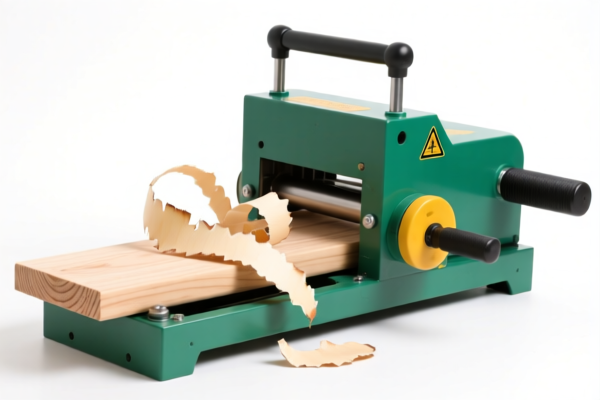
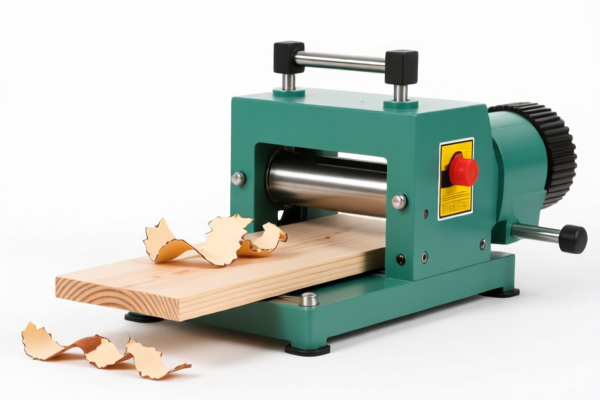
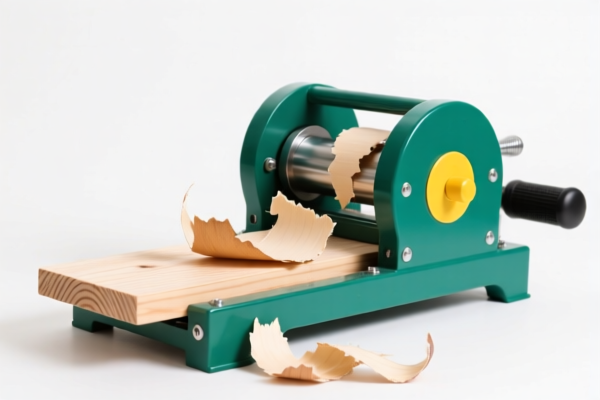
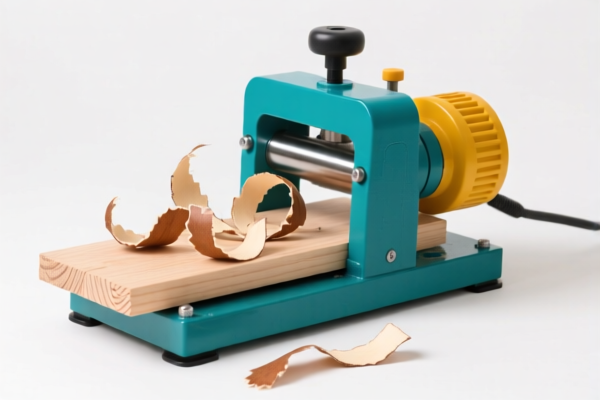
AI Analysis
🪵 Veneer Peeling Machine (Woodworking Machinery)
🌐 HS Code Reference & Customs Clearance Guide | 2026 Latest Tariff Analysis | Professional Clearance Strategy
📌 I. Product Definition & Classification: What is a "Veneer Peeling Machine"?
A Veneer Peeling Machine is a specialized industrial machine tool designed to rotate a log against a stationary knife to peel off continuous sheets of wood veneer. It is a critical component in plywood and laminated wood manufacturing.
In international trade, it falls under Chapter 84 (Nuclear reactors, boilers, machinery and mechanical appliances). Specifically, it is classified under heading 8465 ("Machine tools... for working wood...").
⚠️ Key Classification Distinction:
- If the machine is specifically designed for splitting, slicing, or paring wood veneers (often associated with rotary peeling or specific slicing mechanisms for veneer production), it is classified under 8465.96.
- If the machine is a general woodworking machine not specifically listed as splitting/slicing/paring (e.g., general planing, sawing, or other woodworking operations), it falls under 8465.99.
- Crucial Note: The provided data explicitly links "Veneer Peeling" or related specific woodworking splitting/slicing actions to code 8465.96.00.30. However, general "Other Woodworking Machines" not fitting the specific description of splitting/paring are under 8465.99.02.30.
📦 II. HS Code Classification Details (Based on Provided Data)
The provided dataset contains two specific HS Codes relevant to woodworking machinery. Below is the detailed breakdown:
| HS Code | Product Description | Applicable Scenario | Key Feature |
|---|---|---|---|
8465.96.00.30 |
Splitting, slicing or paring machines for woodworking | Machines specifically designed to peel, slice, or pare wood veneer or logs into sheets. | ✅ Specific to slicing/paring/peeling action |
8465.99.02.30 |
Other Woodworking machines (Other) | General woodworking machines not fitting the "splitting/slicing/paring" specific category (e.g., planing, sanding, drilling). | ✅ General woodworking machinery |
🔍 Important Clarification:
- HS Code 8465.96.00.30 is the primary candidate for machines explicitly performing the peeling, slicing, or paring function to produce veneer.
- HS Code 8465.99.02.30 is a residual category for other woodworking machines that do not perform splitting, slicing, or paring.
- Do not confuse with general saws or planers which may fall elsewhere if not for wood processing specifically listed under 8465.
💰 III. 2026 Latest Tariff Rate Details (Tax Breakdown)
✅ Applicable Region: United States (US)
✅ Origin: China (CN)
✅ Data Source: Provided XML Data
🎯 1. 8465.96.00.30 — Splitting, Slicing or Paring Machines for Woodworking (Including Veneer Peeling)
| Item | Content |
|---|---|
| Base Tariff | 0.0% |
| Additional Tariff (Section 301/IEEPA) | 0.0% |
| Total Tax Rate | 0.0% |
| Tax Calculation | CIF Value × 0.0% = $0.00 |
| De Minimis Exemption | ✅ Yes (Since total tax is 0%, de minimis rules are less critical, but general import rules apply) |
| Legal Basis Path | Based on provided data: Total Tax: 0.0% (Base: 0.0%, Additional: 0.0%) |
📌 Explanation:
- According to the provided data, this specific HS Code (8465.96.00.30) currently enjoys a 0% total tariff rate.
- This means there are no additional Section 301 tariffs or IEEPA surcharges applied to this specific classification in the provided dataset.
- Caution: Tariff rates are subject to change. Always verify with the latest USITC or CBP announcements before shipment.
🎯 2. 8465.99.02.30 — Other Woodworking Machines
| Item | Content |
|---|---|
| Base Tariff | 0.0% |
| Additional Tariff (Section 301/IEEPA) | 0.0% |
| Total Tax Rate | 0.0% |
| Tax Calculation | CIF Value × 0.0% = $0.00 |
| De Minimis Exemption | ✅ Yes |
| Legal Basis Path | Based on provided data: Total Tax: 0.0% (Base: 0.0%, Additional: 0.0%) |
📌 Note:
- Like the previous code, this residual category for "Other Woodworking Machines" also shows a 0% total tax rate in the provided data.
- This indicates that, at least according to the given dataset, no additional punitive tariffs are applied to this specific HS Code for imports from China.
🛠️ IV. Customs Clearance Practical Advice (Pitfall Avoidance Guide)
✅ 1. Preparation Checklist (Essential Documents)
| Document | Required | Notes |
|---|---|---|
| ✅ Product Specifications | ✔️ | Must clearly state the machine's function (e.g., "Rotary Veneer Peeling Machine"). |
| ✅ Technical Drawings | ✔️ | To prove the machine performs "slicing/paring/peeling" vs. other actions. |
| ✅ Commercial Invoice | ✔️ | Must accurately describe the goods as "Veneer Peeling Machine" or "Woodworking Machine Tool". |
| ✅ Packing List | ✔️ | Detailed list of parts, especially if shipped disassembled. |
| ✅ Certificate of Origin | ✔️ | If claiming preferential rates in other markets (though US rate is 0% here). |
| ✅ CE/FCC Certificates | ✔️ | If applicable for safety and electromagnetic compliance in the US market. |
✅ 2. Declaration Tips (Key Mnemonics)
🔥 "Function Defines Code, Peeling is 8465.96, Other is 8465.99, Both 0% Tax!"
| Scenario | Correct Declaration | Incorrect Declaration |
|---|---|---|
| Machine explicitly peels/slices wood | 8465.96.00.30 |
Misclassified as general machinery |
| Machine does general woodworking (e.g., sanding) | 8465.99.02.30 |
Misclassified as specific peeling machine |
| Any woodworking machine not in 8465 | Check Chapter 84 elsewhere | Force into 8465 |
✅ 3. Special Considerations
| Situation | Handling Advice |
|---|---|
| Hybrid Machines | If the machine can both peel veneer and perform other operations, classify based on its principal function. If peeling is primary, use 8465.96.00.30. |
| Parts & Accessories | If shipping spare parts (e.g., knives, rollers), ensure they are declared correctly. Parts for specific machines may have different codes. |
| Software Control | If the machine is heavily computer-controlled, it does not automatically change the classification away from 8465 unless it becomes an automatic data processing machine (which is rare for industrial machinery). |
🌍 V. Global Market Comparison (General Context)
| Country/Region | Recommended HS Code | Tariff Rate (China Origin) | Notes |
|---|---|---|---|
| 🇺🇸 United States | 8465.96.00.30 / 8465.99.02.30 |
0.0% (per provided data) | No additional tariffs in this dataset. |
| 🇨🇳 China | 8465.96.00.30 / 8465.99.02.30 |
Varies | Exporters should check Chinese export duties if any. |
| 🇪🇺 European Union | 8465.29.00 (General) |
~0-2.7% | EU tariff schedules differ; this is a general estimate. |
| 🇯🇵 Japan | 8465.29.00 |
~0-2.5% | Verify with Japan Customs. |
📌 Conclusion:
- The provided data shows 0% tariffs for both relevant HS Codes for US imports from China.
- However, always double-check the latest USITC exclusions and Section 301 lists, as these can change annually.
- Ensure the machine's function is clearly described to avoid misclassification, which could lead to delays or audits.
📌 VI. Common Errors & Pitfalls (Lessons Learned)
❌ Error 1: Classifying a Veneer Peeling Machine under general "Woodworking Machinery" (8465.99) without confirming if it fits "Slicing/Paring".
👉 Consequence: Potential misclassification. While both are 0% in this data, accurate classification is legally required.
❌ Error 2: Declaring the machine as "General Machinery" without specifying "Woodworking".
👉 Consequence: Higher duties may apply if classified under incorrect chapters (e.g., 8479 or 8466).
❌ Error 3: Ignoring the specific function of the machine.
👉 Consequence: If the machine also performs sanding or planing, it may need to be classified based on its principal function, or split into multiple declarations if sold as separate units.
✅ Correct Approach:
"Rotary Veneer Peeling Machine, Model XYZ, for Wood Processing, Designed for Slicing/Paring Logs, HS Code 8465.96.00.30"
🎯 VII. Conclusion: Precision Classification for Cost Efficiency
🎯 Remember:
🔹 "Peeling/Slicing = 8465.96.00.30, Other Woodworking = 8465.99.02.30, Both 0% Tax in Provided Data."
🔹 "Function is King: If it peels/slices, use 8465.96. Otherwise, check 8465.99."
📌 Tip:
- Always request an Advance Ruling from US Customs and Border Protection (CBP) if you are unsure about the classification. This provides legal certainty and avoids future disputes.
- Keep all technical documentation available for customs inspections.
📣 Immediate Action:
📞 Consult with a licensed customs broker.
📄 Prepare detailed product descriptions.
🚀 Ensure smooth clearance with accurate HS Code assignment!
✨ Professional clearance starts with precise classification!
💼 Every percentage point matters in global trade!
Customer Reviews
About HS Code Classification
The Harmonized System (HS) is an internationally standardized nomenclature developed by the World Customs Organization (WCO) to classify traded products. Over 200 countries use the HS system as the basis for customs tariffs, trade statistics, and import/export regulations.
Each HS code follows a hierarchical structure:
- Chapter (2 digits) — Broad category of goods (e.g., Chapter 84: Machinery and Mechanical Appliances)
- Heading (4 digits) — More specific grouping within the chapter
- Subheading (6 digits) — Internationally standardized breakdown, used by all WCO member countries
- National subdivisions (8-10 digits) — Country-specific extensions for further classification, such as US HTSUS 10-digit codes
Correct HS code classification is essential for smooth customs clearance, accurate duty payment, and compliance with trade regulations. Misclassification can lead to customs delays, overpayment of duties, or penalties.
When importing from CN to US, the applicable tariff rates may include:
- Most-Favored-Nation (MFN) rate — The standard duty rate applied to WTO members
- General rate — Applied to countries without trade agreements
- Trade remedy duties — Additional tariffs such as Section 301 (anti-dumping), Section 232 (national security), or countervailing duties
The information provided on this page is for reference purposes only. For official classification, please consult with your local customs authority or a licensed customs broker.