Veterinary Film Roll
CN → US| HS Code | Tariff Rate | Origin | Destination | Doc |
|---|---|---|---|---|
| 3701100030 | 38.7% | CN | US | Official Doc |
| 3701100060 | 38.7% | CN | US | Official Doc |
| 3702100060 | 38.7% | CN | US | Official Doc |
| 3702100030 | 38.7% | CN | US | Official Doc |
Product Images
AI Analysis
🐾 Veterinary X-Ray Film & Rolls (Veterinary Diagnostic Imaging Materials)
🌐 HS Code Reference & Customs Clearance Guide | 2026 Latest Tariff Analysis | Professional Compliance Strategy
📌 I. Product Definition & Classification: Are You Sure You Know "Veterinary Film"?
Veterinary X-ray films are essential diagnostic tools in veterinary medicine, used for imaging bones, organs, and soft tissues in animals. In international trade, these products are primarily categorized by their form factor (sheet vs. roll) and specific application (veterinary/medical X-ray).
Sheets (Veterinary X-Ray Film): Pre-cut, rigid or flexible sheets designed for standard radiographic trays; typically used in clinics for routine check-ups.
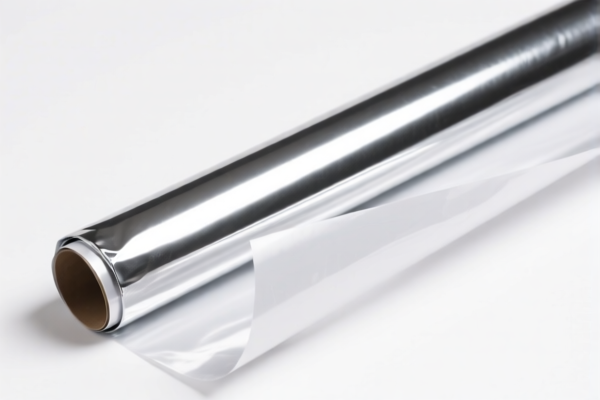
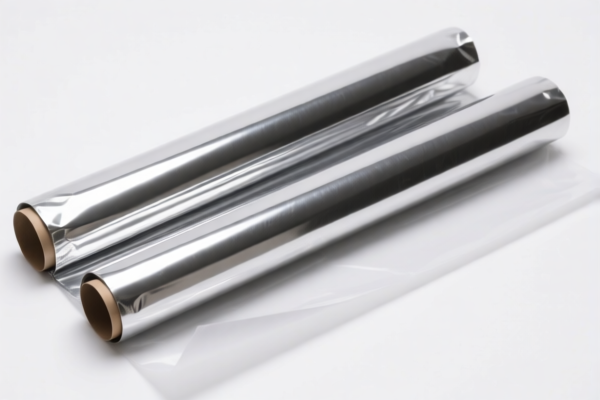
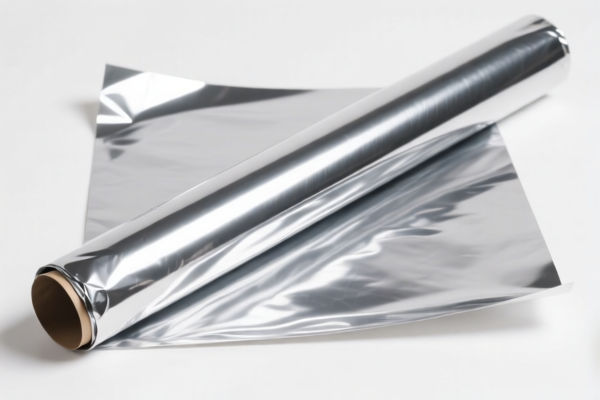
Rolls (Veterinary Film Rolls): Continuous reels of film, often used in larger veterinary hospitals, mobile units, or automated processing systems where bulk usage is required.
⚠️ Key Distinction Point:
- If the product is pre-cut sheets intended for veterinary X-ray → Classified under 3701.10.00.30 or 3701.10.00.60.
- If the product is continuous rolls for veterinary use → Classified under 3702.10.00.60 or 3702.10.00.30.
- Crucial Note: All these classifications fall under "Medical/Veterinary" use, excluding dental X-ray films. Dental films have separate HS codes.
📦 II. HS Code Classification Details (2026 Latest Tariff Authority Comparison)
| HS Code | Product Description | Application Scenario | Form Factor | Dental Use? |
|---|---|---|---|---|
3701.10.00.30 |
Veterinary X-ray film (sheets), non-dental | Routine vet clinic imaging, bone/organ checks | Sheet | ❌ No |
3701.10.00.60 |
Veterinary X-ray film (sheets), for X-ray examination | General medical/veterinary radiography | Sheet | ❌ No |
3702.10.00.60 |
Veterinary film roll (continuous) | Bulk processing, automated systems, mobile vet units | Roll | ❌ No |
3702.10.00.30 |
Veterinary film roll (non-dental) | High-volume veterinary diagnostics | Roll | ❌ No |
🔍 Important Reminder:
- All items described must be explicitly for veterinary or medical X-ray use, not dental.
- If the film is labeled for "Dental X-ray," it cannot use these HS codes.
- The distinction between Sheet (3701) and Roll (3702) is based on physical packaging and intended processing method.
💰 III. 2026 Latest Tariff Rate Breakdown (Including Surcharges & Policy Add-ons)
✅ Applicable Country: United States (US)
✅ Country of Origin: China (CN)
✅ Effective Date: November 10, 2025 (for all subsequent imports)
🎯 1. 3701.10.00.30 & 3701.10.00.60 — Veterinary X-Ray Film Sheets
| Item | Details |
|---|---|
| Base Tariff Rate | 3.7% (ad valorem) |
| Section 301 Surcharge | +25.0% (USITC Footnote 9903.88.01) |
| Section 122 Surcharge | +10.0% (IEEPA-based surcharge for Chinese goods) |
| Total Tariff Rate | 38.7% |
| Tax Calculation | CIF Value × 38.7% |
| De Minimis Exemption | ❌ Not Eligible (deny_de_minimis) |
| Legal Basis Path | IEEPA:9903.01.25 → IEEPA:9903.01.24 → USITC:3701.10.00.30/60 → FOOTNOTE:9903.88.01 |
📌 Explanation:
- Base Tariff 3.7%: Standard duty for photographic films under heading 3701.
- 301 Surcharge 25%: Additional duty imposed on Chinese goods under Section 301 of the Trade Act.
- Section 122 Surcharge 10%: Additional duty under IEEPA for specific Chinese products, including imaging media.
- Total 38.7%: This is a high tariff for medical/veterinary supplies. Cost planning must include this burden.
🎯 2. 3702.10.00.60 & 3702.10.00.30 — Veterinary Film Rolls
| Item | Details |
|---|---|
| Base Tariff Rate | 3.7% (ad valorem) |
| Section 301 Surcharge | +25.0% (USITC Footnote 9903.88.01) |
| Section 122 Surcharge | +10.0% (IEEPA-based surcharge for Chinese goods) |
| Total Tariff Rate | 38.7% |
| Tax Calculation | CIF Value × 38.7% |
| De Minimis Exemption | ❌ Not Eligible (deny_de_minimis) |
| Legal Basis Path | IEEPA:9903.01.25 → IEEPA:9903.01.24 → USITC:3702.10.00.30/60 → FOOTNOTE:9903.88.01 |
📌 Note:
- Rolls and sheets share the same total tariff rate (38.7%) because both are categorized under veterinary/medical X-ray films from China.
- Even if packaged as "rolls" for industrial use, if the end-use is veterinary X-ray, this tariff applies.
- No difference in tax burden between sheet and roll formats for Chinese-origin goods.
🛠️ IV. Customs Clearance Practical Advice (Expert Pitfall Avoidance Guide)
✅ 1. Required Documentation Checklist (Mandatory)
| Document | Must Provide | Explanation |
|---|---|---|
| ✅ Product Specification Sheet | ✔️ | Must specify "Veterinary X-Ray Film," dimensions, sensitivity, and exclude dental use. |
| ✅ Commercial Invoice | ✔️ | Clearly state "Veterinary Diagnostic Imaging Film" or "Veterinary X-Ray Roll." Avoid vague terms like "Photographic Film." |
| ✅ Packing List | ✔️ | Detail whether items are "Sheets" or "Rolls" to ensure correct HS code alignment. |
| ✅ Certificate of Origin (CO) | ✔️ | Confirm Chinese origin; required for accurate tariff calculation. |
| ✅ Usage Declaration Letter | ✔️ | Letter from buyer stating film is for veterinary hospitals, not dental clinics. |
| ✅ Third-Party Test Report | ✔️ | Optional but recommended: Show compliance with environmental/safety standards (if applicable). |
✅ 2. Declaration Tips (Key Mnemonics)
🔥 “Specify Vet Use, Exclude Dental, Roll vs. Sheet Matters, Tax is High!”
| Scenario | Correct Declaration | Wrong Practice |
|---|---|---|
| Veterinary Sheets | 3701.10.00.30 or 3701.10.00.60 |
Misdeclaring as "General Film" → Higher audit risk |
| Veterinary Rolls | 3702.10.00.60 or 3702.10.00.30 |
Misdeclaring as "Dental Film" → Wrong HS Code & Penalty |
| Mixed Pack (Sheets + Rolls) | Declare separately by HS Code | Bundling into one line item → Customs rejection |
| Non-Veterinary (Human Medical) | Different HS Code (e.g., 3006.90) | Using vet codes for human use → Compliance violation |
✅ 3. Special Circumstances Handling
| Situation | Handling Advice |
|---|---|
| OEM Custom Films | Provide buyer’s spec sheet confirming "Veterinary Use Only." |
| Film with Processing Chemicals | Declare chemicals separately if shipped in same container; films go under 3701/3702. |
| Human vs. Vet Use | If film can be used for both humans and animals, declare as Human Medical if higher value or if human use is primary. Vet-specific films must explicitly exclude human/dental use. |
| Dental Film Misclassification | If accidentally declared as vet film but used for dental, Customs may reclassify and penalize. Ensure packaging is vet-labeled. |
🌍 V. Global Market Clearance Comparison (2026 Latest)
| Country/Region | Recommended HS Code | Tariff Rate | Certification Requirements | Notes |
|---|---|---|---|---|
| 🇺🇸 USA | 3701.10.00.30/60 / 3702.10.00.30/60 |
38.7% (China Origin) | None specific | High tariff due to 301 + 122 duties |
| 🇨🇳 China | Same HS Codes | 3.7% (Base) | N/A | No additional surcharges |
| 🇪🇺 EU | 3701.10 or 3702.10 | 6.5% | CE (if applicable) | No US-style surcharges |
| 🇬🇧 UK | 3701.10 or 3702.10 | 6.5% | UKCA | Post-Brexit alignment with EU |
| 🇯🇵 Japan | 3701.10 or 3702.10 | 3.0% | PSE (if electronic components) | Low base duty, no surcharges |
📌 Conclusion:
- USA imposes the highest total tariff (38.7%) on Chinese veterinary X-ray films due to combined Section 301 and Section 122 duties.
- EU, UK, and Japan have significantly lower duties (~3.0–6.5%).
- Cost Strategy: Consider sourcing from non-China origins (e.g., Vietnam, Thailand) to avoid US surcharges, though vet film production is concentrated in Asia.
📌 VI. Common Mistakes & Pitfall Avoidance (Lessons Learned)
❌ Mistake 1: Declaring "Veterinary Film" without specifying "Non-Dental"
👉 Consequence: Customs may suspect dental use, leading to HS code reclassification and penalties.
✅ Fix: Explicitly state "For Veterinary Use Only – Not for Dental" on invoice and packaging.
❌ Mistake 2: Using "Photographic Film" as the product name
👉 Consequence: Customs may classify under general photography HS codes, triggering different tax rates and delays.
✅ Fix: Use precise terms: "Veterinary X-Ray Film Sheet/Roll."
❌ Mistake 3: Assuming De Minimis Exemption Applies
👉 Consequence: Shipments under $800 still face 38.7% duty because veterinary film is excluded from de minimis.
✅ Fix: Budget for full duty payment regardless of shipment value.
❌ Mistake 4: Confusing Sheet (3701) with Roll (3702)
👉 Consequence: Misdeclaration leads to customs hold and potential fines.
✅ Fix: Match physical form (pre-cut vs. continuous) to HS code accurately.
🎯 VII. Conclusion: Professional Declaration Saves Time & Money!
🎯 Remember This Mantra:
🔹 “Vet Use Only, Not Dental, Sheet vs. Roll Matters, 38.7% Tax Awaits!”
🔹 “HS Code Defines Duty, Misclassification Costs Thousands, Clear Declaration Ensures Smooth Clearance!”
📌 Pro Tip:
If your veterinary film is originating from Vietnam, Thailand, or Malaysia, you may be eligible for lower tariffs (0–3.7%) under US Free Trade Agreements or general MFN rates.
Recommendation: Apply for a Pre-Ruling (Advance Ruling) with US Customs before shipping to confirm HS code and tariff applicability.
📣 Immediate Action Required:
📞 Contact a licensed customs broker + Provide Product Specs + Request HS Code Pre-Ruling
🚀 Ensure your veterinary film clears customs smoother, faster, and with minimized costs!
✨ Professional Clearance Starts with Accurate Classification!
💼 Every Percent of Duty Counts – Optimize Your Supply Chain Today!
Customer Reviews
About HS Code Classification
The Harmonized System (HS) is an internationally standardized nomenclature developed by the World Customs Organization (WCO) to classify traded products. Over 200 countries use the HS system as the basis for customs tariffs, trade statistics, and import/export regulations.
Each HS code follows a hierarchical structure:
- Chapter (2 digits) — Broad category of goods (e.g., Chapter 84: Machinery and Mechanical Appliances)
- Heading (4 digits) — More specific grouping within the chapter
- Subheading (6 digits) — Internationally standardized breakdown, used by all WCO member countries
- National subdivisions (8-10 digits) — Country-specific extensions for further classification, such as US HTSUS 10-digit codes
Correct HS code classification is essential for smooth customs clearance, accurate duty payment, and compliance with trade regulations. Misclassification can lead to customs delays, overpayment of duties, or penalties.
When importing from CN to US, the applicable tariff rates may include:
- Most-Favored-Nation (MFN) rate — The standard duty rate applied to WTO members
- General rate — Applied to countries without trade agreements
- Trade remedy duties — Additional tariffs such as Section 301 (anti-dumping), Section 232 (national security), or countervailing duties
The information provided on this page is for reference purposes only. For official classification, please consult with your local customs authority or a licensed customs broker.