Vibration Sleeve
CN → US| HS Code | Tariff Rate | Origin | Destination | Doc |
|---|---|---|---|---|
| 3926209050 | 40.0% | CN | US | Official Doc |
| 3926905900 | 37.4% | CN | US | Official Doc |
| 8483908040 | 37.8% | CN | US | Official Doc |
| 8483905080 | 37.5% | CN | US | Official Doc |
| 4016993000 | 35.0% | CN | US | Official Doc |
| 4016995500 | 37.5% | CN | US | Official Doc |
Product Images
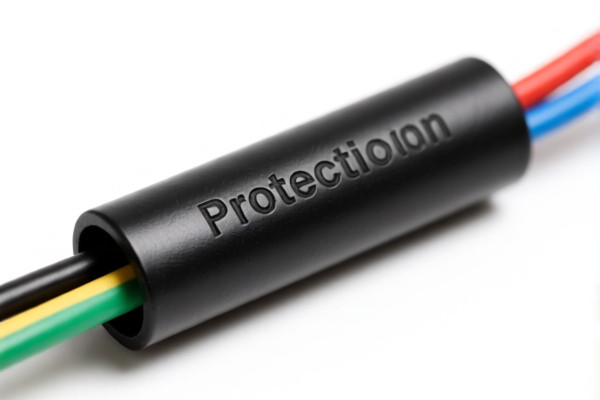
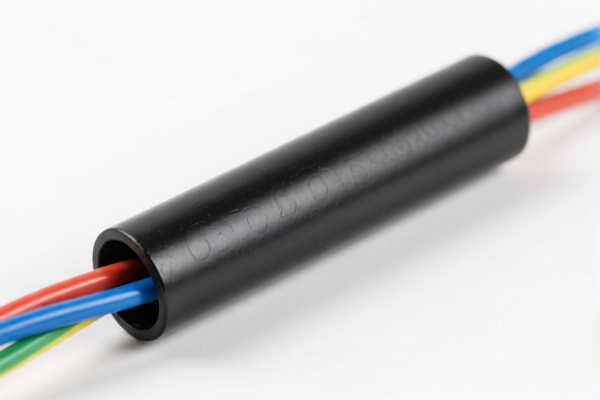

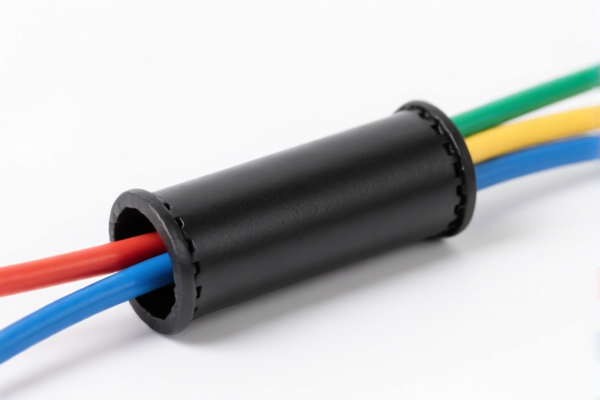
AI Analysis
🛠️ Vibration Sleeve (Vibration Control Goods)
🌐 HS Code Reference & Customs Clearance Guide | 2026 Latest Tariff Analysis | Professional Clearance Strategy
📌 I. Product Definition & Classification: Do You Really Understand "Vibration Sleeves"?
A Vibration Sleeve (often referred to as vibration isolators, rubber mounts, or dampers) is a critical component used to absorb shock and reduce vibrations in machinery and vehicles. In international trade, these items fall under specific sub-categories depending on their material (Natural Rubber vs. Other) and specific application (Vehicle components).
Key Classification Logic:
The Harmonized System (HS) distinguishes between these goods based on the base material and the specific vehicle headings they serve (Headings 8701–8705, which cover tractors, motor vehicles, and certain special-purpose vehicles).
⚠️ Critical Distinction:
- Natural Rubber (NR): If the sleeve is made primarily of natural rubber, it falls under 4016.99.30.00.
- Other Materials (Synthetic Rubber/Plastic): If the sleeve is made of synthetic rubber, thermoplastic elastomers, or other vulcanized rubber types, it falls under 4016.99.55.00.
- Note: The description "Vibration control goods of a kind used in the vehicles of headings 8701 through 8705" is the deciding factor for these specific HS codes.
📦 II. HS Code Classification Details (2026 Latest Tariff Authority Cross-Reference)
| HS Code | Product Description | Applicable Scenario | Material Type | Tax Rate (Total) |
|---|---|---|---|---|
4016.99.30.00 |
Vibration control goods used in vehicles (8701-8705) | Heavy machinery mounts, truck engine mounts, agricultural vehicle dampers | Natural Rubber | 25.0% |
4016.99.55.00 |
Vibration control goods used in vehicles (8701-8705) | General automotive mounts, synthetic rubber isolators, specialized dampers | Other (Synthetic/Non-Natural) | 27.5% |
🔍 Key Reminder:
- Material Matters: You must verify if the primary material is Natural Rubber (NR) or Synthetic Rubber/Other. This single factor determines whether you pay 25.0% or 27.5%. - Vehicle Scope: These codes specifically apply to goods used in vehicles of headings 8701 (Tractors), 8702 (Motor vehicles for transport of persons), 8703 (Motor cars, etc.), 8704 (Motor vehicles for transport of goods), and 8705 (Special purpose vehicles). - Do Not Misclassify: Do not classify general-purpose rubber parts under generic "other articles" if they are specifically designed for these vehicles. Specificity wins!
💰 III. 2026 Latest Tariff Rate Breakdown (Including Additional Duties)
✅ Applicable Country: USA (US)
✅ Country of Origin: China (CN)
✅ Effective Date: Ongoing (Subject to Trade Remedy Laws)
🎯 1. 4016.99.30.00 —— Vibration Control Goods (Natural Rubber)
| Item | Content |
|---|---|
| Base Tariff | 0.0% (Ad Valorem) |
| Section 301 Additional Duty | +25.0% |
| Total Tax Rate | 25.0% |
| Tax Calculation | CIF Value × 25.0% |
| De Minimis Exemption? | ❌ No (Deny De Minimis) |
| Legal Basis | Section 301: 4016.99.30.00 |
📌 Explanation:
- Although the base tariff for rubber articles is often low or zero, the Section 301 tariff applies a 25% surcharge on Chinese-origin rubber goods used in vehicles. - This is a high-cost category for importers. Proper material declaration is crucial to avoid over-payment or misclassification penalties.
🎯 2. 4016.99.55.00 —— Vibration Control Goods (Other Materials)
| Item | Content |
|---|---|
| Base Tariff | 2.5% (Ad Valorem) |
| Section 301 Additional Duty | +25.0% |
| Total Tax Rate | 27.5% |
| Tax Calculation | CIF Value × 27.5% |
| De Minimis Exemption? | ❌ No (Deny De Minimis) |
| Legal Basis | Section 301: 4016.99.55.00 |
📌 Explanation:
- Synthetic rubber or mixed-material vibration sleeves incur the base duty of 2.5% PLUS the 25% Section 301 duty. - The total rate (27.5%) is higher than natural rubber goods.
- Cost Impact: For every $10,000 of goods, you pay $2,750 in duties compared to $2,500 for natural rubber equivalents.
🛠️ IV. Customs Clearance Practical Advice (Practical Pitfall Avoidance Guide)
✅ 1. Required Documentation List (None Missing)
| Document | Mandatory? | Description |
|---|---|---|
| ✅ Product Specification Sheet | ✔️ | Must clearly state material composition (% Natural Rubber vs. Synthetic) |
| ✅ Technical Drawing | ✔️ | Show mounting points, dimensions, and intended vehicle application |
| ✅ Material Declaration | ✔️ | Explicitly state: "100% Natural Rubber" or "Synthetic Rubber EPDM/NBR" |
| ✅ Certificate of Origin (CO) | ✔️ | Essential for proving Chinese origin and applying Section 301 duties |
| ✅ Commercial Invoice | ✔️ | Must use precise HS Code descriptions, not just "Rubber Parts" |
| ✅ Packing List | ✔️ | Clearly separate vibration sleeves from other packaging materials |
✅ 2. Declaration Tips (Key Mnemonics)
🔥 "Material Dictates Rate, Vehicle Defines Code!"
| Scenario | Correct HS Code | Error Consequence |
|---|---|---|
| Natural Rubber Mount for Truck Engine | 4016.99.30.00 |
25.0% |
| Synthetic Rubber Bushing for Car Suspension | 4016.99.55.00 |
27.5% |
| General Rubber Gasket (Not for 8701-8705 vehicles) | Different Code | May face lower rates, but misclassification risk if intended use is vehicles |
| Metal + Rubber Composite | Check Composition | If rubber is essential character, still likely 4016.99.55.00 |
✅ 3. Special Case Handling
| Situation | Handling Advice |
|---|---|
| OEM Parts for Auto Repair | Provide end-user vehicle model (e.g., Ford F-150, John Deere Tractor) to prove use in 8701-8705 vehicles |
| Mixed Shipments | Separate Natural Rubber and Synthetic Rubber items in the packing list to avoid customs scrutiny |
| Pre-Assembly Kits | If the sleeve is pre-assembled into a larger vehicle part, the entire assembly may be classified under the vehicle part code, not the rubber code |
| Sample Imports | Even samples are subject to Section 301 duties; do not declare as "Gift" to bypass |
🌍 V. Global Market Comparison (2026 Latest)
| Country/Region | Recommended HS Code | Tariff (CN Origin) | Certification | Notes |
|---|---|---|---|---|
| 🇺🇸 USA | 4016.99.30.00 / 4016.99.55.00 |
25.0% / 27.5% | None specific | High tariff due to Section 301 |
| 🇨🇳 China | 4016.99.30.00 / 4016.99.55.00 |
~2.5% - 3.0% | CCC (if applicable) | Lower import duties |
| 🇪🇺 EU | 4016.93 / 4016.99 |
0% - 4.5% | REACH / RoHS | No Section 301 equivalent |
| 🇲🇽 Mexico | 4016.99.99 |
0% - 5% | NOM | Potential USMCA benefits if originating |
📌 Conclusion:
- USA is the most expensive market due to Section 301 duties.
- Consider supply chain diversification (e.g., sourcing from Vietnam or Mexico) if targeting the US market to potentially avoid these tariffs.
📌 VI. Common Errors & Pitfall Guide (Lessons Learned)
❌ Error 1: Declaring "Rubber Parts" generically
👉 Consequence: Customs may assign the highest possible duty rate or request additional documentation, causing delays.
❌ Error 2: Misidentifying Material
👉 Consequence: Declaring synthetic rubber as natural rubber to save 2.5% → Audit Risk + Penalties if material test proves otherwise.
❌ Error 3: Ignoring Vehicle Headings
👉 Consequence: If the sleeve is not for 8701-8705 vehicles, it might fall under generic rubber goods with different rates. Incorrect classification leads to underpayment or overpayment.
❌ Error 4: Failing to Declare Section 301 Applicability
👉 Consequence: Automatic application of 25% duty, but failure to declare may lead to compliance flags.
✅ Correct Practice:
"Vibration Isolation Sleeve, Part #XYZ, 100% Natural Rubber, Designed for Heavy-Duty Tractor (Heading 8701), Made in China"
🎯 VII. Conclusion: Precise Classification, Cost Efficiency!
🎯 Remember the Mantra:
🔹 "Natural Rubber = 25%, Synthetic = 27.5%."
🔹 "Vehicle Specificity = Correct HS Code."
🔹 "Declare Material Precisely to Avoid Penalties."
📌 Pro Tip:
If your vibration sleeves are made from Thermoplastic Elastomers (TPE) or other non-rubber materials, they might fall under Chapter 39 (Plastics), such as 3926.90.59.00 (27.4% total tax). Always verify the material composition against Chapter 40 vs. Chapter 39 definitions!
📣 Immediate Action:
📞 Consult with a certified customs broker
📄 Request material test reports from suppliers
🚀 Ensure smooth clearance and optimize your duty costs!
✨ Professional Customs Clearance Starts with Accurate Classification!
💼 Every Percent Saved is Pure Profit!
Customer Reviews
About HS Code Classification
The Harmonized System (HS) is an internationally standardized nomenclature developed by the World Customs Organization (WCO) to classify traded products. Over 200 countries use the HS system as the basis for customs tariffs, trade statistics, and import/export regulations.
Each HS code follows a hierarchical structure:
- Chapter (2 digits) — Broad category of goods (e.g., Chapter 84: Machinery and Mechanical Appliances)
- Heading (4 digits) — More specific grouping within the chapter
- Subheading (6 digits) — Internationally standardized breakdown, used by all WCO member countries
- National subdivisions (8-10 digits) — Country-specific extensions for further classification, such as US HTSUS 10-digit codes
Correct HS code classification is essential for smooth customs clearance, accurate duty payment, and compliance with trade regulations. Misclassification can lead to customs delays, overpayment of duties, or penalties.
When importing from CN to US, the applicable tariff rates may include:
- Most-Favored-Nation (MFN) rate — The standard duty rate applied to WTO members
- General rate — Applied to countries without trade agreements
- Trade remedy duties — Additional tariffs such as Section 301 (anti-dumping), Section 232 (national security), or countervailing duties
The information provided on this page is for reference purposes only. For official classification, please consult with your local customs authority or a licensed customs broker.