Vibration damping Ethylene Elastomer Resin
CN → US| HS Code | Tariff Rate | Origin | Destination | Doc |
|---|---|---|---|---|
| 3901901000 | 35.0% | CN | US | Official Doc |
| 3901905501 | 41.5% | CN | US | Official Doc |
| 3904901000 | 35.0% | CN | US | Official Doc |
| 3904905000 | 41.5% | CN | US | Official Doc |
| 3901909000 | 41.5% | CN | US | Official Doc |
Product Images

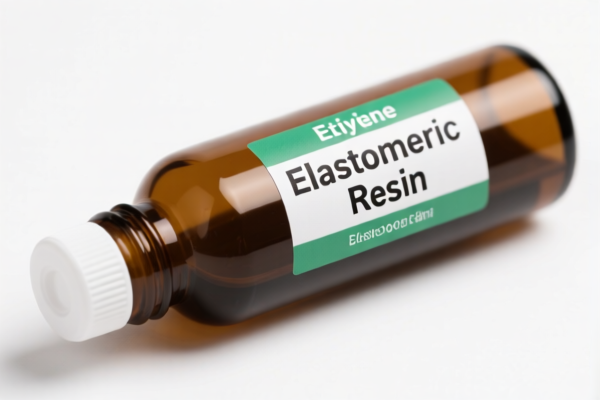


AI Analysis
📦 Vibration Damping Ethylene Elastomer Resin
🌐 HS Code Reference & Customs Clearance Guide | 2026 Latest Tariff Analysis | Professional Clearance Strategy
📌 I. Product Definition and Classification: What is "Vibration Damping Ethylene Elastomer Resin"?
Vibration Damping Ethylene Elastomer Resin is a specialized polymer material designed to absorb shock and reduce noise in industrial and consumer applications. In international trade, its classification depends strictly on its chemical composition, physical form (primary state), and functional additives (flame retardancy).
Based on the provided data, this product falls under Chapter 39 (Plastics and Articles Thereof), specifically as Ethylene Polymers or Vinyl Chloride Polymers, depending on the specific resin matrix. The key distinction lies in whether it is classified primarily as an ethylene copolymer/elasticity or as a vinyl chloride/halogenated olefin polymer.
⚠️ Key Distinction Point:
- If the base resin is Ethylene-based (matching ethylene polymers/elasticity characteristics) →归类 to 3901 series.
- If the base resin is classified under Vinyl Chloride or other halogenated olefin polymers due to specific chemical structure →归类 to 3904 series.
- Crucial Note: All items are in primary form (resin), meaning they are raw materials, not finished molded parts.
📦 II. HS Code Classification Details (2026 Latest Tariff Authoritative Comparison)
| HS Code | Product Description | Application Scenario | Tax Rate (Total) |
|---|---|---|---|
3901.90.10.00 |
Flame-retardant modified ethylene elastomer resin; matches ethylene polymer/elasticity attributes; primary form resin | High-grade ethylene-based vibration damping materials | 35.0% |
3901.90.55.01 |
Flame-retardant modified ethylene elastomer resin; ethylene material; primary shape ethylene copolymer | Standard ethylene copolymer vibration damping resins | 41.5% |
3901.90.90.00 |
Sound-insulating grade ethylene elastomer resin; ethylene elasticity/polymer material; primary form | Premium sound-insulating ethylene resins | 41.5% |
3904.90.10.00 |
Flame-retardant modified ethylene elastomer resin; matches vinyl chloride or other halogenated olefin polymer/elasticity | Halogenated/vinyl-based vibration damping resins | 35.0% |
3904.90.50.00 |
Flame-retardant modified ethylene elastomer resin; ethylene-class polymer; primary form resin | General ethylene-class halogenated polymers | 41.5% |
🔍 Key Reminder:
- The term "Ethylene Elastomer" in the product name can lead to confusion. Customs classifies based on the actual polymer type defined in Section XI of the Harmonized System.
- If the resin is chemically an ethylene copolymer, it goes to 3901.
- If the resin structure aligns with vinyl chloride or halogenated olefins (even if marketed as "ethylene elastomer" for functional reasons), it goes to 3904.
- All codes assume Primary Form (Resin). If melted into pellets or pre-formed shapes, classification may change.
💰 III. 2026 Latest Tariff Rate Details (Including Surcharges and Policy Add-ons)
✅ Applicable Country: United States (US)
✅ Origin: China (CN)
✅ Effective Date: From November 10, 2025 (including subsequent imports)
🎯 1. 3901.90.10.00 —— Flame-Retardant Ethylene Elastomer Resin (Ethylene Polymer Match)
| Item | Content |
|---|---|
| Basic Tariff | 0.0% (ad valorem) |
| USITC Surcharge (Section 301) | +25.0% |
| IEEPA Surcharge (Section 122) | +10.0% |
| Total Tariff | 35.0% |
| Tax Calculation | CIF Value × 35% |
| De Minimis Exemption | ❌ Not Applicable (High tariff threshold) |
| Legal Basis Path | IEEPA:122 → USITC:3901.90.10.00 → FOOTNOTE:Section301 |
📌 Explanation:
- The 0% basic rate applies to general ethylene polymers under 3901.
- The +25% is the standard Section 301 tariff on Chinese plastics.
- The +10% is the additional IEEPA tariff targeting specific Chinese-origin plastics.
- Total 35% is significantly lower than the 41.5% bracket, making this the most cost-effective classification if the material strictly matches ethylene polymer attributes.
🎯 2. 3901.90.55.01 & 3901.90.90.00 —— Ethylene Copolymer / Sound-Insulating Ethylene Resin
| Item | Content |
|---|---|
| Basic Tariff | 6.5% |
| USITC Surcharge (Section 301) | +25.0% |
| IEEPA Surcharge (Section 122) | +10.0% |
| Total Tariff | 41.5% |
| Tax Calculation | CIF Value × 41.5% |
| De Minimis Exemption | ❌ Not Applicable |
| Legal Basis Path | IEEPA:122 → USITC:3901.90.55.01 / 3901.90.90.00 |
📌 Note:
- These subheadings carry a 6.5% basic tariff instead of 0%.
- Even with the same surcharges, the total rate is 41.5%.
- Use this classification only if the material is explicitly defined as "ethylene copolymer" or "sound-insulating grade" with specific chemical properties that do not fit the 0% basic rate category.
🎯 3. 3904.90.10.00 & 3904.90.50.00 —— Vinyl Chloride / Halogenated Olefin Polymer Match
| Item | Content |
|---|---|
| Basic Tariff | 0.0% (3904.90.10.00) / 6.5% (3904.90.50.00) |
| USITC Surcharge (Section 301) | +25.0% |
| IEEPA Surcharge (Section 122) | +10.0% |
| Total Tariff | 35.0% (3904.90.10.00) / 41.5% (3904.90.50.00) |
| Tax Calculation | CIF Value × 35.0% or 41.5% |
| De Minimis Exemption | ❌ Not Applicable |
| Legal Basis Path | IEEPA:122 → USITC:3904.90.10.00 / 3904.90.50.00 |
📌 Crucial Distinction:
- If your "Ethylene Elastomer" is chemically aligned with vinyl chloride or halogenated olefins, it falls under 3904.
-3904.90.10.00offers a 35.0% total rate (0% basic + 35% surcharges).
-3904.90.50.00offers a 41.5% total rate (6.5% basic + 35% surcharges).
- Misclassification here can lead to severe penalties, as the chemical composition must match the description exactly.
🛠️ IV. Customs Clearance Practical Advice (Battle-Tested Pitfall Avoidance)
✅ 1. Required Documentation Checklist (None Can Be Missing)
| Document | Mandatory | Description |
|---|---|---|
| ✅ Technical Data Sheet | ✔️ | Must specify: Polymer type (Ethylene vs. Vinyl Chloride), Primary Form, Flame Retardant Additive % |
| ✅ Certificate of Origin | ✔️ | Essential for applying Section 301/122 surcharges correctly |
| ✅ Commercial Invoice | ✔️ | Must clearly state: "Ethylene Elastomer Resin, Primary Form, Flame Retardant Modified" |
| ✅ Product Photos | ✔️ | Clear images of raw resin/pellets to prove "Primary Form" status |
| ✅ Third-Party Lab Report | ✔️ | IR Spectrum or DSC analysis to confirm chemical composition (Ethylene vs. Halogenated) |
| ✅ Packaging List | ✔️ | Detail gross/net weight, volume, and packaging type |
✅ 2. Declaration Tips (Key Mantra)
🔥 “Form Matters: Resin vs. Finished; Chemistry Dictates Code; Don’t Hide the Flame Retardant!”
| Scenario | Correct Declaration | Wrong Practice |
|---|---|---|
| Raw resin/pellets | 3901.90.10.00 or 3904.90.10.00 |
Declare as "Plastic Parts" → Higher duty + Inspection |
| Ethylene-based | Use 3901 codes | Use 3904 codes → Misclassification risk |
| Vinyl/Halogen-based | Use 3904 codes | Use 3901 codes → Chemical mismatch penalty |
| With Flame Retardant | Explicitly mention in description | Omit additive info → Customs re-evaluation delay |
✅ 3. Special Case Handling
| Scenario | Handling Advice |
|---|---|
| OEM Custom Resin | Provide client specs + chemical formula to prove ethylene vs. vinyl classification |
| Mixed Shipments | Do not mix ethylene and vinyl-based resins in one HS Code entry; declare separately |
| Pre-Formed Shapes | If not in primary form, do NOT use these codes; seek correct chapter (e.g., 3926) |
| High Value Shipments | Apply for Advance Ruling from CBP to lock in HS Code and avoid surprise audits |
🌍 V. Global Market Comparison (2026 Latest)
| Country/Region | Recommended HS Code | Tariff (China Origin) | Certification Req. | Notes |
|---|---|---|---|---|
| 🇺🇸 USA | 3901.90.10.00 / 3904.90.10.00 |
35% (Best Case) | None Specific | High surcharges apply |
| 🇨🇳 China | 3901.90.10.00 |
0%~5% | RoHS | No surcharges |
| 🇪🇺 EU | 3901.90.10.00 |
0% (Most Favored Nation) | REACH | No surcharges |
| 🇦🇺 Australia | 3901.90.10.00 |
5% | RCM | No surcharges |
📌 Conclusion:
- USA has the highest duty burden due to Section 301 and 122 tariffs.
- Optimal Strategy: Aim for 3901.90.10.00 or 3904.90.10.00 to achieve the 35% total rate, avoiding the 6.5% basic rate traps.
- EU/China are tariff-friendly but require strict REACH/RoHS compliance.
📌 VI. Common Errors & Pitfalls (Blood Lessons)
❌ Error 1: Declaring "Ethylene Elastomer" under 3901 when it is chemically a vinyl chloride copolymer
👉 Consequence: Customs reclassifies to 3904, possible penalties for misdeclaration.
❌ Error 2: Ignoring the Flame Retardant Additive in the description
👉 Consequence: Customs may deny the "modified" status or require additional safety data, causing delays.
❌ Error 3: Mixing Primary Form Resin with Finished Parts in one shipment
👉 Consequence: Each item is assessed separately, leading to complex tariff calculations and potential seizure.
❌ Error 4: Using vague terms like "Plastic Granules" without specifying polymer type
👉 Consequence: Customs assigns the highest duty rate by default or initiates an investigation.
✅ Correct Approach:
“Flame-Retardant Modified Ethylene Elastomer Resin, Primary Form, Ethylene Copolymer Base, Model XYZ, Technical Data Sheet Attached”
🎯 VII. Conclusion: Precise Classification Saves Money!
🎯 Remember the Mantra:
🔹 “Ethylene Base = 3901; Vinyl Base = 3904; Primary Form is Key.”
🔹 “35% vs 41.5%: A 6.5% Difference, Worth the Documentation Effort.”
🔹 “Add Surcharges: 25% + 10% = 35% on Top of Basic Rate.”
📌 Pro Tip:
If your resin is ethically sourced from non-China origins (e.g., Malaysia, Singapore, Vietnam), you may qualify for lower or zero tariffs. Always verify the Country of Origin before finalizing the HS Code.
Recommendation: Apply for a CBP Advance Ruling to secure the 35% rate and avoid post-import audits.
📣 Act Now:
📞 Consult a licensed customs broker + Provide Lab Reports + Apply for Advance Ruling
🚀 Ensure your Vibration Damping Ethylene Elastomer Resin clears customs smoothly, efficiently, and cost-effectively!
✨ Professional Customs Clearance Starts with Accurate Classification!
💼 Every Percent Saved is Pure Profit!
Customer Reviews
About HS Code Classification
The Harmonized System (HS) is an internationally standardized nomenclature developed by the World Customs Organization (WCO) to classify traded products. Over 200 countries use the HS system as the basis for customs tariffs, trade statistics, and import/export regulations.
Each HS code follows a hierarchical structure:
- Chapter (2 digits) — Broad category of goods (e.g., Chapter 84: Machinery and Mechanical Appliances)
- Heading (4 digits) — More specific grouping within the chapter
- Subheading (6 digits) — Internationally standardized breakdown, used by all WCO member countries
- National subdivisions (8-10 digits) — Country-specific extensions for further classification, such as US HTSUS 10-digit codes
Correct HS code classification is essential for smooth customs clearance, accurate duty payment, and compliance with trade regulations. Misclassification can lead to customs delays, overpayment of duties, or penalties.
When importing from CN to US, the applicable tariff rates may include:
- Most-Favored-Nation (MFN) rate — The standard duty rate applied to WTO members
- General rate — Applied to countries without trade agreements
- Trade remedy duties — Additional tariffs such as Section 301 (anti-dumping), Section 232 (national security), or countervailing duties
The information provided on this page is for reference purposes only. For official classification, please consult with your local customs authority or a licensed customs broker.