Video Converter
CN → US| HS Code | Tariff Rate | Origin | Destination | Doc |
|---|---|---|---|---|
| 8543908885 | 85.0% | CN | US | Official Doc |
| 8517690000 | 35.0% | CN | US | Official Doc |
| 8517610000 | 17.5% | CN | US | Official Doc |
| 8543906800 | 35.0% | CN | US | Official Doc |
| 8544429090 | 87.6% | CN | US | Official Doc |
Product Images
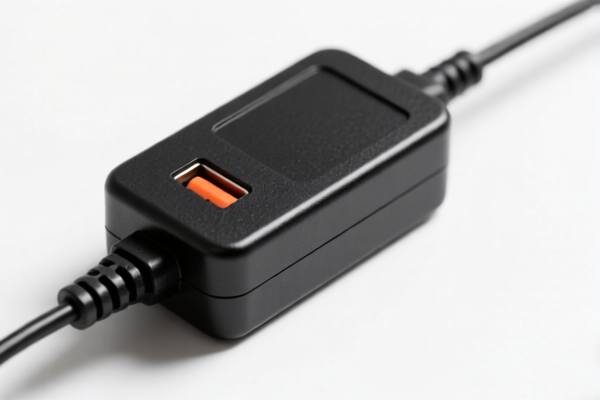

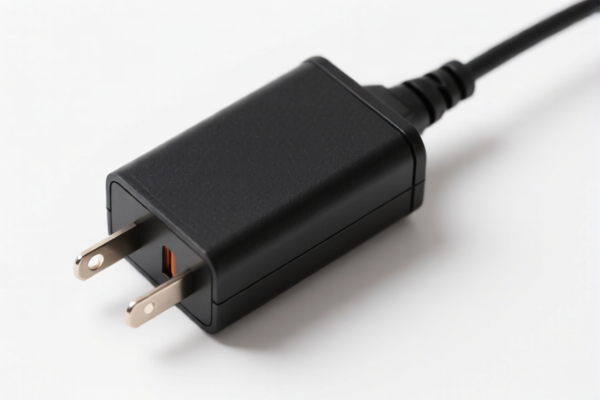

AI Analysis
🔄 Video Converter (HS Code Classification & US Customs Clearance Guide)
🌐 HS Code Reference & Clearance Guide | 2026 Latest Tariff Analysis | Professional Clearance Strategy
📌 I. Product Definition & Classification: What Exactly is a "Video Converter"?
A Video Converter is an electronic device designed to transform video signals from one format or standard to another (e.g., HDMI to SDI, Analog to Digital, or Resolution Upscaling/Downscaling). In international trade, its classification depends heavily on its core function and internal architecture.
According to the provided data, there are five potential HS Codes for Video Converters. The choice among them determines the total tax burden, which can range from 17.5% to 87.6%.
⚠️ Key Distinction Point:
- Is it a general-purpose electrical appliance? → 8543.90.88.85 (Highest Tax)
- Is it primarily for data/image transmission? → 8517.69.00.00 or 8517.61.00.00
- Is it a specific electronic device with printed circuit components? → 8543.90.68.00
- Does it essentially act as a cable/connector assembly? → 8544.42.90.90 (Highest Tax)
📦 II. HS Code Classification Details (Based on Provided Data)
| HS Code | Product Description & Logic | Total Tax Rate | Tax Detail Breakdown |
|---|---|---|---|
8543.90.88.85 |
Video Converter as General Electrical Equipment: Belongs to independent electrical devices with specific functions, falling under the "catch-all" logic of other categories. | 85.0% | Base: 0% Section 301: 25% Section 122: 10% Steel/Aluminum/Copper Surtax: 50% |
8517.69.00.00 |
Video Converter as Data/Image Transmission Device: Classified as equipment for transmitting images and data, fitting the definition of transmission devices. | 35.0% | Base: 0% Section 301: 25% Section 122: 10% |
8517.61.00.00 |
Video Converter as Communication/Base Station Device: Classified as a communication device transmitting/receiving data, fitting the "Base Station" category for data transmission. | 17.5% | Base: 0% Section 301: 7.5% Section 122: 10% |
8543.90.68.00 |
Video Converter as Specific Electronic Circuit Device: A specific electronic device whose core internal architecture belongs to printed circuit components. | 35.0% | Base: 0% Section 301: 25% Section 122: 10% |
8544.42.90.90 |
Video Converter as Connector/Cable Assembly: Infers that the product contains connectors, fitting the characteristics of electric wires/cables with connectors. | 87.6% | Base: 2.6% Section 301: 25% Section 122: 10% Steel/Aluminum/Copper Surtax: 50% |
🔍 Critical Analysis:
- Lowest Tax Option:8517.61.00.00at 17.5%. This classification views the converter as a communication/data transmission device (like a base station component).
- Highest Tax Option:8544.42.90.90at 87.6%. This classification views the converter essentially as a cable/connector, triggering base duties + surtaxes.
- Mid-Range Options:8517.69.00.00and8543.90.68.00both sit at 35.0%.
- Generic Catch-All:8543.90.88.85at 85.0% carries the same heavy surtaxes as the cable classification due to the "Steel/Aluminum/Copper Surtax".
💰 III. 2026 Latest Tariff Rate Details (Including Surtaxes & Policy Add-ons)
✅ Applicable Country: USA (US)
✅ Origin: China (CN)
✅ Effective Time: 2025-11-10 onwards
🎯 1. 8517.61.00.00 —— Best Case: Communication/Data Transmission Device
| Item | Content |
|---|---|
| Base Rate | 0% |
| Section 301 Surtax | +7.5% (Note: Lower than standard 25% for this subheading) |
| Section 122 Surtax | +10% |
| Total Tax Rate | 17.5% |
| Tax Calculation | CIF Value × 17.5% |
| De Minimis Exemption | ❌ Not Applicable |
| Legal Basis Path | USITC:8517.61.00.00 → Section 301 (7.5%) → Section 122 (10%) |
📌 Explanation:
- This is the most favorable classification if the converter can be justified as a communication device (e.g., part of a base station infrastructure or network transmission system).
- The Section 301 rate is only 7.5%, significantly lower than the standard 25%.
- Strategy: If your device is used in professional AV-over-IP, telecom, or network infrastructure, argue for this classification.
🎯 2. 8517.69.00.00 & 8543.90.68.00 —— Middle Ground: Transmission or Specific Electronic Device
| Item | Content |
|---|---|
| Base Rate | 0% |
| Section 301 Surtax | +25% (Standard rate) |
| Section 122 Surtax | +10% |
| Total Tax Rate | 35.0% |
| Tax Calculation | CIF Value × 35.0% |
| De Minimis Exemption | ❌ Not Applicable |
| Legal Basis Path | USITC:8517.69.00.00 / 8543.90.68.00 → Section 301 (25%) → Section 122 (10%) |
📌 Explanation:
- These two codes are functionally equivalent in terms of tax burden (35%).
-8517.69.00.00focuses on the transmission function.
-8543.90.68.00focuses on the electronic circuit/internal architecture.
- Strategy: Use this if the device is a standalone media converter but not strictly a "communication base station" component.
🎯 3. 8543.90.88.85 & 8544.42.90.90 —— Worst Case: General Appliance or Cable
| Item | Content |
|---|---|
| Base Rate | 0% (for 8543) / 2.6% (for 8544) |
| Section 301 Surtax | +25% |
| Section 122 Surtax | +10% |
| Steel/Aluminum/Copper Surtax | +50% |
| Total Tax Rate | 85.0% (for 8543) / 87.6% (for 8544) |
| Tax Calculation | CIF Value × 85.0% / 87.6% |
| De Minimis Exemption | ❌ Not Applicable |
| Legal Basis Path | USITC:8543.90.88.85 / 8544.42.90.90 → Section 301 (25%) → Section 122 (10%) → Steel/Aluminum/Copper Surtax (50%) |
📌 Explanation:
- These classifications trigger the additional 50% Surtax on Steel, Aluminum, and Copper products.
- Critical Warning: If your converter contains significant copper (cables, connectors) or is classified as a "cable assembly" (8544), the tax rate skyrockets.
- Strategy: Avoid these classifications at all costs unless the product is truly a simple cable. Do not misclassify a complex electronic converter as a cable to simplify customs, as penalties for misclassification are severe.
🛠️ IV. Customs Clearance Practical Advice (Risk Mitigation Guide)
✅ 1. Documentation Checklist (Non-Negotiable)
| Document | Required? | Description |
|---|---|---|
| ✅ Product Specification Sheet | ✔️ | Must detail input/output formats, resolution support, and internal circuit type. |
| ✅ Internal Circuit Diagram/Block Diagram | ✔️ | Crucial for proving it is an electronic device (8543 or 8517) and not just a passive cable (8544). |
| ✅ Product Photos (Labeled) | ✔️ | Clear images of ports, labels, and model numbers. |
| ✅ Third-Party Test Reports | ✔️ | FCC, CE, RoHS certifications. |
| ✅ Commercial Invoice | ✔️ | Must clearly state "Video Signal Converter" or "Data Transmission Device," not just "Cable" or "Adapter." |
| ✅ Packing List | ✔️ | Show that the converter is sold as a complete unit, not disassembled. |
✅ 2. Declaration Strategy (Key Mantras)
🔥 "Define Function, Not Form; Avoid 'Cable' Labeling!"
| Scenario | Correct Declaration | Wrong Declaration |
|---|---|---|
| Professional AV Converter | "Video Signal Converter for Data Transmission" → 8517.61.00.00 (17.5%) |
"Video Cable" → 8544.42.90.90 (87.6%) |
| Network Media Converter | "Optical/Ethernet Media Converter" → 8517.61.00.00 (17.5%) |
"Electronic Appliance" → 8543.90.88.85 (85.0%) |
| Simple Resolution Upscaler | "Video Format Converter" → 8517.69.00.00 or 8543.90.68.00 (35.0%) |
"Adapter" → Risk of 8543.90.88.85 (85.0%) |
📌 Note:
- Do not describe the product as a "Cable" or "Wire" in the invoice description. Even if it has cables attached, the converter chip is the core value.
- Do not use vague terms like "Accessory" without specification.
✅ 3. Special Case Handling
| Scenario | Recommendation |
|---|---|
| OEM/White Label Converters | Provide design specs to prove active electronic components (chips/PCBs). |
| Converters with Heavy Copper Wiring | Be very careful with 8544 classification. Argue for 8517 or 8543 to avoid the 50% surtax. |
| Devices Used in Telecom Infrastructure | Strongly argue for 8517.61.00.00 (Base Station/Communication) to secure the 17.5% rate. |
| Mixed Shipments | Ensure converters are not packed loosely with cables in a way that suggests they are sold as cables. |
🌍 V. Global Market Comparison (2026 Latest)
| Country/Region | Recommended HS Code | Est. Tax Rate | Notes |
|---|---|---|---|
| 🇺🇸 USA | 8517.61.00.00 |
17.5% | Best case. Avoid 8544 (87.6%) and 8543.90.88.85 (85.0%). |
| 🇨🇳 China | 8543.90.68.00 |
~6% (Import) + VAT | Domestic trade focuses on value-added tax, not surtaxes. |
| 🇪🇺 EU | 8543.70.90 |
0% - 1.7% | No Section 301/122 surtaxes. CE Marking required. |
| 🇬🇧 UK | 8543.70.90 |
0% - 4% | Post-Brexit rules apply. Check UK Global Tariff. |
| 🇯🇵 Japan | 8543.70.90 |
0% - 6% | PSE Certification required for electrical devices. |
📌 Conclusion:
- The US is the only market with punitive surtaxes (Section 301, 122, and Steel/Aluminum/Copper).
- Classification is critical: A difference between8517.61.00.00(17.5%) and8544.42.90.90(87.6%) is 70 percentage points.
- Misclassification Penalty: If Customs determines you should have declared8543.90.88.85or8544.42.90.90, you face back taxes + penalties.
📌 VI. Common Errors & Pitfalls (Lessons Learned)
❌ Error 1: Describing the product as "Video Cable" or "HDMI Cable" in the commercial invoice.
👉 Consequence: Customs may classify as 8544.42.90.90 → 87.6% Tax!
❌ Error 2: Failing to provide circuit diagrams for "Video Converter."
👉 Consequence: Customs defaults to "Other Electrical Appliances" → 8543.90.88.85 → 85.0% Tax!
❌ Error 3: Assuming all "Converters" are the same.
👉 Consequence: A media converter for telecom (8517.61.00.00) is taxed at 17.5%, while a generic HDMI converter (8543.90.88.85) is 85.0%.
✅ Correct Approach:
"Active Electronic Video Signal Converter, Model XYZ, Supports HDMI to SDI Conversion, With FCC Certified Circuit Board, Intended for Data Transmission"
🎯 VII. Conclusion: Precise Classification Saves 70%+ in Taxes
🎯 Remember the Mantra:
🔹 "Function over Form: Argue for Transmission (
8517), Not Cable (8544)."
🔹 "Circuit Diagram is King: Prove it’s electronic (8543/8517) to avoid the 50% Surtax."
🔹 "17.5% vs. 87.6%: One HS Code Decision = Huge Cost Difference."
📌 Pro Tip:
If your Video Converter is part of a larger telecommunications system, explicitly state its role in data transmission in the declaration. This supports the 8517.61.00.00 classification (17.5%).
For high-value shipments, consider applying for an Advance Ruling (Pre-classification) from US Customs to lock in the favorable HS Code before shipping.
📣 Immediate Action:
📞 Consult a licensed customs broker.
📄 Prepare detailed circuit diagrams and functional descriptions.
🚀 Optimize for8517.61.00.00to minimize US import costs.
✨ Professional Clearance Starts with Accurate Classification!
💼 Every percentage point of tax is profit lost. Define it right.
Customer Reviews
About HS Code Classification
The Harmonized System (HS) is an internationally standardized nomenclature developed by the World Customs Organization (WCO) to classify traded products. Over 200 countries use the HS system as the basis for customs tariffs, trade statistics, and import/export regulations.
Each HS code follows a hierarchical structure:
- Chapter (2 digits) — Broad category of goods (e.g., Chapter 84: Machinery and Mechanical Appliances)
- Heading (4 digits) — More specific grouping within the chapter
- Subheading (6 digits) — Internationally standardized breakdown, used by all WCO member countries
- National subdivisions (8-10 digits) — Country-specific extensions for further classification, such as US HTSUS 10-digit codes
Correct HS code classification is essential for smooth customs clearance, accurate duty payment, and compliance with trade regulations. Misclassification can lead to customs delays, overpayment of duties, or penalties.
When importing from CN to US, the applicable tariff rates may include:
- Most-Favored-Nation (MFN) rate — The standard duty rate applied to WTO members
- General rate — Applied to countries without trade agreements
- Trade remedy duties — Additional tariffs such as Section 301 (anti-dumping), Section 232 (national security), or countervailing duties
The information provided on this page is for reference purposes only. For official classification, please consult with your local customs authority or a licensed customs broker.