Vinyl Chloride Acrylate Copolymer
CN → USProduct Images
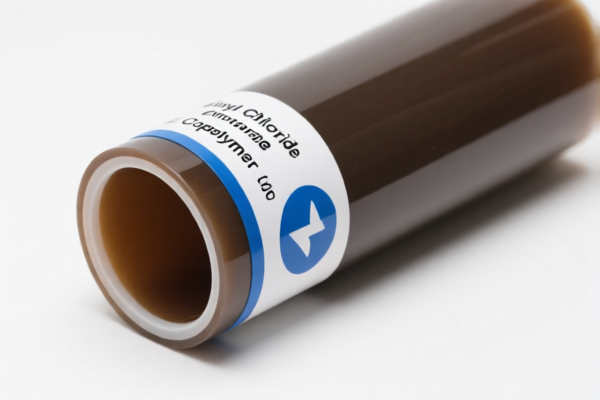
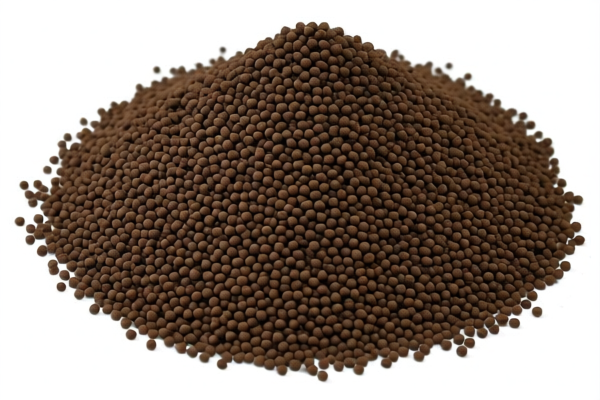
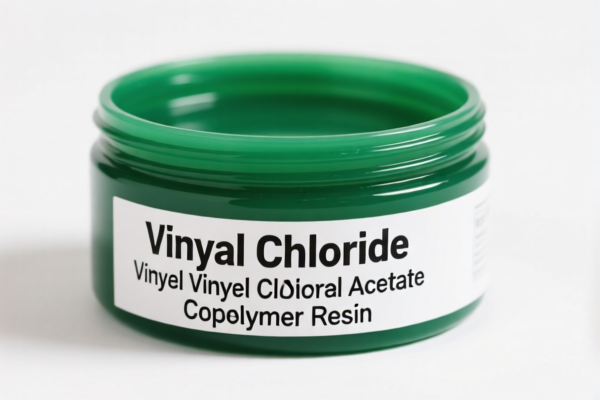
AI Analysis
🧪 Vinyl Chloride Acrylate Copolymer (VCA)
🌐 HS Code Reference & Customs Clearance Guide | 2026 Latest Tariff Analysis | Professional Compliance Strategy
📌 I. Product Definition & Classification: What Exactly is VCA?
Vinyl Chloride Acrylate Copolymer (VCA) is a specialized polymer resin produced by copolymerizing vinyl chloride with a small amount of an acrylic monomer (such as vinyl acetate, ethyl acrylate, or butyl acrylate). It is not a standard commodity plastic like PVC but a modified copolymer used primarily as a modifier, impact enhancer, or adhesive component.
In international trade, VCA is classified based on its chemical structure and primary use. It generally falls under Chapter 39 (Plastics and Articles Thereof). The critical distinction lies in whether it is a homopolymer (single monomer) or a copolymer (two or more monomers), and whether it is in primary forms (powders, granules, liquids).
⚠️ Key Classification Distinction:
- If the material is a copolymer of vinyl chloride and other unsaturated monomers (like acrylates) → HS 3904.60
- If the material is simply PVC plasticizers or additives without being a polymerized copolymer → HS 3907.90 or Chapter 38
- If it is a dispersion (latex/emulsion form) → HS 3901.20 or 3904.60 depending on specific polymer type
- If it is a finished article (e.g., pre-mixed paint or adhesive) → HS 3208 or 3506 (NOT Chapter 39)💡 Critical Note: VCA is often used as an impact modifier for PVC or in adhesives, coatings, and sealants. Importers must clearly declare the chemical composition to avoid misclassification as "PVC Resin" (3904.21/3904.30) or "Other Polymers" (3906.90).
📦 II. HS Code Classification Details (2026 Latest Tariff Reference)
| HS Code | Product Description | Applicable Scenario | Form | Key Characteristics |
|---|---|---|---|---|
| 3904.60.00.00 | Other vinyl-chloride copolymers | Primary form (powder, granules, liquid polymer) | Raw Material | Copolymer of VC + acrylate; used as modifier |
| 3901.20.00.00 | Polyvinyl alcohol (PVA) in primary forms | Rarely VCA, but confusion risk | Raw Material | Only if mislabeled as PVA |
| 3907.90.00.00 | Other polyacetals, other polyethers, and other epoxides | Incorrect for VCA | N/A | Do not use unless chemically different |
| 3906.90.00.00 | Other acrylic polymers in primary forms | Only if acrylate >50% by weight | Raw Material | If VC is minor component |
| 3208.90.90.00 | Paints & varnishes based on synthetic polymers | Finished Product | Liquid | If VCA is already mixed into paint/coating |
| 3506.91.00.00 | Ready rubber, ready adhesives | Finished Product | Paste/Gel | If VCA is part of a ready-to-use adhesive |
🔍 Focus Alert:
- Primary Form (Raw Material): Most VCA imported as raw chemical resin falls under 3904.60.00.00 ("Other vinyl-chloride copolymers").
- Finished Form (Coatings/Adhesives): If VCA is already dispersed in a solvent or resin system to make paint or glue, it moves to Chapter 32 or 35. Do not classify finished products under Chapter 39!
💰 III. 2026 Latest Tariff Rate Breakdown (US Market)
✅ Applicable Country: United States (US)
✅ Origin: China (CN)
✅ Effective Date: As of 2026, subject to Section 301 & IEEPA adjustments
🎯 1. 3904.60.00.00 — Other Vinyl-Chloride Copolymers (Raw Material)
| Item | Content |
|---|---|
| Base Tariff Rate | 5.3% (General Rate, Column 1) |
| USITC Additional Duty (Section 301) | +25% (Footnote 9903.88.01 / 9903.88.02) |
| IEEPA Additional Duty (China) | +10% (Effective Nov 10, 2025) |
| Total Effective Rate | 40.3% |
| Tax Calculation | CIF Value × 40.3% |
| De Minimis Exemption Eligibility | ❌ No (Section 301 goods are ineligible for $800 de minimis exemption) |
| Legal Authority Path | IEEPA:9903.01.25 → USITC:3904.60.00.00 → FOOTNOTE:9903.88.02 |
📌 Explanation:
- Base 5.3%: Standard MFN rate for vinyl chloride copolymers.
- +25% Section 301: VCA is on the US Trade Representative’s List 3/4 of China-origin goods subject to 25% tariff.
- +10% IEEPA: Additional surcharge on Chinese goods under emergency powers.
- Total 40.3%: This is a high-cost import. Must be factored into landed cost calculations.
🎯 2. 3208.90.90.00 — Paints/Coatings Containing VCA (Finished Product)
| Item | Content |
|---|---|
| Base Tariff Rate | 6.5% |
| USITC Additional Duty (Section 301) | +25% |
| IEEPA Additional Duty (China) | +10% |
| Total Effective Rate | 41.5% |
| De Minimis Exemption Eligibility | ❌ No |
| Legal Authority Path | IEEPA:9903.01.25 → USITC:3208.90.90.00 → FOOTNOTE:9903.88.02 |
📌 Note:
- Finished paints/coatings are not classified under Chapter 39. Misclassification here can lead to severe penalties.
- If VCA is a minor component in a larger adhesive system, check HS 3506 (adhesives) which may have different rates.
🛠️ IV. Customs Clearance Practical Advice (Real-World Pitfall Guide)
✅ 1. Required Documentation Checklist
| Document | Mandatory? | Explanation |
|---|---|---|
| ✅ Certificate of Analysis (COA) | ✔️ | Must confirm % of vinyl chloride, acrylic monomer, and polymerization method. |
| ✅ SDS (Safety Data Sheet) | ✔️ | Critical for chemical safety; must match HS classification. |
| ✅ Technical Specification Sheet | ✔️ | Shows molecular weight, solubility, and intended use (modifier vs. resin). |
| ✅ Commercial Invoice | ✔️ | Clearly state "Vinyl Chloride Acrylate Copolymer, HS 3904.60". Avoid vague terms like "Plastic Powder". |
| ✅ Bill of Lading | ✔️ | Ensure weight and volume match invoice. |
| ✅ ECCN/Control Number | ✔️ | Check if VCA is subject to dual-use export controls (rare, but possible if high-purity). |
✅ 2. Declaration Tips (Key Mnemonic)
🔥 "Raw Copolymer = 3904.60; Finished Paint = 3208.90; Don't Mix Them!"
| Scenario | Correct Declaration | Wrong Practice |
|---|---|---|
| Raw VCA powder/granules | 3904.60.00.00 | Mistakenly declared as PVC Resin (3904.21) |
| VCA-based adhesive paste | 3506.91.00.00 or 3904.60 if pure | Declared as "Glue" without chemical breakdown |
| VCA mixed in liquid paint | 3208.90.90.00 | Declared as raw polymer → Severe Misclassification |
| VCA plasticizer (not polymerized) | 3907.90 or Chapter 38 | Declared as copolymer → Legal Risk |
⚠️ Warning:
- Do not declare VCA as "PVC Resin" (3904.21/3904.30) if it contains significant acrylate content.
- Do not declare finished products (paints/adhesives) under Chapter 39. Chapter 39 is strictly for primary forms (powders, liquids, semi-finished resins).
✅ 3. Special Handling Cases
| Case | Handling Advice |
|---|---|
| OEM Custom VCA | Provide customer formula + technical data sheet. Prove it’s a copolymer, not a mixture. |
| VCA in Dispersion (Latex) | If water-based emulsion, may fall under 3901.20 or 3904.60. Check if it’s a "dispersion" vs. "solution". |
| VCA as Additive (<5%) | If VCA is only a minor component in a larger formulation, the whole product may be classified differently. |
| Chinese Origin | Apply for Exclusion if available (check USTR list for HS 3904.60.00.00). Many VCA products have had exclusions removed. |
🌍 V. Global Market Comparison (2026)
| Country/Region | Recommended HS Code | Tariff (China Origin) | Certification | Notes |
|---|---|---|---|---|
| 🇺🇸 USA | 3904.60.00.00 |
40.3% (5.3+25+10) | TSCA Compliance | High tariff; check for exclusions |
| 🇨🇳 China | 3904.60.00.00 |
0% (MFN) | CCC (if finished) | No extra duties |
| 🇪🇺 EU | 3904.60 |
6.5% | REACH Registration | No Section 301 equivalent |
| 🇮🇳 India | 3904.60 |
7.5% - 10% | BIS Certification | Check anti-dumping |
| 🇯🇵 Japan | 3904.60 |
5.3% | FSCA (Food) or Industrial | Low tariff base |
📌 Conclusion:
- USA is the most expensive market due to Section 301 + IEEPA tariffs.
- EU and Japan have lower base tariffs but require strict chemical registrations (REACH, FSCA).
- China has no import duty on raw chemicals but may have VAT.
📌 VI. Common Errors & Pitfalls (Blood Lessons)
❌ Error 1: Declaring VCA as "PVC Resin" (3904.21)
👉 Consequence: If audited, customs may reassess under 3904.60, leading to back taxes + penalties. Also, different environmental regulations apply.
❌ Error 2: Declaring finished paints/adhesives under Chapter 39
👉 Consequence: Misdeclaration. Goods may be seized, returned, or fined. HS 3904.60 is for raw polymers, not finished formulations.
❌ Error 3: Ignoring IEEPA 10% Surcharge
👉 Consequence: Underpayment of duty. US Customs will assess additional 10% + interest on all past shipments from Nov 2025.
❌ Error 4: Using vague names like "Plastic Powder" on Invoice
👉 Consequence: Customs will request clarification, causing delayed clearance and potential detention fees.
✅ Correct Practice:
"Vinyl Chloride-Acrylic Copolymer Resin, Powder Form, HS 3904.60.00.00, TSCA Compliant, Not for Direct Food Contact"
🎯 VII. Conclusion: Professional Declaration, Cost Efficiency & Compliance
🎯 Remember the Mnemonic:
🔹 "Raw Copolymer = 3904.60; Finished Product = 32/35; Raw = 40.3% Tax; Finished = 41.5% Tax; Don't Mix!"
🔹 "HS Code Determines Tax; VCA is Not PVC; Chemical CoA is Key!"
📌 Tips:
- If your VCA is originating from Vietnam, Thailand, or Malaysia, you may qualify for lower or zero tariffs under USMCA or ASEAN agreements. Check Rules of Origin carefully.
- Apply for Advance Ruling (CBP Ruling) if you have a new formulation. It provides legal certainty.
- Keep Certificate of Analysis (COA) and SDS on file for every shipment. Customs may request them during audit.
📣 Immediate Action:
📞 Contact your customs broker + Provide Technical Data Sheet + Verify HS Code with CBP
🚀 Ensure your VCA shipments are compliant, taxed correctly, and cleared efficiently!
✨ Professional Clearance Starts with Accurate Classification!
💼 Every gram of chemical matters – calculate precisely!
Customer Reviews
About HS Code Classification
The Harmonized System (HS) is an internationally standardized nomenclature developed by the World Customs Organization (WCO) to classify traded products. Over 200 countries use the HS system as the basis for customs tariffs, trade statistics, and import/export regulations.
Each HS code follows a hierarchical structure:
- Chapter (2 digits) — Broad category of goods (e.g., Chapter 84: Machinery and Mechanical Appliances)
- Heading (4 digits) — More specific grouping within the chapter
- Subheading (6 digits) — Internationally standardized breakdown, used by all WCO member countries
- National subdivisions (8-10 digits) — Country-specific extensions for further classification, such as US HTSUS 10-digit codes
Correct HS code classification is essential for smooth customs clearance, accurate duty payment, and compliance with trade regulations. Misclassification can lead to customs delays, overpayment of duties, or penalties.
When importing from CN to US, the applicable tariff rates may include:
- Most-Favored-Nation (MFN) rate — The standard duty rate applied to WTO members
- General rate — Applied to countries without trade agreements
- Trade remedy duties — Additional tariffs such as Section 301 (anti-dumping), Section 232 (national security), or countervailing duties
The information provided on this page is for reference purposes only. For official classification, please consult with your local customs authority or a licensed customs broker.