Vinyl Chloride Polymer Parings
CN → US| HS Code | Tariff Rate | Origin | Destination | Doc |
|---|---|---|---|---|
| 3904210000 | 41.5% | CN | US | Official Doc |
| 3904220000 | 41.5% | CN | US | Official Doc |
| 3926906090 | 39.2% | CN | US | Official Doc |
| 3904100000 | 41.5% | CN | US | Official Doc |
| 3920490000 | 40.8% | CN | US | Official Doc |
Product Images
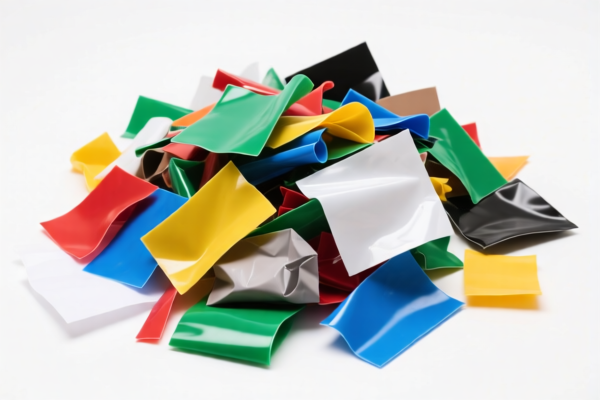
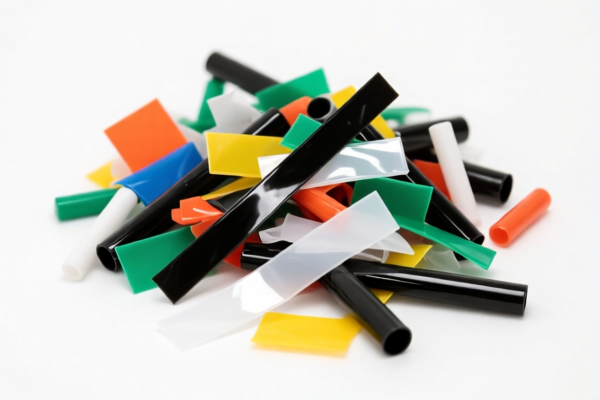
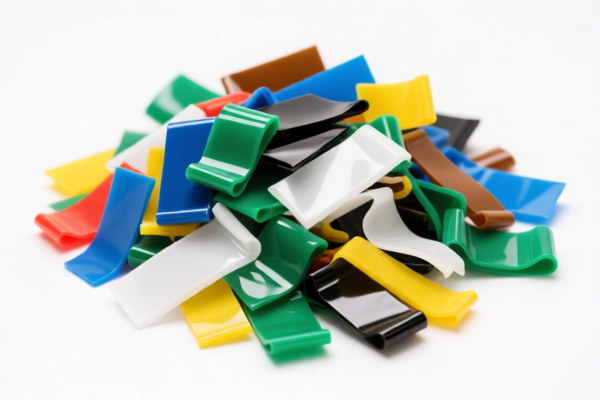
AI Analysis
🧪 PVC Resin & Composites: The Ultimate Import Clearance Guide (Vinyl Chloride Polymer Parings/Scrap)
🌐 HS Code Reference & Customs Clearance Guide | 2026 Latest Tariff Analysis | Professional Strategy
📌 一、Product Definition: What are "Vinyl Chloride Polymer Parings"?
In the global trade of chemical materials, "Parings" (or Scraps/Shavings) refer to the residual material generated during the processing of Vinyl Chloride Polymer (PVC). These are typically granular or particulate forms of PVC that have been cut, ground, or trimmed.
However, in customs classification, the physical state (shape) and usage intent are critical. "Parings" are often just a description of origin, not the final commercial state. Customs officials will look at: 1. Physical Form: Is it raw resin granules? Is it a finished pipe fitting? Is it a composite film? 2. Material Composition: Is it pure PVC (Homopolymer) or a complex blend?
⚠️ Key Distinction:
- If it is raw, unprocessed PVC granules (even if described as "parings" from a supplier) → It is classified as Resin.
- If it is processed into a specific article (like a sheet, pipe, or complex composite) → It is classified as a Plastic Article.
- "Parings" is NOT a valid HS Code description. You must classify based on the actual nature of the goods entering the port.
📦 二、HS Code Classification Matrix (Based on Provided Data)
Below is the precise mapping of your input "Vinyl Chloride Polymer Parings" to the available HS Codes in <DATA>. Each code represents a different physical state or legal classification under customs law.
| HS Code | Product Description (from Data) | Physical State & Key Features | Tax Rate (Total) |
|---|---|---|---|
3904.21.00.00 |
PVC Resin Granules (For Pipes) | Granular Form. Raw material, non-plasticized, specifically for pipe manufacturing. | 41.5% |
3904.22.00.00 |
PVC Resin Granules (For Pipes) | Granular Form. Similar to above, but potentially different additive profiles or resin types within PVC. | 41.5% |
3904.10.00.00 |
PVC Resin Composite Material | Resin (Primary Shape). Raw polymer material, chlorovinyl polymer, in primary form (granules/powder). | 41.5% |
3926.90.60.90 |
PVC Composite Material | Composite Article. A "catch-all" classification for other plastic articles made from PVC composites. | 39.2% |
3920.49.00.00 |
PVC Composite Material | Sheet/Film/Plate. Vinyl polymer inferred to be in the form of plastic plates, sheets, or membranes. | 40.8% |
💰 三、Detailed Tariff Breakdown (2026 Tax Structure)
✅ Applicable Jurisdiction: United States (US)
✅ Origin: China (CN) [Implied by tax details]
✅ Effective Date: Current Trade War Tariffs (Section 301 + IEEPA)
All listed HS Codes are subject to a high combined tariff structure due to US-China trade tensions.
🎯 1. Raw Resin Classifications (3904.21, 3904.22, 3904.10)
These codes cover the raw material stage. If your "parings" are just ground-up raw PVC pellets, they likely fall here.
| Item | Detail |
|---|---|
| Base Duty | 6.5% (General Rate) |
| Section 301 Surcharge | +25.0% (Add-on Tariff) |
| 122 Clause Tariff | +10.0% (Specific US Trade Remedy) |
| Total Effective Tax | 41.5% |
| Calculation Base | CIF Value (Cost, Insurance, Freight) |
| De Minimis Exemption | ❌ NO (Cannot use $800 threshold for bulk raw materials) |
📌 Explanation:
- The 6.5% is the standard Most Favored Nation (MFN) rate for PVC resins.
- The 25% is the punitive tariff under Section 301.
- The 10% is an additional layer based on specific trade clauses (often related to dumping or specific commodity restrictions).
- Total: 41.5%. This is a massive cost burden.
🎯 2. Composite/Article Classifications (3926.90, 3920.49)
These codes apply if the "parings" are actually finished or semi-finished products (like sheets or composite parts).
A. 3926.90.60.90 – Other Plastic Articles (Composite)
| Item | Detail |
|---|---|
| Base Duty | 4.2% |
| Section 301 Surcharge | +25.0% |
| 122 Clause Tariff | +10.0% |
| Total Effective Tax | 39.2% |
| Why Lower? | The base duty for "other plastic articles" is lower (4.2% vs 6.5%), but still high. |
B. 3920.49.00.00 – Plastic Plates, Sheets, Film (Non-Cellular)
| Item | Detail |
|---|---|
| Base Duty | 5.8% |
| Section 301 Surcharge | +25.0% |
| 122 Clause Tariff | +10.0% |
| Total Effective Tax | 40.8% |
| Note | This applies if the material is in sheet/film form, not granular. |
🛠️ 四、Customs Clearance Practical Advice (Avoid Pitfalls)
✅ 1. Critical Clarification: "Parings" vs. "Resin"
Customs may reject the term "Parings" if it doesn't match the HS Code description.
- If you are importing raw PVC scraps/ground material:
→ Declare as "PVC Resin, Granular, Unplasticized"
→ Use 3904.21.00.00 or 3904.22.00.00.
→ Do NOT declare as "Scrap" or "Recycled Material" unless you have specific recycling licenses, as this triggers environmental checks.
-
If you are importing PVC sheets/films:
→ Declare as "PVC Plastic Sheets, Non-Cellular"
→ Use3920.49.00.00. -
If you are importing complex PVC composite parts:
→ Declare as "Other Plastic Articles, Not Elsewhere Specified"
→ Use3926.90.60.90.
✅ 2. Documentation Checklist
| Document | Requirement | Purpose |
|---|---|---|
| Commercial Invoice | Must specify HS Code, Material Composition (100% PVC or Composite), and Form (Granule/Sheet). | Primary classification basis. |
| Material Safety Data Sheet (MSDS) | Required for all chemical/plastic imports. | Safety and hazard classification. |
| Certificate of Origin | Must clearly state Country of Origin (e.g., China). | To apply correct tariff rates (Section 301). |
| Product Specification Sheet | Detail particle size, density, and intended use. | Prevents misclassification between "Resin" and "Article". |
✅ 3. Classification Strategy & Risk Mitigation
| Scenario | Recommended HS Code | Risk Level | Reason |
|---|---|---|---|
| Raw PVC Granules (even if called "parings") | 3904.21.00.00 |
Medium | High tariff (41.5%), but clear classification. |
| PVC Sheets/Films | 3920.49.00.00 |
Medium | High tariff (40.8%), but standard form. |
| Complex PVC Assemblies | 3926.90.60.90 |
Low-Medium | Lowest base duty (39.2%), but requires proof of "composite article" status. |
| Misclassified as "Scrap" (No HS Code) | N/A | HIGH | Customs will force reclassification + penalties + detention. |
🔥 Pro Tip:
If the "parings" are recycled and have lost their resin properties (e.g., heavily degraded, colored, mixed with other materials), they might be considered waste, not resin. Waste PVC imports are heavily restricted or banned. Ensure your material is usable as a raw feedstock to qualify for3904codes.
🌍 五、Global Tariff Comparison (2026)
| Market | Base Duty | Add-ons | Total Effective Rate | Notes |
|---|---|---|---|---|
| 🇺🇸 USA | 4.2% - 6.5% | +35% (Section 301 + 122) | 39.2% - 41.5% | Highest global barrier. |
| 🇨🇳 China | 5.0% - 6.5% | 0% | ~5-6% | Low tariff for domestic processing. |
| 🇪🇺 EU | 6.5% | 0% | 6.5% | No Section 301 equivalent. |
| 🇲🇽 Mexico | 0% - 5% | 0% | <5% | Potential alternative if sourced from NAFTA partners. |
📌 Conclusion:
The US market imposes a ~40% tariff wall on PVC products from China. This makes direct import highly expensive. Consider: 1. Supply Chain Shift: Source from Vietnam, Mexico, or Thailand (if rules of origin are met). 2. Bonded Warehousing: Store goods in a Foreign Trade Zone (FTZ) to delay duty payment. 3. Product Re-engineering: If possible, shift to non-punished HS codes (though PVC is heavily monitored).
📌 六、Common Errors & Pitfalls (Learn from Others)
❌ Error 1: Declaring "PVC Parings" as "Plastic Waste"
👉 Consequence: Rejected at port, fined for illegal waste import, or forced to pay higher environmental fees.
✅ Fix: Prove it is usable raw material (resin), not waste.
❌ Error 2: Using 3926.90.60.90 for raw granules
👉 Consequence: Customs may reclassify to 3904.21 (higher base duty) or reject the "composite" claim.
✅ Fix: Be honest about form. If it's granules, use 3904.
❌ Error 3: Ignoring the "122 Clause"
👉 Consequence: Underpaying taxes.
✅ Fix: Always include the +10% surcharge in your cost model.
🎯 七、Final Recommendation
For "Vinyl Chloride Polymer Parings":
- If Granular/Raw: Use
3904.21.00.00(or3904.22.00.00). Expect 41.5% total tax. - If Sheet/Film: Use
3920.49.00.00. Expect 40.8% total tax. - If Complex Composite Part: Use
3926.90.60.90. Expect 39.2% total tax.
⚠️ Warning:
All these codes are subject to Section 301 and 122 tariffs. Do not attempt to evade these duties. Consult a licensed customs broker to file an Advance Ruling if the product form is ambiguous.
📣 Immediate Action:
📞 Contact your customs broker with:
- Product Photos (Granule vs. Sheet vs. Part)
- MSDS
- Invoice specifying "PVC Resin" or "PVC Composite Article"
- Pre-calculate 40%+ duty impact on your profit margin!
✨ Professional Customs Clearance Starts with Accurate Classification!
💼 Your Cost Efficiency Depends on Getting the HS Code Right!
Customer Reviews
About HS Code Classification
The Harmonized System (HS) is an internationally standardized nomenclature developed by the World Customs Organization (WCO) to classify traded products. Over 200 countries use the HS system as the basis for customs tariffs, trade statistics, and import/export regulations.
Each HS code follows a hierarchical structure:
- Chapter (2 digits) — Broad category of goods (e.g., Chapter 84: Machinery and Mechanical Appliances)
- Heading (4 digits) — More specific grouping within the chapter
- Subheading (6 digits) — Internationally standardized breakdown, used by all WCO member countries
- National subdivisions (8-10 digits) — Country-specific extensions for further classification, such as US HTSUS 10-digit codes
Correct HS code classification is essential for smooth customs clearance, accurate duty payment, and compliance with trade regulations. Misclassification can lead to customs delays, overpayment of duties, or penalties.
When importing from CN to US, the applicable tariff rates may include:
- Most-Favored-Nation (MFN) rate — The standard duty rate applied to WTO members
- General rate — Applied to countries without trade agreements
- Trade remedy duties — Additional tariffs such as Section 301 (anti-dumping), Section 232 (national security), or countervailing duties
The information provided on this page is for reference purposes only. For official classification, please consult with your local customs authority or a licensed customs broker.