Vinyl Copolymer for Toys
CN → US| HS Code | Tariff Rate | Origin | Destination | Doc |
|---|---|---|---|---|
| 3901105010 | 41.5% | CN | US | Official Doc |
| 3903190000 | 41.5% | CN | US | Official Doc |
| 3903110000 | 41.5% | CN | US | Official Doc |
| 3926909989 | 22.8% | CN | US | Official Doc |
Product Images
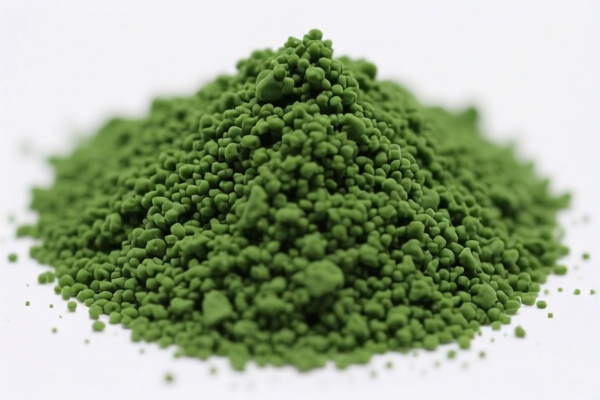
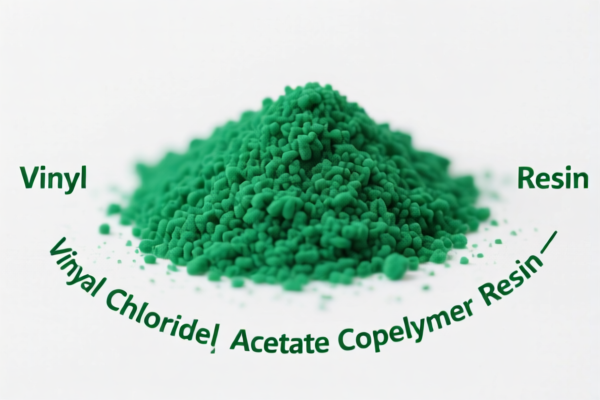


AI Analysis
🧸 Vinyl Copolymer for Toys (Toy-Grade Polyethylene/Polymer Particles)
🌐 HS Code Reference & Customs Clearance Guide | 2026 Latest Tariff Analysis | Professional Clearance Strategy
📌 I. Product Definition & Classification: What Exactly is "Vinyl Copolymer for Toys"?
Vinyl Copolymer, commonly referred to in the plastics industry as Polyethylene (PE) or specific vinyl-based copolymers, is a thermoplastic resin. When specified as "Toy-Grade," it indicates a formulation meeting specific safety standards (low toxicity, appropriate flexibility/durability) for children's toys.
In international trade, this raw material is classified based on its chemical composition and physical state. The data provided highlights two primary scenarios for this product depending on its precise polymerization type and final processing stage:
1. Raw Material Form (Resin/Particles): * Chemical Identity: Polyethylene (Ethylene polymer) or Polystyrene (if mislabeled or mixed context). * Physical State: Granules, pellets, or beads. * Application: Input material for injection molding or extrusion to create toy components.
2. Finished/Semi-Finished Plastic Article: * Identity: Polystyrene resin items specifically for toys. * Physical State: Molded parts or specific plastic articles. * Note: The dataset includes specific entries for "Polystyrene resin for toys" which are classified as plastic articles, not raw resins.
⚠️ Key Distinction Point:
- If the product is raw granules/pellets (Ethylene/Polyethylene) → It falls under Chapter 39 (Plastics and Articles Thereof), specifically 3901.
- If the product is Polystyrene resin used for toys → It may fall under 3903 (if raw resin) or 3926 (if finished plastic articles).
- Critical Warning: The dataset shows mixed data for "Vinyl Copolymer" vs "Polystyrene." You must verify if your product is Polyethylene (PE) or Polystyrene (PS). The HS codes differ significantly in duty structure.
📦 II. HS Code Classification Details (2026 Latest Tariff Authority Alignment)
Based on the provided <DATA>, here are the precise classifications for toy-grade vinyl/polymer products. Note that the dataset contains duplicate entries and specific product descriptions that must be matched carefully.
| HS Code | Product Description (From Data) | Material/State | Application | Total Tax Rate |
|---|---|---|---|---|
3901.10.50.10 |
Ethylene Polymer Granules, Toy Grade (乙烯聚合物颗粒,玩具级) |
Polyethylene (PE) Granules/Pellets |
Raw material for toys | 41.5% |
3903.19.00.00 |
Polystyrene Resin for Toys (玩具用聚苯乙烯树脂) |
Polystyrene (PS) Resin |
Raw material/resin for toys | 41.5% |
3903.11.00.00 |
Polystyrene Resin for Toys (玩具用聚苯乙烯树脂) |
Polystyrene (PS) Resin |
Raw material/resin for toys | 41.5% |
3926.90.99.89 |
Polystyrene Resin Articles for Toys (玩具用聚苯乙烯树脂...属于塑料制品) |
Polystyrene (PS) Plastic Articles |
Finished/Semi-finished toy parts | 22.8% |
🔍 Critical Analysis of the Dataset:
-3901.10.50.10is the most accurate for Ethylene-based (Vinyl) copolymers in granular form. "Vinyl" in common trade parlance often refers to Polyvinyl Chloride (PVC) or Polyethylene. However, the description explicitly says "Ethylene Polymer" (乙烯聚合物), which is Polyethylene.
-3903.11/19applies if the material is actually Polystyrene (PS), not Ethylene. If your "Vinyl Copolymer" is chemically Polystyrene, use these codes.
-3926.90.99.89applies if the item is a finished plastic article (e.g., a molded toy part) made of Polystyrene, not the raw resin. This has a lower tax rate (22.8%) but requires proof that it is an "article" rather than "resin."
💰 III. 2026 Latest Tariff Rate Breakdown (Including Surtaxes & Policy Add-ons)
✅ Applicable Country: United States (US)
✅ Origin: China (CN)
✅ Effective Time: 2025/2026 (Current Policy)
🎯 1. 3901.10.50.10 — Ethylene Polymer Granules (Toy Grade)
For Polyethylene (PE) Raw Material
| Item | Details |
|---|---|
| Base Duty Rate | 6.5% |
| Section 301 Surcharge | +25.0% |
| Section 122 Tariff | +10.0% |
| Total Tax Rate | 41.5% |
| Calculation Basis | CIF Value × 41.5% |
| De Minimis Exemption | ❌ Not Eligible (Deny de minimis) |
| Legal Reference Path | USITC:3901.10.50.10 → Section 301: Footnote 9903.88.01 → Section 122: 10% surcharge |
📌 Explanation:
- The 6.5% is the standard Most Favored Nation (MFN) duty for polyethylene.
- The 25% is the Section 301 tariff for Chinese-origin plastics.
- The 10% is the Section 122 tariff (often applied to certain Chinese imports under trade remedies).
- Total 41.5% is extremely high. This applies to raw granules.
🎯 2. 3903.19.00.00 & 3903.11.00.00 — Polystyrene Resin
For Polystyrene (PS) Raw Material
| Item | Details |
|---|---|
| Base Duty Rate | 6.5% |
| Section 301 Surcharge | +25.0% |
| Section 122 Tariff | +10.0% |
| Total Tax Rate | 41.5% |
| Calculation Basis | CIF Value × 41.5% |
| De Minimis Exemption | ❌ Not Eligible |
| Legal Reference Path | USITC:3903.11/19 → Section 301 → Section 122 |
📌 Note: Same tax burden as PE. If your product is PS resin, the cost impact is identical.
🎯 3. 3926.90.99.89 — Polystyrene Plastic Articles for Toys
For Finished/Semi-Finished Toy Parts (NOT Raw Resin)
| Item | Details |
|---|---|
| Base Duty Rate | 5.3% |
| Section 301 Surcharge | +7.5% |
| Section 122 Tariff | +10.0% |
| Total Tax Rate | 22.8% |
| Calculation Basis | CIF Value × 22.8% |
| De Minimis Exemption | ❌ Not Eligible |
| Legal Reference Path | USITC:3926.90.99.89 → Section 301 (Footnote for 3926) → Section 122 |
📌 Strategic Advantage:
- If you can prove the goods are "Plastic Articles" (finished parts) rather than "Resin" (raw material), the total tax drops from 41.5% to 22.8%.
- Section 301 rate for 3926 is only 7.5%, compared to 25% for 3901/3903.
- Crucial: You must demonstrate that the goods are not further processed after importation (i.e., they are ready-to-use toy components).
🛠️ IV. Customs Clearance Practical Advice (Real-World Pitfall Guide)
✅ 1. Documentation Checklist (Non-Negotiable)
| Document | Must Provide | Reason |
|---|---|---|
| ✅ Product Specification Sheet | ✔️ | Must clearly state: "Ethylene Polymer" OR "Polystyrene", and "Toy Grade". |
| ✅ Material Safety Data Sheet (MSDS/SDS) | ✔️ | Proves chemical composition and non-toxicity (crucial for toy safety). |
| ✅ Certificate of Origin (CO) | ✔️ | Required to apply Section 301/122 rules. Must state "Made in China". |
| ✅ Commercial Invoice | ✔️ | Must describe as "Ethylene Polymer Granules for Toy Manufacturing" (if 3901) or "Polystyrene Plastic Toy Parts" (if 3926). |
| ✅ Packing List | ✔️ | Net weight vs. Gross weight. |
| ✅ Toy Safety Certification | ✔️ | ASTM F963 (US) or CPSIA compliance documents. |
✅ 2. Declaration Tactics (Key Mnemonics)
🔥 "Clarify Material: PE vs PS; Form Matters: Resin vs Article!"
| Scenario | Correct HS Code | Wrong Way to Declare | Consequence |
|---|---|---|---|
| Raw PE Granules | 3901.10.50.10 |
Declaring as "Plastic Toy" → 3926 | Audit Risk: Customs may reassess to 3901, backdating duties + penalties. |
| Raw PS Resin | 3903.11/19.00 |
Declaring as "Toy Part" → 3926 | Audit Risk: If not a finished article, misclassification penalty. |
| Finished PS Toy Part | 3926.90.99.89 |
Declaring as "Resin" → 3903 | Missed Saving: Paying 41.5% instead of 22.8%. |
| Mixed Shipment (PE + PS) | Split Declaration | Declaring all as "Vinyl Copolymer" | Delays: Customs will separate and reclassify, causing hold-ups. |
✅ 3. Special Situation Handling
| Situation | Handling Advice |
|---|---|
| "Vinyl" Ambiguity | "Vinyl" is ambiguous. Use precise chemical name: Polyethylene (PE) or Polystyrene (PS). Avoid "Vinyl Copolymer" without chemical definition. |
| Toy Grade Claim | Provide CPSIA/ASTM F963 test reports. Without this, customs may classify as general industrial plastic, risking higher scrutiny. |
| Section 122 Applicable? | The 10% S122 tariff is specific. Ensure your broker applies it correctly. It often applies to Chinese goods under certain trade orders. |
| De Minimis (Section 321) | ❌ Do Not Use. High-value toy raw materials/finished goods from China are excluded from $800 de minimis exemption for these HS codes due to Section 301/122. |
🌍 V. Global Market Comparison (2026 Latest)
| Country/Region | Recommended HS Code | Total Tax (China Origin) | Certification Required | Notes |
|---|---|---|---|---|
| 🇺🇸 USA | 3901.10.50.10 (PE) / 3926.90.99.89 (PS Parts) |
41.5% (Resin) / 22.8% (Parts) | CPSIA, ASTM F963, Prop 65 | Highest duty burden due to S301 + S122. |
| 🇨🇳 China | 3901.10.50.10 / 3903.11.00 |
~5-7% (Import) | CCC (if finished toys) | Raw material imports have lower base rates. |
| 🇪🇺 EU | 3901.10.50 / 3903.11.00 |
0-6.5% | REACH, EN71 | No Section 301/122 equivalents. Lower cost. |
| 🇦🇺 Australia | 3901.10.50 |
5% | ACCC Standards | No major surtaxes. |
📌 Conclusion:
- USA is the most expensive market due to叠加 (stacked) tariffs (Base + 301 + 122).
- Optimization Strategy: If possible, source Polystyrene Toy Parts (3926) instead of Resin to save 18.7% in duties (22.8% vs 41.5%).
- Raw Material vs. Finished Goods: Ensure your supply chain and documentation clearly distinguish between "Resin" (41.5%) and "Plastic Article" (22.8%).
📌 VI. Common Errors & Pitfalls (Lessons Learned)
❌ Error 1: Using "Vinyl Copolymer" as the product name without chemical specificity.
👉 Consequence: Customs may misclassify, leading to incorrect duty payment and potential fines.
👉 Fix: Use "Polyethylene (PE) Resin, Toy Grade" or "Polystyrene (PS) Resin, Toy Grade".
❌ Error 2: Declaring finished toy parts as "Plastic Resin" to avoid higher duties on other codes.
👉 Consequence: If the product is clearly a molded part, declaring it as "Resin" is misdeclaration. However, in this case, Resin has HIGHER tax (41.5%) than Articles (22.8%).
👉 Fix: If it is a finished part, declare as 3926.90.99.89 to SAVE money.
❌ Error 3: Assuming De Minimis ($800) applies.
👉 Consequence: Packages seized, duties backdated, and penalties.
👉 Fix: These HS codes are excluded from de minimis for Chinese origins. Always file a formal entry.
❌ Error 4: Ignoring Section 122.
👉 Consequence: Underpayment of duties.
👉 Fix: Ensure your broker applies the 10% S122 tariff correctly alongside Section 301.
🎯 VII. Conclusion: Precise Classification Saves Thousands!
🎯 Remember the Golden Rules:
🔹 "PE Resin = 3901 (41.5%) | PS Resin = 3903 (41.5%) | PS Parts = 3926 (22.8%)"
🔹 "Don't call it 'Vinyl'—Call it 'Polyethylene' or 'Polystyrene'!"
🔹 "Finished Toy Parts save you 18.7% in US Duties vs. Raw Resin!"
📌 Pro Tip:
If your product is Polyethylene (PE), you cannot use the lower 3926 rate for toy parts unless it is a finished article. For PE toys, the base resin (3901) will always be taxed at 41.5%.
For Polystyrene (PS), optimizing from Resin to Finished Parts can significantly reduce tax burden.
📣 Immediate Action:
📞 Consult a licensed customs broker.
📄 Provide Chemical Composition Data and Product Images.
📝 Request a Binding Ruling from US CBP if the product form is ambiguous.
🚀 Accurate HS Code = Lower Tax = Higher Profit!
✨ Professional Clearance Starts with Precise Classification!
💼 Every Percent of Duty Matters in the Toy Industry!
Customer Reviews
About HS Code Classification
The Harmonized System (HS) is an internationally standardized nomenclature developed by the World Customs Organization (WCO) to classify traded products. Over 200 countries use the HS system as the basis for customs tariffs, trade statistics, and import/export regulations.
Each HS code follows a hierarchical structure:
- Chapter (2 digits) — Broad category of goods (e.g., Chapter 84: Machinery and Mechanical Appliances)
- Heading (4 digits) — More specific grouping within the chapter
- Subheading (6 digits) — Internationally standardized breakdown, used by all WCO member countries
- National subdivisions (8-10 digits) — Country-specific extensions for further classification, such as US HTSUS 10-digit codes
Correct HS code classification is essential for smooth customs clearance, accurate duty payment, and compliance with trade regulations. Misclassification can lead to customs delays, overpayment of duties, or penalties.
When importing from CN to US, the applicable tariff rates may include:
- Most-Favored-Nation (MFN) rate — The standard duty rate applied to WTO members
- General rate — Applied to countries without trade agreements
- Trade remedy duties — Additional tariffs such as Section 301 (anti-dumping), Section 232 (national security), or countervailing duties
The information provided on this page is for reference purposes only. For official classification, please consult with your local customs authority or a licensed customs broker.