Vinyl Copolymer for Wire and Cable
CN → USProduct Images
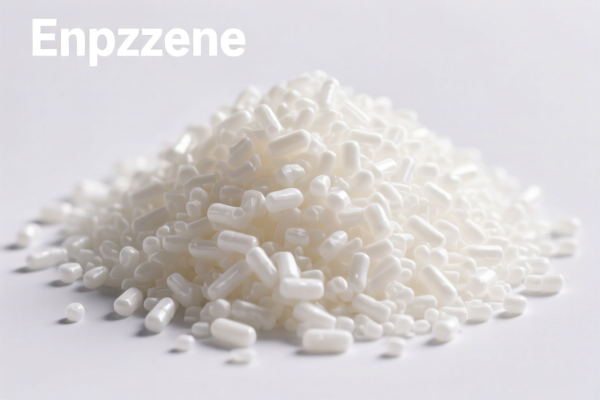

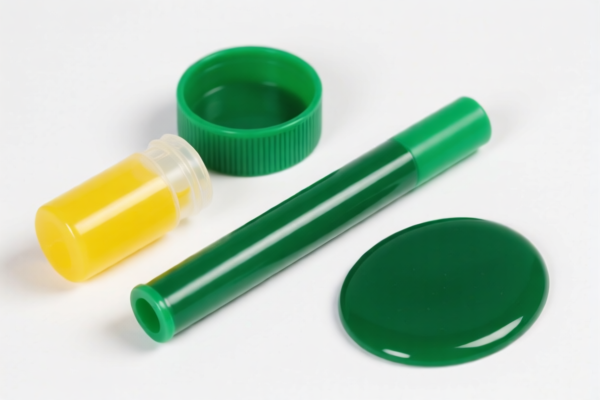
AI Analysis
⚡ Vinyl Copolymer for Wire and Cable (Polyvinyl Chloride Compounds)
🌐 HS Code Reference & Customs Clearance Guide | 2026 Latest Tariff Analysis | Professional Strategy for Polymer Raw Materials
📌 I. Product Definition & Classification: Do You Really Understand "Vinyl Copolymer"?
Vinyl Copolymer for Wire and Cable typically refers to Polyvinyl Chloride (PVC) Compounds or Chlorinated Polyvinyl Chloride (CPVC) mixtures specifically engineered for insulation and sheathing in electrical wiring. In international trade, these are not simple raw polymers but compounded materials containing additives (stabilizers, plasticizers, fillers) to meet flame-retardant, flexible, or durable standards.
Key Distinctions: * Raw PVC Resin (Homopolymer): Uncompounded powder/granules → Usually classified under 3904. * Compounded PVC/Copolymer for Cables: Pre-mixed, ready-to-extrude granules containing additives → Classified under 3907 (if based on polyacetals or other primary forms) or 3904 (if PVC-based). However, the most common classification for standard PVC cable compounds is under 3904. * Wire Insulation Products: Finished wires/cables → Classified under Chapter 85.
⚠️ Critical Classification Point:
- If the material is a primary form (powder/granules) of PVC, regardless of additives, it generally falls under 3904.
- If it is a copolymer (e.g., EVA, ABS, or specialized vinyl blends) not specifically PVC, it may fall under 3907 or 3901/3902/3903 depending on the monomer unit.
- Most common "Vinyl Copolymer for Cable" in global trade is PVC-based, thus Chapter 3904.
📦 II. HS Code Classification Details (2026 Latest Harmonized System)
| HS Code | Product Description | Application | Chemical Basis | Note |
|---|---|---|---|---|
3904.10.00.00 |
Polyvinyl chloride (PVC), primary forms | PVC resin, PVC compounds for cable insulation | PVC Homopolymer or Copolymer | Most Common for standard vinyl cable compounds |
3904.21.00.00 |
PVC, plasticized (plasticized PVC) | Flexible PVC compounds (soft, rubber-like) | Plasticized PVC | For flexible cables, harnesses |
3904.30.00.00 |
PVC, non-plasticized (rigid) | Rigid PVC compounds | Non-plasticized PVC | For rigid conduit, heavy-duty cables |
3904.90.00.00 |
Other PVC, primary forms | Specialty PVC compounds | PVC-based | For specialized electrical applications |
3907.10.00.00 |
Polyacetals (POM), other primary forms | If the "vinyl" is actually a formaldehyde-based copolymer | Acetal-based | Rare for standard wire insulation |
3907.90.00.00 |
Other primary forms of plastics | Misc. copolymers (e.g., EVA, ionomers) | Non-PVC copolymers | If not PVC-based |
🔍 Key Reminder:
- Check the MSDS/SDS: If the major component by weight is Vinyl Chloride Monomer (VCM) polymer, it is PVC → 3904.
- If it is a copolymer with ethylene (e.g., EVA used in cable insulation), it may be 3901.20.
- Finished wires (Chapter 85) are NOT classified here. This guide is for raw materials.
💰 III. 2026 Latest Tariff Rate Details (Including Surcharges & Policy Add-ons)
✅ Applicable Country: United States (US)
✅ Country of Origin: China (CN)
✅ Effective Date: November 10, 2025 (and subsequent imports)
🎯 1. 3904.10.00.00 —— Polyvinyl Chloride, Primary Forms (Standard PVC Compounds)
| Item | Content |
|---|---|
| Basic Tariff Rate | 5.3% (ad valorem) |
| USITC Additional Tariff | +7.5% (Footnote 9903.01.24) |
| IEEPA Additional Tariff | +10% (For China/HK products, effective Nov 10, 2025) |
| Total Tariff Rate | 22.8% |
| Tax Calculation | CIF Value × 22.8% |
| De Minimis Eligibility | ❌ No (deny_de_minimis) |
| Legal Path | IEEPA:9903.01.24 → USITC:3904.10.00.00 → FOOTNOTE:9903.01.24 |
📌 Explanation:
- 5.3% is the base Most Favored Nation (MFN) rate for PVC.
- 7.5% is the Section 301 additional duty for PVC compounds.
- 10% is the IEEPA surcharge on Chinese-origin polymers.
- Total: 22.8% is a significant cost multiplier for raw material importers.
🎯 2. 3904.21.00.00 —— PVC, Plasticized (Flexible Cable Compounds)
| Item | Content |
|---|---|
| Basic Tariff Rate | 5.3% |
| USITC Additional Tariff | +7.5% |
| IEEPA Additional Tariff | +10% |
| Total Tariff Rate | 22.8% |
| Tax Calculation | CIF Value × 22.8% |
| De Minimis Eligibility | ❌ No |
| Legal Path | IEEPA:9903.01.24 → USITC:3904.21.00.00 → FOOTNOTE:9903.01.24 |
📌 Note:
- Same rate as standard PVC because the additional duties apply to all PVC subheadings under 3904.
- Flexible compounds (used in automotive wiring, consumer electronics) are heavily taxed.
🎯 3. 3901.20.00.00 —— Ethylene-Vinyl Acetate (EVA) Copolymers (If Applicable)
| Item | Content |
|---|---|
| Basic Tariff Rate | 5.7% |
| USITC Additional Tariff | +7.5% |
| IEEPA Additional Tariff | +10% |
| Total Tariff Rate | 23.2% |
| Tax Calculation | CIF Value × 23.2% |
| De Minimis Eligibility | ❌ No |
| Legal Path | IEEPA:9903.01.24 → USITC:3901.20.00.00 → FOOTNOTE:9903.01.24 |
📌 Note:
- If the "vinyl copolymer" is actually EVA (common in solar cable insulation), it falls under 3901.20.
- Rate is slightly higher (23.2%) due to different base rate.
🛠️ IV. Customs Clearance Practical Advice (Battle-Tested Pitfall Guide)
✅ 1. Required Documentation List (Mandatory)
| Document | Must Provide | Description |
|---|---|---|
| ✅ SDS/MSDS | ✔️ | Must clearly state the major polymer component (e.g., "PVC, >90%") |
| ✅ Product Specification Sheet | ✔️ | Lists additives, plasticizers, and intended use (cable insulation) |
| ✅ Commercial Invoice | ✔️ | Must specify "PVC Compound for Wire and Cable Insulation" |
| ✅ Bill of Lading | ✔️ | Clean, unclawed, with correct weight and volume |
| ✅ Certificate of Origin (CO) | ✔️ | If claiming any FTA benefits (though limited for PVC from China) |
| ✅ FCC/UL Certification (for final product) | ✔️ | If importing finished wires, but for raw material, SDS is key |
✅ 2. Declaration Strategy (Key Mnemonic)
🔥 "Check the Monomer, Check the Additives, Declare Precisely, Avoid the 23% Hit!"
| Scenario | Correct Declaration | Incorrect Practice |
|---|---|---|
| PVC Compound with Plasticizers | 3904.21.00.00 - "PVC, Plasticized" |
Declaring as "General Plastic" → Misclassification Penalty |
| Pure PVC Resin | 3904.10.00.00 - "PVC, Primary Form" |
Declaring as "Cable Parts" → Chapter 85 Error |
| EVA Copolymer for Solar Cables | 3901.20.00.00 - "EVA Copolymer" |
Declaring as "PVC" → Incorrect HS Code |
| Mixed Polymer Blend | Provide SDS | Vague description like "Vinyl Powder" → Customs Hold |
✅ 3. Special Case Handling
| Situation | Handling Advice |
|---|---|
| OEM Custom Compounds | Provide formulation sheet or show that the base polymer is PVC/EVA |
| Importing from Third Countries | If re-exported from Vietnam/Malaysia, ensure Substantial Transformation occurred to avoid US origin rules |
| Dual-Use Items | PVC compounds are generally not restricted, but check for controlled chemical additives |
| Small Shipments | Do not use de minimis (Section 321) due to deny_de_minimis status for PVC from China |
🌍 V. Global Major Market Clearance Comparison (2026 Latest)
| Country/Region | Recommended HS Code | Tariff Rate | Certification Requirements | Notes |
|---|---|---|---|---|
| 🇺🇸 USA | 3904.10.00.00 |
22.8% (China) | SDS, TSCA Compliance | High tariff due to Section 301 + IEEPA |
| 🇨🇳 China | 3904.10.00.00 |
6.5% | N/A | Lower base rate, but export restrictions may apply |
| 🇪🇺 EU | 3904.10.00 |
6.5% (if origin China) | REACH, RoHS | No IEEPA, but REACH registration required |
| 🇯🇵 Japan | 3904.10.00 |
6.0% | JIS Standards | No additional surcharges for China |
| 🇲🇽 Mexico | 3904.10.00 |
6.0% | NOM Certification | USMCA benefits may apply if non-Chinese origin |
📌 Conclusion:
- USA imposes the highest effective tariff (22.8%) on Chinese-origin PVC/copolymer compounds.
- EU and Japan have lower base rates but require strict chemical compliance (REACH/JIS).
- Strategy: Consider third-country sourcing (e.g., Vietnam, Thailand) if possible to mitigate IEEPA duties.
📌 VI. Common Errors & Pitfall Guide (Lessons Learned)
❌ Error 1: Declaring "Vinyl Copolymer" as "Plastic Pellets" (General)
👉 Consequence: Customs may classify under a higher tariff or deny entry due to lack of specificity.
👉 Correct: Specify "PVC Compound, Plasticized, for Wire Insulation."
❌ Error 2: Ignoring the SDS requirement
👉 Consequence: CBP may hold shipment for chemical safety review, causing delays and storage fees.
👉 Correct: Provide SDS highlighting the primary polymer and lack of restricted chemicals.
❌ Error 3: Assuming De Minimis applies
👉 Consequence: Package seized for bypassing duties on denied goods from China.
👉 Correct: All PVC compounds from China are denied de minimis eligibility.
❌ Error 4: Confusing PVC Resin with Finished Wire
👉 Consequence: Wrong HS Code (Chapter 39 vs. Chapter 85), leading to penalties.
👉 Correct: Raw material = Chapter 39. Finished wire = Chapter 85.
✅ Correct Declaration Example:
"Polyvinyl Chloride (PVC) Compound, Plasticized, Primary Form, for Wire and Cable Insulation, Model XYZ, TSCA Compliant, SDS Attached"
🎯 VII. Conclusion: Precise Classification Saves 23% in Costs!
🎯 Remember the Mnemonic:
🔹 "PVC Base, 3904, Add 7.5% + 10%, Total 23% Hit!"
🔹 "SDS is Key, De Minimis Denied, Origin Matters!"
📌 Pro Tip:
If your vinyl copolymer is EVA-based (common in solar), use 3901.20 and check for specific EPA/TSCA requirements.
For PVC-based, prepare for 22.8% total duty. Consider supply chain diversification to non-China origins if volume is high.
📣 Immediate Action:
📞 Contact a Licensed Customs Broker + Provide SDS + Verify TSCA Status
🚀 Ensure your vinyl copolymer clears US customs smoothly, legally, and cost-effectively!
✨ Professional Clearance Starts with Accurate Classification!
💼 Every Percent in Tariff Counts!
Customer Reviews
About HS Code Classification
The Harmonized System (HS) is an internationally standardized nomenclature developed by the World Customs Organization (WCO) to classify traded products. Over 200 countries use the HS system as the basis for customs tariffs, trade statistics, and import/export regulations.
Each HS code follows a hierarchical structure:
- Chapter (2 digits) — Broad category of goods (e.g., Chapter 84: Machinery and Mechanical Appliances)
- Heading (4 digits) — More specific grouping within the chapter
- Subheading (6 digits) — Internationally standardized breakdown, used by all WCO member countries
- National subdivisions (8-10 digits) — Country-specific extensions for further classification, such as US HTSUS 10-digit codes
Correct HS code classification is essential for smooth customs clearance, accurate duty payment, and compliance with trade regulations. Misclassification can lead to customs delays, overpayment of duties, or penalties.
When importing from CN to US, the applicable tariff rates may include:
- Most-Favored-Nation (MFN) rate — The standard duty rate applied to WTO members
- General rate — Applied to countries without trade agreements
- Trade remedy duties — Additional tariffs such as Section 301 (anti-dumping), Section 232 (national security), or countervailing duties
The information provided on this page is for reference purposes only. For official classification, please consult with your local customs authority or a licensed customs broker.