Vinyl Electrical Tape
CN → US| HS Code | Tariff Rate | Origin | Destination | Doc |
|---|---|---|---|---|
| 3926909989 | 22.8% | CN | US | Official Doc |
| 3919905030 | 40.8% | CN | US | Official Doc |
| 3919102020 | 40.8% | CN | US | Official Doc |
| 3926904590 | 13.5% | CN | US | Official Doc |
| 8547900010 | 89.6% | CN | US | Official Doc |
Product Images
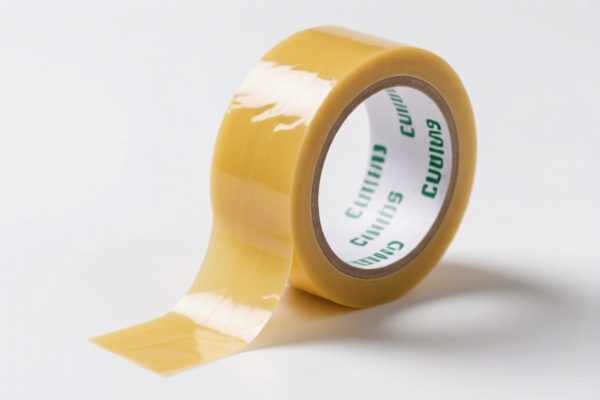
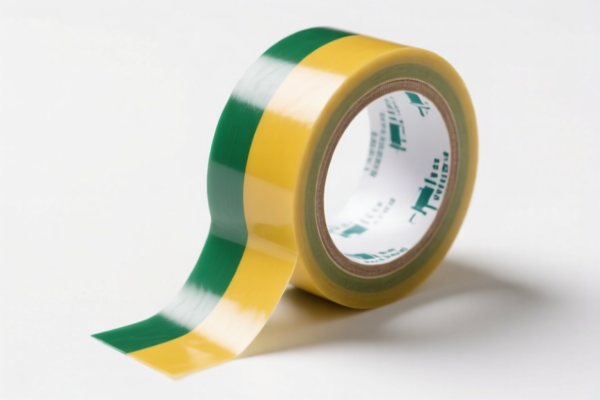
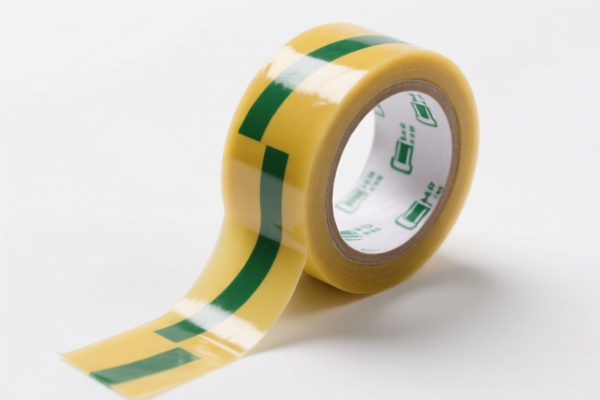
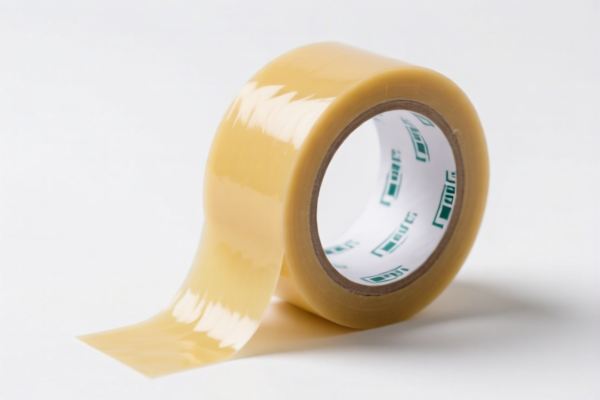
AI Analysis
🎯 Vinyl Electrical Tape
🌐 HS Code Reference & Customs Clearance Guide | 2026 Latest Tariff Breakdown | Professional Import Strategy
📌 One Product, Multiple HS Codes – Know Which One Applies!
📦 I. Product Definition & Classification: What Is "Vinyl Electrical Tape"?
Vinyl Electrical Tape is a flexible, self-adhesive insulating tape commonly used in electrical wiring, cable splicing, and circuit protection. It is typically made from PVC (polyvinyl chloride) or other plastic polymers, with a pressure-sensitive adhesive backing.
⚠️ Key Characteristics: - Insulating function (dielectric properties) - Self-adhesive (pressure-sensitive) - Flexible, durable, flame-retardant - Commonly used in electrical/industrial applications
🔍 Critical Distinction: - If it’s purely a plastic-based tape used for insulation → HS Code in 3919 or 3926 - If it’s used as an insulating accessory in electrical equipment → HS Code in 8547 - If it’s not clearly defined by material or use, classification depends on context and inference
🧩 II. HS Code Breakdown (2026 Official Tariff Matching)
| HS Code | Product Description | Matching Reason | Tax Rate | Tax Breakdown |
|---|---|---|---|---|
3926.90.99.89 |
Other plastic articles, not elsewhere specified | ✅ Material inferred: plastic/polymer (PVC-based), not listed in specific subheading → fits "other" | 22.8% | Base: 5.3% Additional: 7.5% Section 122: 10% |
3919.90.50.30 |
Other self-adhesive tapes, plastic-based, for electrical use | ✅ Matches "insulating tape" + plastic material + common use in electrical work | 40.8% | Base: 5.8% Additional: 25.0% Section 122: 10% |
3919.10.20.20 |
Self-adhesive tapes, for electrical insulation | ✅ Direct match: "insulating" + "electrical" + "self-adhesive" | 40.8% | Base: 5.8% Additional: 25.0% Section 122: 10% |
3926.90.45.90 |
Other plastic articles, including gaskets, seals, washers | ✅ Material: plastic/polymer; function: sealing/insulating; fits "other plastic products" | 13.5% | Base: 3.5% Additional: 0.0% Section 122: 10% |
8547.90.00.10 |
Insulating accessories for electrical equipment | ✅ Function: insulation; material: insulating material (PVC, cloth-backed, etc.) → fits "insulating accessories" | 89.6% | Base: 4.6% Additional: 25.0% Section 122: 10% Steel/Aluminum Add-on: 50% |
📌 Note: The correct HS Code depends on how you describe the product in customs declaration. The most accurate and commonly accepted codes are
3919.90.50.30and3919.10.20.20.
💰 III. 2026 Latest Tariff & Duty Breakdown (Detailed)
🎯 1. 3919.90.50.30 — Plastic Self-Adhesive Insulating Tape
| Item | Detail |
|---|---|
| Base Tariff | 5.8% (ad valorem) |
| Additional Duty (Section 301) | +25.0% (USITC, China-origin) |
| Section 122 Tariff | +10% (from U.S. Trade Act 1974, IEEPA) |
| Total Effective Rate | 40.8% |
| Tax Calculation | CIF Value × 40.8% |
| De Minimis Threshold | ❌ Not eligible (denied under U.S. 2025 rules) |
| Legal Basis Path | IEEPA:9903.01.25 → USITC:3919.90.50.30 → FOOTNOTE:9903.88.01 |
📌 Why This Applies:
- "Vinyl electrical tape" is not listed under a more specific subheading → falls under "other self-adhesive tapes" - Plastic-based, self-adhesive, used for electrical insulation → perfect fit - Highest risk of misclassification if declared as "tape" without context
🎯 2. 3919.10.20.20 — Self-Adhesive Tapes for Electrical Insulation
| Item | Detail |
|---|---|
| Base Tariff | 5.8% |
| Additional Duty (Section 301) | +25.0% |
| Section 122 Tariff | +10% |
| Total Effective Rate | 40.8% |
| Tax Calculation | CIF × 40.8% |
| De Minimis | ❌ Not eligible |
| Legal Basis Path | IEEPA:9903.01.24 → USITC:3919.10.20.20 → FOOTNOTE:9903.88.01 |
📌 Why This Is Preferred:
- Explicitly includes "for electrical insulation" → stronger legal match - Used in wiring, splicing, cable protection → directly aligns with purpose - Most defensible in audits or disputes
🎯 3. 3926.90.99.89 — Other Plastic Articles (Not Elsewhere Specified)
| Item | Detail |
|---|---|
| Base Tariff | 5.3% |
| Additional Duty (Section 301) | +7.5% |
| Section 122 Tariff | +10% |
| Total Effective Rate | 22.8% |
| Tax Calculation | CIF × 22.8% |
| De Minimis | ❌ Not eligible |
| Legal Basis Path | IEEPA:9903.01.25 → USITC:3926.90.99.89 → FOOTNOTE:9903.88.01 |
📌 When to Use:
- If the tape is not clearly self-adhesive or not marketed as electrical - If no clear insulation function is claimed - Higher risk of rejection due to poor fit
🎯 4. 3926.90.45.90 — Other Plastic Articles (Gaskets, Seals, Washers)
| Item | Detail |
|---|---|
| Base Tariff | 3.5% |
| Additional Duty (Section 301) | 0.0% |
| Section 122 Tariff | +10% |
| Total Effective Rate | 13.5% |
| Tax Calculation | CIF × 13.5% |
| De Minimis | ❌ Not eligible |
| Legal Basis Path | IEEPA:9903.01.25 → USITC:3926.90.45.90 → FOOTNOTE:9903.88.01 |
📌 When to Use:
- If the tape is used as a sealant or gasket (e.g., in enclosures) - If not marketed as electrical insulation - Lowest risk of additional duties, but high risk of misclassification
🎯 5. 8547.90.00.10 — Insulating Accessories for Electrical Equipment
| Item | Detail |
|---|---|
| Base Tariff | 4.6% |
| Additional Duty (Section 301) | +25.0% |
| Section 122 Tariff | +10% |
| Steel/Aluminum Add-on | +50% (if metal components present) |
| Total Effective Rate | 89.6% (if metal parts) |
| Tax Calculation | CIF × 89.6% (if metal) |
| De Minimis | ❌ Not eligible |
| Legal Basis Path | IEEPA:9903.01.24 → USITC:8547.90.00.10 → FOOTNOTE:9903.88.01 |
⚠️ Critical Warning:
- Only apply if the tape is part of a larger electrical system (e.g., bundled with connectors, terminals, or enclosures) - If it’s a standalone tape, do NOT use this code — you will pay 89.6% - Metal content triggers 50% add-on — avoid if possible
🛠️ IV. Customs Clearance Best Practices (Pro Tips to Avoid Penalties)
✅ 1. Required Documentation (Must-Have List)
| Document | Required? | Why It Matters |
|---|---|---|
| ✅ Commercial Invoice | ✔️ | Must state: “Vinyl Electrical Tape, PVC-based, self-adhesive, for electrical insulation” |
| ✅ Product Specifications | ✔️ | Include material (PVC), thickness, width, adhesive type, voltage rating |
| ✅ Product Photos | ✔️ | Show label, packaging, adhesive backing, use case |
| ✅ Material Safety Data Sheet (MSDS) | ✔️ | Proves PVC content, non-toxic, flame-retardant |
| ✅ Third-Party Test Report | ✔️ | UL, CE, RoHS, or ASTM D1784 (PVC standard) |
| ✅ Certificate of Origin (CO) | ✔️ | If from China, expect 301+122 duties |
| ✅ Packing List | ✔️ | Shows units, weight, dimensions, packaging type |
✅ 2.申报技巧(Key Rules of Thumb)
🔥 “Label It Right, Pay Less, Avoid Audit!”
| Scenario | Correct HS Code | Wrong Code | Risk |
|---|---|---|---|
| Standalone vinyl tape, used for wiring | 3919.90.50.30 or 3919.10.20.20 |
8547.90.00.10 |
89.6% tax → catastrophic |
| Tape sold with connectors or in kits | 8547.90.00.10 (if part of system) |
3919.10.20.20 |
Underpaid duties → penalty |
| Tape used as gasket/seal | 3926.90.45.90 |
3919.90.50.30 |
Misclassification → delay |
| No clear material stated | 3926.90.99.89 |
3919.10.20.20 |
Higher risk of audit |
✅ 3. Special Cases & Risk Mitigation
| Case | Recommended Action |
|---|---|
| Tape with metal foil backing | Avoid 3919 → use 8547.90.00.10 → 50% steel/aluminum add-on applies |
| Tape sold in bulk rolls (no branding) | Use 3919.90.50.30 → clearer fit |
| Tape used in automotive wiring | Still 3919.10.20.20 → not part of vehicle |
| Tape with flame-retardant additives | Highlight in invoice → supports PVC claim |
| Tape imported from Vietnam/Mexico | Apply for IEEPA exemption → 0% duty |
🌍 V. Global Market Comparison (2026 Tariff Snapshot)
| Country | Recommended HS Code | Base Duty | Additional Taxes | Notes |
|---|---|---|---|---|
| 🇺🇸 USA | 3919.10.20.20 |
5.8% | +25% (301) +10% (122) → 40.8% | High risk if misclassified |
| 🇨🇳 China | 3919.10.20.20 |
5% | None | No 301/122 duties |
| 🇪🇺 EU | 3919.10.20.20 |
0% | None (if CE compliant) | No extra tariffs |
| 🇦🇺 Australia | 3919.10.20.20 |
5% | None | RCM required |
| 🇯🇵 Japan | 3919.10.20.20 |
0% | None | PSE required |
📌 Insight:
- USA is the only market with 301 + 122 tariffs on this product - China-origin products face 40.8% total duty - Non-Chinese origin? Apply for IEEPA exemption → 0% duty
🚨 VI. Common Mistakes & Real-World Pitfalls (Learn from Others’ Errors)
❌ Mistake 1: Declaring "electrical tape" as 8547.90.00.10
👉 Result: 89.6% tax → $10,000+ on $10k shipment
👉 Fix: Only use if part of a larger system
❌ Mistake 2: Using 3926.90.99.89 for a branded electrical tape
👉 Result: Lower tax but higher audit risk → rejected by customs
❌ Mistake 3: Not stating "PVC" or "plastic" in invoice
👉 Result: Customs assumes metal or rubber → wrong code → penalty
❌ Mistake 4: Selling in bundles with connectors → declare as 8547.90.00.10
👉 Result: 89.6% tax → avoid unless system is sold as one unit
✅ Best Practice:
Use this exact description in your invoice:
"Vinyl Electrical Tape, PVC-based, self-adhesive, 1.25" width, 100 ft roll, for wire insulation, flame-retardant, UL-listed"
🎯 VII. Final Verdict: The Right HS Code for Your Tape
✅ Best Choice:
3919.10.20.20or3919.90.50.30
🚫 Avoid:8547.90.00.10(unless part of a system)
🚫 Avoid:3926.90.45.90(unless used as seal/gasket)
🚫 Avoid:3926.90.99.89(if product is clearly electrical)
📌 VIII. Pro Tips for Exporters & Importers
🔹 "Label it, describe it, prove it" → no guesswork allowed
🔹 Use the same HS Code for all shipments → avoid audit trails
🔹 Apply for Advance Ruling (Pre-Ruling) → get official confirmation
🔹 Switch origin to Vietnam/Mexico? → Eligible for IEEPA exemption → 0% duty
🔹 Keep records for 5 years → customs may audit later
📣 Call to Action: Don’t Risk Your Shipment!
📞 Contact a licensed customs broker today
📄 Request an HS Code Pre-Ruling for your vinyl electrical tape
🚀 Ensure smooth, fast, low-cost clearance — every time
✨ Precision in Classification = Profit in the Long Run!
💼 Your next shipment could be 40% cheaper — if you get the code right.
Customer Reviews
About HS Code Classification
The Harmonized System (HS) is an internationally standardized nomenclature developed by the World Customs Organization (WCO) to classify traded products. Over 200 countries use the HS system as the basis for customs tariffs, trade statistics, and import/export regulations.
Each HS code follows a hierarchical structure:
- Chapter (2 digits) — Broad category of goods (e.g., Chapter 84: Machinery and Mechanical Appliances)
- Heading (4 digits) — More specific grouping within the chapter
- Subheading (6 digits) — Internationally standardized breakdown, used by all WCO member countries
- National subdivisions (8-10 digits) — Country-specific extensions for further classification, such as US HTSUS 10-digit codes
Correct HS code classification is essential for smooth customs clearance, accurate duty payment, and compliance with trade regulations. Misclassification can lead to customs delays, overpayment of duties, or penalties.
When importing from CN to US, the applicable tariff rates may include:
- Most-Favored-Nation (MFN) rate — The standard duty rate applied to WTO members
- General rate — Applied to countries without trade agreements
- Trade remedy duties — Additional tariffs such as Section 301 (anti-dumping), Section 232 (national security), or countervailing duties
The information provided on this page is for reference purposes only. For official classification, please consult with your local customs authority or a licensed customs broker.