Vinyl Floor Tile
CN → US| HS Code | Tariff Rate | Origin | Destination | Doc |
|---|---|---|---|---|
| 3918102000 | 40.3% | CN | US | Official Doc |
| 3918101040 | 40.3% | CN | US | Official Doc |
| 5904909000 | 35.0% | CN | US | Official Doc |
| 3918101020 | 40.3% | CN | US | Official Doc |
Product Images
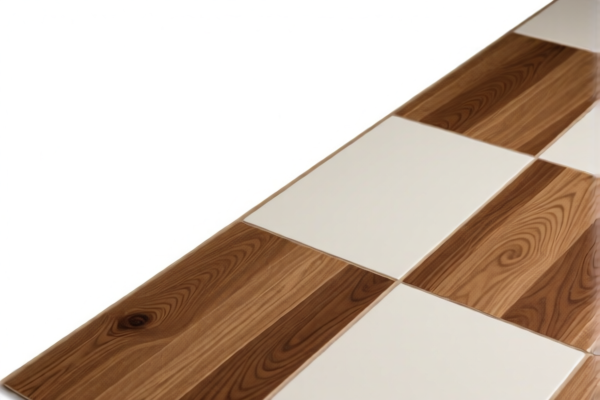

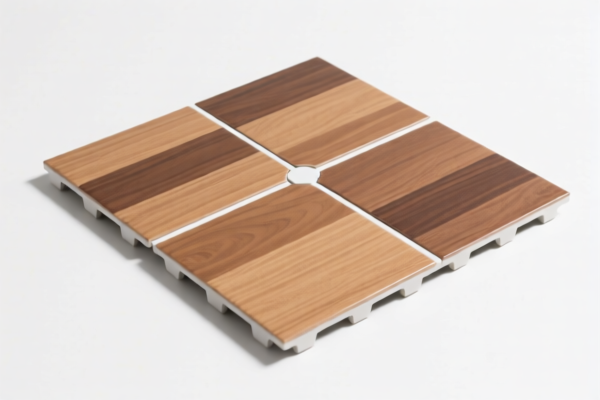
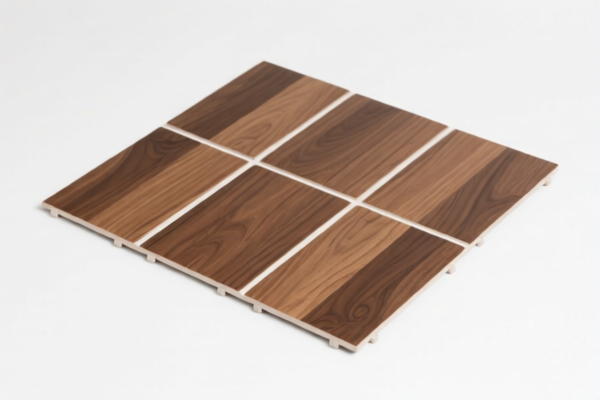
AI Analysis
🏠 Vinyl Floor Tile: The Ultimate HS Code & Customs Clearance Guide (2026 Update)
🌐 HS Code Reference & Customs Strategy | 2026 Latest Tariff Analysis | Professional Clearance Protocol
📌 I. Product Definition & Classification: Do You Really Understand "Vinyl Flooring"?
"Vinyl Floor Tile" is a ubiquitous home improvement product, primarily used for residential and commercial flooring due to its durability and aesthetic appeal. In international trade, its classification hinges on two critical factors: Material Composition and Form Factor.
Polyvinyl Chloride (PVC) Plastics: "Vinyl" is the common trade name for Polyvinyl Chloride. Therefore, these tiles are technically plastic floor coverings. Floor Coverings: The product is specifically designed to cover floors, distinguishing it from wall coverings or loose plastic sheets.
⚠️ Key Distinction:
- If the product is a solid PVC tile/sheet without a textile backing → Classified under Chapter 39 (Plastics).
- If the product has a fabric/textile base coated with PVC → Classified under Chapter 59 (Impregnated Textiles).
- Note: The majority of standard "Vinyl Floor Tiles" are solid PVC or PVC-based composites, falling squarely under Chapter 39.
📦 II. HS Code Classification Details (2026 Latest Tariff Authority Comparison)
Based on the provided data, here are the specific HS Codes matched to the product description "Vinyl Floor Tile":
| HS Code | Product Description | Classification Logic | Total Tax Rate |
|---|---|---|---|
3918.10.20.00 |
Floor Coverings of Plastics, Other Than Vinyl | Summary: Matches material (Vinyl = PVC) and use (Floor Covering). Based on common sense, vinyl flooring belongs to plastic products made of polyvinyl chloride. | 40.3% |
3918.10.10.40 |
Floor Coverings of Plastics, Vinyl | Summary: "Vinyl" in the product name matches "Polyvinyl Chloride Polymers" in the classification. "Floor" matches "Floor Covering" in the classification. | 40.3% |
5904.90.90.00 |
Carpeting and Other Floor Coverings, of Textile Materials | Summary: The product is a floor covering. Although material isn't explicitly stated, "Vinyl" is inferred as a synthetic material. It fits the "Other" category for floor coverings applied to textile bases with coatings, with no material conflict. | 35.0% |
3918.10.10.20 |
Floor Coverings of Plastics, Vinyl, Tiles | Summary: "Vinyl Floor Tile" contains material (Vinyl/PVC Polymer) and form (Floor Material/Tiles), matching the classification definition for vinyl tiles. | 40.3% |
3918.10.10.40 |
Floor Coverings of Plastics, Vinyl, Tiles | Summary: "Vinyl" corresponds to "Polyvinyl Chloride (PVC)", and "Floor Tile" corresponds to the form "Vinyl Tile", matching the material and form description. | 40.3% |
🔍 Critical Insight:
- Primary Classification: Most standard vinyl floor tiles fall under3918.10.10.40or3918.10.20.00(40.3% total tax). These are classified as Plastic Floor Coverings.
- Alternative Classification: If the tile has a significant textile backing, it might fall under5904.90.90.00(35.0% total tax). However, pure vinyl or PVC-core tiles are NOT textile-based and should not be misclassified here to avoid penalties.
- Tax Uniformity: Codes3918.10.20.00,3918.10.10.40, and3918.10.10.20all carry the same 40.3% total tax rate.
💰 III. 2026 Latest Tariff Rate Breakdown (Including Surcharges & Policy Add-ons)
✅ Applicable Country: United States (US)
✅ Origin: China (CN)
✅ Effective Date: November 10, 2025 (and subsequent imports)
🎯 1. 3918.10.20.00 & 3918.10.10.40 & 3918.10.10.20 —— Plastic Floor Coverings (Vinyl)
| Item | Detail |
|---|---|
| Base Tariff | 5.3% (Ad Valorem) |
| Section 301 Surcharge | +25.0% (Additional Tariff under USITC Footnote 9903.88.01) |
| IEEPA Surcharge | +10.0% (Against China/HK products, effective Nov 10, 2025) |
| Total Tax Rate | 40.3% |
| Tax Calculation | CIF Value × 40.3% |
| De Minimis Eligibility | ❌ Not Eligible (Deny De Minimis) |
| Legal Basis Path | IEEPA:9903.01.25 → IEEPA:9903.01.24 → USITC:3918.10.10.40/20 → FOOTNOTE:9903.88.01 |
📌 Explanation:
- The 5.3% is the standard Most Favored Nation (MFN) tariff for plastic floor coverings.
- The +25% is the Section 301 tariff, applicable to most Chinese-made goods.
- The +10% is the new IEEPA surcharge specifically targeting Chinese plastic and textile-related products starting late 2025.
- Combined at 40.3%, this is a significant cost factor that must be included in your pricing strategy.
🎯 2. 5904.90.90.00 —— Carpeting & Other Floor Coverings (Textile-Based)
| Item | Detail |
|---|---|
| Base Tariff | 0.0% |
| Section 301 Surcharge | +25.0% |
| IEEPA Surcharge | +10.0% |
| Total Tax Rate | 35.0% |
| Tax Calculation | CIF Value × 35.0% |
| De Minimis Eligibility | ❌ Not Eligible (Deny De Minimis) |
| Legal Basis Path | IEEPA:9901.25 → IEEPA:9903.01.24 → USITC:5904.90.90.00 |
📌 Note:
- This rate applies ONLY if the vinyl tile is affixed to a textile backing (e.g., luxury vinyl tile with a felt pad).
- Pure vinyl/plastic tiles cannot use this code. Misclassification can lead to severe audits and back-tariffs.
🛠️ IV. Customs Clearance Practical Advice (Battle-Tested Pitfall Guide)
✅ 1. Preparation Checklist (Non-Negotiable)
| Document | Required | Description |
|---|---|---|
| ✅ Product Specifications | ✔️ | Must detail material composition (PVC %), backing type (if any), thickness, and dimensions. |
| ✅ Product Photos | ✔️ | Clear images of the tile, including cross-section if possible, to prove material type. |
| ✅ Commercial Invoice | ✔️ | Must explicitly state: "Vinyl Floor Tiles, Made of Polyvinyl Chloride (PVC), for Floor Covering Use" |
| ✅ Packing List | ✔️ | Include weight, dimensions, and number of boxes/pallets. |
| ✅ Material Safety Data Sheet (MSDS) | ✔️ | Required for chemical compliance and safe handling. |
| ✅ Certification | ✔️ | If applicable: CARB Phase 2 (Formaldehyde), GREENGUARD, or FloorScore. |
✅ 2. Declaration Strategy (Key Mnemonic)
🔥 "Vinyl is PVC, Plastic Chapter 39! Textile Base? Chapter 59. Don't Guess, Prove!"
| Scenario | Correct Declaration | Wrong Approach |
|---|---|---|
| Standard Vinyl Tile (Solid PVC/Vinyl Core) | 3918.10.10.40 or 3918.10.20.00 |
Misclassifying as "Carpet" or "Textile" → Audit Risk |
| Luxury Vinyl Tile (LVT) with Felt Backing | 5904.90.90.00 (if backing is significant) |
Classifying as pure plastic → Underpayment Risk |
| Mixed Shipment (Tiles + Adhesive) | Declare Tiles and Adhesive separately | Bundling into one HS Code → Complex Valuation Issues |
| Sample/Small Shipment | Declare accurately | Relying on De Minimis → Deny De Minimis for China Origin! |
✅ 3. Special Situation Handling
| Situation | Handling Advice |
|---|---|
| OEM Custom Vinyl Tiles | Provide customer PO and design specs. Ensure the invoice matches the exact material description to avoid "Unknown Material" delays. |
| Recycled Vinyl Content | Declare honestly. If it contains high recycled content, it may still fall under 3918.10, but ensure no false "Green" claims are made. |
| Vinyl Tile + Installation Kit | Declare the kit components separately if they are distinct articles (e.g., tape, trowel). |
| Origin Marking | Ensure each carton is marked "Made in China". Failure to mark can result in penalties even if duties are paid. |
🌍 V. Global Market Customs Comparison (2026 Latest)
| Country/Region | Recommended HS Code | Tariff Rate | Certification Requirements | Notes |
|---|---|---|---|---|
| 🇺🇸 USA | 3918.10.10.40 / 3918.10.20.00 |
40.3% | FDA (if food contact), CARB Phase 2 | Highest Cost. Section 301 + IEEPA apply. |
| 🇨🇳 China | 3918.10.10.00 |
~5-8% | GB Standards | Low duty, no surcharges. |
| 🇪🇺 EU | 3918.10.90 |
~6.5% | REACH Compliance | No additional tariffs if EORI registered. |
| 🇨🇦 Canada | 3918.10.00.90 |
~5% (MFN) | Prop 65 (if for US export), CARB | Standard NAFTA/USMCA rules if non-Chinese origin. |
| 🇬🇧 UK | 3918.10.90 |
~5% | UKCA Marking | Post-Brexit tariffs apply. |
📌 Conclusion:
- The USA is the most expensive market for Chinese-made vinyl floor tiles due to the 40.3% effective duty rate.
- European and Asian markets remain more competitive with lower tariffs.
- Supply Chain Diversification: Consider sourcing or assembling in Vietnam or Mexico to potentially avoid Section 301/IEEPA tariffs (subject to strict rules of origin).
📌 VI. Common Mistakes & Pitfall Guide (Lessons Learned)
❌ Mistake 1: Calling the product "Carpet" or "Rug"
👉 Consequence: Wrong HS Code (5701-5705). Customs will reclassify to 3918 and charge 40.3% instead of lower rates, plus penalties.
❌ Mistake 2: Ignoring the IEEPA 10% Surcharge
👉 Consequence: Underpayment by 10%. Customs will demand back taxes + interest + penalties. This applies to ALL Chinese goods post-Nov 2025.
❌ Mistake 3: Claiming "De Minimis" for shipments under $800
👉 Consequence: Denied. Goods from China are excluded from De Minimis exemption for plastic products. Every shipment must be formally entered.
❌ Mistake 4: Vague Description "Floor Tiles"
👉 Consequence: Customs will classify based on "Worst Case" scenario. Always specify "Vinyl" or "PVC" to justify Chapter 39.
✅ Correct Practice:
"Vinyl Floor Tiles, Polyvinyl Chloride (PVC) Composition, 5mm Thick, 12x12 Inches, Designed for Residential Floor Covering, Made in China"
🎯 VII. Conclusion: Professional Declaration, Cost Control, Efficiency!
🎯 Remember This Mantra:
🔹 "Vinyl = PVC = Chapter 39!"
🔹 "Textile Base? Then Chapter 59!"
🔹 "40.3% is the US Price. Plan accordingly."
🔹 "No De Minimis for China. Declare Always."
📌 Pro Tip:
If your vinyl floor tiles are originating from Vietnam, Mexico, or Thailand, you may be eligible to avoid IEEPA/Section 301 tariffs, reducing the total rate to the base MFN rate (approx. 5.3%).
Recommendation: Apply for an Advance Ruling (APA) with US Customs and Border Protection (CBP) to confirm your HS Code and duty liability before shipping.
📣 Act Now:
📞 Contact a licensed customs broker + Provide Product Specs + Request HS Code Pre-Ruling
🚀 Ensure Smooth Clearance, Protect Margins, and Scale Your Flooring Business!
✨ Professional Clearance Starts with Precise Classification!
💼 Every Cent of Duty Is Counted, Every Shipment Is Secured!
Customer Reviews
About HS Code Classification
The Harmonized System (HS) is an internationally standardized nomenclature developed by the World Customs Organization (WCO) to classify traded products. Over 200 countries use the HS system as the basis for customs tariffs, trade statistics, and import/export regulations.
Each HS code follows a hierarchical structure:
- Chapter (2 digits) — Broad category of goods (e.g., Chapter 84: Machinery and Mechanical Appliances)
- Heading (4 digits) — More specific grouping within the chapter
- Subheading (6 digits) — Internationally standardized breakdown, used by all WCO member countries
- National subdivisions (8-10 digits) — Country-specific extensions for further classification, such as US HTSUS 10-digit codes
Correct HS code classification is essential for smooth customs clearance, accurate duty payment, and compliance with trade regulations. Misclassification can lead to customs delays, overpayment of duties, or penalties.
When importing from CN to US, the applicable tariff rates may include:
- Most-Favored-Nation (MFN) rate — The standard duty rate applied to WTO members
- General rate — Applied to countries without trade agreements
- Trade remedy duties — Additional tariffs such as Section 301 (anti-dumping), Section 232 (national security), or countervailing duties
The information provided on this page is for reference purposes only. For official classification, please consult with your local customs authority or a licensed customs broker.