Vinyl Flooring Roll
CN → US| HS Code | Tariff Rate | Origin | Destination | Doc |
|---|---|---|---|---|
| 3918102000 | 40.3% | CN | US | Official Doc |
| 3918101040 | 40.3% | CN | US | Official Doc |
| 5904909000 | 35.0% | CN | US | Official Doc |
Product Images

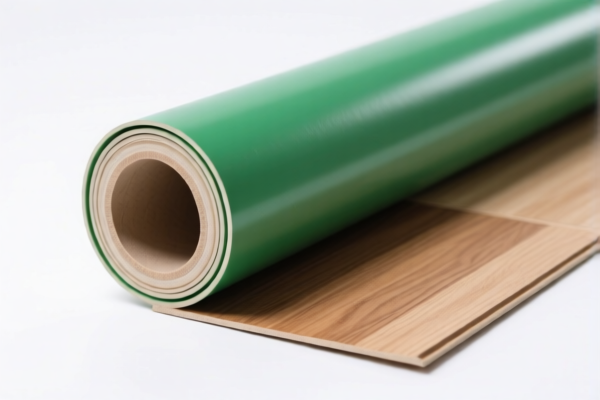


AI Analysis
🏠 Vinyl Flooring Roll
🌐 HS Code Reference & Customs Clearance Guide | 2026 Latest Tariff Analysis | Professional Level Entry Strategy
📌 I. Product Definition & Classification: Do You Really Understand "Vinyl Flooring"?
Vinyl Flooring Roll (also known as Sheet Vinyl or LVT Roll) is a popular synthetic flooring material composed primarily of Polyvinyl Chloride (PVC), also referred to in trade as "vinyl." It is typically supplied in large rolls (e.g., 2m or 4m width) and is used for residential, commercial, and industrial flooring.
In international trade, it is generally classified based on its material composition (PVC polymer) and specific application (floor covering). However, depending on the substrate and manufacturing process, it may fall into different HS codes with significantly different tax implications, especially under current US trade policies.
⚠️ Key Distinction:
- If it is made of PVC polymers (standard vinyl) and used as floor covering → Likely Chapter 39 (3918.10).
- If it is a textile-backed vinyl floor (vinyl coated on fabric) → Potentially Chapter 59 (5904.90).
- Misclassification Risk: Declaring a PVC roll as "textile-backed" to seek lower base tariffs can trigger audits if the primary material is PVC.
📦 II. HS Code Classification Details (2026 Latest Tariff Authoritative Comparison)
| HS Code | Product Description | Applicability | Material Basis |
|---|---|---|---|
3918.10.20.00 |
Vinyl flooring, not made up; PVC-based | Standard vinyl sheet flooring, no fabric backing | PVC Polymer (Vinyl) |
3918.10.10.40 |
Vinyl flooring, PVC-based, specific subtype | Matches "Vinyl" in name with "Polyvinyl Chloride" in classification; "Floor" matches "Floor Covering" | PVC Polymer (Vinyl) |
5904.90.90.00 |
Other floor coverings, textile-backed | Inferred from common sense: "Vinyl" is synthetic, fits "Other" category of "Floor coverings coated/covered on textile base" | PVC + Textile Base |
🔍 Important Note:
-3918.10.xx: Applies to solid PVC/vinyl sheets. This is the most direct classification for standard vinyl rolls.
-5904.90.xx: Applies if the product is vinyl-coated textile/fabric. This requires proof of textile backing.
- Tax Discrepancy: The total tax rate differs significantly between these categories due to base duty differences.
💰 III. 2026 Latest Tariff Rate Breakdown (Including Additional Duties, Policy Surcharges)
✅ Applicable Country: United States (US)
✅ Origin: China (CN)
✅ Effective Time: 2025/2026 (Current US Trade Policy)
🎯 1. 3918.10.20.00 & 3918.10.10.40 —— PVC Vinyl Flooring (Standard Classification)
| Item | Content |
|---|---|
| Base Tariff | 5.3% (Ad Valorem) |
| Section 301 Additional Tariff | +25.0% (USITC Footnote for PVC products from China) |
| Section 122 Tariff | +10.0% (Specific to certain PVC/chloride products under US law) |
| Total Tax Rate | 40.3% |
| Tax Calculation | CIF Value × 40.3% |
| De Minimis Exemption | ❌ Not Applicable (High tariff items excluded) |
| Legal Basis Path | HTSUS:3918.10 → USITC:301 (25%) → USITC:122 (10%) |
📌 Explanation:
- Base Duty (5.3%): Standard MFN rate for plastic floor coverings.
- Section 301 (+25%): Retaliatory tariff on Chinese PVC goods.
- Section 122 (+10%): Additional duty on specific chemical/plastic imports.
- Total 40.3%: This is a very high tax burden. Importers must calculate cost carefully.
🎯 2. 5904.90.90.00 —— Other Floor Coverings (Textile-Backed/Inferred)
| Item | Content |
|---|---|
| Base Tariff | 0.0% |
| Section 301 Additional Tariff | +25.0% |
| Section 122 Tariff | +10.0% |
| Total Tax Rate | 35.0% |
| Tax Calculation | CIF Value × 35.0% |
| De Minimis Exemption | ❌ Not Applicable |
| Legal Basis Path | HTSUS:5904.90 → USITC:301 (25%) → USITC:122 (10%) |
📌 Explanation:
- Base Duty (0%): Textile-based floor coverings often have lower base duties.
- However, Total 35.0%: Still high due to 301 and 122 tariffs.
- Risk: If customs determines the product is pure PVC (not textile-backed), it will reclassify to 3918.10, resulting in back taxes + penalties.
🛠️ IV. Customs Clearance Practical Advice (Battlefield Pit-Avoidance Guide)
✅ 1. Required Documentation Checklist (All Mandatory)
| Document | Must Provide | Explanation |
|---|---|---|
| ✅ Product Specification Sheet | ✔️ | Detail: Width, Thickness, Material Composition (100% PVC vs. PVC+Textile), Backing Type. |
| ✅ Material Safety Data Sheet (MSDS) | ✔️ | Confirms chemical composition (PVC content). |
| ✅ Product Photos (Whole Roll + Cross-Section) | ✔️ | Must clearly show if there is a textile/fabric layer. |
| ✅ Commercial Invoice | ✔️ | Must state: "Vinyl Flooring Roll, PVC Composition, For Floor Covering." |
| ✅ Packing List | ✔️ | Include roll dimensions, weight, and quantity. |
| ✅ Certificate of Origin (CO) | ✔️ | If shipped from non-China countries, may reduce tariffs. |
✅ 2. Declaration Tips (Key Mantras)
🔥 “Material Determines Code, Backing Changes Rate, Accurate Description Saves Money!”
| Scenario | Correct Declaration | Wrong Practice |
|---|---|---|
| 100% PVC Vinyl Roll | 3918.10.20.00 or 3918.10.10.40 |
Declare as 5904.90 → Audit Risk & Back Taxes |
| PVC-Coated Textile Roll | 5904.90.90.00 |
Declare as 3918.10 → Overpayment (5.3% base) |
| Mixed Samples | Separate HS Codes | Mixed declaration → Delays & Seizures |
| Roll vs. Tile | Specify "Roll" not "Tile" | Confusing with LVT Planks (3918.91) → Wrong Tax |
📌 Critical Advice:
- If your product is 100% PVC (no fabric), DO NOT try to declare it as5904.90to save 5.3%. The 301 and 122 tariffs are the same. The only benefit of5904.90is the 0% base duty, but if audited, you will pay the 5.3% + penalties.
- If your product has a clear textile backing,5904.90.90.00saves you 5.3% on the CIF value. Calculate if the administrative burden is worth it.
✅ 3. Special Cases Handling
| Case | Handling Advice |
|---|---|
| Hybrid Products (PVC + Fabric) | Provide cross-section photos. Declare as 5904.90.90.00 if textile is the base. |
| Embossed/Textured Vinyl | Still 3918.10.20.00. Texture does not change material classification. |
| Self-Adhesive Vinyl Rolls | If adhesive is primary, may fall under 3918.91. Check adhesive content. |
| Ships from Vietnam/Mexico | Check for Section 301 Exclusions. If exempt, total tariff could drop to 5.3% or 0% depending on HS code. |
🌍 V. Global Main Market Customs Comparison (2026 Latest)
| Country/Region | Recommended HS Code | Base Tariff | Additional Duties (China) | Total Est. Tax | Remarks |
|---|---|---|---|---|---|
| 🇺🇸 USA | 3918.10.20.00 |
5.3% | +35% (301+122) | 40.3% | High barrier. Check for exclusions. |
| 🇺🇸 USA | 5904.90.90.00 |
0.0% | +35% (301+122) | 35.0% | Only if textile-backed. |
| 🇪🇺 EU | 3918.10 |
6.5% | None | 6.5% | No Section 301/122 in EU. |
| 🇨🇳 China | 3918.10 |
5.0% | None | 5.0% | Low entry cost for domestic use. |
| 🇬🇧 UK | 3918.10 |
5.0% | None | 5.0% | Post-Brexit, aligns with old EU rates. |
📌 Conclusion:
- USA is the highest-cost market for Chinese vinyl flooring due to 301 and 122 tariffs.
- Consider Supply Chain Diversification: Shipping from Vietnam, Thailand, or Mexico may qualify for Section 301 Exclusions or lower base tariffs, potentially reducing total tax to <10%.
📌 VI. Common Errors & Pitfalls Guide (Lessons from Tears)
❌ Error 1: Declaring 100% PVC rolls as "Textile Flooring" (5904.90)
👉 Consequence: Customs audits, reclassification to 3918.10, back taxes + 25% penalty.
Fix: Provide cross-section photos proving no textile backing for 3918.10.
❌ Error 2: Missing "Section 122" in declaration
👉 Consequence: Underpayment of 10%. Customs will assess additional duty + interest.
Fix: Ensure all PVC products are flagged for Section 122 if applicable.
❌ Error 3: Confusing "Vinyl Tiles" (LVT) with "Vinyl Rolls"
👉 Consequence: LVT (Planks/Tiles) may have different HS codes (e.g., 3918.91).
Fix: Clearly state "ROLL" in description. Tiles are cut, Rolls are continuous.
❌ Error 4: Not checking for Section 301 Exclusions
👉 Consequence: Paying 25% unnecessarily.
Fix: Check the USTR Exclusion List for PVC flooring before shipping. If your product is on the list, you can save 25%.
✅ Correct Declaration Example:
"Vinyl Flooring Roll, 100% Polyvinyl Chloride (PVC), 2mm Thickness, 2m Width, For Indoor Residential Use, Model XYZ, No Textile Backing."
🎯 VII. Conclusion: Precise Classification, Cost Optimization!
🎯 Remember the Mantra:
🔹 “100% PVC → 3918.10 (40.3%)”
🔹 “Textile-Backed → 5904.90 (35.0%)”
🔹 “Non-China Origin → Check Exclusions (Save 25%!)”
🔹 “Always Provide Photos → Avoid Audits!”
📌 Pro Tip:
If you are importing into the USA, and your vinyl flooring is not on the Section 301 Exclusion List, consider:
1. Pre-Application for Advance Ruling from CBP to confirm HS Code.
2. Supply Chain Shift to Southeast Asia if possible.
3. Hire a Customs Broker to verify if your specific product qualifies for any 122 Tariff exemptions.
📣 Immediate Action:
📞 Contact your customs broker + Provide Product Cross-Section Photos + Apply for Pre-Ruling.
🚀 Ensure your vinyl flooring clears customs smoothly, legally, and cost-effectively!
✨ Professional Clearance Starts with Accurate Classification!
💼 Your Every Dollar of Tax is Worth Calculating Precisely!
Customer Reviews
About HS Code Classification
The Harmonized System (HS) is an internationally standardized nomenclature developed by the World Customs Organization (WCO) to classify traded products. Over 200 countries use the HS system as the basis for customs tariffs, trade statistics, and import/export regulations.
Each HS code follows a hierarchical structure:
- Chapter (2 digits) — Broad category of goods (e.g., Chapter 84: Machinery and Mechanical Appliances)
- Heading (4 digits) — More specific grouping within the chapter
- Subheading (6 digits) — Internationally standardized breakdown, used by all WCO member countries
- National subdivisions (8-10 digits) — Country-specific extensions for further classification, such as US HTSUS 10-digit codes
Correct HS code classification is essential for smooth customs clearance, accurate duty payment, and compliance with trade regulations. Misclassification can lead to customs delays, overpayment of duties, or penalties.
When importing from CN to US, the applicable tariff rates may include:
- Most-Favored-Nation (MFN) rate — The standard duty rate applied to WTO members
- General rate — Applied to countries without trade agreements
- Trade remedy duties — Additional tariffs such as Section 301 (anti-dumping), Section 232 (national security), or countervailing duties
The information provided on this page is for reference purposes only. For official classification, please consult with your local customs authority or a licensed customs broker.