Vinyl Polymers Profile Shapes
CN → US| HS Code | Tariff Rate | Origin | Destination | Doc |
|---|---|---|---|---|
| 3916200010 | 40.8% | CN | US | Official Doc |
| 3916200020 | 40.8% | CN | US | Official Doc |
Product Images
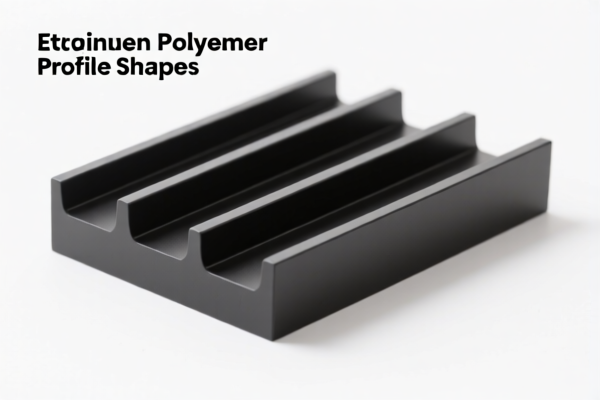
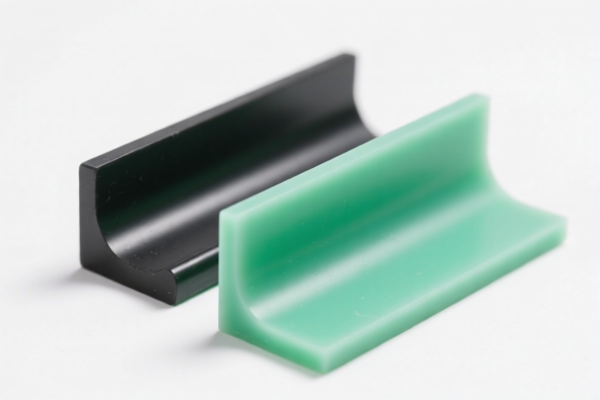
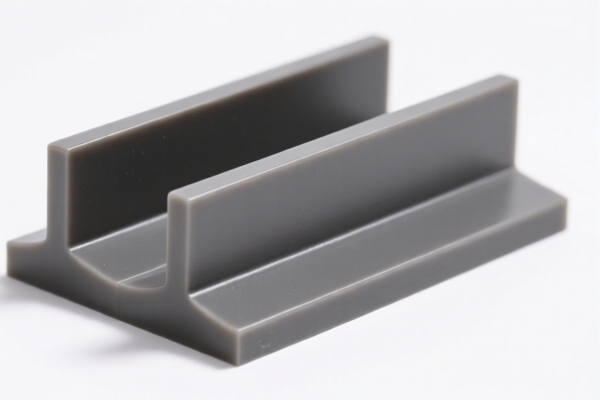
AI Analysis
🏗️ Vinyl Polymers: Profile Shapes (Siding & Window/Door Systems)
🌐 HS Code Reference & Clearance Guide | 2026 Latest Tariff Analysis | Professional Customs Strategy
📌 I. Product Definition & Classification: What Exactly Are We Dealing With?
In the global trade of plastic construction materials, "Vinyl Polymer Profile Shapes" primarily refer to rigid extruded shapes used in building exteriors. While the broad category is Chapter 39 (Plastics and Articles Thereof), specific end-uses dictate precise classification within Heading 3916.
Key Distinction: The difference lies strictly in the intended application defined by the customs description: 1. Siding Profiles: Specifically designed for house or building exterior cladding. 2. Window/Door/Decking/Railing Profiles: General-purpose architectural extrusions used for frames, tracks, or structural supports.
⚠️ Critical Classification Point:
- If the product is marketed, packaged, or technically specified exclusively as siding for houses/buildings → It falls under Siding.
- If the product is a general extrusion used for windows, doors, decking, or railings (or not specifically identified as siding) → It falls under General Architectural Profiles.
- Note: Both categories are made of Polymers of Vinyl Chloride (PVC).
📦 II. HS Code Classification Details (2026 Latest Tariff Alignment)
| HS Code | Product Description | Primary Application | Material |
|---|---|---|---|
3916.20.00.10 |
Monofilament, rods, sticks, profile shapes... of polymers of vinyl chloride: Siding for house or building exterior | Exterior wall cladding, trim boards, shutters | PVC |
3916.20.00.20 |
Monofilament, rods, sticks, profile shapes... of polymers of vinyl chloride: Window, door, decking or railing profiles | Window frames, door frames, deck boards, balcony railings | PVC |
🔍 Key Reminder:
- Both codes fall under 3916.20.00 (Plastics, of polymers of vinyl chloride).
- The 8-digit suffix determines the specific use.
- Do not misclassify window profiles as siding just because they are both plastic; the tariff sub-headings are distinct.
💰 III. 2026 Latest Tariff Rate Breakdown (Detailed Tax Analysis)
✅ Applicable Country: United States (US)
✅ Origin: China (CN)
✅ Effective Date: Current enforcement includes both base and retaliatory tariffs.
🎯 1. 3916.20.00.10 — Siding for House or Building Exterior
| Item | Content |
|---|---|
| Base Tariff Rate | 5.8% (Standard MFN Rate) |
| Section 301 Additional Tariff | +25.0% (Retaliatory Tariff on Chinese PVC Profiles) |
| Total Effective Tax Rate | 30.8% |
| Tax Calculation | (Base Duty 5.8% + Additional Duty 25.0%) = 30.8% |
| De Minimis Exemption | ❌ Not Applicable (Value of goods determines duty, but the 25% surcharge often negates small parcel benefits depending on current CBP enforcement on PVC). |
| Legal Basis Path | HTSUS:3916.20.00.10 → Section 301 List 4 → Total: 30.8% |
📌 Explanation:
- The 5.8% is the standard US Harmonized Tariff Schedule duty for PVC profiles.
- The 25.0% is the additional duty imposed under Section 301 of the Trade Act of 1974, targeting specific Chinese manufacturing sectors, including plastic products.
- Total Cost Impact: For every $10,000 USD of CIF value, expect $3,080 in duties/taxes.
🎯 2. 3916.20.00.20 — Window, Door, Decking or Railing Profiles
| Item | Content |
|---|---|
| Base Tariff Rate | 5.8% (Standard MFN Rate) |
| Section 301 Additional Tariff | +25.0% (Retaliatory Tariff on Chinese PVC Profiles) |
| Total Effective Tax Rate | 30.8% |
| Tax Calculation | (Base Duty 5.8% + Additional Duty 25.0%) = 30.8% |
| De Minimis Exemption | ❌ Not Applicable |
| Legal Basis Path | HTSUS:3916.20.00.20 → Section 301 List 4 → Total: 30.8% |
📌 Note:
- The tax rate is identical to siding profiles because the base heading (3916.20) and the additional duty list apply uniformly to PVC profiles regardless of the specific architectural use.
- Whether it’s a window frame or a deck board, the 30.8% total tax applies.
🛠️ IV. Customs Clearance Practical Advice (Actionable Pitfall Avoidance)
✅ 1. Required Documentation Checklist (Non-Negotiable)
| Document | Must Provide | Purpose |
|---|---|---|
| ✅ Product Specification Sheet | ✔️ | Must explicitly state: "PVC Polymer," "Extruded Profile," and Intended Use (Siding vs. Window/Door). |
| ✅ Commercial Invoice | ✔️ | Description must match HS Code exactly. E.g., "PVC Siding Profiles" for .10 or "PVC Window Frame Profiles" for .20. |
| ✅ Packing List | ✔️ | Weight and dimensions must align with HS Code volume/weight characteristics. |
| ✅ Photos of Products | ✔️ | Show the cross-section and any branding/markings indicating use (e.g., "Exterior Siding"). |
| ✅ Certificate of Origin (CO) | ✔️ | Essential for proving China origin to trigger/verify the 25% Section 301 duty. |
| ✅ Material Safety Data Sheet (MSDS) | ✔️ | Sometimes requested to confirm non-hazardous nature of PVC compounds. |
✅ 2. Declaration Best Practices (Key Mantra)
🔥 “Specify Use Clearly, PVC is PVC, 30.8% is the Floor!”
| Scenario | Correct Declaration | Common Mistake |
|---|---|---|
| Siding | 3916.20.00.10Desc: "Vinyl Siding Profiles for Exterior Walls" |
Using .20 for siding → Risk of reclassification & penalties. |
| Window/Door | 3916.20.00.20Desc: "PVC Profiles for Window Frames" |
Calling it "General Plastic Rods" → Risk of higher scrutiny. |
| Mixed Shipment | Split HS Codes in one entry | Combining siding and window profiles into one line item → Customs will split and assess based on the most favorable or least favorable depending on audit, causing delays. |
| Non-Vinyl Plastics | Do NOT use these codes | If it’s ABS or PP, it falls under different subheadings (e.g., 3916.90). Using 3916.20 for non-PVC is fraud. |
✅ 3. Special Considerations
| Situation | Handling Advice |
|---|---|
| OEM Custom Profiles | Provide the design file or drawing to Customs Broker to prove if it’s siding or window profile. |
| Recycled PVC | If the PVC contains recycled content, declare accurately. Some trade agreements may offer different rates if origin is not China. |
| Transshipment | If goods are shipped via Vietnam or Mexico, ensure Country of Origin remains China. Transshipment does not eliminate the 25% Section 301 duty unless substantial transformation occurs (unlikely for simple extrusion). |
| Section 301 Exclusions | Check current USTR exclusion lists. Note: As of recent updates, most PVC profile exclusions have expired or are limited. Assume 30.8% applies unless a specific exclusion code is granted. |
🌍 V. Global Market Comparison (2026 Outlook)
| Region | Recommended HS Code | Total Tariff Rate (China Origin) | Key Requirements |
|---|---|---|---|
| 🇺🇸 USA | 3916.20.00.10 / .20 |
30.8% (5.8% Base + 25% 301) | FCC (if applicable), UL (for fire rating claims) |
| 🇨🇳 China | 3916.20 |
~2.8% - 5% (Import Duty) | CCC Certification (if applicable) |
| 🇪🇺 EU | 3916.20 |
0% (Most Favored Nation) | REACH Compliance, CE Marking (for construction products) |
| 🇨🇦 Canada | 3916.20 |
0% (CUSMA/USMCA Eligible if Canadian Made) | If China-made: MFN rate applies (~0-2.5%) |
📌 Strategic Insight:
- The US market is the most expensive for Chinese PVC profiles due to the 25% Section 301 tariff.
- EU and Canada are significantly cheaper on duty, but face strict REACH/CE regulatory barriers.
- Diversification: Many exporters are shifting PVC extrusion to Vietnam or Thailand to avoid the 25% US tariff, ensuring the product is not of Chinese origin.
📌 VI. Common Errors & Pitfalls (Lessons Learned)
❌ Mistake 1: Declaring "Plastic Rods" instead of "PVC Profiles"
👉 Consequence: Customs may assign a higher general rate or reject the entry for lack of specificity. PVC has specific subheadings; generic "Plastics" codes are wrong.
❌ Mistake 2: Using 3916.20.00.10 for Window Profiles
👉 Consequence: Although the tax rate is the same (30.8%), incorrect description leads to misdeclaration flags. While financial impact might be neutral, it triggers audits.
❌ Mistake 3: Ignoring the 25% Section 301 Duty
👉 Consequence: Underpayment of duties. If discovered, you owe back taxes + interest + potential penalties. The 30.8% is NOT negotiable.
❌ Mistake 4: Claiming "De Minimis" for LCL Shipments
👉 Consequence: Section 301 duties often do not apply to de minimis (under $800) imports depending on current CBP enforcement. However, for commercial B2B shipments, this exemption does not exist. Always budget for 30.8%.
✅ Correct Action:
"PVC Extruded Siding Profiles, Unpainted, for Exterior Residential Use, Model XYZ, 5.8% Duty, 25% Section 301, Total 30.8%"
🎯 VII. Conclusion: Precision in PVC Profiling
🎯 Key Takeaway:
🔹 Material is Key: Must be Vinyl Chloride (PVC).
🔹 Use Defines Code: Siding =.10, Window/Door/Deck =.20.
🔹 Tax is High: 30.8% total burden. Plan cash flow accordingly.
🔹 Documentation: Be specific. "Plastic Profile" is too vague. "PVC Siding Profile" is accurate.
📌 Pro Tip:
If your profit margins are thin, consider:
1. Value Engineering: Reduce PVC thickness without compromising strength.
2. Origin Shifting: Source extrusions from non-China countries (e.g., Vietnam) to bypass the 25% Section 301 duty.
3. Advance Ruling: Apply for a Binding Tariff Information (BTI) or US Pre-Decision Ruling if you are unsure if a unique profile is "siding" or "general."
📣 Immediate Next Steps:
📞 Verify with Broker: Send product drawings to your customs broker.
💰 Budget for 30.8%: Do not quote CIF prices without including this duty.
🚀 Optimize Supply Chain: Evaluate non-China PVC suppliers if targeting the US market.
✨ Professional Clearance Starts with Accurate Classification!
💼 Every percent of duty saved is pure profit gained!
Customer Reviews
About HS Code Classification
The Harmonized System (HS) is an internationally standardized nomenclature developed by the World Customs Organization (WCO) to classify traded products. Over 200 countries use the HS system as the basis for customs tariffs, trade statistics, and import/export regulations.
Each HS code follows a hierarchical structure:
- Chapter (2 digits) — Broad category of goods (e.g., Chapter 84: Machinery and Mechanical Appliances)
- Heading (4 digits) — More specific grouping within the chapter
- Subheading (6 digits) — Internationally standardized breakdown, used by all WCO member countries
- National subdivisions (8-10 digits) — Country-specific extensions for further classification, such as US HTSUS 10-digit codes
Correct HS code classification is essential for smooth customs clearance, accurate duty payment, and compliance with trade regulations. Misclassification can lead to customs delays, overpayment of duties, or penalties.
When importing from CN to US, the applicable tariff rates may include:
- Most-Favored-Nation (MFN) rate — The standard duty rate applied to WTO members
- General rate — Applied to countries without trade agreements
- Trade remedy duties — Additional tariffs such as Section 301 (anti-dumping), Section 232 (national security), or countervailing duties
The information provided on this page is for reference purposes only. For official classification, please consult with your local customs authority or a licensed customs broker.