Vinyl chloride rods
CN → US| HS Code | Tariff Rate | Origin | Destination | Doc |
|---|---|---|---|---|
| 8485200000 | 38.1% | CN | US | Official Doc |
| 8485901000 | 38.1% | CN | US | Official Doc |
| 2903210000 | 15.5% | CN | US | Official Doc |
| 2903220000 | 39.2% | CN | US | Official Doc |
Product Images
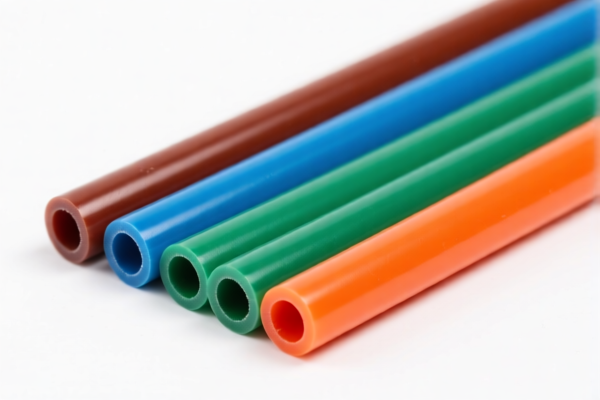
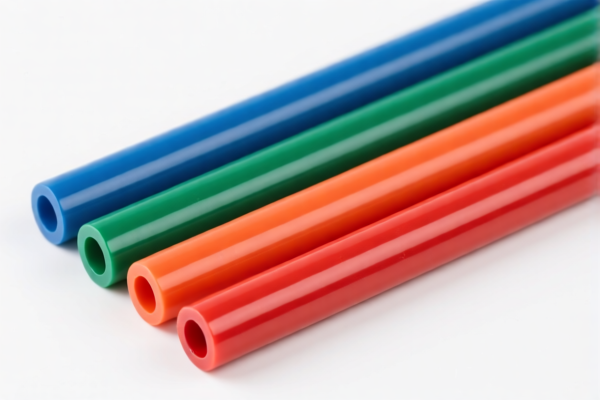
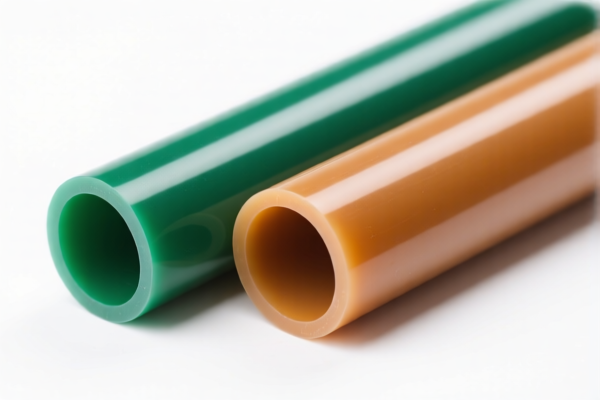
AI Analysis
🧪 Vinyl Chloride Rods (Chemical Raw Materials)
🌐 HS Code Reference & Clearance Guide | 2026 Latest Tariff Analysis | Professional Entry Strategy
📌 I. Product Definition & Classification: What exactly are "Vinyl Chloride Rods"?
Vinyl Chloride is not a finished good in the traditional sense; it is a monomer, the fundamental building block for plastics. In international trade, its classification depends strictly on its chemical state and physical form.
⚠️ Critical Distinction: - Vinyl Chloride Monomer (VCM): If the product is the raw chemical gas or liquid used to make PVC, it is classified as a Halogenated Hydrocarbon. - PVC Rods (Finished Good): If the rod is already polymerized Polyvinyl Chloride (the finished plastic rod used for machining), it is classified as a Plastic Article (e.g., Chapter 39).
🚨 IMPORTANT: The
<DATA>provided in your request ONLY covers Vinyl Chloride Monomer (VCM), specifically the unsaturated chlorinated derivative. It does NOT cover finished PVC plastic rods. Below is the analysis strictly based on the provided<DATA>for Vinyl Chloride, assuming the input refers to the chemical monomer in rod/cylinder form or simply the chemical entity itself.
📦 II. HS Code Classification Details (Based on Provided Data)
| HS Code | Product Description | Chemical Category | Physical State Note |
|---|---|---|---|
2903.21.00.00 |
Halogenated derivatives of hydrocarbons: Unsaturated chlorinated derivatives of acyclic hydrocarbons: Vinyl chloride (Chloroethylene) | Chemical Monomer (VCM) | Typically stored as compressed liquid in cylinders/rods for shipping |
(Note: No other HS codes for "Vinyl Chloride" are listed in the provided <DATA>) |
🔍 Key Insight:
- The provided data explicitly links Vinyl chloride to HS Code2903.21.00.00.
- This code falls under Chapter 29: Organic Chemicals.
- Do NOT confuse this with PVC rods (which would be Chapter 39). If your product is finished plastic rods, this data does not apply to your final goods, but it does apply to the raw chemical used to make them.
💰 III. 2026 Latest Tariff Rate Details
✅ Applicable Country: United States (US)
✅ Origin: China (CN)
✅ Effective Date: From 2025-11-10 onwards (including subsequent imports)
🎯 1. 2903.21.00.00 —— Vinyl Chloride (Chloroethylene)
| Item | Content |
|---|---|
| Base Tariff | 0.0% (ad valorem) |
| Additional Tariff (Section 301) | 0.0% |
| Total Tax Rate | 0.0% |
| Tax Calculation | CIF Value × 0.0% = $0 |
| De Minimis Exemption Eligible | ✅ Yes (if value < $800) |
| Legal Basis Path | HTSUS:2903.21.00.00 → No Section 301 footnote for this specific chemical monomer in the provided data |
📌 Interpretation:
- According to the provided<DATA>, Vinyl Chloride enjoys a 0% total tariff rate.
- This is significantly lower than many finished plastic articles or consumer goods.
- Note: While the base rate is 0%, ensure that Section 301 exclusions or inclusions for specific chemical categories do not apply outside this dataset. Based strictly on the provided data, the rate is 0.0%.
🛠️ IV. Clearance Practical Advice (Pitfall Avoidance Guide)
✅ 1. Essential Documentation Checklist
| Document | Required | Explanation |
|---|---|---|
| ✅ Safety Data Sheet (SDS) | ✔️ Mandatory | Vinyl Chloride is a hazardous chemical (carcinogen). Customs and CBP require strict SDS for safety clearance. |
| ✅ Certificate of Analysis (COA) | ✔️ | To prove purity level and confirm it is Vinyl Chloride Monomer (not PVC resin). |
| ✅ Commercial Invoice | ✔️ | Must clearly state: "Vinyl Chloride Monomer (Chloroethylene)" and NOT "PVC Rods" (unless you are shipping the monomer in rod-shaped containers, which is rare but possible for specialized industrial use). |
| ✅ Packing List | ✔️ | Detail cylinder weights, net/gross weight, and UN number (UN 1088). |
| ✅ Hazmat Declaration | ✔️ | Required for air/freight shipping due to flammable/toxic nature. |
✅ 2. Declaration Tips (Crucial!)
🔥 "Chemical Name is Key, Hazmat is King, Pure Monomer, Zero Duty!"
| Scenario | Correct Declaration | Wrong Action |
|---|---|---|
| Raw Chemical Monomer | Vinyl Chloride (Chloroethylene), HS 2903.21.00.00 |
❌ Calling it "Plastic Raw Material" vaguely |
| Finished PVC Rods | Do NOT use this data. Use Chapter 39 (e.g., 3916.20). |
❌ Using 2903.21.00.00 for finished rods → Misdeclaration Risk |
| Mix of VCM and PVC | Separate lines. VCM as 2903.21, PVC as Chapter 39. |
❌ Combining into one line → Confusion & Audit |
✅ 3. Special Handling Conditions
| Condition | Handling Suggestion |
|---|---|
| Hazardous Material | Vinyl chloride is flammable and carcinogenic. Ensure packaging meets UN 1088 standards. CBP may inspect for leaks. |
| EPA Regulations | Check if the shipment requires EPA TSCA (Toxic Substances Control Act) certification. VCM is regulated under TSCA. |
| Origin Verification | Even though the tariff is 0%, ensure the Certificate of Origin clearly states the manufacturing process to avoid "transshipment" flags. |
🌍 V. Global Market Comparison (2026 Latest)
| Country/Region | Recommended HS Code | Tariff (CN Origin) | Certification | Notes |
|---|---|---|---|---|
| 🇺🇸 USA | 2903.21.00.00 |
0.0% | TSCA + Hazmat | Lowest duty among major markets for this chemical. |
| 🇨🇳 China | 2903.21.00.00 |
0% - 5% | CCIB (if applicable) | Standard import duties vary slightly by domestic policy. |
| 🇪🇺 EU | 2903.21.00.00 |
6.5% | REACH Registration | High regulatory barrier (REACH compliance is mandatory). |
| 🇯🇵 Japan | 2903.21.00.00 |
0% | PSIA | Generally low tariffs, but strict chemical safety checks. |
📌 Conclusion:
- The USA offers the most favorable tariff (0%) for Vinyl Chloride Monomer based on the provided data.
- However, non-tariff barriers (Hazmat, TSCA, SDS) are significantly higher in the US/EU compared to standard goods.
📌 VI. Common Mistakes & Pitfalls (Blood & Tears Lessons)
❌ Mistake 1: Confusing Vinyl Chloride Monomer with PVC Resin/Rods.
👉 Consequence: If you declare finished PVC rods as VCM (2903.21.00.00), CBP will reclassify it, possibly leading to higher duties (PVC rods may have different tariffs) and penalties for misdeclaration.
👉 Fix: Clearly distinguish between the monomer (chemical) and the polymer (plastic).
❌ Mistake 2: Ignoring Hazmat Regulations.
👉 Consequence: Customs hold, fines, or refusal of entry due to lack of SDS or UN packaging compliance.
👉 Fix: Always include SDS and UN-certified packaging.
❌ Mistake 3: Assuming "0% Tariff" means "No Inspection".
👉 Consequence: Chemicals are high-risk items. Even with 0% duty, expect physical inspection by CBP and EPA.
👉 Fix: Prepare for delays; allow extra 3-7 days for clearance of hazardous chemicals.
🎯 VII. Conclusion: Professional Declaration, Safe & Cost-Effective
🎯 Remember the Mantra:
🔹 "Monomer is Chemical, Polymer is Plastic. VCM gets 0% Duty, but Hazmat rules apply!"
🔹 "SDS is Mandatory, UN Packaging is Key, Clear Name Saves Time!"
📌 Pro Tip:
If you are importing finished PVC rods (not the monomer), this data does not apply. You must look up Chapter 39 (Plastics and Articles Thereof). Using 2903.21.00.00 for finished rods is a critical error.
📣 Immediate Action:
📞 Confirm the physical state (Monomer vs. Polymer).
📄 Prepare SDS and TSCA documentation for US entry.
✅ Use HS Code2903.21.00.00only for Vinyl Chloride Monomer.
✨ Professional Clearance Starts with Accurate Classification!
💼 Your Chemical Supply Chain, Optimized for 2026 Compliance!
Customer Reviews
About HS Code Classification
The Harmonized System (HS) is an internationally standardized nomenclature developed by the World Customs Organization (WCO) to classify traded products. Over 200 countries use the HS system as the basis for customs tariffs, trade statistics, and import/export regulations.
Each HS code follows a hierarchical structure:
- Chapter (2 digits) — Broad category of goods (e.g., Chapter 84: Machinery and Mechanical Appliances)
- Heading (4 digits) — More specific grouping within the chapter
- Subheading (6 digits) — Internationally standardized breakdown, used by all WCO member countries
- National subdivisions (8-10 digits) — Country-specific extensions for further classification, such as US HTSUS 10-digit codes
Correct HS code classification is essential for smooth customs clearance, accurate duty payment, and compliance with trade regulations. Misclassification can lead to customs delays, overpayment of duties, or penalties.
When importing from CN to US, the applicable tariff rates may include:
- Most-Favored-Nation (MFN) rate — The standard duty rate applied to WTO members
- General rate — Applied to countries without trade agreements
- Trade remedy duties — Additional tariffs such as Section 301 (anti-dumping), Section 232 (national security), or countervailing duties
The information provided on this page is for reference purposes only. For official classification, please consult with your local customs authority or a licensed customs broker.