Violin Case
CN → US| HS Code | Tariff Rate | Origin | Destination | Doc |
|---|---|---|---|---|
| 9209998000 | 22.8% | CN | US | Official Doc |
| 4202925000 | 39.2% | CN | US | Official Doc |
| 9209991000 | 23.2% | CN | US | Official Doc |
| 4202190000 | 55.0% | CN | US | Official Doc |
Product Images
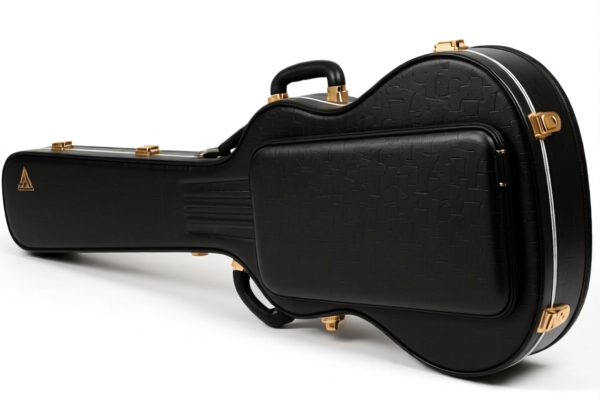
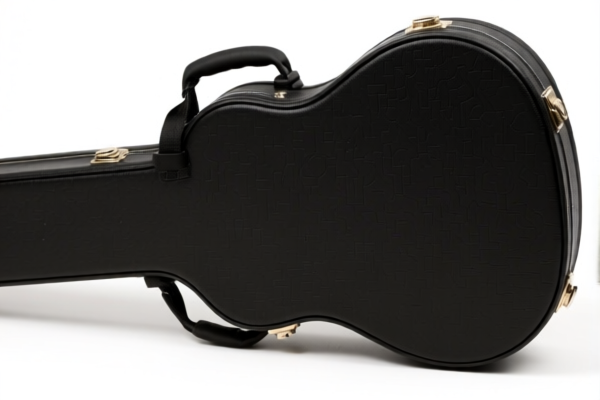
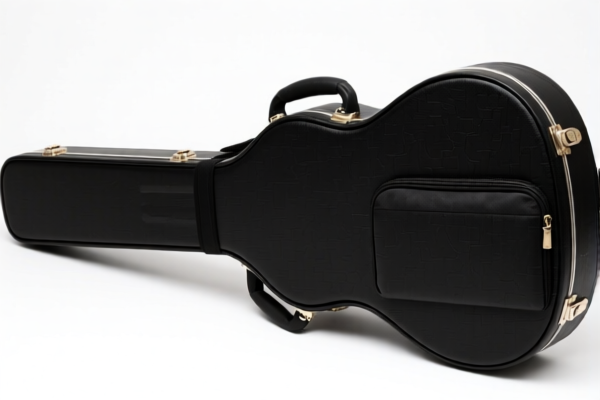

AI Analysis
🎻 Violin Case (Musical Instrument Accessory)
🌐 HS Code Reference & Customs Clearance Guide | 2026 Latest Tariff Analysis | Professional Clearance Strategy
📌 I. Product Definition & Classification: Do You Really Understand "Violin Cases"?
Violin cases are specialized protective containers for string instruments. In international trade, they are typically classified either as accessories to musical instruments (Chapter 92) or luggage/containers (Chapter 42). The correct classification depends heavily on design specificity and material composition.
Key Classification Logic: * Chapter 92 (9209): Applies if the case is specifically designed for musical instruments and lacks material conflicts with "accessories." This is generally the most favorable classification for dedicated violin cases. * Chapter 42 (4202): Applies if the case is viewed primarily as a "container" made of plastic sheeting, textile, or leather, regardless of its specific use for a violin. This often triggers higher tariffs due to broader container categories.
⚠️ Critical Distinction:
- If the case is shaped specifically for a violin and marketed as an instrument accessory → Chapter 92 (Lower Tax)
- If the case is a general-purpose hard/soft shell made of plastic/textile → Chapter 42 (Higher Tax)
- Note: Customs may reclassify based on material evidence if the "instrument accessory" claim is weak.
📦 II. HS Code Classification Details (2026 Latest Tariff Authority对照)
Based on the provided data, here are the four potential HS Codes, ranked from lowest tax burden to highest tax burden:
| HS Code | Product Description | Applicable Scenario | Estimated Total Tax (US Import from CN) |
|---|---|---|---|
9209.99.80.00 |
Accessories to musical instruments (Violin Case) | Dedicated violin case, no material conflict | 22.8% |
9209.99.10.00 |
Accessories/Holders for Musical Instruments | Matches instrument accessory category, consistent with intended use | 23.2% |
4202.92.50.00 |
Containers of plastic sheets or textile materials | Plastic/textile violin case, generic container classification | 39.2% |
4202.19.00.00 |
Containers of leather or plastic/leather covered | Leather/plastic-covered container, highest bracket | 55.0% |
🔍 Key Observation:
- Chapter 92 codes (9209.**) are significantly cheaper** (approx. 23%) compared to Chapter 42 codes (4202., approx. 39%-55%). - The difference between9209.99.80.00and9209.99.10.00is minimal (0.4%), but9209.99.10.00` explicitly references "holders/accessories," which may be safer for proof of purpose. - Chapter 42 codes incur heavy Section 301 tariffs**, making them cost-prohibitive for many exporters.
💰 III. 2026 Latest Tariff Rate Breakdown (Including Additional Duties)
✅ Applicable Country: United States (US)
✅ Origin: China (CN)
✅ Effective Date: Post-2025 Import Regulations
🎯 1. 9209.99.80.00 —— Musical Instrument Accessory (Best Option)
| Item | Detail |
|---|---|
| Base Duty | 5.3% |
| Section 301 Tariff | 7.5% |
| Section 122 Tariff | 10.0% |
| Total Tax Rate | 22.8% |
| Calculation Base | CIF Value × 22.8% |
| De Minimis Exemption | ❌ Not Eligible (Value likely exceeds $800 threshold for low-value shipments, and Section 301/122 usually override) |
| Legal Basis | Chapter 92 Notes + Section 301 List |
📌 Explanation:
- This is the most cost-effective classification. - Section 301 (7.5%) and Section 122 (10%) are applied cumulatively. - Total ~23% is manageable for high-value violin cases.
🎯 2. 9209.99.10.00 —— Instrument Holder/Accessory (Close Second)
| Item | Detail |
|---|---|
| Base Duty | 5.7% |
| Section 301 Tariff | 7.5% |
| Section 122 Tariff | 10.0% |
| Total Tax Rate | 23.2% |
| Calculation Base | CIF Value × 23.2% |
| De Minimis Exemption | ❌ Not Eligible |
| Legal Basis | Chapter 92 Notes + Section 301 List |
📌 Note:
- Nearly identical to9209.99.80.00. - Choose this if customs documentation explicitly lists "Instrument Holder" or "Accessory" rather than just "Box/Case."
🎯 3. 4202.92.50.00 —— Plastic/Textile Container (High Cost)
| Item | Detail |
|---|---|
| Base Duty | 4.2% |
| Section 301 Tariff | 25.0% |
| Section 122 Tariff | 10.0% |
| Total Tax Rate | 39.2% |
| Calculation Base | CIF Value × 39.2% |
| De Minimis Exemption | ❌ Not Eligible |
| Legal Basis | Chapter 42 Notes + Section 301 List |
📌 Warning:
- The 25% Section 301 tariff applies here, which is significantly higher than the 7.5% in Chapter 92. - This classification is risky unless the case is clearly a generic plastic/textile box not exclusively designed for violins.
🎯 4. 4202.19.00.00 —— Leather/Plastic Container (Highest Cost)
| Item | Detail |
|---|---|
| Base Duty | 20.0% |
| Section 301 Tariff | 25.0% |
| Section 122 Tariff | 10.0% |
| Total Tax Rate | 55.0% |
| Calculation Base | CIF Value × 55.0% |
| De Minimis Exemption | ❌ Not Eligible |
| Legal Basis | Chapter 42 Notes + Section 301 List |
📌 Critical Alert:
- 55% Total Tax is extremely high. - This applies to cases made of leather or leather-covered plastic. - Avoid this classification for standard violin cases unless they are luxury leather goods explicitly marketed as fashion accessories, not just instrument protection.
🛠️ IV. Customs Clearance Practical Advice (Best Practices to Avoid Pitfalls)
✅ 1. Essential Documentation Checklist (Non-Negotiable)
| Document | Required | Explanation |
|---|---|---|
| Product Specification Sheet | ✔️ | Must state "Designed for Violin," including dimensions, weight, and internal lining. |
| Photos | ✔️ | Clear images showing violin-shaped interior, padding, and latches. |
| Commercial Invoice | ✔️ | Description: "Violin Case, Accessory to Musical Instrument, Model XYZ" |
| Bill of Lading/Air Waybill | ✔️ | Ensure no misleading terms like "Plastic Box" or "Luggage." |
| HS Code Justification | ✔️ | Provide a brief note citing Chapter 92, Note 1 if claiming instrument accessory status. |
✅ 2. Declaration Strategy (Key Mantra)
🔥 "Claim Instrument Accessory, Not Generic Container!"
| Scenario | Correct Declaration | Wrong Declaration | Consequence |
|---|---|---|---|
| Dedicated Violin Case | HS: 9209.99.10.00 or 9209.99.80.00Desc: "Violin Case (Musical Instrument Accessory)" |
HS: 4202.92.50.00Desc: "Plastic Case" |
Tax Jump from 23% to 39%! |
| Luxury Leather Case | HS: 9209.99.10.00 (if arguable) |
HS: 4202.19.00.00Desc: "Leather Luggage" |
Tax Skyrockets to 55% |
| Generic Hard Shell | HS: 4202.92.50.00 |
HS: 9209.99.80.00 |
Customs Audit Risk (May be reclassified later) |
✅ 3. Special Handling Tips
| Situation | Recommendation |
|---|---|
| Mixed Shipment | If shipping violins + cases together, declare cases as accessories if they are packed with the instrument. This strengthens the Chapter 92 argument. |
| Material Ambiguity | If the case has both plastic and leather parts, emphasize the primary function (instrument protection) and specialized shape to argue for Chapter 92. |
| Pre-Ruling | For large volumes, apply for an Advance Ruling from U.S. Customs and Border Protection (CBP) to lock in the 22.8% rate. |
| Section 301 Exemptions | Check current exemption lists. Some musical instrument accessories may qualify for exclusions, but this is rare. Verify before shipping. |
🌍 V. Global Market Comparison (2026 Update)
| Country/Region | Recommended HS Code | Est. Total Duty | Notes |
|---|---|---|---|
| 🇺🇸 USA | 9209.99.10.00 |
23.2% | High Section 301/122. Chapter 92 is essential to avoid 39-55%. |
| 🇨🇳 China | 9209.99.00.00 |
~5-8% | Lower duties. Focus on accurate description. |
| 🇪🇺 EU | 9209.99.90 |
~0-4% | No Section 301. Standard duties apply. |
| 🇬🇧 UK | 9209.99.90 |
~0-4% | Post-Brexit rules similar to EU for this category. |
| 🇯🇵 Japan | 9209.99.90 |
~5-10% | Standard MFN rates. |
📌 Conclusion:
- USA is the only market where classification choice drastically impacts cost due to Section 301 and 122 tariffs. - Always prioritize Chapter 92 (9209) for US exports to minimize tax liability.
📌 VI. Common Mistakes & Pitfalls (Lessons Learned)
❌ Mistake 1: Declaring a violin case as a "Plastic Box" or "Suitcase"
👉 Result: Customs assigns 4202.92.50.00 → Tax jumps from 23% to 39.2% (Loss of ~16% on CIF value).
❌ Mistake 2: Ignoring the "Section 122" tariff
👉 Result: Underestimating total costs. Even with Chapter 92, the 10% Section 122 tariff applies. Total must be calculated as Base + 301 + 122.
❌ Mistake 3: Using "Violin Case" in description but listing HS as 4202.19.00.00 (Leather)
👉 Result: 55% Tax. If the case is not primarily leather, this is a misclassification error leading to penalties.
❌ Mistake 4: Assuming "De Minimis" ($800) applies
👉 Result: No exemption. Musical instrument accessories and their cases are generally subject to full duty assessment, especially with additional tariffs.
✅ Correct Approach:
"Violin Case, Hard Shell, Foam Lined, Designed for 4/4 Violin, Accessory to Musical Instrument, Model ABC, Origin: China"
🎯 VII. Conclusion: Professional Declaration for Cost Efficiency
🎯 Remember the Mantra:
🔹 "Accessory Status Saves 16-30% Tax!"
🔹 "Chapter 92 is Your Friend; Chapter 42 is Your Expense."
🔹 "Describe Function, Not Just Material."
📌 Pro Tip:
If you are exporting large quantities to the US, consult a customs broker to apply for a CBP Advance Ruling. Locking in the 9209.99.10.00 classification at 23.2% instead of risking 4202 at 39-55% can save thousands of dollars per container.
📣 Action Item:
📞 Contact your freight forwarder with the exact product photos and spec sheet.
📝 Ensure the commercial invoice states "Musical Instrument Accessory."
🚀 Maximize Profit by Minimizing Classification Risk!
✨ Precise Classification, Smooth Clearance, Higher Margins!
💼 Your Violin Case is an Accessory, Not Just a Box!
Customer Reviews
About HS Code Classification
The Harmonized System (HS) is an internationally standardized nomenclature developed by the World Customs Organization (WCO) to classify traded products. Over 200 countries use the HS system as the basis for customs tariffs, trade statistics, and import/export regulations.
Each HS code follows a hierarchical structure:
- Chapter (2 digits) — Broad category of goods (e.g., Chapter 84: Machinery and Mechanical Appliances)
- Heading (4 digits) — More specific grouping within the chapter
- Subheading (6 digits) — Internationally standardized breakdown, used by all WCO member countries
- National subdivisions (8-10 digits) — Country-specific extensions for further classification, such as US HTSUS 10-digit codes
Correct HS code classification is essential for smooth customs clearance, accurate duty payment, and compliance with trade regulations. Misclassification can lead to customs delays, overpayment of duties, or penalties.
When importing from CN to US, the applicable tariff rates may include:
- Most-Favored-Nation (MFN) rate — The standard duty rate applied to WTO members
- General rate — Applied to countries without trade agreements
- Trade remedy duties — Additional tariffs such as Section 301 (anti-dumping), Section 232 (national security), or countervailing duties
The information provided on this page is for reference purposes only. For official classification, please consult with your local customs authority or a licensed customs broker.