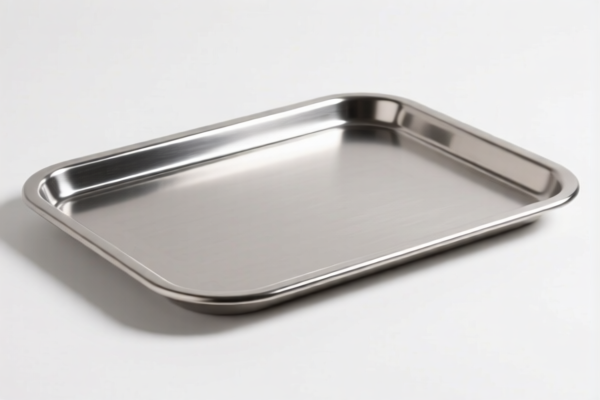
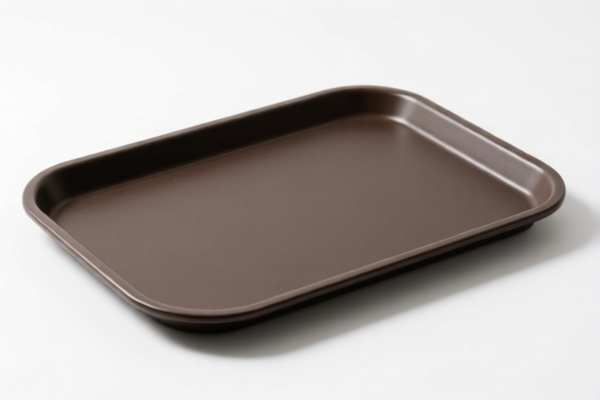
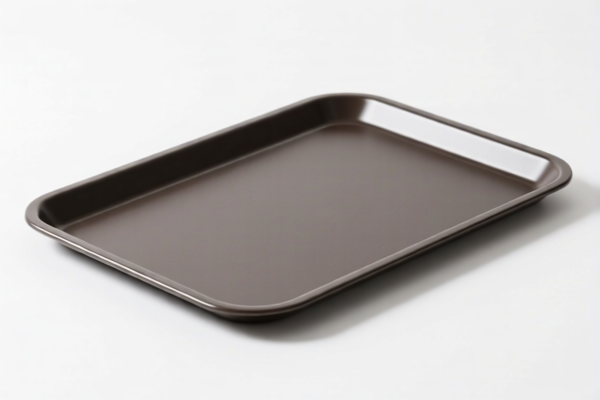
Virus Tray
CN → US| HS Code | Tariff Rate | Origin | Destination | Doc |
|---|---|---|---|---|
| 7326903500 | 92.8% | CN | US | Official Doc |
| 7326908688 | 87.9% | CN | US | Official Doc |
Product Images

AI Analysis
🦠 Virus Tray (Portable Iron/Steel Containers)
🌐 HS Code Reference & Customs Clearance Guide | 2026 Latest Tariff Analysis | Professional Compliance Strategy
📌 I. Product Definition & Classification: What Exactly is a "Virus Tray"?
In the context of international trade and HS Code classification, a "Virus Tray" is not a scientific or medical term. Based on the provided data, it refers to small, portable containers made of iron or steel, typically designed to be carried on the person, in a pocket, or in a handbag.
⚠️ Critical Distinction:
The classification depends entirely on material and portability.
- If it is a steel/iron container designed for personal carry (like a pocket tin, small cosmetic tin, or pill box) → It falls under 7326.90.35.00.
- If it is a generic steel article that does not fit the "carried on person" description (e.g., a larger storage box, industrial tray, or fixed container) → It may fall under 7326.90.86.88.
📦 II. HS Code Classification Details (2026 Latest Tariff Authority Comparison)
| HS Code | Product Description | Application Scenario | Portability |
|---|---|---|---|
7326.90.35.00 |
Other articles of iron or steel: Other: Other: Containers of a kind normally carried on the person, in the pocket or in the handbag | Small pocket tins, cosmetic steel cases, portable pill containers, small tool tins | ✅ Yes (Personal Carry) |
7326.90.86.88 |
Other articles of iron or steel: Other: Other: Other: Other | Generic steel containers, industrial trays, storage boxes not meant for pocket carry | ❌ No (General Use) |
🔍 Key Reminder:
- 7326.90.35.00 is HIGHLY SPECIFIC. It only applies if the item is small enough to be normally carried in a pocket or handbag.
- 7326.90.86.88 is a "Catch-All" for other steel articles. If your "Virus Tray" is larger, heavier, or not designed for pocket carry, it likely falls here.
- Material Check: Both codes apply to iron or steel. Non-metal trays (plastic, wood) are excluded.
💰 III. 2026 Latest Tariff Rate Breakdown (Including Additional Taxes, Policy Surcharges)
✅ Applicable Country: United States (US)
✅ Origin: China (CN)
✅ Effective Date: Current rates (as per provided data)
🎯 1. 7326.90.35.00 —— Portable Steel Containers (Pocket/Handbag)
| Item | Content |
|---|---|
| Basic Tariff | 0.0% |
| Additional Tariff (Section 301) | 0.0% (Base rate for this specific subheading) |
| Steel, Aluminum, Copper Surcharge | +50% (Under the "Steel, Aluminum, Copper Products Additional Tariff" policy) |
| Total Tariff Rate | 50.0% |
| Tax Calculation | CIF Value × 50% |
| De Minimis Exemption Eligible? | ❌ No (High tariff items generally excluded from de minimis benefits) |
| Legal Basis Path | HTS:7326.90.35.00 → Steel Surcharge Policy: 50% |
📌 Explanation:
- The base tariff is 0%, but the 50% additional tariff on steel products applies.
- This results in a total effective rate of 50%.
- Warning: This is a very high tax burden. Importers must calculate costs carefully.
🎯 2. 7326.90.86.88 —— Other Steel Articles (Non-Portable/Generic)
| Item | Content |
|---|---|
| Basic Tariff | 2.9% |
| Additional Tariff (Section 301) | 25.0% |
| Steel, Aluminum, Copper Surcharge | +50% (Under the "Steel, Aluminum, Copper Products Additional Tariff" policy) |
| Total Tariff Rate | 77.9% |
| Tax Calculation | CIF Value × 77.9% |
| De Minimis Exemption Eligible? | ❌ No |
| Legal Basis Path | HTS:7326.90.86.88 → Section 301: 25% → Steel Surcharge: 50% |
📌 Note:
- This code has a higher base tariff (2.9%) and a Section 301 surcharge (25%) compared to the portable container code.
- Plus the 50% steel surcharge, the total is 77.9%.
- This is an extremely high tax rate. Misclassification from7326.90.35.00to7326.90.86.88can increase taxes by 27.9 percentage points.
🛠️ IV. Customs Clearance Practical Advice (Battle-Tested Pitfall Guide)
✅ 1. Required Documentation Checklist (All Essential)
| Document | Mandatory | Description |
|---|---|---|
| ✅ Product Specification Sheet | ✔️ | Must clearly state dimensions, weight, and material (Iron/Steel) |
| ✅ Photos (with Scale) | ✔️ | Show the item being held in a hand or pocket to prove portability |
| ✅ Commercial Invoice | ✔️ | Must describe as "Steel Container, Portable, for Personal Use" |
| ✅ Packing List | ✔️ | Detail contents, avoid vague terms like "Assorted Goods" |
| ✅ Material Declaration | ✔️ | Confirm 100% Iron/Steel content to trigger/avoid steel surcharge correctly |
✅ 2. Declaration Tips (Key Mnemonics)
🔥 "Portable = 35.00 (50%); Generic = 86.88 (77.9%)! Describe size, prove pocket-fit!"
| Scenario | Correct Declaration | Wrong Action |
|---|---|---|
| Small steel tin (fits in pocket) | 7326.90.35.00 + "Pocket Container" |
Declare as "Steel Box" → Risk 77.9% |
| Large steel tray (industrial) | 7326.90.86.88 |
Declare as "Pocket Container" → Smuggling Risk |
| Mixed Materials (Steel + Plastic) | Not covered (Check other HS codes) | Declare as pure steel → Misclassification |
✅ 3. Special Cases Handling
| Situation | Handling Advice |
|---|---|
| OEM Custom Tins | Provide design files showing size constraints to prove portability |
| "Virus Tray" as Brand Name | Use generic description: "Steel Container" in HS declaration, brand name only on invoice |
| Small Batch Samples | Still subject to 50% or 77.9% tax; no de minimis exemption for high-tariff steel |
| Non-Steel Items | If "Virus Tray" is plastic, it is not in this data; check other HS codes |
🌍 V. Global Market Clearance Comparison (2026 Latest)
| Country/Region | Recommended HS Code | Tariff (China Origin) | Certification | Notes |
|---|---|---|---|---|
| 🇺🇸 USA | 7326.90.35.00 |
50.0% | None Specific | High steel surcharge |
| 🇺🇸 USA | 7326.90.86.88 |
77.9% | None Specific | Highest tax tier |
| 🇨🇳 China | 7326.90.35.00 |
~3-5% | CCC (if applicable) | Lower baseline |
| 🇪🇺 EU | 7326.90.35.00 |
0-5% | CE (if electronic) | No steel surcharge |
| 🇬🇧 UK | 7326.90.35.00 |
0-5% | UKCA | Post-Brexit rules |
📌 Conclusion:
- USA is the most expensive market for steel containers due to the 50% steel surcharge.
- EU/UK have much lower tariffs, making them more attractive for export.
- Accurate HS classification is critical in the US to avoid paying 77.9% instead of 50%.
📌 VI. Common Errors & Pitfall Guide (Lessons Learned)
❌ Error 1: Misclassifying a large steel box as a pocket container
👉 Consequence: Customs audit → Back taxes + penalties (77.9% vs 50%)
❌ Error 2: Using vague descriptions like "Steel Tray" without size proof
👉 Consequence: Customs reclassifies to 7326.90.86.88 (77.9%)
❌ Error 3: Ignoring the 50% steel surcharge in cost calculation
👉 Consequence: Profit margin wiped out by unexpected taxes
❌ Error 4: Declaring non-steel items as steel to match HS code
👉 Consequence: Fraud charges or forced reclassification
✅ Correct Approach:
"Steel Pocket Container, Dimensions: 5cm x 5cm x 2cm, Material: Mild Steel, for Personal Storage, Model VTR-01"
🎯 VII. Conclusion: Precise Classification Saves Money!
🎯 Remember the Mantra:
🔹 "Pocket Fit? 50%! Generic? 77.9%! Steel Surcharge is King!"
🔹 "HS Code Choice = Tax Difference of 27.9%! Declare Accurately!"
📌 Pro Tip:
If your "Virus Tray" can be proven to be normally carried in a pocket or handbag, insist on 7326.90.35.00 to save 27.9% in taxes. Provide size photos and dimension specs to customs.
📣 Immediate Action:
📞 Consult a customs broker + Provide dimensional proof + Apply for Advance Ruling if unsure.
🚀 Clear customs smoothly, reduce tax burden, maximize profit!
✨ Professional clearance starts with precise classification!
💼 Every percentage point of tax matters!
Customer Reviews
About HS Code Classification
The Harmonized System (HS) is an internationally standardized nomenclature developed by the World Customs Organization (WCO) to classify traded products. Over 200 countries use the HS system as the basis for customs tariffs, trade statistics, and import/export regulations.
Each HS code follows a hierarchical structure:
- Chapter (2 digits) — Broad category of goods (e.g., Chapter 84: Machinery and Mechanical Appliances)
- Heading (4 digits) — More specific grouping within the chapter
- Subheading (6 digits) — Internationally standardized breakdown, used by all WCO member countries
- National subdivisions (8-10 digits) — Country-specific extensions for further classification, such as US HTSUS 10-digit codes
Correct HS code classification is essential for smooth customs clearance, accurate duty payment, and compliance with trade regulations. Misclassification can lead to customs delays, overpayment of duties, or penalties.
When importing from CN to US, the applicable tariff rates may include:
- Most-Favored-Nation (MFN) rate — The standard duty rate applied to WTO members
- General rate — Applied to countries without trade agreements
- Trade remedy duties — Additional tariffs such as Section 301 (anti-dumping), Section 232 (national security), or countervailing duties
The information provided on this page is for reference purposes only. For official classification, please consult with your local customs authority or a licensed customs broker.