Viscose Blended Greige Fabric
CN → US| HS Code | Tariff Rate | Origin | Destination | Doc |
|---|---|---|---|---|
| 5408312090 | 49.9% | CN | US | Official Doc |
| 5408312010 | 49.9% | CN | US | Official Doc |
| 5516410090 | 49.9% | CN | US | Official Doc |
| 5516210090 | 49.9% | CN | US | Official Doc |
Product Images
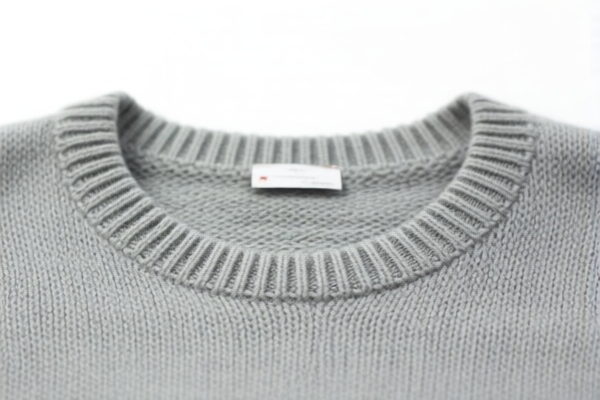
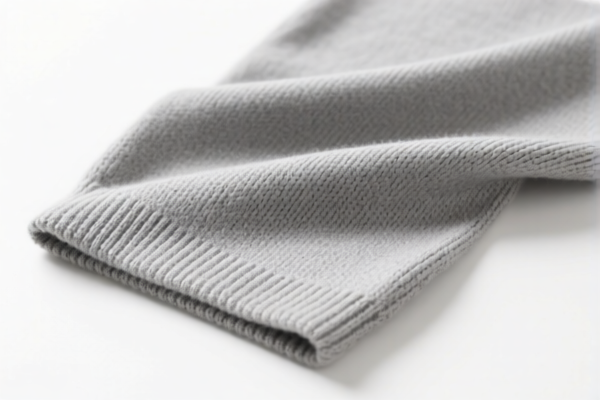
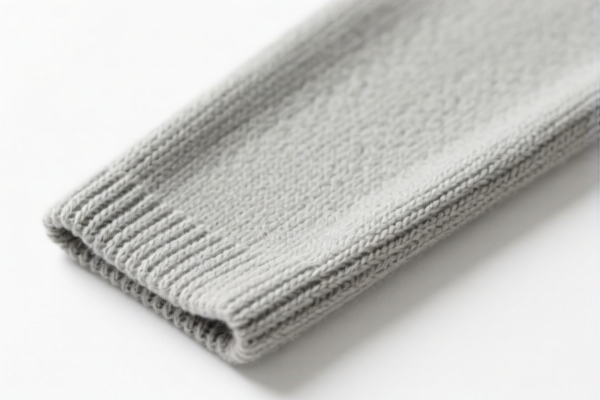
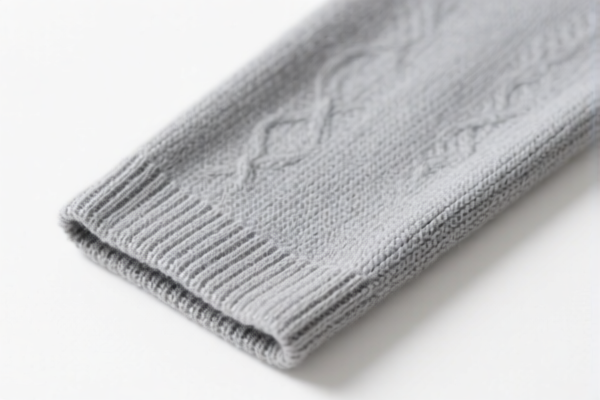
AI Analysis
🧵 Viscose Blended Greige Fabric (Unbleached/Unfinished Textiles)
🌐 HS Code Reference & Customs Clearance Guide | 2026 Latest Tariff Analysis | Professional Clearance Strategy
📌 I. Product Definition & Classification: What Exactly is "Viscose Blended Greige Fabric"?
Viscose Blended Greige Fabric refers to textile fabrics primarily made from Viscose (a type of Artificial/Man-Made Fiber) that are blended with other fibers (such as Synthetic Filaments or Cotton). The term "Greige" (or "Grey") indicates that the fabric is in its raw, unbleached, and unfinished state. It has undergone weaving/knitting but has not yet undergone scouring, bleaching, dyeing, or printing.
In international trade, the classification depends heavily on: 1. The Composition of the Blend: Is it blended with synthetic filaments or man-made short fibers? 2. The Form of the Other Fiber: Is it a continuous filament (long fiber) or a short staple fiber? 3. The State of the Fabric: Since it is "Greige," it falls under specific subheadings for unbleached or merely scoured fabrics, distinct from bleached/dyed ones.
⚠️ Key Distinction:
- If blended with Synthetic Filaments (e.g., Polyester, Nylon) → Look at Chapter 54 (Filament Yarns).
- If blended with Artificial Short Fibers (e.g., Viscose Staple Fibers mixed with Cotton) → Look at Chapter 55 (Staple Fibers).
- "Greige" Status: The description must explicitly state "Unbleached," "Scoured," or "Greige" to avoid misclassification as finished fabrics (which may have different duty rates).
📦 II. HS Code Classification Details (Based on Provided Data)
Based on the provided <DATA>, the classification depends on the specific blend partner. Here are the four specific HS Codes provided, all carrying the same total tax rate but differing in product description:
| HS Code | Product Description (Summary) | Key Classification Criteria |
|---|---|---|
5408.31.20.10 |
Viscose Blended Greige Fabric, matched with mainly or wholly synthetic filament blends | Blend contains Synthetic Filaments (e.g., Polyester/Viscose). |
5516.41.00.90 |
Viscose Blended Greige Fabric, matched with artificial short fibers blended with Cotton | Blend is Artificial Short Fiber + Cotton. |
5516.21.00.90 |
Viscose Blended Greige Fabric, matched with other categories of artificial short fiber woven fabrics | Blend is Artificial Short Fiber (not primarily cotton, or other specific sub-category). |
5408.31.20.90 |
Viscose Blended Greige Fabric, matched with other categories of artificial filament woven fabrics (unbleached/bleached) | Blend contains Artificial Filaments (non-synthetic, e.g., Viscose Filament blended with other filaments). |
🔍 Critical Note:
- All four codes listed in the data share the exact same tax structure (Total 49.9%).
- The difference lies purely in the fibrous composition (Synthetic Filament vs. Artificial Short Fiber vs. Cotton Blend).
- Do not mix these up: Misclassifying a Cotton-Viscose blend as a Synthetic-Viscose blend can lead to customs audits.
💰 III. 2026 Latest Tariff Rate Breakdown (Detailed Tax Clauses)
✅ Applicable Region: United States (US)
✅ Origin: China (CN) (Implied by "122 Clause" and typical trade context)
✅ Effective Time: Current rates apply
For ALL the above HS Codes (5408.31.20.10, 5516.41.00.90, 5516.21.00.90, 5408.31.20.90), the tax structure is identical:
🎯 1. Universal Tax Structure for Viscose Blended Greige Fabric
| Tax Component | Rate | Source/Clause |
|---|---|---|
| Base Tariff | 14.9% | Standard MFN Rate (Most Favored Nation) |
| Section 301 Additional Tariff | 25.0% | US Trade Law Section 301 (Retaliatory Tariffs) |
| Clause 122 Tariff | 10.0% | Specific Administrative Clause (often related to trade remedy or specific legislative provisions) |
| TOTAL TARIFF RATE | 49.9% | Ad Valorem (Based on CIF Value) |
📌 Explanation:
- Base 14.9%: This is the standard duty rate for textile fabrics under Chapters 54 and 55 for non-preferential trade origins (like China).
- 301 Tariff 25%: These HS codes are listed in the 301 Action List, subject to an additional 25% duty on Chinese imports.
- Clause 122 Tariff 10%: This is an additional specific levy. Note: "122 Clause" often refers to specific trade administrative measures. Ensure your customs broker verifies if this clause applies to your specific shipment entry date and origin.
- Total 49.9%: This is a very high combined duty rate. Profit margin calculations must account for nearly 50% of the product value going to taxes.❗ De Minimis Warning:
- Small Packages/Parcel Post: These goods typically DO NOT qualify for the $800 de minimis exemption if they are subject to Section 301 tariffs and Clause 122.
- Risk: Attempts to ship via low-value cargo to avoid tariffs will likely result in seizure, penalties, and back-payment of taxes.
🛠️ IV. Customs Clearance Practical Advice (Avoiding Pitfalls)
✅ 1. Essential Documentation Checklist
| Document | Required? | Purpose |
|---|---|---|
| Commercial Invoice | ✅ Mandatory | Must clearly state: "Viscose Blended Greige Fabric, Unbleached," and list exact fiber percentages (e.g., "65% Viscose, 35% Polyester"). |
| Packing List | ✅ Mandatory | Details weight, dimensions, and packaging type. |
| Fiber Content Declaration | ✅ Mandatory | Must match the HS Code classification. If you claim it's Cotton-Viscose (5516.xx), but it's actually Synthetic-Viscose (5408.xx), you risk reclassification. |
| Lab Test Report | ⚠️ Recommended | If the HS Code is disputed, a third-party lab test confirming fiber composition is crucial for appeal. |
| Bill of Lading / Air Waybill | ✅ Mandatory | Proof of shipment. |
| Certificate of Origin | ✅ Recommended | Proves origin is China (subject to tariffs). If origin is elsewhere, tariffs may differ. |
✅ 2. Classification Strategy & Declaration Tips
🔥 Golden Rule: "Be Specific About the Blend Partner!"
Do NOT just declare "Viscose Fabric." You must declare the blend.
| Scenario | Correct HS Code | Why? |
|---|---|---|
| Viscose + Polyester Filament | 5408.31.20.10 or .90 |
Chapter 54 covers Filaments. Check if it's mainly synthetic. |
| Viscose + Cotton (Short Fiber) | 5516.41.00.90 |
Chapter 55 covers Staple Fibers. Cotton is the key partner here. |
| Viscose + Nylon Filament | 5408.31.20.10 |
Synthetic filaments fall here. |
| Viscose + Rayon Staple (No Cotton) | 5516.21.00.90 |
Other artificial short fiber blends. |
📝 Declaration Wording Example:
"VISCOSE POLYESTER BLENDED GREIGE FABRIC, UNBLEACHED, 60% VISCOSE 40% POLYESTER, FOR GARMENT MANUFACTURING"
✅ 3. Special Handling for "Greige" Status
- Unbleached/Scoured Only: Ensure the commercial invoice specifies "Greige," "Unbleached," or "Scoured" and explicitly states "Not Dyed or Printed."
- Customs Inspection: Customs officers may inspect the fabric color. If it appears bleached white or dyed, they may reclassify it to a different (potentially higher or lower) subheading under Chapter 54/55, leading to delays.
- Sample Submission: If possible, submit a physical sample during the pre-clearance phase to verify the "Greige" status and fiber content.
✅ 4. Cost-Saving & Risk Mitigation
- Pre-Ruling (Advance Ruling):
- Apply for an Advance Ruling from U.S. Customs and Border Protection (CBP) if you are importing in large volumes. This locks in the HS Code and tariff rate, providing legal certainty.
- Supply Chain Diversification:
- Given the 49.9% total tariff, consider sourcing from countries with favorable trade agreements (e.g., Vietnam, India) to avoid Section 301 and Clause 122 tariffs.
- Duty Drawback:
- If the fabric is imported and then exported as part of a finished garment, explore Duty Drawback programs to recover up to 99% of the paid duties.
- Bonded Warehouses:
- Use bonded warehouses to defer tariff payments until the goods are released for consumption or re-exported.
🌍 V. Global Market Comparison (2026 Context)
| Country/Region | Recommended HS Code (Example) | Base Tariff | Additional Tariffs | Total Effective Rate | Notes |
|---|---|---|---|---|---|
| 🇺🇸 USA | 5408.31.20.10 etc. |
14.9% | 301 (25%) + Clause 122 (10%) | 49.9% | Highest Barrier. High risk of audit. |
| 🇪🇺 EU | Similar codes (e.g., 5408/5516) | ~4-10% | None (Generally) | ~10% | No Section 301 equivalent. Easier clearance. |
| 🇨🇳 China | Similar codes | ~5-8% | None | ~8% | Low import duty. |
| 🇻🇳 Vietnam | Similar codes | ~0-20% | Depends on FTAs | Low | Potential to avoid US tariffs if substantial transformation occurs. |
📌 Conclusion:
- The USA market is the most challenging for Chinese Viscose Blended Greige Fabric due to the cumulative 49.9% tariff.
- EU and other markets are significantly more favorable with no extra punitive tariffs.
📌 VI. Common Mistakes & Pitfalls (Blood Lessons)
❌ Mistake 1: Declaring "Viscose Fabric" without specifying the blend.
👉 Consequence: Customs will assign the "worst-case" or "most generic" HS code, potentially applying the wrong tax rate or triggering a manual examination.
❌ Mistake 2: Misidentifying "Greige" as "Bleached" or "Dyed."
👉 Consequence: If declared as Greige but found to be Bleached, the HS code may change to a different subheading (e.g., from unbleached to bleached sections), which might have different duty rates or require additional permits.
❌ Mistake 3: Ignoring Clause 122.
👉 Consequence: Clause 122 is a specific administrative levy. If not accounted for in your landed cost calculation, your profit margins will be wiped out.
❌ Mistake 4: Using De Minimis for 301/Clause 122 Goods.
👉 Consequence: High risk of package seizure, fines, and blacklisting of the importer of record.
✅ Correct Approach:
"Precise Fiber Composition + Explicit 'Greige' Status + Accurate HS Code Selection = Smooth Clearance."
🎯 VII. Conclusion: Professional Clearance, Cost Control, Efficiency!
🎯 Remember the Key Takeaways:
🔹 "Viscose Blend Needs Specific Partner" – Don't generalize.
🔹 "Greige Means Unbleached" – Prove it with invoices and samples.
🔹 "49.9% Total Tariff is Brutal" – Plan your pricing and supply chain accordingly.
🔹 "Clause 122 is Real" – Don't forget the extra 10%.
📌 Pro Tip:
If you are importing large volumes, consult a licensed customs broker to apply for an Advance Ruling from CBP. This provides legal protection and certainty. For smaller shipments, consider alternative markets or origins to mitigate the high tariff burden.
📣 Immediate Action:
📞 Contact a Professional Customs Broker + Provide Detailed Fiber Content + Verify Clause 122 Applicability
🚀 Optimize Your Landed Cost, Ensure Smooth Clearance, and Maximize Profit!
✨ Professional Clearance Starts with Accurate Classification!
💼 Every Cent of Tax Paid Should Be Justified and Optimized!
Customer Reviews
About HS Code Classification
The Harmonized System (HS) is an internationally standardized nomenclature developed by the World Customs Organization (WCO) to classify traded products. Over 200 countries use the HS system as the basis for customs tariffs, trade statistics, and import/export regulations.
Each HS code follows a hierarchical structure:
- Chapter (2 digits) — Broad category of goods (e.g., Chapter 84: Machinery and Mechanical Appliances)
- Heading (4 digits) — More specific grouping within the chapter
- Subheading (6 digits) — Internationally standardized breakdown, used by all WCO member countries
- National subdivisions (8-10 digits) — Country-specific extensions for further classification, such as US HTSUS 10-digit codes
Correct HS code classification is essential for smooth customs clearance, accurate duty payment, and compliance with trade regulations. Misclassification can lead to customs delays, overpayment of duties, or penalties.
When importing from CN to US, the applicable tariff rates may include:
- Most-Favored-Nation (MFN) rate — The standard duty rate applied to WTO members
- General rate — Applied to countries without trade agreements
- Trade remedy duties — Additional tariffs such as Section 301 (anti-dumping), Section 232 (national security), or countervailing duties
The information provided on this page is for reference purposes only. For official classification, please consult with your local customs authority or a licensed customs broker.