Viscose Blended Woven Industrial Fabric
CN → US| HS Code | Tariff Rate | Origin | Destination | Doc |
|---|---|---|---|---|
| 5516920090 | 47.0% | CN | US | Official Doc |
| 5408329010 | 50.0% | CN | US | Official Doc |
| 5516420090 | 47.0% | CN | US | Official Doc |
| 5408339010 | 47.0% | CN | US | Official Doc |
| 5408339010 | 47.0% | CN | US | Official Doc |
Product Images
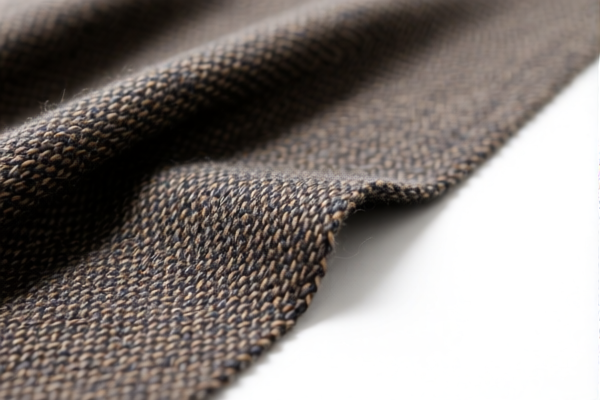
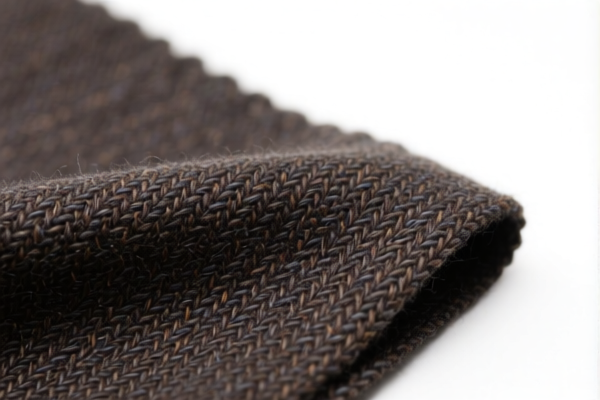
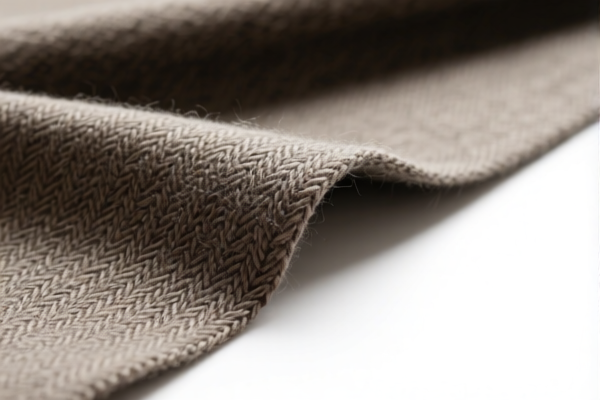
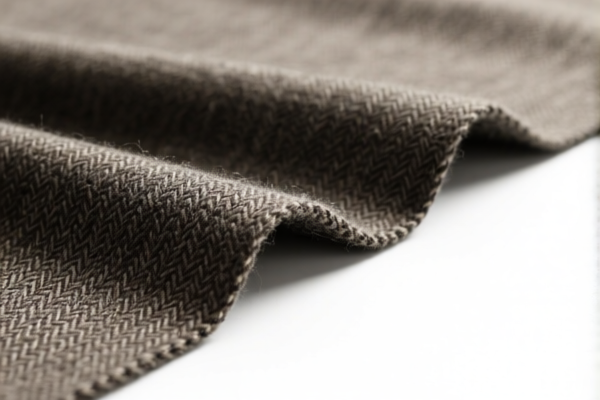
AI Analysis
🧵 Viscose Blended Woven Industrial Fabric
🌐 HS Code Reference & Customs Clearance Guide | 2024 Latest Tariff Analysis | Professional Clearance Strategy
📌 I. Product Definition & Classification: Do You Really Know "Viscose Blended Fabric"?
Viscose blended woven fabrics, often used in industrial applications, consumer goods, and apparel, fall under Chapter 54 (Man-made filaments) and Chapter 55 (Man-made staple fibers). The key to correct classification lies in distinguishing between filament (long continuous fibers) and staple (short cut fibers), as well as the processing method (dyed vs. undyed/piece-dyed).
⚠️ Key Distinction Points:
- Viscose Staple Fiber (VS): Short fibers spun into yarn → Classified under Chapter 55 (HS 5516).
- Viscose Filament: Long continuous fibers → Classified under Chapter 54 (HS 5408).
- Blending: If mixed with synthetic filaments (e.g., polyester), the classification shifts based on the dominant fiber type and construction.
📦 II. HS Code Classification Details (2024 Latest Tariff Authority Comparison)
Based on the provided data, here are the specific HS Codes and their corresponding tax implications for US imports from China.
| HS Code | Product Description | Applicable Scenario | Total Tax Rate |
|---|---|---|---|
5516.92.00.90 |
Viscose blended fabric, man-made staple fiber woven, other | Undyed/piece-dyed viscose staple blends (not elsewhere specified) | 47.0% |
5408.32.90.10 |
Viscose blended fabric, mainly or exclusively with synthetic filaments, man-made filament woven | Filament-based viscose blends, specific synthetic composition | 50.0% |
5516.42.00.90 |
Viscose blended fabric, dyed man-made staple fiber woven, other | Dyed viscose staple blends (color-specific classification) | 47.0% |
5408.33.90.10 |
Viscose blended fabric, man-made filament/staple woven, dyed, other | Dyed filament-viscose blends or multi-color yarn constructions | 47.0% |
🔍 Important Note:
- All listed codes involve Viscose, a man-made fiber derived from cellulose.
- The difference between 47% and 50% hinges on whether the fabric is primarily made of filaments (5408) or staples (5516), and specific sub-heading nuances.
-5408.32.90.10has the highest tax rate at 50% due to its specific filament-blend classification.
💰 III. 2024 Latest Tariff Rate Breakdown (Including Additional Duties & Policy Add-ons)
✅ Applicable Country: United States (US)
✅ Country of Origin: China (CN)
✅ Effective Time: Current rates apply (Section 301 & IEEPA provisions remain in force)
🎯 1. Codes with 47.0% Total Tax Rate
(Includes: 5516.92.00.90, 5516.42.00.90, 5408.33.90.10)
| Item | Content |
|---|---|
| Base Duty Rate | 12.0% (ad valorem) |
| Section 301 Additional Duty | +25% (Trade Remedy Action under Section 301 of the Trade Act of 1974) |
| Section 122 (IEEPA) Additional Duty | +10% (International Emergency Economic Powers Act tariffs on specific Chinese goods) |
| Total Tax Rate | 47.0% |
| Tax Calculation | CIF Value × 47% |
| De Minimis Exemption | ❌ Not Eligible (De minimis value does not apply to Section 301/IEEPA duties) |
| Legal Basis Path | Section 301 → Section 122 → HTSUS: 5516/5408 → Footnotes |
📌 Explanation:
- "Base Duty 12%": Standard MFN (Most Favored Nation) rate for man-made fiber fabrics.
- "Section 301: 25%": Imposed on thousands of Chinese products, including textile components.
- "Section 122: 10%": Additional tariff under IEEPA, often applied to specific categories of Chinese imports.
- Combined Impact: These tariffs are cumulative. You must pay 12% + 25% + 10% = 47%.
🎯 2. Code with 50.0% Total Tax Rate
(Includes: 5408.32.90.10)
| Item | Content |
|---|---|
| Base Duty Rate | 15.0% (ad valorem) |
| Section 301 Additional Duty | +25% |
| Section 122 (IEEPA) Additional Duty | +10% |
| Total Tax Rate | 50.0% |
| Tax Calculation | CIF Value × 50% |
| De Minimis Exemption | ❌ Not Eligible |
| Legal Basis Path | Section 301 → Section 122 → HTSUS: 5408.32 → Footnotes |
📌 Note:
- This code has a higher base duty (15%) compared to the others (12%), leading to a higher total burden.
- This typically applies to more specific synthetic filament blends that may have less favorable trade terms or higher base classifications.
🛠️ IV. Customs Clearance Practical Advice (Real-World Pitfall Avoidance Guide)
✅ 1. Required Documentation Checklist (None are Optional)
| Document | Must Provide | Explanation |
|---|---|---|
| ✅ Product Specification Sheet | ✔️ | Detail fiber composition (e.g., 65% Viscose / 35% Polyester), weight, width, weave type. |
| ✅ Yarn Construction Info | ✔️ | Crucial for distinguishing between Filament (5408) vs. Staple (5516). |
| ✅ Coloration Method Proof | ✔️ | Is it yarn-dyed, piece-dyed, or undyed? This determines sub-heading accuracy. |
| ✅ Commercial Invoice | ✔️ | Must clearly state "Viscose Blended Woven Fabric" and origin "Made in China". |
| ✅ Packing List | ✔️ | Match weight and dimensions with invoice. |
| ✅ Bill of Lading/Air Waybill | ✔️ | Standard shipping document. |
✅ 2. Declaration Tips (Key Mantras)
🔥 "Composition is King, Process is Queen! Specify Filament vs. Staple!"
| Scenario | Correct Declaration | Incorrect Action |
|---|---|---|
| Viscose mixed with synthetic staples | Use 5516.xx.xx | Misdeclare as 5408 → Risk of audit & penalties |
| Viscose mixed with synthetic filaments | Use 5408.xx.xx | Misdeclare as 5516 → Overpayment/Underpayment risk |
| Dyed fabric | Ensure "Dyed" is noted | Declare as "Un-dyed" → Wrong sub-classification |
| Multi-color yarns | Specify "Different Colored Yarns" | Vague description → Customs holds shipment for classification |
✅ 3. Special Case Handling
| Situation | Handling Advice |
|---|---|
| Partial Duty Exemption Claims | ❌ Do Not Claim for Section 301/122 tariffs. No exemptions apply to these specific codes from China. |
| Transshipment via Third Country | ⚠️ High Risk: US Customs will look for substantial transformation. Simply re-labeling does not avoid 47-50% duties. |
| Small Samples (Under $800) | ❌ Not Eligible: Section 301 and 122 duties apply even to de minimis shipments from China. |
| Pre-Ruling Application | ✅ Highly Recommended: Apply for an Advance Ruling from CBP if your fabric composition is complex. Save time and avoid delays. |
🌍 V. Global Market Comparison (2024 Latest)
| Country/Region | Recommended HS Code | Base Duty | US-Specific Add-ons | Total Effective Rate (US) |
|---|---|---|---|---|
| 🇺🇸 USA | 5516.92.00.90 / 5408.32.90.10 |
12% - 15% | +25% (301) +10% (122) | 47% - 50% |
| 🇨🇳 China | 5516 / 5408 |
5% - 8% | None | 5% - 8% |
| 🇪🇺 EU | 5516 / 5408 |
4% - 6% | None (unless anti-dumping) | ~5% |
| 🇬🇧 UK | 5516 / 5408 |
4% - 6% | None | ~5% |
📌 Conclusion:
- The USA is the most expensive market for these goods due to the cumulative impact of Section 301 and Section 122 tariffs.
- Importers into the US face nearly 10x the duty cost compared to EU or China.
- Cost Mitigation: Consider sourcing from Vietnam, Thailand, or Bangladesh (where possible) to avoid China-specific additional tariffs, though rules of origin must be strictly met.
📌 VI. Common Mistakes & Pitfall Guide (Lessons Learned)
❌ Mistake 1: Calling it simply "Textile Fabric"
👉 Consequence: Customs assigns highest possible duty rate or holds shipment for classification review → Delays + Storage Fees.
❌ Mistake 2: Ignoring the Filament vs. Staple distinction
👉 Consequence: Incorrect HS Code → Potential penalty for misdeclaration + repayment of duties.
❌ Mistake 3: Assuming De Minimis ($800) exemption applies
👉 Consequence: Packages from China under $800 are still subject to 47-50% duties for these HS codes. Do not rely on e-commerce exemptions for bulk industrial fabric.
❌ Mistake 4: Not specifying "Dyed" vs. "Undyed"
👉 Consequence: Wrong sub-heading (5516.42 vs 5516.92) → Incorrect tariff calculation.
✅ Correct Practice:
"Viscose Blend Woven Fabric, 150 GSM, 150cm Width, 60% Viscose Staple/40% Polyester Staple, Piece Dyed, Made in China"
🎯 VII. Conclusion: Precise Classification Saves Money!
🎯 Remember the Mantra:
🔹 "Staple vs. Filament is Critical! Section 301 + 122 is Real! 47% or 50%, Not a Dream!"
🔹 "Declare Precisely, Pay Correctly, Avoid Delays!"
📌 Pro Tip:
If your fabric can be classified under a more favorable sub-heading with professional help, invest in an Advance Ruling.
For large volumes, calculate the Total Landed Cost including the 47-50% duty before finalizing orders.
💼 Your profit margin depends on accurate HS Code selection!
✨ Professional Clearance Starts with Precise Classification!
💼 Every cent of duty should be calculated, not guessed!
Customer Reviews
About HS Code Classification
The Harmonized System (HS) is an internationally standardized nomenclature developed by the World Customs Organization (WCO) to classify traded products. Over 200 countries use the HS system as the basis for customs tariffs, trade statistics, and import/export regulations.
Each HS code follows a hierarchical structure:
- Chapter (2 digits) — Broad category of goods (e.g., Chapter 84: Machinery and Mechanical Appliances)
- Heading (4 digits) — More specific grouping within the chapter
- Subheading (6 digits) — Internationally standardized breakdown, used by all WCO member countries
- National subdivisions (8-10 digits) — Country-specific extensions for further classification, such as US HTSUS 10-digit codes
Correct HS code classification is essential for smooth customs clearance, accurate duty payment, and compliance with trade regulations. Misclassification can lead to customs delays, overpayment of duties, or penalties.
When importing from CN to US, the applicable tariff rates may include:
- Most-Favored-Nation (MFN) rate — The standard duty rate applied to WTO members
- General rate — Applied to countries without trade agreements
- Trade remedy duties — Additional tariffs such as Section 301 (anti-dumping), Section 232 (national security), or countervailing duties
The information provided on this page is for reference purposes only. For official classification, please consult with your local customs authority or a licensed customs broker.