Vise
CN → US| HS Code | Tariff Rate | Origin | Destination | Doc |
|---|---|---|---|---|
| 8205700060 | 40.0% | CN | US | Official Doc |
| 4417008010 | 40.1% | CN | US | Official Doc |
| 4417008090 | 40.1% | CN | US | Official Doc |
| 8205700090 | 40.0% | CN | US | Official Doc |
Product Images
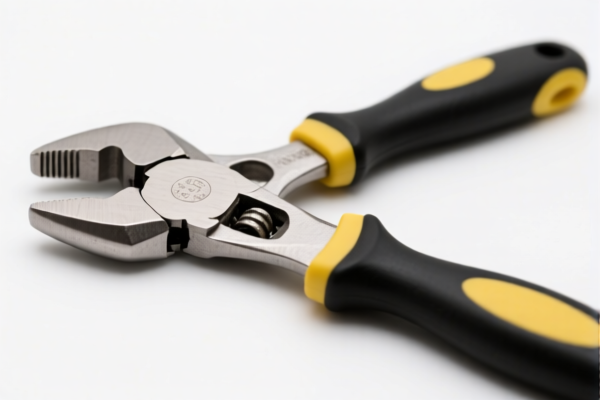
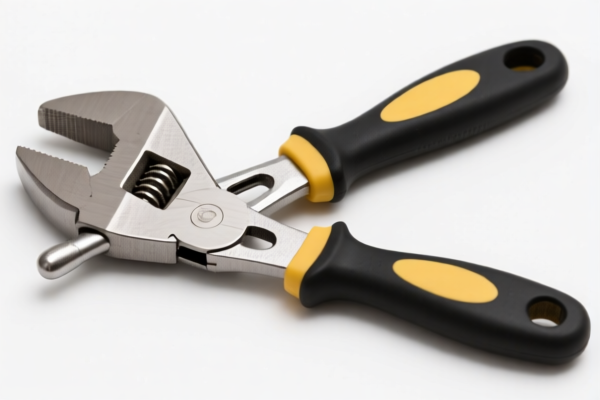
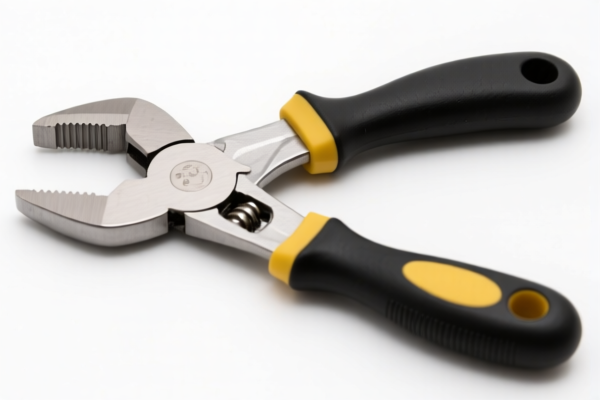
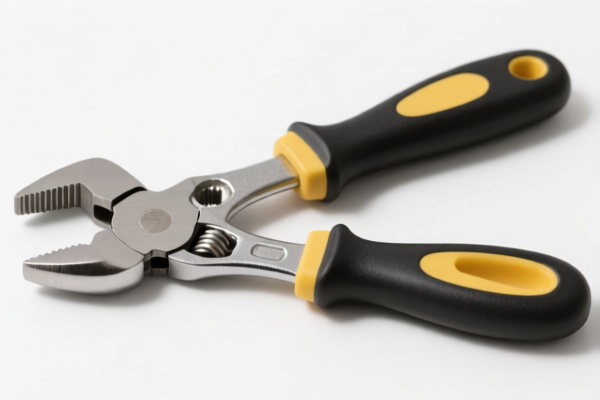
AI Analysis
🛠️ Wooden Vise (Wooden Bench Vise / Bench Clamp)
🌐 HS Code Reference & Customs Clearance Guide | 2026 Latest Tariff Analysis | Professional Clearance Strategy
📌 I. Product Definition & Classification: Do You Really Understand "Wooden Vise"?
A wooden vise (often referred to as a bench vise or bench clamp) is a mechanical apparatus used to secure an object to allow work to be performed on it. While modern vises are predominantly made of metal, wooden vises are distinct in material composition and often used for specific woodworking tasks or as decorative/antique tools.
In international trade, classification depends heavily on: 1. Material Composition: Is the primary structure wood or metal? 2. Function: Is it a general-purpose hand tool? 3. Specific Features: Does it have metal jaws or screws?
⚠️ Key Distinction Point:
- If the vise is predominantly wooden with minimal metal fasteners, it may fall under Chapter 44 (Wood and Articles of Wood).
- If the vise is primarily a metal hand tool (even if it has wooden handles or wooden jaws for protection), it falls under Chapter 82 (Tools, Implements, Cutlery).
- Customs Authority: The classification often hinges on whether the wooden component constitutes the "essential character" of the tool.
📦 II. HS Code Classification Details (2026 Latest Tariff Authority Comparison)
Based on the provided data, here are the four possible HS Code classifications for Wooden Vises, along with their tax implications.
| HS Code | Product Description | Summary of Logic | Total Tax Rate (China to US) |
|---|---|---|---|
8205.70.00.60 |
Other Vises (Clamps & Similar Vices); Non-Powered; Wooden Components | Classified as "Other Vises" under hand tools. The logic follows the "catch-all" category for vises not specified elsewhere. Material conflict is deemed non-conflicting. | 40.0% |
4417.00.80.10 |
Articles of Wood; Hand Tools; Wooden Vise | Classified as an "Article of Wood" because it fits the characteristics of wooden products and falls under the category of wooden tools. | 40.1% |
4417.00.80.90 |
Articles of Wood; Other (Unclassified); Wooden Vise | Classified as a "Wooden Product" attribute. It fits into the "Other" sub-category with no conflicts in classification. | 40.1% |
8205.70.00.90 |
Other Vises (Clamps & Similar Vices); Non-Powered; Wooden Components | Classified as "Other Vises" under hand tools. Follows the "catch-all" logic for vises not specified elsewhere, similar to .60 but potentially different sub-description. | 40.0% |
🔍 Critical Analysis:
- Metal vs. Wood: HS Chapter 82 (8205) covers "Hand Tools... Other than articles of Chapter 81, 83 or 94." If the vise is considered a "hand tool" regardless of wooden parts, it goes to 8205.
- Material Primary: If the customs authority determines the wooden part defines the product, it goes to Chapter 44 (4417).
- Tax Difference: The difference between.60/.90(40.0%) and.80.10/.80.90(40.1%) is minimal (0.1%), but the legal basis differs. Misclassification can lead to audits.
💰 III. 2026 Latest Tariff Rate Breakdown (Including Surtaxes & Policy Add-ons)
✅ Applicable Country: United States (US)
✅ Origin: China (CN)
✅ Effective Date: November 10, 2025 onwards (including subsequent imports)
🎯 1. HS Codes 8205.70.00.60 & 8205.70.00.90 —— Vises (Hand Tools Category)
| Item | Content |
|---|---|
| Base Tariff | 5.0% (Ad valorem) |
| Section 301 Surcharge | +25.0% (USITC Footnote for Hand Tools) |
| Section 122 Tariff | +10.0% (Specific Section 122 Tariff for certain imports) |
| Total Tax Rate | 40.0% |
| Tax Calculation | CIF Value × 40% |
| De Minimis Eligibility | ❌ Not Eligible (deny_de_minimis) |
| Legal Path | Base Tariff → USITC:301 → Section 122 |
📌 Explanation:
- Base (5%): Standard MFN rate for vises/clamps.
- Section 301 (+25%): Applies to most Chinese-made hand tools under Chapter 82.
- Section 122 (+10%): A newer or specific surcharge applied to certain tool categories.
- Total 40%: This is a high-cost classification. Importers must factor this into pricing.
🎯 2. HS Codes 4417.00.80.10 & 4417.00.80.90 —— Wooden Articles (Wood Chapter Category)
| Item | Content |
|---|---|
| Base Tariff | 5.1% (Ad valorem) |
| Section 301 Surcharge | +25.0% (USITC Footnote for Wood Products) |
| Section 122 Tariff | +10.0% (Specific Section 122 Tariff) |
| Total Tax Rate | 40.1% |
| Tax Calculation | CIF Value × 40.1% |
| De Minimis Eligibility | ❌ Not Eligible (deny_de_minimis) |
| Legal Path | Base Tariff → USITC:301 → Section 122 |
📌 Note:
- The tax rate is almost identical to the hand tool classification.
- The key risk is misclassification audit. If declared as "Wooden Article" but found to be primarily a "Tool," customs may retroactively adjust to Chapter 82, potentially affecting legal precedents or anti-dumping duties (if any apply to tools).
- Recommendation: Choose the classification that best reflects the essential character. If the metal screw/jaw system makes it a tool,8205is safer. If it's a decorative or purely wooden clamp,4417is correct.
🛠️ IV. Customs Clearance Practical Advice (Battle-Tested Pitfall Avoidance)
✅ 1. Documentation Checklist (All Mandatory)
| Document | Required | Notes |
|---|---|---|
| ✅ Product Specification Sheet | ✔️ | Must detail material composition (e.g., "100% Wood," "Wood with Metal Screw"). |
| ✅ Detailed Photos | ✔️ | Show overall view, close-up of mechanism, and any metal components. |
| ✅ Commercial Invoice | ✔️ | Clearly state "Wooden Bench Vise" or "Wooden Clamp." Avoid vague terms like "Holder." |
| ✅ Packing List | ✔️ | Ensure weights/dimensions match the HS Code profile. |
| ✅ Country of Origin Certificate | ✔️ | Required for Section 301 & 122 tariff application. |
| ✅ Internal Test Report | ⚠️ Optional | If claiming "Decorative," provide evidence that it lacks functional clamping strength. |
✅ 2. Declaration Tips (Key Mnemonics)
🔥 "Material Defines Chapter, Function Defines Subheading, Tariff is Heavy!"
| Scenario | Correct Declaration | Incorrect Action | Consequence |
|---|---|---|---|
| Mainly Wood, Minimal Metal | 4417.00.80.10 / .90 |
Declare as 8205 |
Potential audit if metal part is functional. |
| Functional Tool with Wooden Parts | 8205.70.00.60 / .90 |
Declare as 4417 |
Risk of misclassification penalty if metal is key. |
| Vague Name: "Wooden Clamp" | Specify "Vise," "Bench Clamp," or "Work Clamp" | Use "Wooden Item" | Customs may reject or assign highest duty. |
✅ 3. Special Circumstances Handling
| Situation | Handling Advice |
|---|---|
| Vise with Replaceable Jaws | If jaws are wood but frame is metal, declare as Metal Tool (8205). |
| Antique/Vintage Vise | If >100 years old, it may qualify as "Antique" under different headings, but Section 301/122 may still apply depending on current rulings. Consult a broker. |
| OEM Custom Wooden Vises | Provide design specs showing wooden structure is integral, not just handles. |
| Set with Accessories | If the vise is sold with a wooden stand, declare as One Unit. Do not split. |
🌍 V. Global Market Comparison (2026 Latest)
| Country/Region | Recommended HS Code | Tariff Rate | Certification Requirements | Notes |
|---|---|---|---|---|
| 🇺🇸 USA | 8205.70.00.60 or 4417.00.80.10 |
40.0% - 40.1% | None specific, but origin proof vital | High tariff due to Section 301 & 122. |
| 🇨🇳 China | 8205.70.00.60 |
5.0% | N/A | Low import duty. |
| 🇪🇺 EU | 8205.70 or 4417 |
0% - 6% | CE Marking (if applicable) | No Section 301 equivalent. |
| 🇬🇧 UK | 8205.70 |
6.0% | UKCA Marking | Post-Brexit tariff schedule applies. |
📌 Conclusion:
- USA is the most challenging market due to 40%+ total duties.
- EU/UK offer significantly lower tariffs, but certification requirements (CE/UKCA) may apply if the vise is considered "safety equipment."
📌 VI. Common Mistakes & Pitfall Guide (Lessons Learned)
❌ Mistake 1: Declaring "Wooden Vise" as 4417 when it has a heavy metal screw mechanism.
👉 Consequence: Customs may reclassify as 8205, leading to administrative penalties for incorrect declaration.
❌ Mistake 2: Using "Wooden Clamp" without specifying it's a "Vise."
👉 Consequence: Customs may classify under broader categories with higher anti-dumping duties if any exist for clamps.
❌ Mistake 3: Ignoring Section 122 Tariff.
👉 Consequence: Unexpected 10% surcharge at customs, causing cash flow issues.
❌ Mistake 4: Assuming "De Minimis" applies.
👉 Consequence: Package held at border; tax collected on full CIF value. No $800 exemption for China-origin goods under 301/122.
✅ Correct Practice:
"Wooden Bench Vise, 6-inch, Solid Oak Body with Metal Adjustment Screw, Model XYZ, For Woodworking Use"
🎯 VII. Conclusion: Precise Classification Saves Costs!
🎯 Remember the Rule:
🔹 "Wood Body, Metal Function → Chapter 82 (40.0%)"
🔹 "Pure Wood, Decorative/Basic → Chapter 44 (40.1%)"
🔹 "Don't Guess! The 0.1% Difference Matters Less Than Legal Safety!"
🔹 "Section 301 & 122 are Non-Negotiable for China Origin!"
📌 Pro Tip:
If your wooden vise is originating from Vietnam, Thailand, or Malaysia, you MAY be exempt from Section 301 and 122 tariffs, reducing the rate to 5.0% (Base Rate).
✅ Action: Verify Country of Origin rules carefully. Ensure no Chinese processing alters the origin status.
📣 Immediate Action:
📞 Contact a licensed customs broker + Provide Product Photos + Apply for Pre-Ruling if high volume.
🚀 Ensure your Wooden Vises clear US Customs smoothly, avoiding 40%+ traps, and maximize profit margins!
✨ Professional Clearance Starts with Accurate Classification!
💼 Every Percent of Duty Saved is Pure Profit!
Customer Reviews
About HS Code Classification
The Harmonized System (HS) is an internationally standardized nomenclature developed by the World Customs Organization (WCO) to classify traded products. Over 200 countries use the HS system as the basis for customs tariffs, trade statistics, and import/export regulations.
Each HS code follows a hierarchical structure:
- Chapter (2 digits) — Broad category of goods (e.g., Chapter 84: Machinery and Mechanical Appliances)
- Heading (4 digits) — More specific grouping within the chapter
- Subheading (6 digits) — Internationally standardized breakdown, used by all WCO member countries
- National subdivisions (8-10 digits) — Country-specific extensions for further classification, such as US HTSUS 10-digit codes
Correct HS code classification is essential for smooth customs clearance, accurate duty payment, and compliance with trade regulations. Misclassification can lead to customs delays, overpayment of duties, or penalties.
When importing from CN to US, the applicable tariff rates may include:
- Most-Favored-Nation (MFN) rate — The standard duty rate applied to WTO members
- General rate — Applied to countries without trade agreements
- Trade remedy duties — Additional tariffs such as Section 301 (anti-dumping), Section 232 (national security), or countervailing duties
The information provided on this page is for reference purposes only. For official classification, please consult with your local customs authority or a licensed customs broker.