Voice Module
CN → US| HS Code | Tariff Rate | Origin | Destination | Doc |
|---|---|---|---|---|
| 8542310030 | 60.0% | CN | US | Official Doc |
| 8542390090 | 60.0% | CN | US | Official Doc |
| 8543708800 | 10.0% | CN | US | Official Doc |
| 8517620090 | 35.0% | CN | US | Official Doc |
| 8543709860 | 37.6% | CN | US | Official Doc |
Product Images
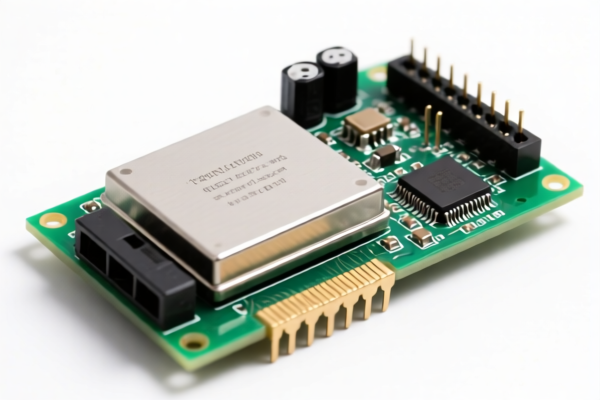
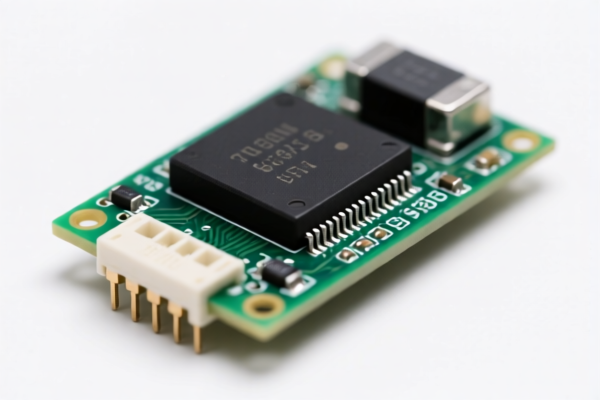
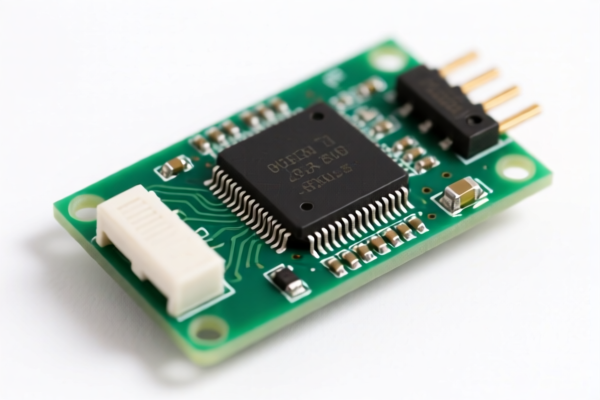

AI Analysis
🗣️ Voice Module (Audio Processing Units)
🌐 HS Code Reference & Customs Clearance Guide | 2024/2025 Latest Tariff Analysis | Professional Compliance Strategy
📌 I. Product Definition: What is a "Voice Module"?
A Voice Module is a generic term for electronic components designed to capture, process, or transmit audio data. In international trade, its classification depends entirely on its internal circuitry and functionality:
- Logic/Processor-Based Modules: Contain CPUs, DSPs, or AI chips for voice recognition/processing → Classified under Chapter 85 (Electrical Machinery/ICs).
- Communication/Transmission Modules: Primarily used to send/receive voice signals (like VoIP or radio modules) → Classified under Chapter 85 (Telecom/Other Electrical Machines).
- Special Function Modules: Devices with specific translation or dictionary functions → Classified under Chapter 85 (Other Machines).
⚠️ Critical Distinction:
- If the module acts as a microprocessor/controller (decoding/encoding voice via logic): → 8542 (ICs)
- If the module acts as a communication interface (transmitting voice): → 8517 or 8543
- Misclassification Risk: Declaring a high-tax IC module as a low-tax communication module can lead to severe penalties.
📦 II. HS Code Classification Matrix (Based on Provided Data)
| HS Code | Product Description Summary | Key Function Logic | Tax Impact (Total) |
|---|---|---|---|
8543.70.98.60 |
Electronic circuit device with specific function | "Other machines/appliances"; general electronic circuitry | 37.6% |
8517.79.00.00 |
Communication equipment functional module | Transmits/receives voice, image, or data signals | 67.5% |
8542.31.00.30 |
Integrated Circuit: Processor/Controller | Contains control logic for voice processing | 60.0% |
8542.39.00.90 |
Integrated Circuit: Other | General IC application form | 60.0% |
8543.70.88.00 |
Specific function electrical apparatus | Has translation/dictionary functions or similar | 10.0% |
💰 III. Detailed Tariff Breakdown (US Import Context)
✅ Origin: China (CN)
✅ Destination: United States (US)
✅ Components: Base Tariff + Section 301 (25%) + Section 122 (10%) + Other Specific Surcharges
🎯 1. 8543.70.88.00 – The Low-Risk / Optimal Choice?
Description: Electrical machines with specific functions (e.g., translation/dictionary logic).
| Item | Detail |
|---|---|
| Base Tariff | 0.0% |
| Section 301 (Add-on) | 0.0% |
| Section 122 (Add-on) | 10.0% |
| Other Surcharges | None |
| Total Rate | 10.0% |
| Why? | This code falls under "Other machines" with specific utility. It avoids the heavy Section 301 tariffs applied to ICs and generic electronics. |
| Legal Path | USITC:8543.70.88.00 → FOOTNOTE:122 |
📌 Strategy: If your voice module has translation, dictionary, or specific signal processing logic that doesn't fit strictly into "processor" or "telecom," this is the most cost-effective classification.
🎯 2. 8543.70.98.60 – General Electronic Circuit
Description: Electronic circuit devices not elsewhere specified.
| Item | Detail |
|---|---|
| Base Tariff | 2.6% |
| Section 301 (Add-on) | 25.0% |
| Section 122 (Add-on) | 10.0% |
| Total Rate | 37.6% |
| Why? | Classifies as a generic electronic assembly. Subject to both Section 301 and 122 duties. |
| Legal Path | USITC:8543.70.98.60 → FOOTNOTE:301:25 + FOOTNOTE:122:10 |
📌 Strategy: Use this if the module is a standalone circuit board without distinct processing or communication identity. Higher cost than
8543.70.88.00.
🎯 3. 8542.31.00.30 & 8542.39.00.90 – High-Tax IC Categories
Description: Integrated Circuits (Processors/Controllers vs. Other).
| Item | Detail |
|---|---|
| Base Tariff | 0.0% |
| Section 301 (Add-on) | 50.0% |
| Section 122 (Add-on) | 10.0% |
| Total Rate | 60.0% |
| Why? | Voice modules containing CPUs, DSPs, or AI chips are classified as microprocessors/processors. These attract the highest Section 301 penalty. |
| Legal Path | USITC:8542.31.00.30 → FOOTNOTE:301:50 + FOOTNOTE:122:10 |
📌 Warning: Do not use these codes unless the primary component is unmistakably a microprocessor/controller. The 60% tariff is a major cost driver.
🎯 4. 8517.79.00.00 – Communication Module (Highest Risk)
Description: Parts of telecommunication apparatus; functional modules for data/voice transmission.
| Item | Detail |
|---|---|
| Base Tariff | 0.0% |
| Section 301 (Add-on) | 7.5% |
| Section 122 (Add-on) | 10.0% |
| Steel/Aluminum/Copper Add-on | 50.0% |
| Total Rate | 67.5% |
| Why? | While base + 301 + 122 seem low (17.5%), the "Steel/Aluminum/Copper Add-on: 50%" applies if the module contains significant metallic components or is classified under specific material surcharges. Note: Data shows total 67.5%, implying the 50% surcharge is heavily weighted. |
| Legal Path | USITC:8517.79.00.00 → FOOTNOTE:301:7.5 + FOOTNOTE:122:10 + FOOTNOTE:MATERIALS:50 |
📌 Critical Alert: This code has the highest total tax (67.5%). Avoid this classification for voice modules unless it is a pure telecom interface (like a modem) without processing logic. The material surcharge makes it extremely expensive.
🛠️ IV. Customs Clearance Best Practices
✅ 1. Documentation Requirements
| Document | Purpose |
|---|---|
| Technical Data Sheet | Must specify if the module contains a CPU/DSP (processor) or is just a transceiver (comm). |
| Circuit Diagram | Proves whether the primary function is processing (IC) or transmission (Comm). |
| Bill of Materials (BOM) | Helps determine if metallic component surcharges apply (8517.79.00.00). |
| Commercial Invoice | Describe accurately: e.g., "Voice Processing IC Module" vs. "Voice Transmission Interface." |
✅ 2. Classification Strategy (Decision Tree)
- Does it have a CPU/DSP for AI/Recognition?
- Yes → Likely
8542.31.00.30(60% Tax). High Cost.
- Yes → Likely
- Is it a simple Voice Over IP/Telecom Interface?
- Yes → Could be
8517.79.00.00(67.5% Tax). Very High Cost due to material surcharges.
- Yes → Could be
- Does it have specific utility (Translation/Dictionary/Specific Processing)?
- Yes → Aim for
8543.70.88.00(10% Tax). Lowest Cost.
- Yes → Aim for
- Is it a generic circuit board?
- Yes →
8543.70.98.60(37.6% Tax). Medium Cost.
- Yes →
✅ 3. Common Pitfalls
- ❌ Over-classifying as Telecom (
8517): If you classify a processing module as a "communication part" to avoid IC tariffs, CBP may reclassify it as an IC (8542) or impose material surcharges, resulting in 67.5% or 60% taxes. - ❌ Ignoring Section 122: All codes above include a 10% Section 122 surcharge. Ensure your DDP (Delivered Duty Paid) price includes this.
- ❌ Vague Descriptions: Using only "Voice Module" on the invoice invites CBP examination. Use specific terms like "Voice Recognition Processor" or "Voice Interface Circuit."
🌍 V. Global Market Comparison (2024/2025)
| Market | Recommended HS Code | Est. Total Duty | Key Notes |
|---|---|---|---|
| 🇺🇸 USA | 8543.70.88.00 |
10.0% | Best for specific-function modules. Avoid 8517 due to 50% material surcharge. |
| 🇺🇸 USA | 8542.31.00.30 |
60.0% | High cost for AI/Processor-based modules. |
| 🇪🇺 EU | 8542.31.00 |
~14% | No Section 301/122 tariffs. Standard EU duty applies. |
| 🇨🇳 China | 8542.31.00 |
~0-5% | Low import duty for re-export or domestic use. |
📌 Conclusion:
For US imports,8543.70.88.00(10%) is the most strategic classification if the module has specific functional logic (like translation or specialized processing).
8517.79.00.00(67.5%) and8542(60%) should be avoided unless technically unavoidable, due to their prohibitive tariff rates.
📌 VI. Actionable Advice for Importers
- Pre-Ruling is Key: Apply for an ISD (Information and Support Document) or Pre-Ruling with CBP if your module has dual functionality (e.g., both processing and transmission).
- Product Naming: Label products clearly on invoices:
- Good: "Voice Processing Module with Translation Function, Model XYZ"
- Bad: "Voice Module"
- Check Material Content: If classifying under
8517, audit the BOM for steel/aluminum/copper content to confirm if the 50% surcharge applies. - Cost Simulation:
- Scenario A (Processor): $100 CIF → $60 Duty
- Scenario B (General Circuit): $100 CIF → $37.60 Duty
- Scenario C (Specific Function): $100 CIF → $10 Duty
🔥 Pro Tip:
"Logic is King, Comm is High, Function is Low."
Structure your hardware design and documentation to highlight specific functional utility (8543.70.88.00) to minimize the 57.5% difference in duty rates!
✨ Professional Customs Compliance Starts with Precise Classification!
💼 Don't let a 57% tariff difference erase your profit margin.
Customer Reviews
About HS Code Classification
The Harmonized System (HS) is an internationally standardized nomenclature developed by the World Customs Organization (WCO) to classify traded products. Over 200 countries use the HS system as the basis for customs tariffs, trade statistics, and import/export regulations.
Each HS code follows a hierarchical structure:
- Chapter (2 digits) — Broad category of goods (e.g., Chapter 84: Machinery and Mechanical Appliances)
- Heading (4 digits) — More specific grouping within the chapter
- Subheading (6 digits) — Internationally standardized breakdown, used by all WCO member countries
- National subdivisions (8-10 digits) — Country-specific extensions for further classification, such as US HTSUS 10-digit codes
Correct HS code classification is essential for smooth customs clearance, accurate duty payment, and compliance with trade regulations. Misclassification can lead to customs delays, overpayment of duties, or penalties.
When importing from CN to US, the applicable tariff rates may include:
- Most-Favored-Nation (MFN) rate — The standard duty rate applied to WTO members
- General rate — Applied to countries without trade agreements
- Trade remedy duties — Additional tariffs such as Section 301 (anti-dumping), Section 232 (national security), or countervailing duties
The information provided on this page is for reference purposes only. For official classification, please consult with your local customs authority or a licensed customs broker.